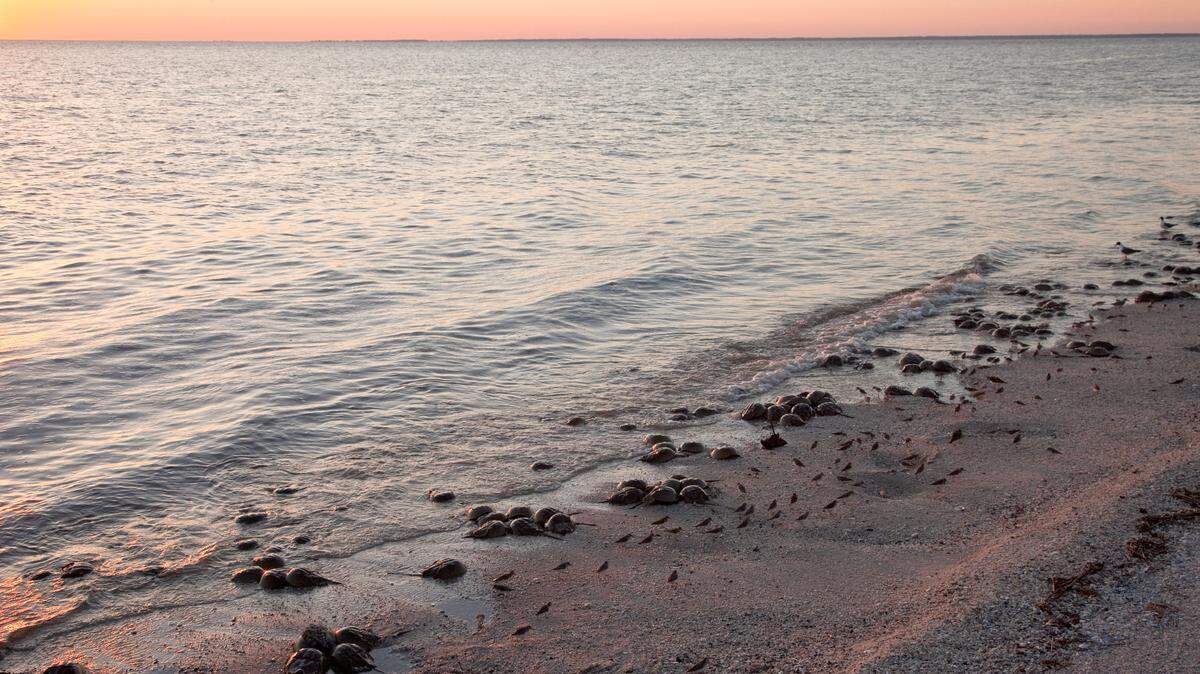
As calls rise for horseshoe crab harvest limitations, SC agency may allow more ‘pillage’
READ MORE
Charles River Labs & the SC Horseshoe Crab Harvest
Blue blood from horseshoe crabs has helped make vaccines safe for years, but experts say the multinational company harvesting the crabs in South Carolina is misleading the public about its environmental impact and the synthetic alternatives that exist.
Expand All
The highest levels of South Carolina’s governmental leadership could still allow some of the state’s last protected areas to be accessed by fishermen harvesting horseshoe crabs for a multinational biomedical lab.
That’s despite the fact that a newly published science paper and a scathing report from a national nonprofit suggest the state should be increasing its conservation efforts for the wildlife, not diminishing them.
In January, The State newspaper first reported that Charles River Laboratories had confidentially offered $500,000 to the South Carolina Department of Natural Resources in exchange for allowing fishermen to harvest horseshoe crabs in the only places where the agency has long prohibited it — five islands in the ACE Basin National Estuarine Research Reserve that spans Colleton, Charleston, and Beaufort counties. Of the set of islands, Otter is the only one that multiple DNR employees have reported is a major spawning site for horseshoe crabs.
The ACE Basin’s “wealth of wildlife and history” and “relatively intact and exceptionally rich ecosystem,” as National Geographic has described it, is so special that national groups like The Nature Conservancy have at times stepped in to help protect its hundreds of thousands of acres of wetlands, tidal marshes, barrier islands and peatlands.
“That’s an area that the public holds as a sacred place to visit and is important to the state for its natural resources,” said Catherine Wannamaker, a lawyer for the Southern Environmental Law Center. “And all of a sudden DNR just changes that? It’s like taking a national park and de-designating that with no notice to anyone.”
Gov. Henry McMaster was involved with the first iteration of the deal to grant new commercial access to the basin, meeting with Charles River representatives and directors of DNR since last summer. Though he declined an interview in January with The State about the issue, through a spokesman, he said he was dedicated to finding a “long term solution” to keep Charles River open while protecting the natural ecosystem.
The secretive dealings and documents were then widely condemned by environmental defenders as an example of “pay-to-play” politics that favored corporate interests over public transparency. But they appear to have become more secretive still. Months after the agency indicated it could not grant Charles River the research license the company had initially requested as part of their proposal because that license did not exist in state code, two people familiar with the issue told The State that the government was still considering granting harvesters access to protected spaces in the ACE Basin.
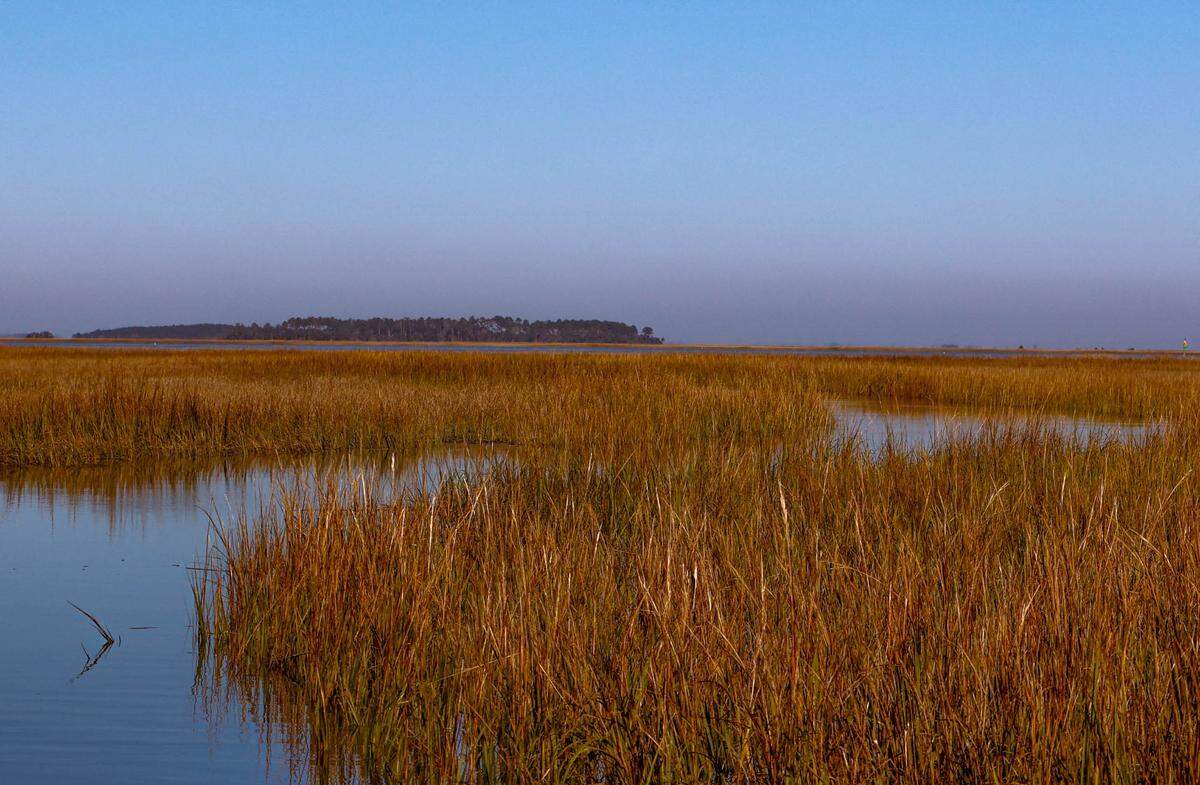
When The State asked the DNR to confirm that harvesters could be granted permission to take crabs from Otter Island — or at least to confirm whether that option was still being discussed — the agency did not do that. Instead, the DNR sent a statement with few details:
“The Department has not issued any permits related to harvest on the currently prohibited islands in the ACE Basin Research Reserve,” a spokeswoman wrote. “Discussions are ongoing and we’ll be in touch if there is something to share.”
The agency did confirm, however, that its leaders had met to discuss the topic with Charles River on March 15 and with the governor’s office on March 22.
Through a spokesman, McMaster declined to provide information regarding whether Charles River might still receive permission to use the ACE Basin islands to harvest crabs during the upcoming season, despite the fact that he met with DNR officials about the issue last week. Instead, his office deferred a reporter to DNR.
If harvesters for Charles River are allowed to take crabs from Otter, this concession of one of South Carolina’s last protected spaces would constitute the first time that the island has been opened to commercial activity in at least 25 years. For decades, Otter has received protection not just for its historical heritage but for the refuge it offers to a host of South Carolina’s most threatened species.
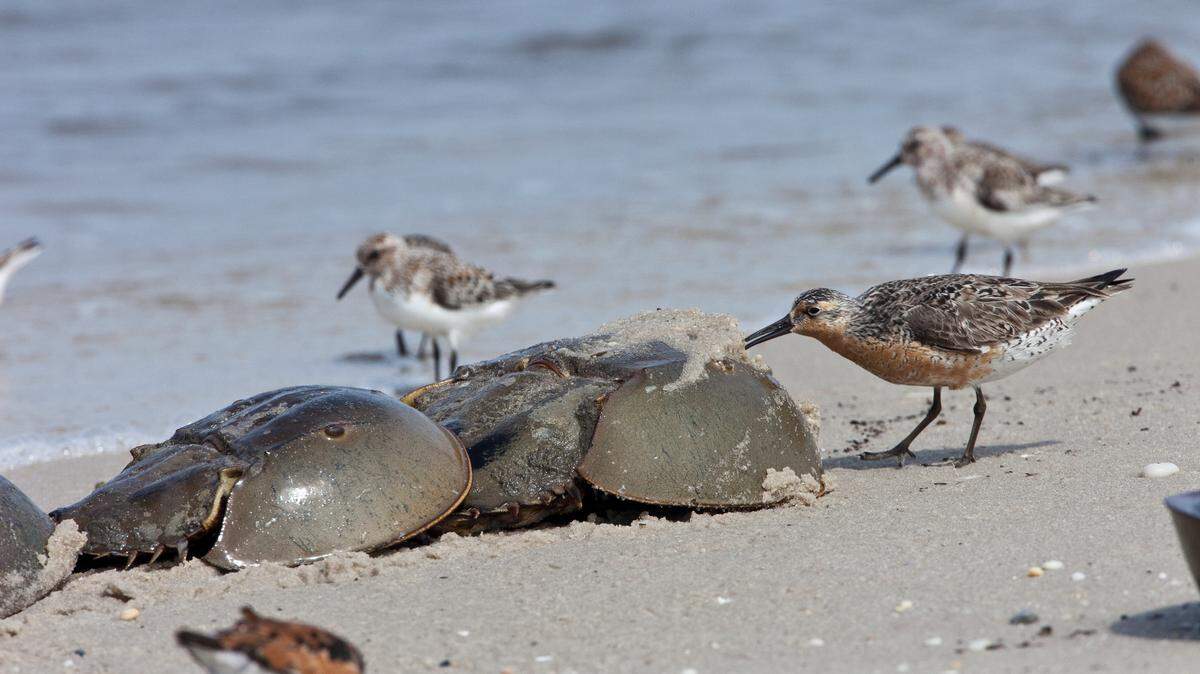
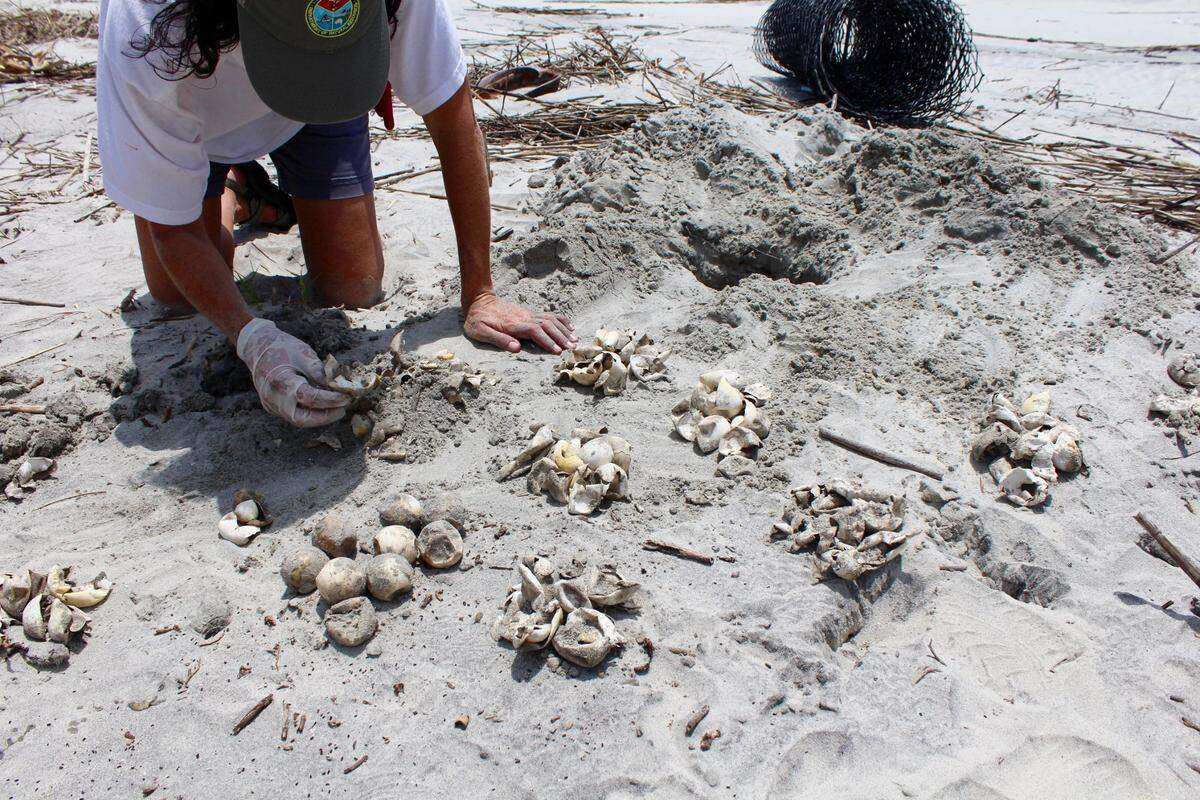
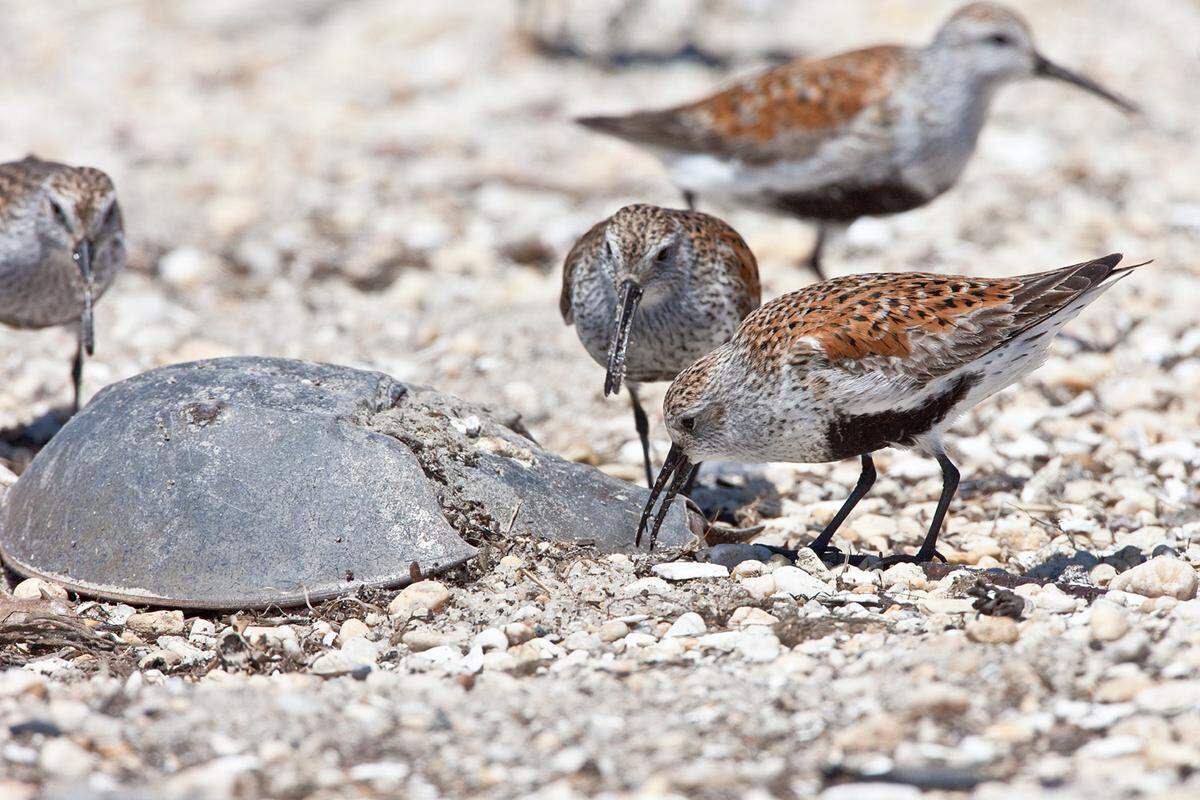
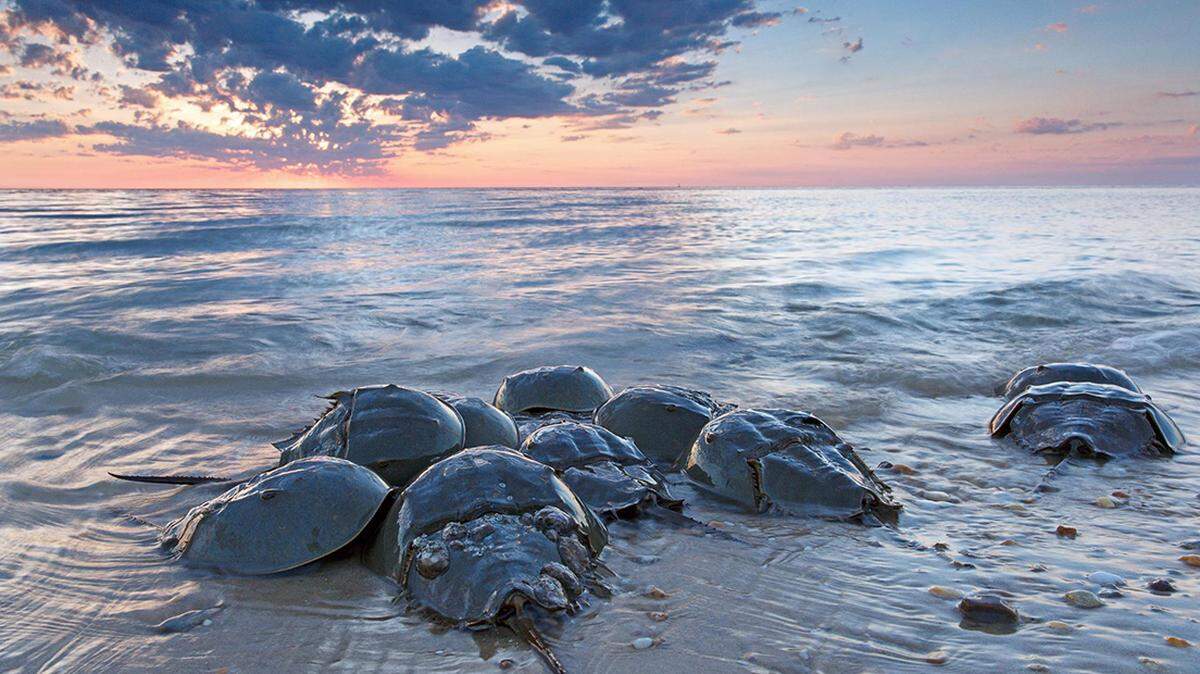
Along its three-mile stretch of undeveloped beach, each summer, baby loggerhead sea turtles crawl out of their shells and scurry into the ocean. Endangered falcons, storks and eagles land on the island every year to build their nests. Many of those animals rely on the horseshoe crab, a species that outlived all of them by more than 450 million years. After the ancient arthropods spawn on the beach each spring and summer, shorebirds like the threatened red knot feast on their eggs. Others prey on the crabs’ bodies, using them to fuel their own activity.
But the reason Charles River wants the crabs is for something else — their blue blood. After the company based in Massachusetts pays fishermen by the crab for their haul, their lab in Charleston drains the animals for sometimes upwards of half their liquid before returning them to sea. It then uses the blood to make a product pharmaceutical groups employ for detecting bacterial toxins in vaccines and medical devices. Though a crab-free synthetic equivalent is already in use in Europe, Asia and the U.S., Charles River has lobbied authorities to discourage its widespread adoption in America.
Environmental defenders, who are already suing the agency for other issues related to the harvest, said they were shocked to hear that the state was again considering opening the ACE Basin to a multinational company based out-of-state.
“A company from Massachusetts wants to pillage the equivalent of South Carolina’s national parks,” said Wannamaker.
Charles River did not respond to The State’s request for an interview. Since 2021, the company has denied or ignored every interview The State has requested.
Though the news came as a surprise to many outside and inside DNR, it isn’t the first time taking crabs from the protected islands has been discussed at the state agency. Harvesters began exploring possible access to the prohibited ACE Basin islands, and Otter Island in particular, more than four years ago, said a former DNR employee.
The longstanding desire for Otter Island could be fueled by the fact that there are fewer places than ever along the South Carolina coast where large groups of crabs still gather to mate, biologists have noted. Charles River has also lost permission to take crabs from the Cape Romain National Wildlife Refuge in Awendaw, after a fisherman whose family has worked with the company for generations was caught poaching on off-limits islands and a federal lawsuit ensued.
Though the growing scarcity of the crabs might make a company that profits from their blood more interested in harvesting the remaining animals in South Carolina, scientists believe it also means the need for their preservation has never been higher.
New research now shows how delicately a disappearing bird, not just the crabs, hangs in the balance.
For a dying flock, South Carolina eggs matter
A science paper published on Saturday revealed a “staggering and unexpected finding,” said the author, Dr. Nathan Senner, a professor at the University of South Carolina.
Most people assumed that other beaches higher along the Atlantic Coast, like New Jersey’s Delaware Bay, were by far the most popular stopping grounds for red knots, a threatened migratory shorebird whose numbers have dwindled by more than 80%.
Each year, the birds fly almost 10,000 miles from Argentina to the Arctic Circle and then back again. Many of them stop only once in the middle of the journey. When they land on the ground, they’re thin and exhausted from flying for days straight and in desperate need of nourishment. They have to gorge themselves on enough food not to just recover their lost strength but to save up for the last massive stretch of their trip to Canada.
Almost half of all the red knots still alive today chose to take that important break in South Carolina, the new research indicates.
Many of those snack on the tiny, colorful clams that decorate the beaches in Kiawah and Seabrook islands. But their preferred food are the fatty horseshoe crab eggs that they find elsewhere, like in the ACE Basin.
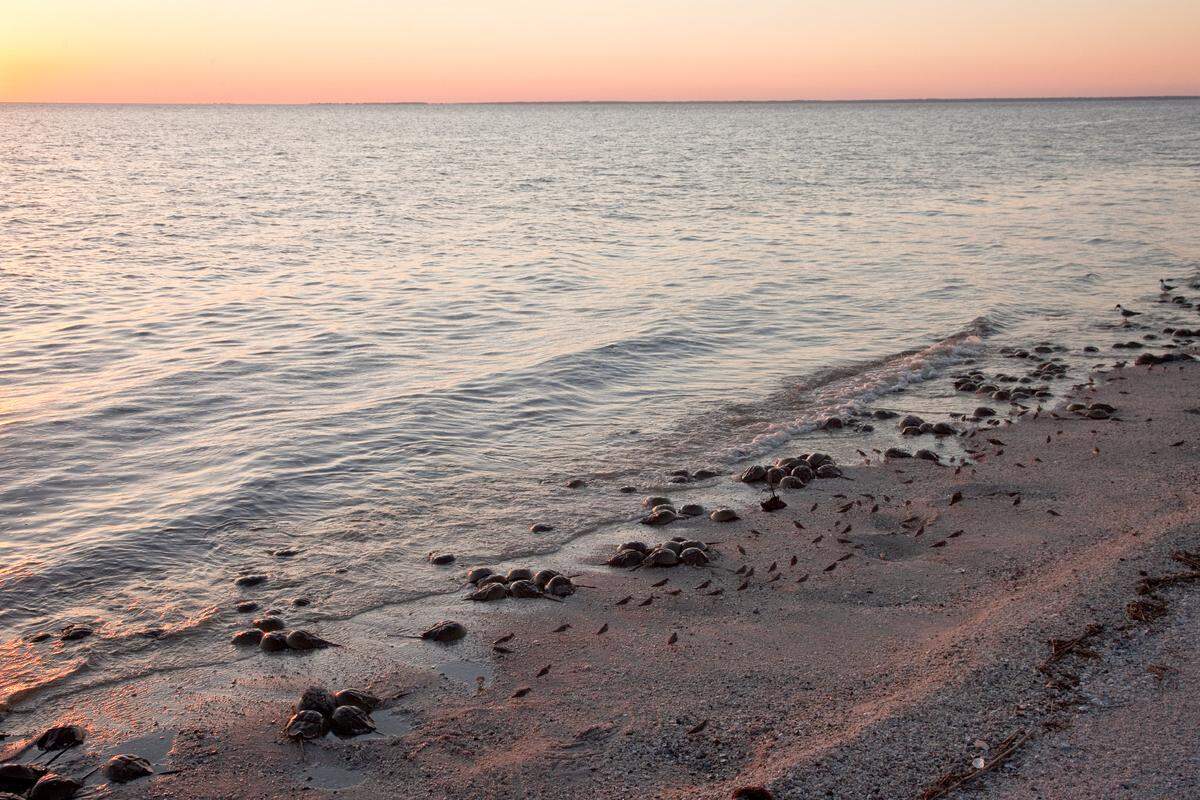
“The mindset, not just in the popular imagination but in conservation biology, is that they’re endangered and the reason they’re endangered Is Delaware Bay,” said Senner. “What’s been happening in Delaware Bay is that horseshoe crab numbers have been over harvested. So when we found that more than 40% of the estimated population is stopping here in South Carolina, and that many of these birds that are stopping here in South Carolina aren’t going to Delaware Bay, that just was this real almost 180 in my head.”
More conservation efforts have to be focused in this state, Senner said the research indicates. As the population of remaining birds shrinks, seemingly small events can lead to quickening spirals of even further decline until one event could knock them out completely. One year, it could be a hurricane. Another year, it might be disease.
Or it could be the removal of access to their favorite food, the eggs laid by horseshoe crabs.
So strong were the team’s findings in bolstering the call for more wildlife protections that Senner rushed to publish the article on a popular pre-print website over the weekend, said the USC professor, because he hoped those in power could consider it before making decisions about the harvest.
“We wanted to make sure that all of the facts were out there about this species linked to horseshoe crabs,” he said. The article has also simultaneously been submitted for publication by the peer reviewed journal, Wader Study.
If South Carolina is to increase protections to the levels of other states where the birds have previously been known to prefer, it will need to do more. It has been years since the Palmetto State approved a regulation that significantly limited the take of horseshoe crabs. In the early 1990s, a law was passed that prohibited the crabs from being sold as bait. In 1996, South Carolina closed Otter to horseshoe crab harvesting. Since then, though other states have at times implemented restrictions like prohibiting female crabs from being taken off beaches, in South Carolina, that hasn’t been approved.
The harvest here has barely been curbed. Instead, it has exploded.
Over the past five years, from the 2017 season through 2021, the DNR has granted 53% more permits to harvesters, confirmed Mel Bell, Director of the Office of Fisheries Management, in emails with The State. The harvesters who have the permissions typically use teams of fishermen, one of the 26 permit holders from last season confirmed to a reporter. That means the real number of harvesters taking crabs from the coast is likely far higher than those two dozen listed on paper.
“I don’t think there’s any balance whatsoever,” said Christian Hunt, a Southeast representative for the nonprofit, Defenders of Wildlife that is also suing DNR and Charles River. “Three decades have passed and DNR has not enacted a single tangible measure to prevent the collapse of the horseshoe crab.”
South Carolina is unique in its leniency for another reason: It is the only state in the country that allows fishermen to detain thousands of crabs in massive containment ponds during their time for reproduction. Since the environmental groups sued the DNR and Charles River labs over that in January, the fight has spilled over from the courtroom to the court of public opinion.
More blue blood on the battlefield
The decades of minimal restrictions in South Carolina have had one clear beneficiary: the out-of-state company that makes money off the blood. The small business that used to bleed a couple thousand horseshoe crabs a year in the early 1990s is unrecognizable today. After Charles River bought that local operation, called Endosafe, the multinational has grown to be worth roughly half of the entire budget of the state of South Carolina.
A lawsuit that curbs the company’s easy access to animals does the conglomerate no favors. On March 7, Charles River’s lawyers asked the judge to dismiss it. They made one central point: “Defenders of Wildlife offers no allegations about what specifically it has done to investigate, research, educate, or advocate beyond filing the instant lawsuit, and it does not link any of those alleged expenditures to actions of Charles River, as opposed to some other third party.”
The nonprofits weren’t the right people to sue, Charles River lawyers seemed to imply, and Charles River wasn’t the right group to be sued. Some other thing could be responsible for the damages South Carolina wildlife was suffering.
On Tuesday, Hunt emailed a public report to DNR Director Robert Boyles, a slew of other high-level DNR directors and some of the state’s prominent nonprofits. It suggests the opposite is true.
He advocated that DNR immediately change how it permits the horseshoe crab harvest. Hunt offered four initial recommendations for how to do that: Significantly restrict the harvest, clearly indicate to fishermen where they’re not allowed to go, conduct better research on the animals and prohibit containing crabs in ponds. His fifth recommendation directly connected the harvest to only one company. The agency should immediately cut all financial ties with Charles River, he concluded.
The suggestions were supported by an archive of data. In all, the pamphlet is 28 pages long, including more than 100 citations of public records requests, official wildlife analysis dating as far back as 1857, and dozens of old science and newspaper articles. Three investigative articles, published by The State in 2021 and 2022, were cited 16 times.
The pamphlet also shared news of its own.
Since at least 2002, scientists at the DNR have been repeatedly warning the agency within their research that an “unchecked” horseshoe crab harvest could lead to the declines in crab and shorebird populations now being reported across the coast. By 2012 and again in 2019, government scientists started noting in the pages of their science reports that a “worrisome” shrinkage of wildlife populations had begun and urged for sensitive areas to be protected. But “public acknowledgments of declines were prohibited,” the report states.
All the while, the number of horseshoe crabs harvested was growing exponentially. Fishermen removed fewer than 5,000 crabs in 1999, he noted. Last year, the Associated Press reported, they were taking as many as 150,000 animals. That means that the amount of horseshoe crabs taken from South Carolina increased by a whopping 2900% in less than 25 years.
But instead of heeding warnings from staff, DNR leadership catered to the biomedical lab paying its bills instead, the report charges. Every year, Charles River pays the DNR about $1.5 million to rent Morgan, or ‘Monkey,” Island, an amount that makes up almost 20% of the revenue of the division involved with setting restrictions for harvesters, The State first reported in 2021.
The pamphlet notes that those at the highest levels of leadership at the agency knew harvesters working for Charles River had poached crabs from off-limits islands across the coast. But the agency kept granting the rule breakers new permits.
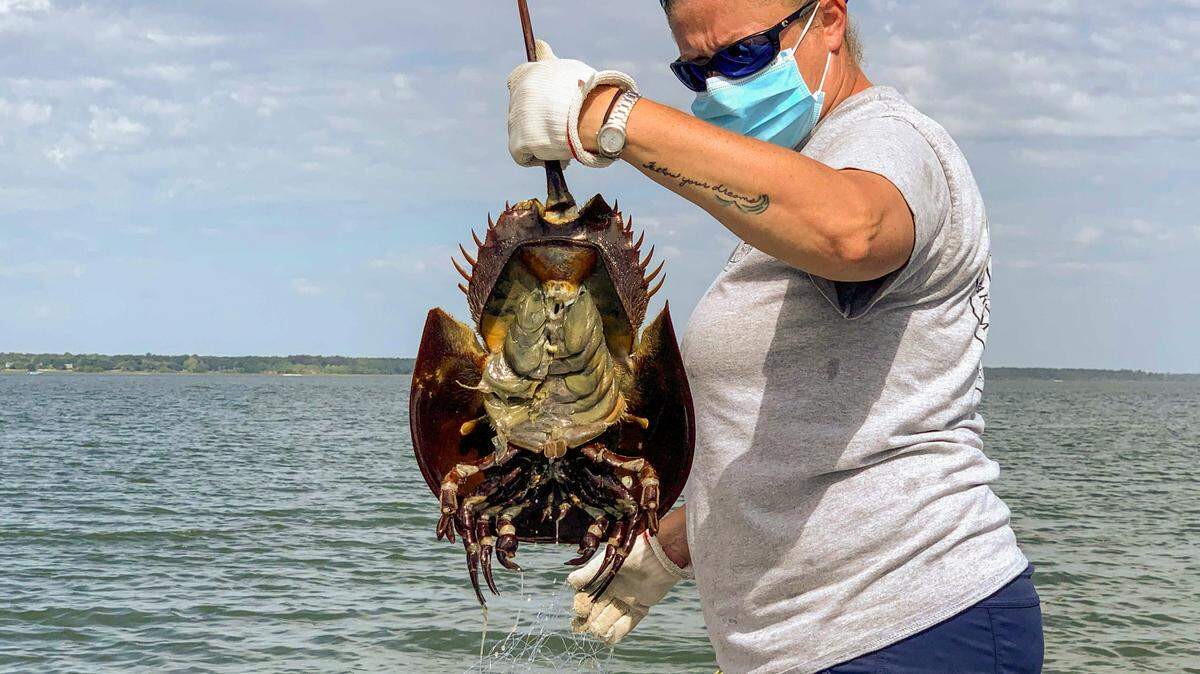
Dotted throughout the report, too, are never-before-published photos that show fishermen breaking the best practices rules for harvesting that Charles River, the agency and fishermen themselves have repeatedly claimed they’re instructed to follow.
“We’ve been encouraged not to use the tails,” one fisherman told The State in 2020. “We might injure them, keep them from being able to flip themselves over.”
Harvesting the crabs is often a rough and dangerous job, he explained. It’s not just that fishermen have to scan everywhere from oyster shell bottoms, marshes, creeks and beaches to find the animals. The crabs meet in big numbers to mate in the dark, and only under certain conditions. The tide has to be high and the moon has to be full.
“It doesn’t take a rocket scientist to figure out that you only have a few nights to collect the crabs,” he said.
But regardless of those time limits, South Carolina law requires that horseshoe crabs “be handled so as to minimize injury.” In the photos published in the report, harvesters are pictured grabbing the animals by those same tail-like telsons known to cause the animal harm if broken.
If the conflicts of interest, hushing of scientists, poaching and animal injury that Hunt claimed in the report continues unchecked, not just the horseshoe crab and the red knot, but some of South Carolina’s most important industries could suffer, he said. He sees consequences for tourism and the other fisheries that depend on an abundance of wildlife, since so many other species rely on a healthy marine population.
But it’s the people of South Carolina that Hunt believes stand to lose the most if the DNR doesn’t restrict the harvest by implementing his five recommendations and keeping the islands of the ACE Basin protected.
“I want to be able to take my kid out and see horseshoe crabs spawning and migratory shorebirds,” said Hunt. “I think that if the DNR continues on the track that it’s on, they are going to ultimately deprive South Carolinians of that opportunity.”
This story was originally published March 29, 2022 at 1:40 PM with the headline "As calls rise for horseshoe crab harvest limitations, SC agency may allow more ‘pillage’."
%20(1).jpg)