Vaccine testing is changing. Why is this $13B lab still bleeding SC horseshoe crabs?
READ MORE
Charles River Labs & the SC Horseshoe Crab Harvest
Blue blood from horseshoe crabs has helped make vaccines safe for years, but experts say the multinational company harvesting the crabs in South Carolina is misleading the public about its environmental impact and the synthetic alternatives that exist.
Expand All
Horseshoe crabs are rarely seen above water alive. After appearing on the planet about 445 million years ago, the stern-looking arthropods have held on through each of the world’s five mass extinctions that wiped out nearly all of their contemporaries, including the dinosaurs, by spending most of their time crawling on the bottom of the ocean.
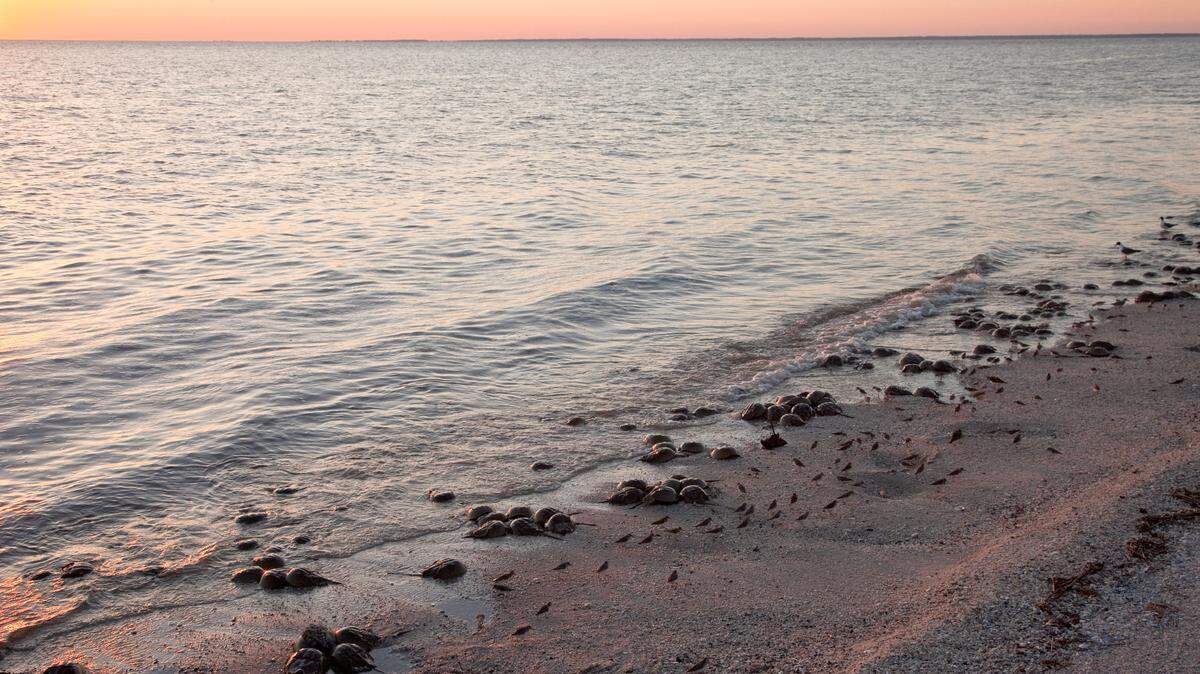
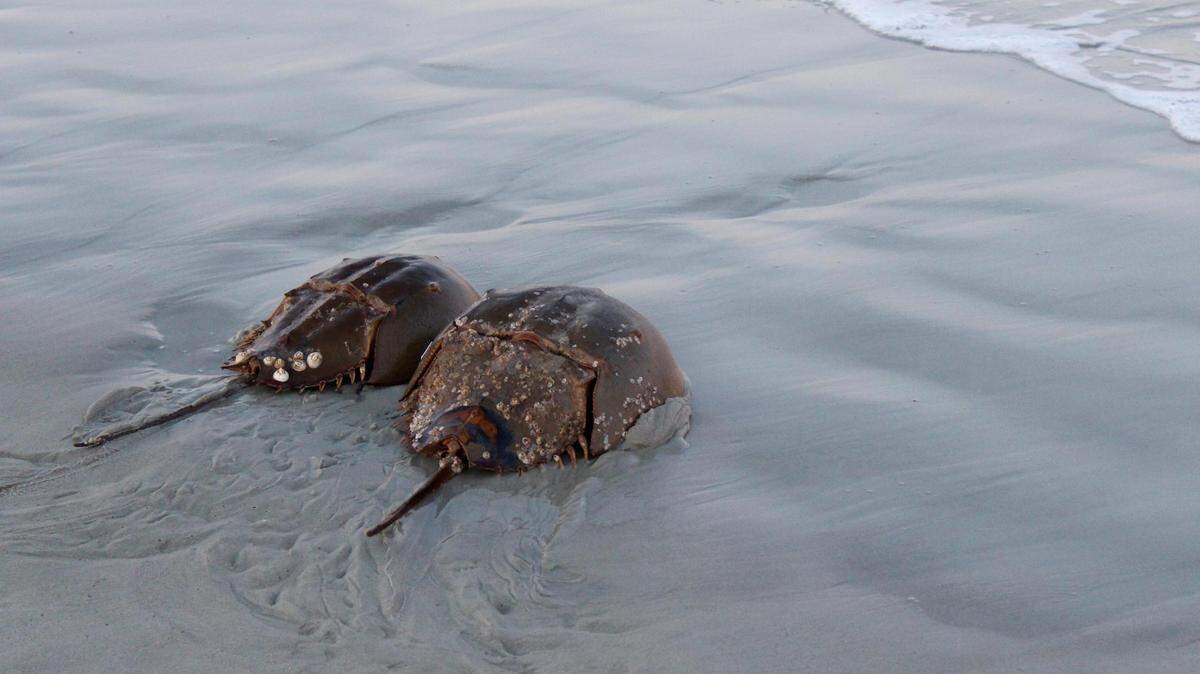
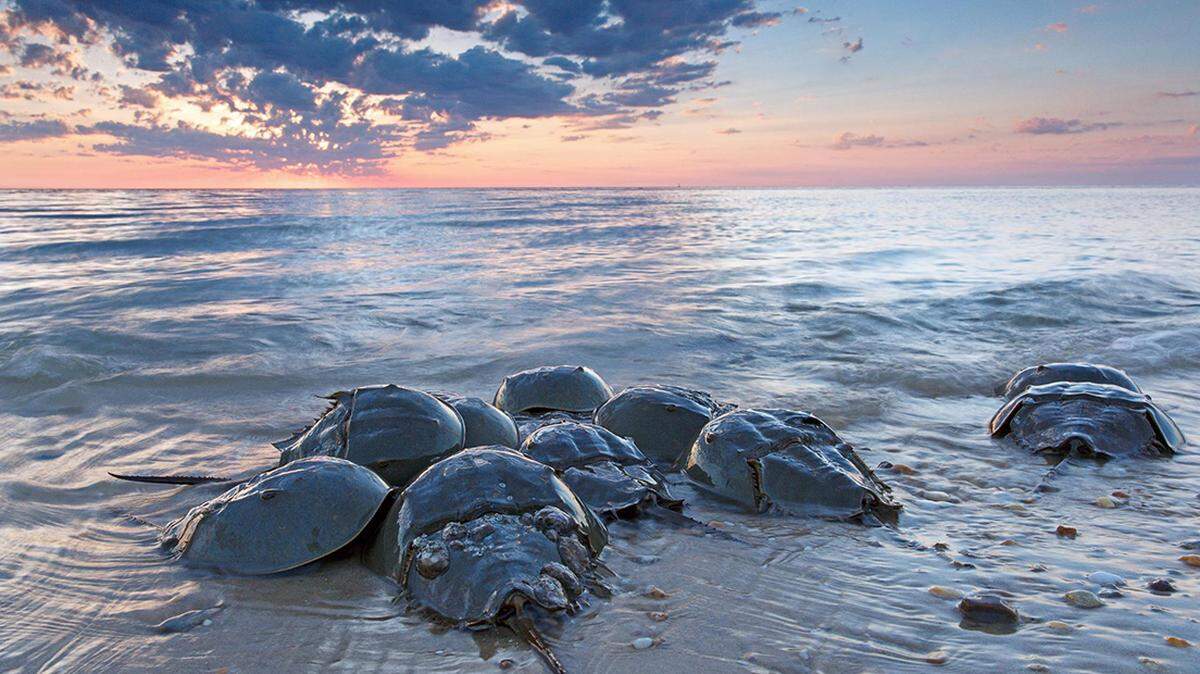
But during the spring and summer months, often under the cover of night, horseshoe crabs rise from the sea floor to lay and fertilize their eggs in huddled masses on the beaches of the S.C. coast.
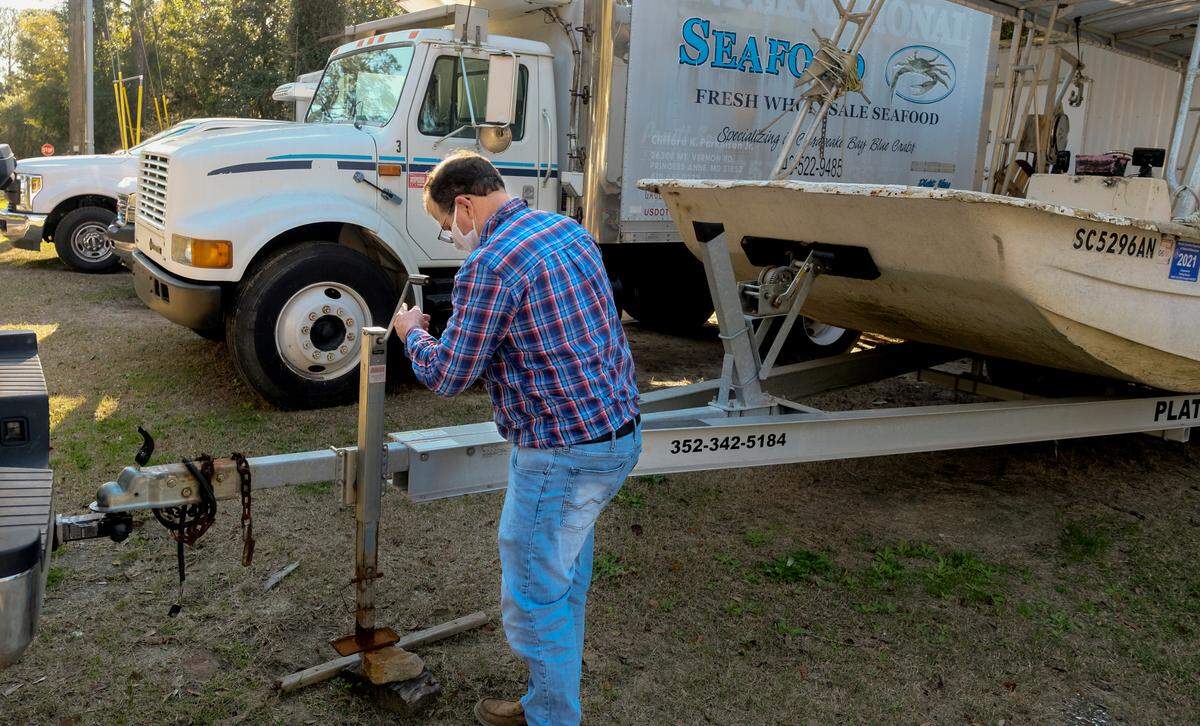
“It’s a huge spring orgy,” said Jerry Gault, a second generation fisherman from Beaufort who collects the animals while they’re spawning for Charles River Laboratories. “Forty-five minutes before the high tide, the crabs start coming up. Then it’s a race to get them in a boat.”
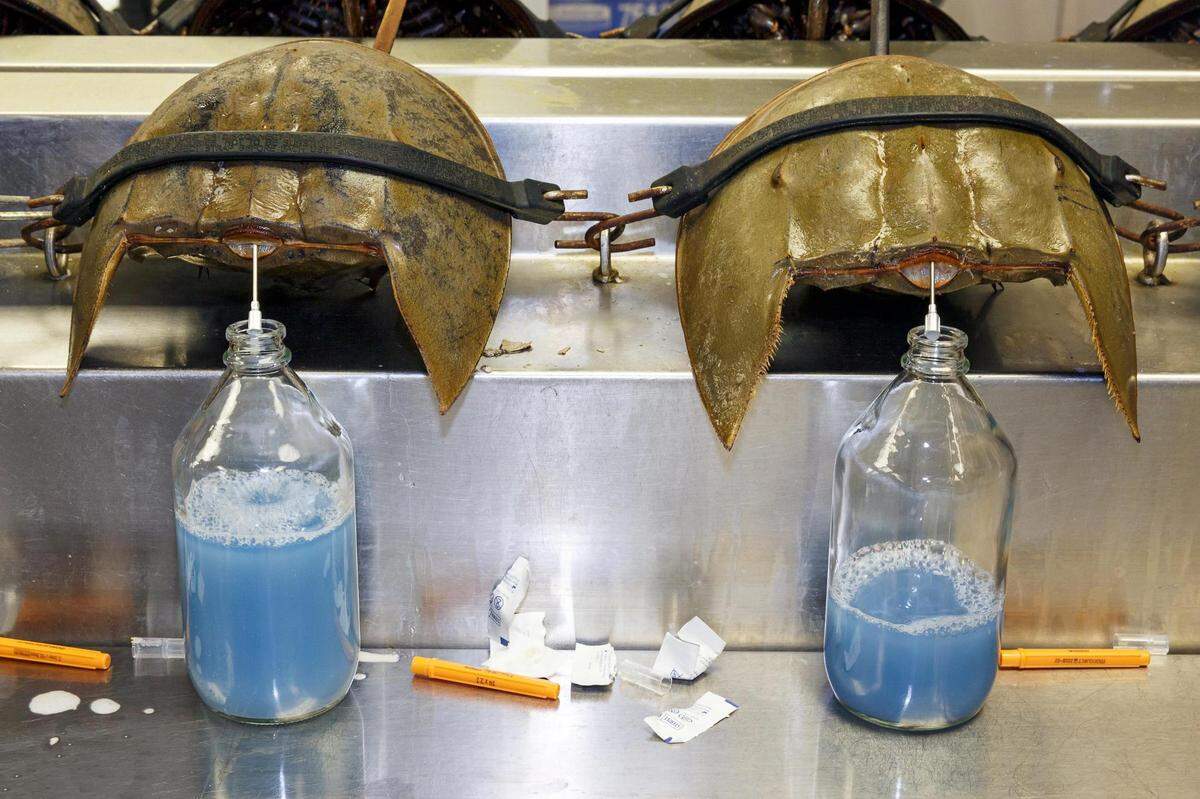
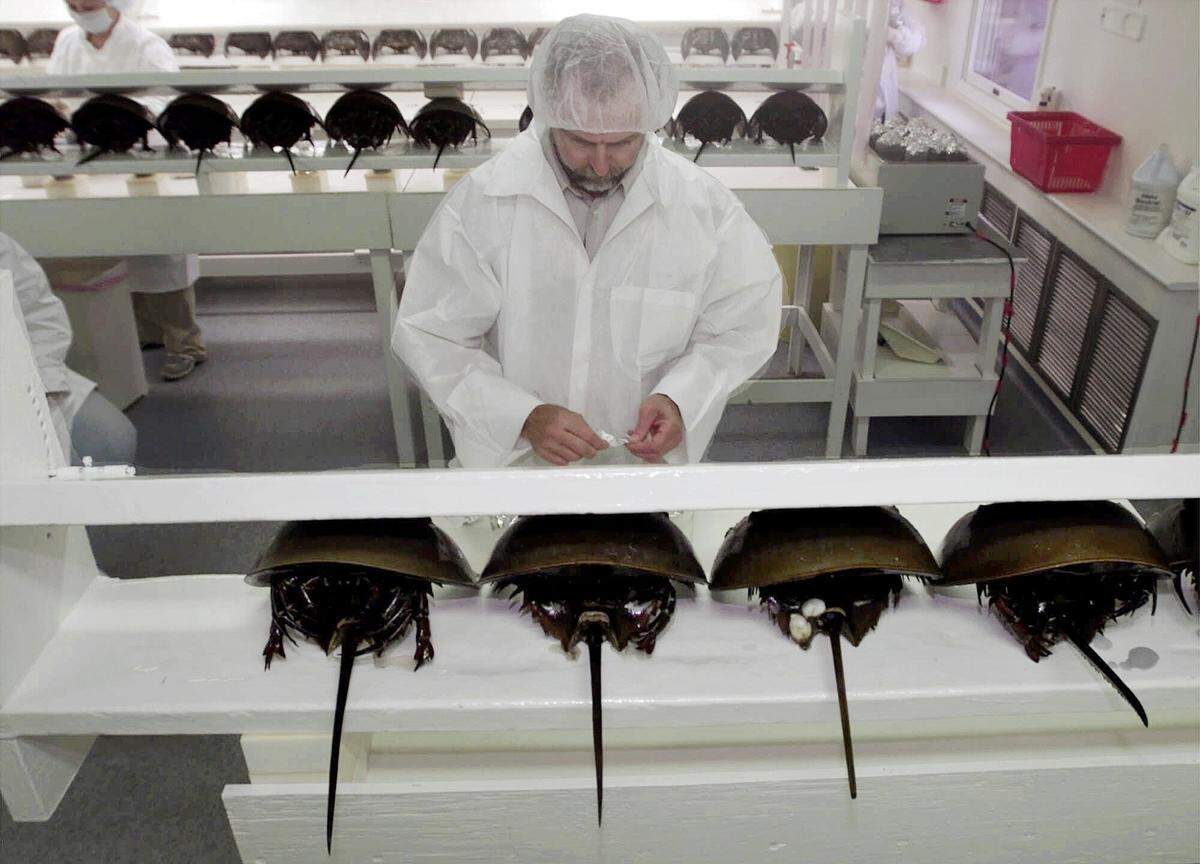
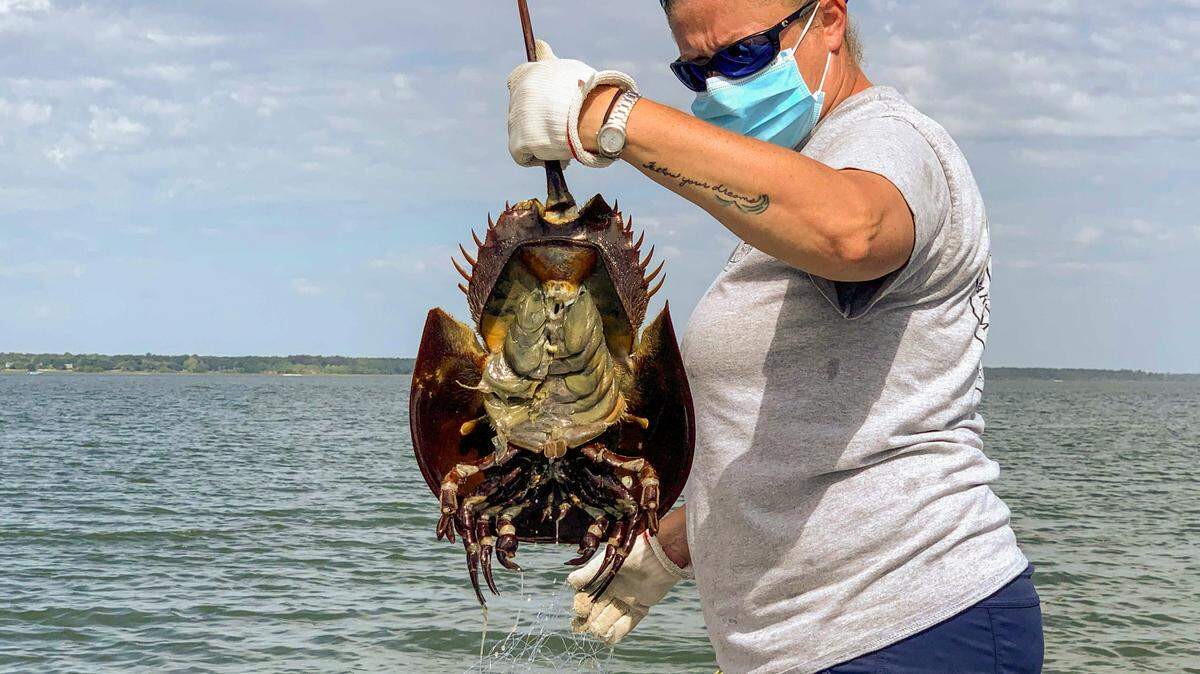
Charles River, the only company permitted to purchase the animals in South Carolina, is after their blood. Copper-based and colored light blue, the fluid that runs through their hard bodies is exceptionally good at detecting a bacterial toxin that can cause organ failure or death in humans. For almost 30 years in a facility in Charleston, Charles River has bled the horseshoe crabs, then sold a test for contaminants using the blue blood called LAL, named after the species that lives along the Atlantic, Limulus polyphemus.
Pharmaceutical companies in America use LAL to ensure drugs and devices that must be sterile, like the coronavirus vaccines, are free of the toxins. But companies in Europe and Asia have switched to using a synthetic copy of the ingredient that some scientists say works just as well or better. Since it’s made in a lab, the synthetic, called recombinant Factor C, or rFC for short, doesn’t require horseshoe crabs to be captured and bled.
“It is the horseshoe crab protein, it’s just made by a different mechanism,” explained Jay Bolden, a senior biologist at American pharmaceutical giant, Eli Lilly. “We know that rFC is equivalent to or superior to LAL.”
But in South Carolina, where horseshoe crabs grow larger in size than almost anywhere else in the country and nest along a stretch of beaches from Charleston’s Kiawah Island to Hilton Head’s Calibogue Sound, Charles River is clinging to the old industry and standing in the way of the new one.
In the process, the company worth $13 billion has for years presented information to the public that experts say has been misleading and sometimes inaccurate, an investigation by The State Media Co. shows. Never-before-reported emails reveal Charles River knew that harvesters were illegally taking horseshoe crabs from off-limits islands in a S.C. wildlife refuge, and research in previously confidential state documents indicates the animals may be dying at a higher rate after bleeding than what Charles River has claimed. The company’s business may have been supported by its oversized influence in groups meant to regulate the industry, conservationists believe.
Representatives for Charles River have told the U.S. Pharmacopoeia, the group in charge of setting standards for ingredients, that it deserves credit for the survival of horseshoe crabs.
“Without the protection of the biomedical industry, these prehistoric creatures would surely become endangered, if not extinct,” wrote a representative from Charles River in a 2019 letter it sent to the U.S. Pharmacopoeia.
Others believe the opposite is true.
“Why are we using a wild animal extract when we don’t need to?” asked Ryan Phelan, the executive director of Revive and Restore, a nonprofit that advocates for biotechnology and conservation. “It’s like using whales for lamp oil, it’s like using pigs for insulin.”
For three months, The State spoke to dozens of experts to understand the details of the business at the cusp of a tipping point, and obtained documents from the S.C. Department of Natural Resources and the Atlantic States Marine Fisheries Commission through open records requests.
The information indicates something different than what Charles River has suggested. The reality is wild like the Lowcountry that supports the company. It touches not just on the horseshoe crabs that help rework the marine soil and provide food for shorebirds, fish and crustaceans, but also on the fate of a threatened migratory visitor, the legacy of a famed island of monkeys and a slice of an industry worth more than half a billion dollars.
Suppressing the crab-safe synthetic
Representatives from Charles River have said that more than 80 million LAL tests are performed annually at a value of over $500 million, and that the company makes the most in the industry.
“We were fifth in a field of five when we started, and now we’re the number one provider of this technology,” said John Dubczak, an executive director for Charles River based in South Carolina.
Though the company has tried to make its own synthetic equivalent to LAL, Charles River has been unsuccessful at manufacturing something that works as well as its blue blooded product, Dubczak indicated.
That’s part of the reason why the company has become one of the main antagonists to the synthetic innovation, believes Dr. Lawrence Niles, a wildlife biologist who co-leads the national Horseshoe Crab Recovery Coalition from New Jersey and has been involved with animal conservation projects for more than 40 years.
“They have a lot to lose from switching over to rFC,” Niles said.
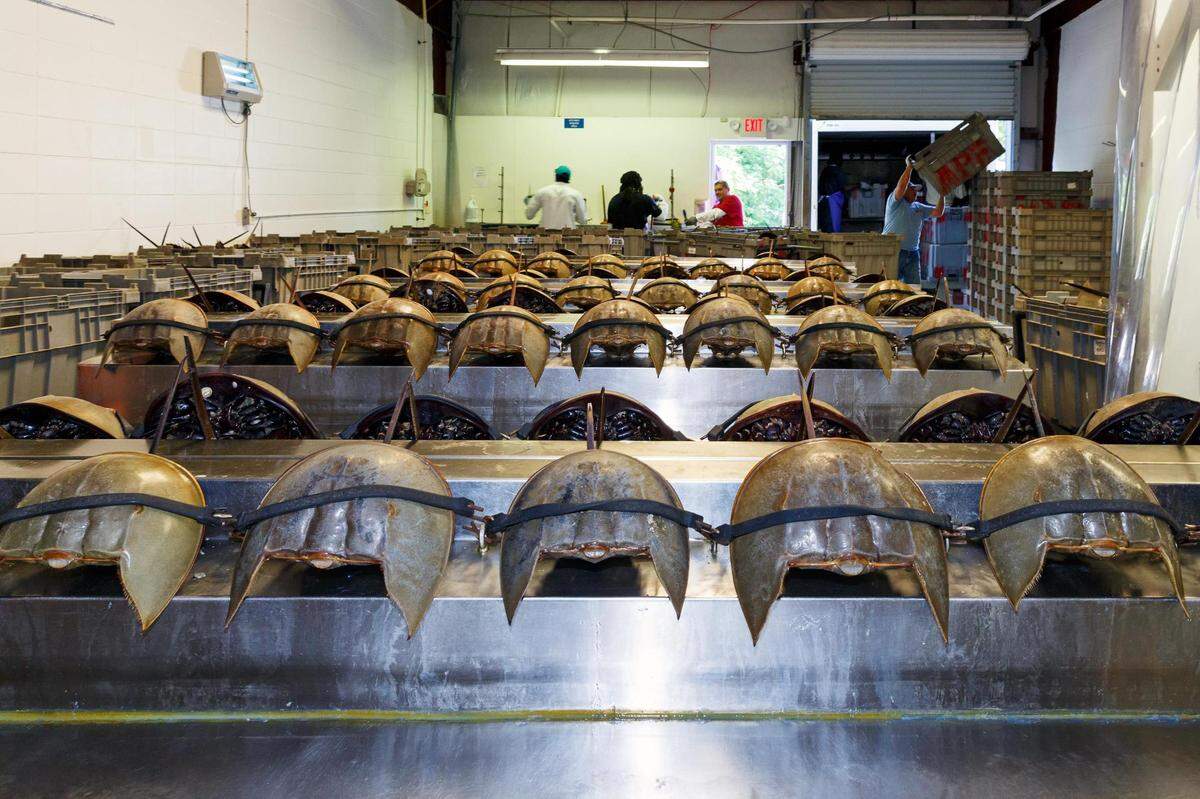
Charles River’s statements about the synthetic — a technology first invented over 20 years ago in Singapore and already approved in Europe, Japan and China as an equivalent to LAL — have indicated the company believes it doesn’t provide for a test as effective as the natural one, and more research is needed to prove it does.
“Our position is that this is very exciting, but it requires more development,” Dubczak said.
Last year, the company hired a lobbyist based in Washington D.C. to pressure the government about its opinions on the topic.
“Speedy adoption should not be viewed more favorably than certainty of patient safety,” Charles River urged the U.S. Pharmacopoeia in its 2019 letter.
The efforts seem to have paid off. Half a year after it received Charles River’s letter, the U.S. Pharmacopoeia announced it was canceling a proposal expected to eventually grant the synthetic equivalent status to LAL in America. The decision was “based on stakeholder comments and in accordance with USP’s public process for standards development.”
The group has clarified it is supportive of investigating the use of rFC and may publish a chapter about it later, but that it is taking time to consider the synthetic since “tests using rFC do not benefit from the same level of real-world evidence as LAL.” A committee is expected to vote on a related issue in March.
Some scientists said the information Charles River provided to regulators was misleading.
“When they present data, there is always a spin,” said Dr. Jessica Ponder, a toxicologist at Physicians Committee for Responsible Medicine, a nonprofit based in Washington, D.C. “They want to establish a paradigm where LAL is the gold standard purely on precedent, which is not scientific. The oldest method is not the best method in most of science.”
The pandemic has heightened the urgency to approve the synthetic as an equivalent to LAL, Ponder believes, since there’s a growing demand for vaccines and antibody drugs that have to be tested for contamination.
“I don’t feel safe counting on a limited resource for all of our response to COVID when anything could happen to it,” she said.
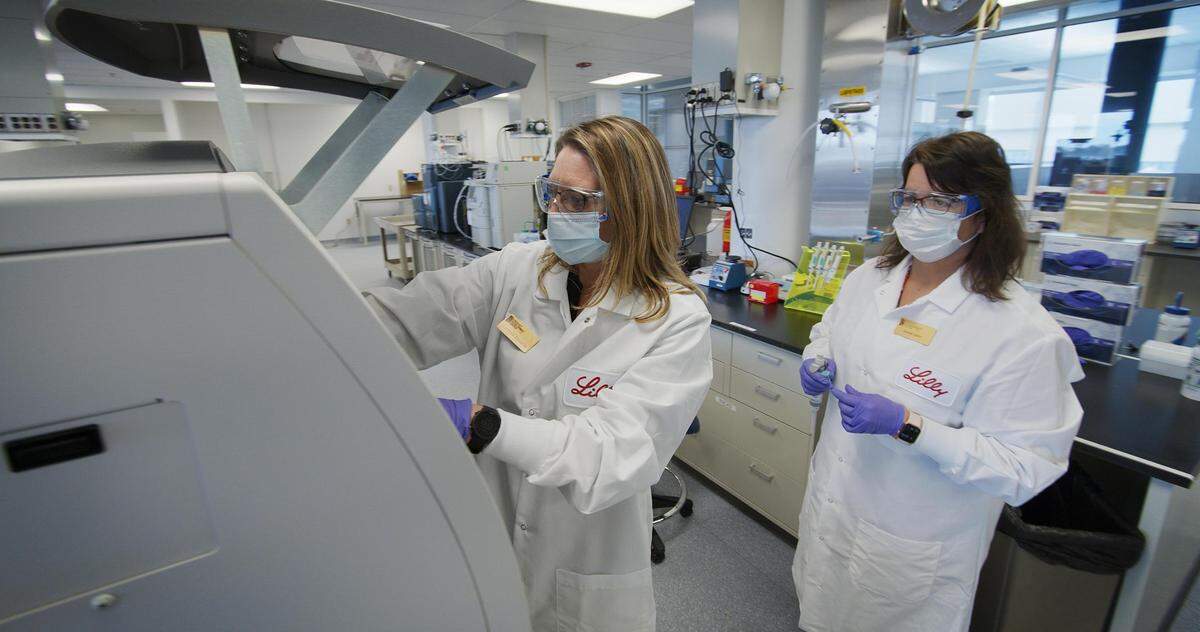
The main exception to that is Eli Lilly. In 2016, the company became one of the first in America to start obtaining special permission from the Food and Drug Administration to use rFC when making new products.
Last year, the agency gave Lilly emergency use authorization for a COVID-19 antibody drug, bamlanivimab, which was screened for contamination using the synthetic. After former President Donald Trump received another antibody treatment while infected with COVID-19, his administration agreed to purchase the first doses of the Lilly medicine to ensure it would be available for sick Americans.
“For Eli Lilly, it’s cost favorable,” Bolden said. “You can make a more consistent product batch to batch than you can from pulling animals out of the ocean.”
He’s confident about the safety of the synthetic ingredient the company has trusted for years.
“We’re well over 60,000 samples in, we’ve looked at close to 80 different products at least,” Bolden said. “All the data shows comparability.”
Dubczak believes the Lilly decision to switch to rFC is a mistake, and Dr. James Cooper, who founded the Charleston facility in 1987 and helped pioneer LAL development, said the groups advocating for the synthetic are just trying to gain their own part of the testing market.
In public comments submitted to the U.S. Pharmacopoeia last year, European pharmaceutical representatives were frank about their disapproval of the group’s decision that left America behind them, and about what they said was Charles River’s role in the delay.
Charles River had been “frightening the future potential user” of the synthetic, wrote a manager from Sanofi, a French multinational pharmaceutical company. The company’s evidence had resulted from flawed reasoning, he indicated.
A biologist from the Paul Ehrlich Institute, a German research institution for vaccines and medicines, made a similar remark. Data presented by Charles River had been “misinterpreted by Charles River and the USP as a sign of inferiority of rFC,” he wrote. “I feel USP wants to suppress rFC as long as needed for unknown reasons.”
Research conducted with the S.C. Department of Natural Resources shows Charles River is not only working to slow the approval of its competitor; it might have more of a negative impact on the horseshoe crabs it still bleeds than it has let on.
Not a harmless harvest, research shows
“The horseshoe crab blood donation is similar to human blood donation,” wrote Cooper, the Charleston facility founder, in a company publication last year. “The crabs are bled for a few minutes and returned to sea unharmed.”
Yet there’s a key difference between the bleeding of humans and horseshoe crabs: 15% of horseshoe crabs die because of the biomedical industry’s use of them, estimates the Atlantic States Marine Fisheries Commission, a congressionally approved compact of delegates from South Carolina and 14 other states. Other studies have put the death rate between 8% and 30%.
Some industry representatives disagree that the rate is that high, saying the science hasn’t always reflected the “Best Management Practices” the industry now uses to care for the animals.
Dubczak told The State in 2020 that “a very, very low percentage” of crabs die from the harvest in South Carolina.
Research conducted by and in collaboration with DNR scientists indicates something different.
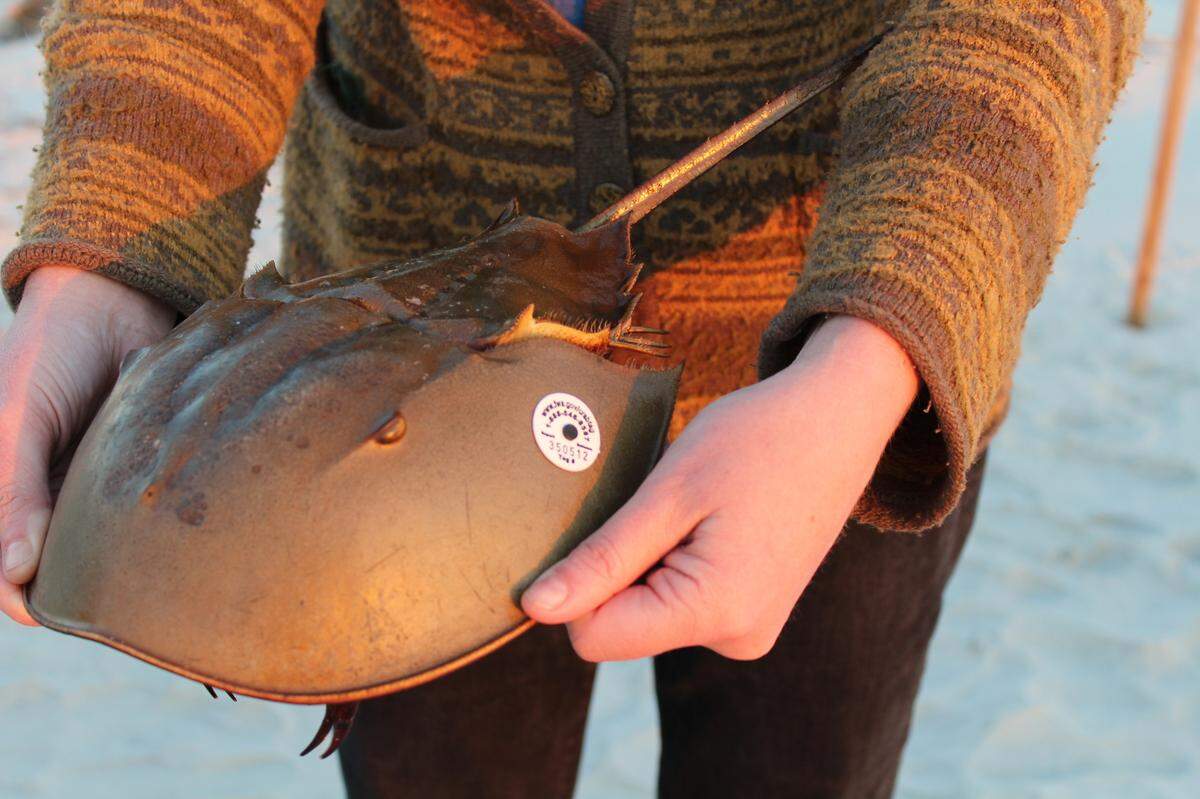
The animals are required to be returned to the ocean after they’re bled in the state, but more than half of their blood can be extracted first by biomedical companies that drain the liquid for up to eight minutes, research performed by a College of Charleston graduate student with funding from the DNR showed.
“Eight minutes is unofficially recognized as the maximum bleeding time across the industry,” confirmed a Charles River representative to The State. On its website, the company mentions it takes less than about a third of the blue blood.
Blood loss due to the extraction has been linked to horseshoe crabs moving less and more slowly after the procedure, and to their decreased ability to express the kinds of tidal rhythms that guide their behavior. But it’s not the only factor thought to weaken the crabs after they’re released. Stress of capture, being kept above water for hours when their homes are below, mishandling during harvesting and transportation, sun exposure and disorientation from being returned to a different spot from which they were gathered are also believed to eventually contribute to increased mortality.
In the Palmetto State, fishers are permitted to store horseshoe crabs they capture in natural ponds until they’re needed by Charles River, a practice that can restrict the animals from their typical spawning grounds during the only time of year they lay and fertilize eggs.
“It gives us a competitive edge,” said Gault, the Beaufort fisherman. “We can have a consistent supply for the lab.”
-2.jpg "Fumika Marsh 2016 (3)-2.jpg")
The College of Charleston research also mimicked the captivity conditions in South Carolina. The scientists found that horseshoe crabs kept in ponds deteriorated physiologically and returned to baseline blood levels slower after being bled, which could weaken their immune defenses in the long term.
And in a study conducted by DNR scientists in 2011, researchers determined that slightly more than 20% of horseshoe crabs tracked by the agency died within two weeks after they were bled by Charles River, records obtained by The State reveal. Just over 4% of horseshoe crabs observed that weren’t bled died in the same time frame — about five times fewer than those that Charles River used.
With the help of previously kept confidential records, The State was able to glimpse something of the impact those conditions might be having on the larger S.C. crab population.
The growing, but hidden, biomedical catch
The five labs collecting horseshoe crabs along the coast, including Charles River, that’s headquartered in Massachusetts, are now bleeding over half a million of the animals a year. That’s more than double their number in 2004, according to the ASMFC.
The American horseshoe crab species is listed as vulnerable and the overall population is decreasing, according to The International Union for Conservation of Nature. The ASMFC determined in a 2019 stock assessment report that the coast-wide abundance of horseshoe crabs was “likely in a neutral condition,” with some regions faring worse than others.
Mel Bell, director of the Office of Fisheries Management within the DNR, said the patterns of the industry at large are typically mirrored in South Carolina.
In fact, the harvest appears to have increased in South Carolina, too. Since five years ago, 41% more fishermen are now permitted to collect horseshoe crabs to be purchased by Charles River, according to figures provided by Bell.
But the status of the horseshoe crab population in the state alone — and the responsibility of the biomedical industry for it — is more difficult to pinpoint. Climate change and weather events are also known threats to the species.
In the 2019 ASMFC report, the authors wrote that horseshoe crab abundance in the Southeast region, which includes the Palmetto State, was in “a good condition.” That determination took into account information from other states in the area, however, none of which host commercial harvesters that bleed horseshoe crabs.
To find more precise information, The State obtained annual reports from the DNR and the ASMFC about the horseshoe crab harvest that did show density and abundance research specific to South Carolina, and would have revealed the exact number of animals being taken each year for the past decade from S.C. waters.
But there were obstacles in that as well: The amount of animals collected by Charles River and the number known to have died or to have become unresponsive were blacked out in each of the documents provided by the governmental groups.
State Sen. Ronnie Cromer, R-Newberry, who represents South Carolina as a commissioner in the ASMFC, defended the company’s right to have that information kept confidential to protect it from competition.
“I don’t know what it is either,” he told the newspaper.
Not everyone agrees that the privacy afforded the company benefits the public.
“Why the harvesting of public resources should ever be considered confidential business information is beyond me,” said Jason Rylander, a senior counsel at Defenders of Wildlife, a nonprofit focused on animal conservation.
The 2019 stock assessment mentioned the lack of transparency about biomedical data across the coast was getting in the way of the commission’s job.
“The inability to publicly show regional biomedical collection and mortality data and derivative stock assessment results presents a material constraint to fully explaining the stock assessment results,” wrote the authors. “Efforts should be made to improve data access and use however possible.”
But thanks to an unusual gap in the harvest in South Carolina, The State found indications of the company’s impact on the local population anyway.
When harvest stopped, abundance soared
The gap occurred in 2016, when a building in the Charleston facility on Wappoo Road was under construction. Charles River was expanding its space, Dubczak explained, so no permits for harvesting or possession of the animals were issued to anyone in South Carolina that year, documents obtained by The State confirm.
Before the construction, when Charles River was bleeding horseshoe crabs like it usually does, the 2015 annual report had noted some bad news. DNR surveys showed that density numbers for the population in deep water had continued to decline since 2011, though “the recent densities still represent a high level for the coastal survey,” the report stated.
But the next year, when Charles River did not bleed a single horseshoe crab from the state, the records show something surprising happened.
“The density of horseshoe crabs in 2016 was higher than the estimated density in 2015 and was the third highest since 1995, the first year of comparable data,” the authors of the annual report noted.
When Charles River returned to harvesting crabs like usual the following year, the density of the animals reverted to a depressed level similar to the one reported before.
Dr. Michael Kendrick, a marine scientist at the DNR, said that other factors besides the lack of commercial harvesting might have played a role in prompting the unusual spike, and that some variability in survey results is to be expected. He recommended consulting a second survey the agency conducts each year — this one a look at horseshoe crabs found on S.C. estuaries — to see if it revealed a similar pattern.
The survey results roughly matched. Horseshoe crab abundance numbers had been low since 2009, the estuary data show, but shot up in 2016. Abundance stayed high through 2017, then dipped back to more characteristically low levels by 2018, two years after Charles River returned to its regular business practices.
Given just one year off from the regular harvest, the abundance of horseshoe crabs in South Carolina appeared to soar — then sink when bleeding started again later.
Now, a lawsuit filed in the South Carolina District Court contends that some of the horseshoe crabs paid for by Charles River were taken by fishermen illegally. Though previously unreported emails reveal the company knew as early as 2014 that the federal government believed fishermen selling the animals to the company were violating regulations, an executive told The State he wasn’t aware of it.
Poaching crabs and endangering birds, nonprofit alleges
At midday on May 12, 2014, Dubczak received an email from the federal government.
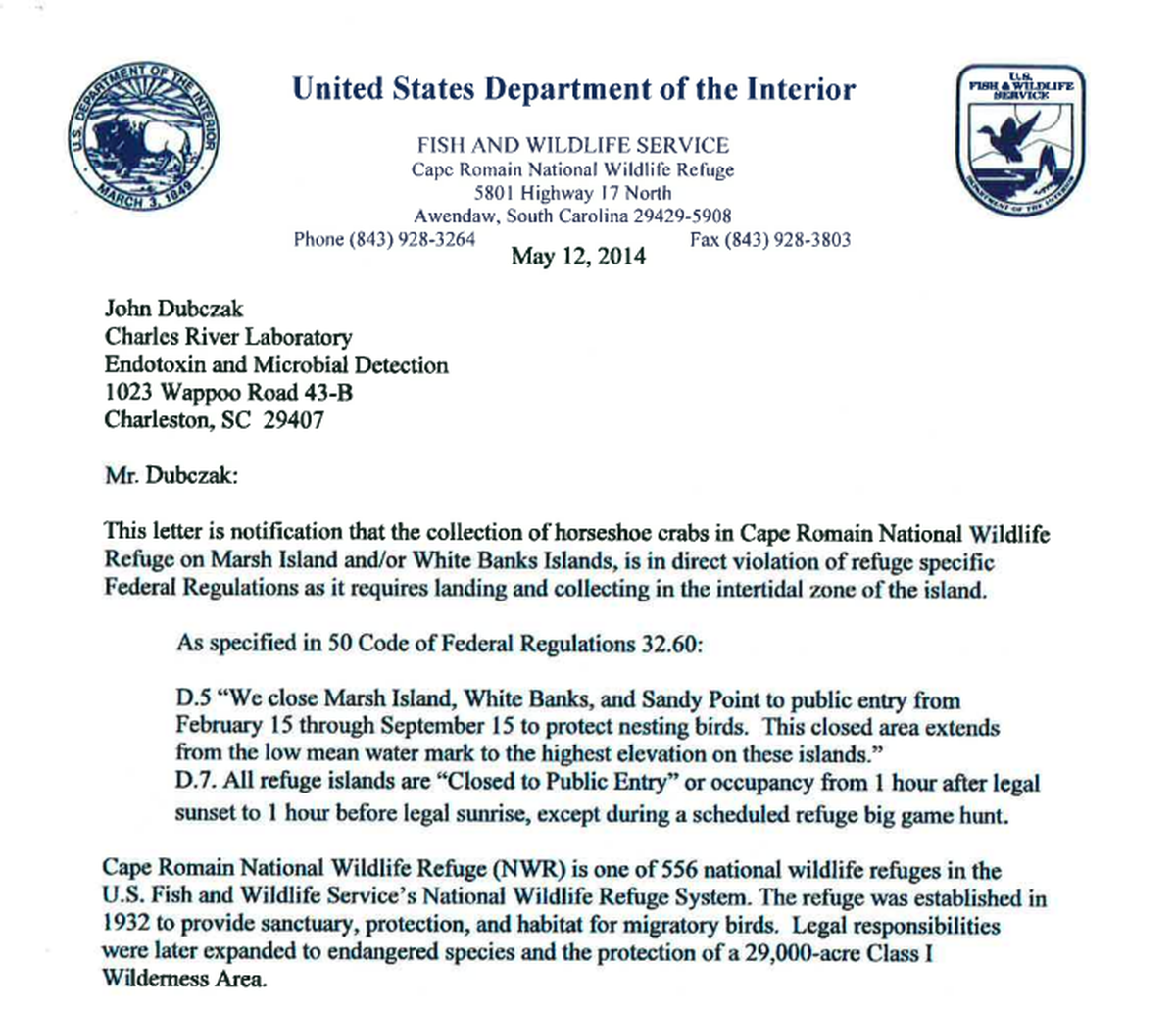
“This letter is notification that the collection of horseshoe crabs in Cape Romain National Wildlife Refuge on Marsh Island and/or White Banks Island is in direct violation of refuge specific Federal Regulations,” wrote Sarah Dawsey, then a manager at Cape Romain, to the Charles River executive.
More than half the size of the city of Columbia and located an hour north of Charleston, Cape Romain is a wilderness of salt marshes, barrier islands, beaches, maritime forests and creeks that was set aside in 1932 as a refuge for migratory birds to be managed by the U.S. Fish and Wildlife Service. Almost 300 different species of birds have since been recorded there, including the red knot, a threatened migratory shorebird whose numbers are decreasing.
.jpg "Original audubon illustration of endangered bird that eats horseshoe crab eggs (1).jpg")
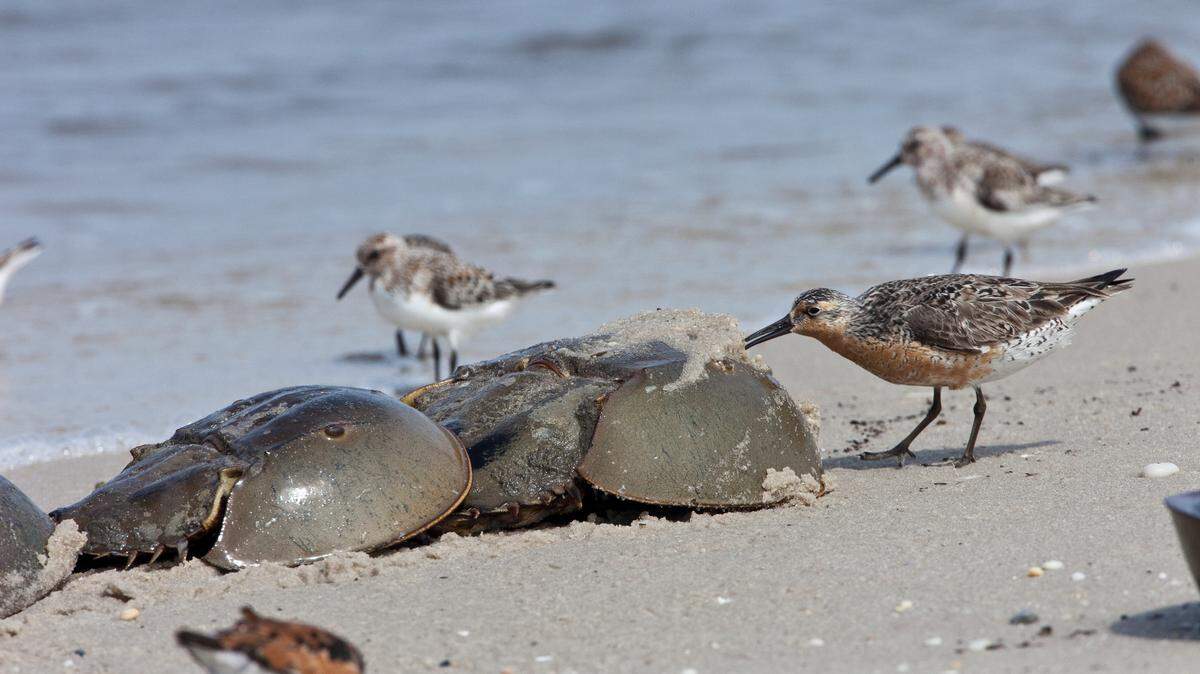
On its annual journey north from the bottom tip of South America to the Canadian Arctic where it breeds, the red knot often takes a break in the S.C. refuge to feed on the nutrient-dense eggs of horseshoe crabs.
The shorebirds aren’t just snacking. To adequately fuel the rest of their voyage, one of the longest in the animal kingdom, it’s estimated that a flock of 40,000 red knots would need to eat a whopping 16 billion horseshoe crab eggs in a stopover period, a DNR document reviewed by the newspaper states.
Their opportunity to feast may have been endangered by the illegal harvest of horseshoe crabs from Cape Romain’s closed islands, a lawsuit filed against the U.S. Fish and Wildlife Service by Defenders of Wildlife alleged in October. Though it sent a few letters, the federal government failed to adequately protect animals like the red knot by emboldening the illegal harvest of horseshoe crabs there, the nonprofit contends.
“The Service must suspend the harvest until it evaluates how it can proceed in a manner that no longer puts the refuge at risk,” said Lindsay Dubin, an attorney with Defenders, in a press release.
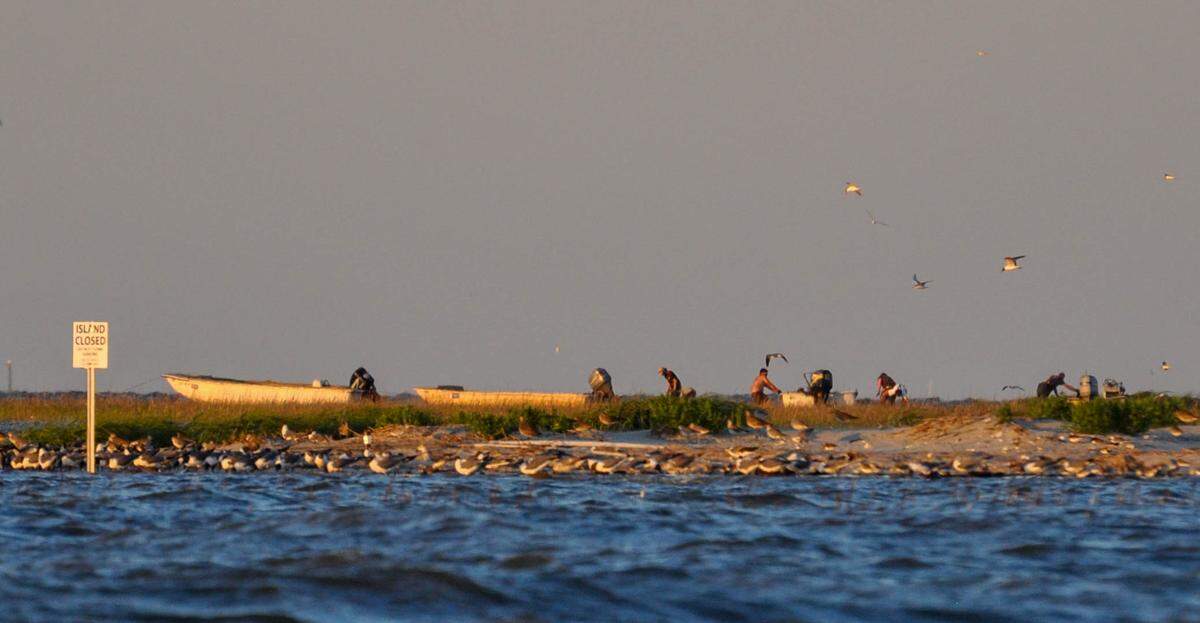
In her correspondence with Dubczek in 2014, Dawsey explained that illegal collection of horseshoe crabs had occurred on islands “vital for nesting seabirds and shorebirds, and for migratory shorebirds,” and mentioned that she had spoken previously about the regulations with Dubczak.
“This notification letter completes my efforts to ensure due diligence in contacting all parties involved in the harvest of horseshoe crabs in the Cape Romain National Wildlife Refuge,” Dawsey finished.
By the end of the afternoon, Dubczak had confirmed he received the message. “Thank you for the memorandum,” he wrote to Dawsey, before inviting her to visit Charles River’s facilities.
But when asked by a reporter this December if Charles River had been informed before that harvesters were picking up crabs from where they weren’t supposed to be collecting them, Dubczak said he didn’t know of any instance and denied liability.
“That’s just outside our responsibility,” he answered, after mentioning that fishermen are contractors and not employees — though Charles River pays for the horseshoe crabs brought to them by harvesters.
“That is more of a DNR or Fish and Wildlife issue, but it is something that we are not aware of,” Dubczak told The State.
His professed ignorance seems helpful for maintaining Charles River’s bottom line. Emails exchanged between Cape Romain staffers and published in the court record indicate that the refuge serves as a rich source of blue blood. Over three months of harvesting in 2014, fishermen brought Charles River 25,000 animals to bleed from the refuge, records show.
Potentially losing those profits as a result of the lawsuit may have changed the company’s perspective about what Dubczak characterized as Charles River’s previously uninvolved position. Less than two months after talking with The State, company lawyers asked permission for the corporation to intervene in the lawsuit.
“Charles River has significant scientific and economic interests in the harvest of horseshoe crabs from the Refuge,” they wrote on Jan. 17, 2021. Temporarily pausing the harvest in Cape Romain would “directly and adversely affect Charles River,” the lawyers noted.
Conservationists say the company may be empowered by its oversized influence on regulatory groups.
With regulators, leadership roles and a $15M lease
Over 20 years ago, the ASMFC determined it would consider management action if more than an estimated 57,500 crabs died as a result of only the biomedical industry working along the coast. The mark was first overstepped in 2007, and in 2019, the threshold was crossed by an estimated more than 43,000 dead crabs.
The executive director of the commission, Robert Beal, told The State that the management board hasn’t discussed taking responsive measures because the number of dying animals is relatively low. More than eight times as many horseshoe crabs were killed by the bait industry in 2019, he pointed out.
Another reason for the general lack of curtailing the industry by the commission may be the political influence of biomedical representatives on the group, indicated Niles, the wildlife biologist.
Though the LAL industry stands to benefit from permissive policies and favorable status reports, its employees have led the ASMFC’s horseshoe crab advisory panel for the past 15 years.
Cooper, the founder of the Charles River facility in South Carolina, served as chair of the group for 12 of those.
After he retired in 2018, a high ranking employee of another company that bleeds crabs in Maryland, Allen Burgenson, assumed the position. When he steps down soon, Burgenson plans to be replaced by the LAL production manager of the company that bleeds the crabs in Massachusetts, Burgenson said.
The former and current panel chairs indicated they’ve been involved with the advisory panel because they care about the well being of the species.
“I’m on the panel and I work for Lonza, not because I work for Lonza,” Burgenson explained, referring to the Swiss biotechnology company, Lonza Group, that owns the bleeding facility in Maryland.
Their representation is still related to the fact that wealthy corporations that bleed horseshoe crabs for profit pay their salaries, Niles said. Other people, like recreational fishermen, are less able to afford to attend meetings and share opinions, he mentioned.
“The bleeding companies are the ones doing all the talking,” Niles remarked. “That’s what we’re dealing with: A lot of money, a lot of influence on politics, very little responsibility for the resource.”
That influence extends to the DNR in South Carolina, indicated Christian Hunt, the Southeast representative of Defenders of Wildlife.
When speaking of its stewardship of the environment in its publications, spokespeople for Charles River often mention that Cooper worked with the DNR to write legislation in the early 1990s that made selling the crabs for anything but biomedical use within South Carolina illegal. The result was a rule that prevented horseshoe crabs from being used as bait to catch other animals, which was a contribution to the species, Cooper said.
“A concern by many marine biologists is that the need for LAL prevents expansion of the bait industry, which has 100% mortality,” Cooper wrote to The State in an email.
But the rules were also self-serving, Hunt believes.
“By drafting the legislation, Charles River really granted themselves a monopoly over the species and cut the public out of the process,” he said.
After the 1990s, Hunt added, the connection between the agency and Charles River has grown into a “financial entanglement.”
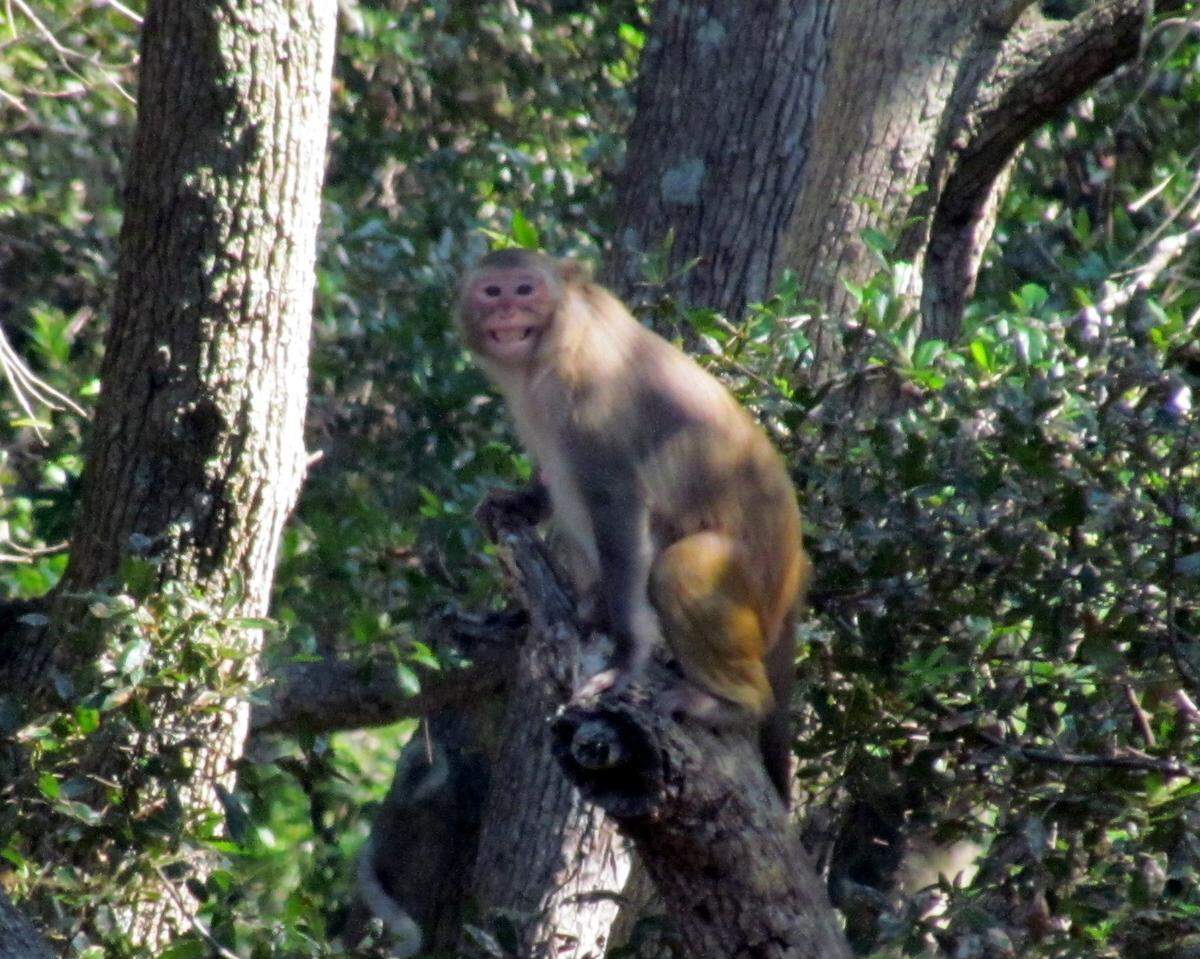
Documents obtained by The State show that since 2007, Charles River has paid the agency over $15 million to lease hundreds of acres of land on Morgan Island, a DNR-owned island in Beaufort County that’s home to thousands of rhesus monkeys. Charles River pays the agency to rent the land and take care of the approximately 3,500 Indian-origin primates until they’re needed for research by government scientists.
“The lease of Morgan Island and permitting of horseshoe crab harvest are unrelated,” said Phillip Maier, the deputy director for Marine Resources at DNR and an S.C. commissioner in the ASMFC.
The money DNR earns from the only company that uses horseshoe crabs commercially in the state amounts to a large portion of the Marine Resource Division’s income. In the 2016 fiscal year, the Morgan Island rent made up almost 20% of the group’s revenue. The same division issues permits to horseshoe crab harvesters, who collect the animals for Charles River to bleed.
And the state agency has now been informally looped into the Cape Romain lawsuit that involves its billionaire tenant. Lawyers for the federal government responded to the complaint filed by Defenders of Wildlife by arguing that the case should be dismissed as they believe the state, not the U.S. Fish and Wildlife Service, should be held responsible for any illegal harvesting in Cape Romain. They say it’s the state that has the right and responsibility to authorize harvesters.
Defenders of Wildlife opposed the Service’s motion to dismiss on Feb. 1. Lawyers for the Service did not respond to a request for comment from The State. A DNR spokeswoman said the agency could not comment on active litigation.
As the legal battle continues, and while the U.S. Pharmacopoeia deliberates on the equivalency of the blue blood test to its synthetic version, Audubon South Carolina plans to monitor horseshoe crabs on local beaches with help from volunteers during the upcoming spawning season.
The nonprofit has trained residents before to protect shorebirds like the red knot, the migratory bird that gorges on horseshoe crab eggs on its way to the Arctic.
“They stand between where the people want to go and where the birds need to nest,” said Nolan Schillerstrom, an associate at the nonprofit.
Schillerstrom hopes that this year, the group can instruct volunteers to look out for horseshoe crabs too, reporting what they see while walking near the surf, like where the animals lay their eggs.
It’s support the horseshoe crab didn’t have about 250 million years ago when the worst of the mass extinctions events nearly emptied the oceans of life. But the animals didn’t have negative interference from humans then, either.
“We’re the loudest advocates for the horseshoe crab, we really are,” Dubczak told The State.
Hunt disagrees.
“The idea that this species needs Charles River, that’s just ludicrous,” the Defenders of Wildlife representative said. “The only thing that this crab needs is to be left alone.”
This story was originally published February 11, 2021 at 5:00 AM with the headline "Vaccine testing is changing. Why is this $13B lab still bleeding SC horseshoe crabs?."
%20(1).jpg)