Pharma lab seems to contradict itself, science in fight to bleed SC horseshoe crabs
READ MORE
Charles River Labs & the SC Horseshoe Crab Harvest
Blue blood from horseshoe crabs has helped make vaccines safe for years, but experts say the multinational company harvesting the crabs in South Carolina is misleading the public about its environmental impact and the synthetic alternatives that exist.
Expand All
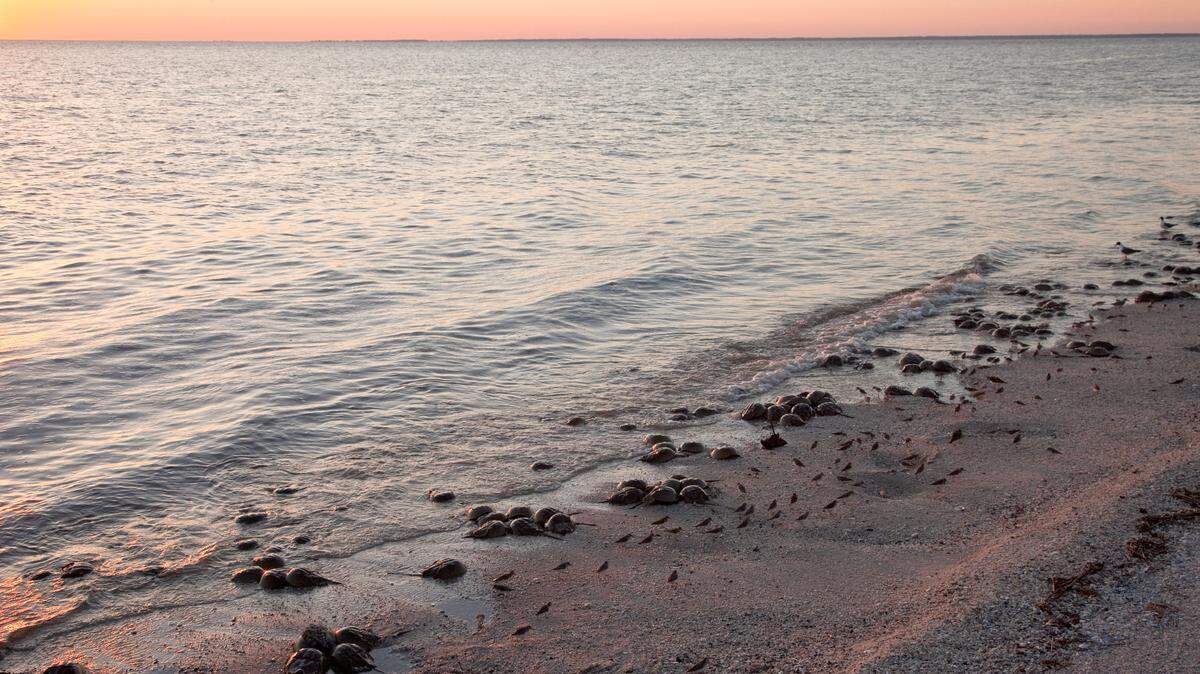
A federal judge has prohibited the harvest of horseshoe crabs in the Cape Romain National Wildlife Refuge near Charleston. The new order was expected to restrict the operations of a Massachusetts-based biomedical company, Charles River Laboratories, that for almost 30 years has purchased tens of thousands of the animals from fishermen who collect them on the refuge and other spots along the S.C. coast.
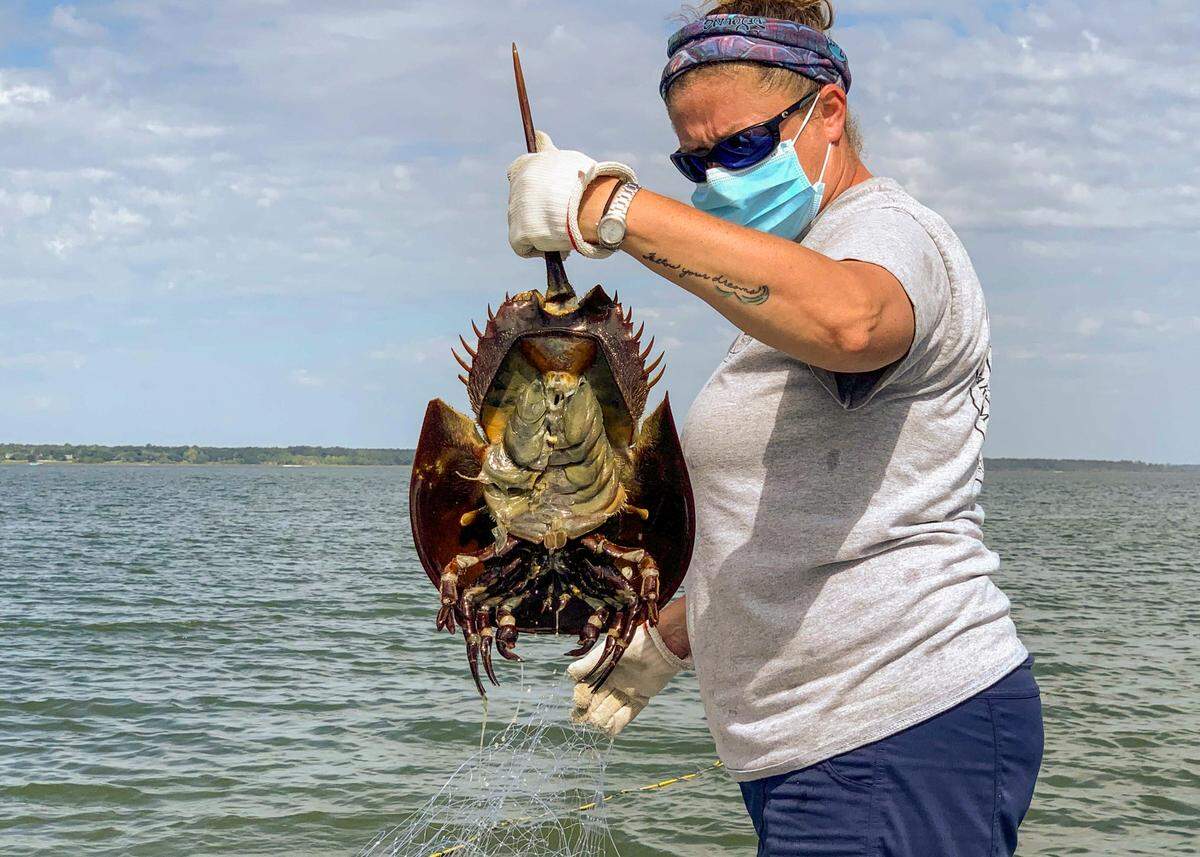
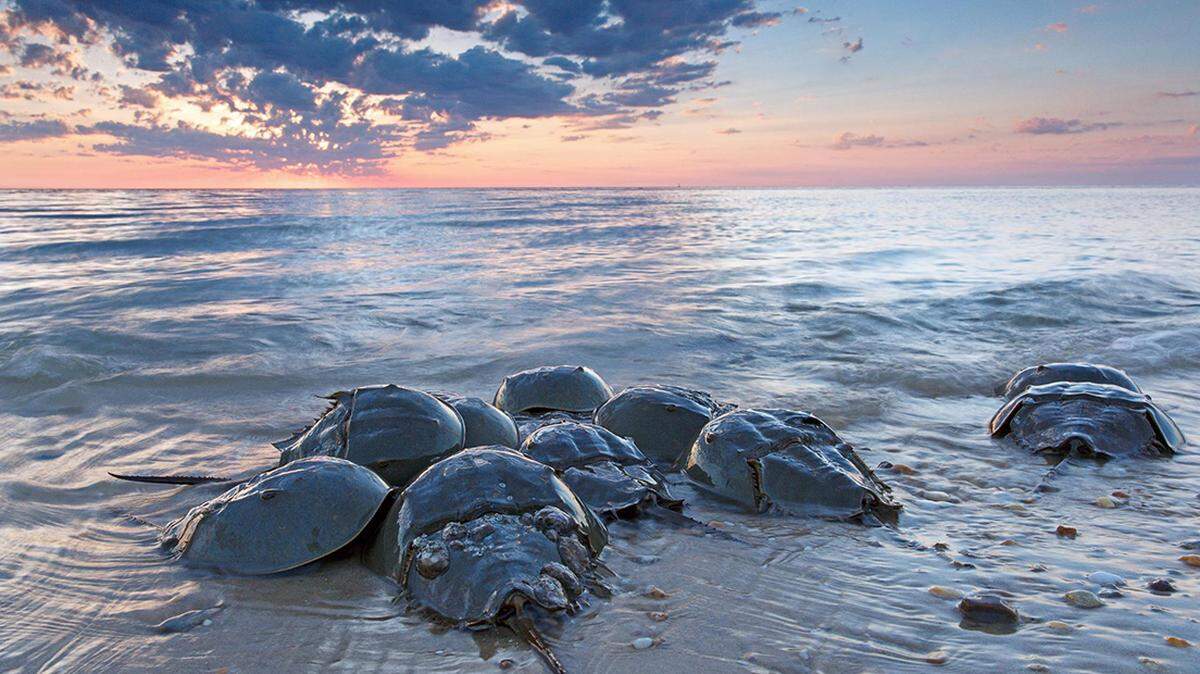
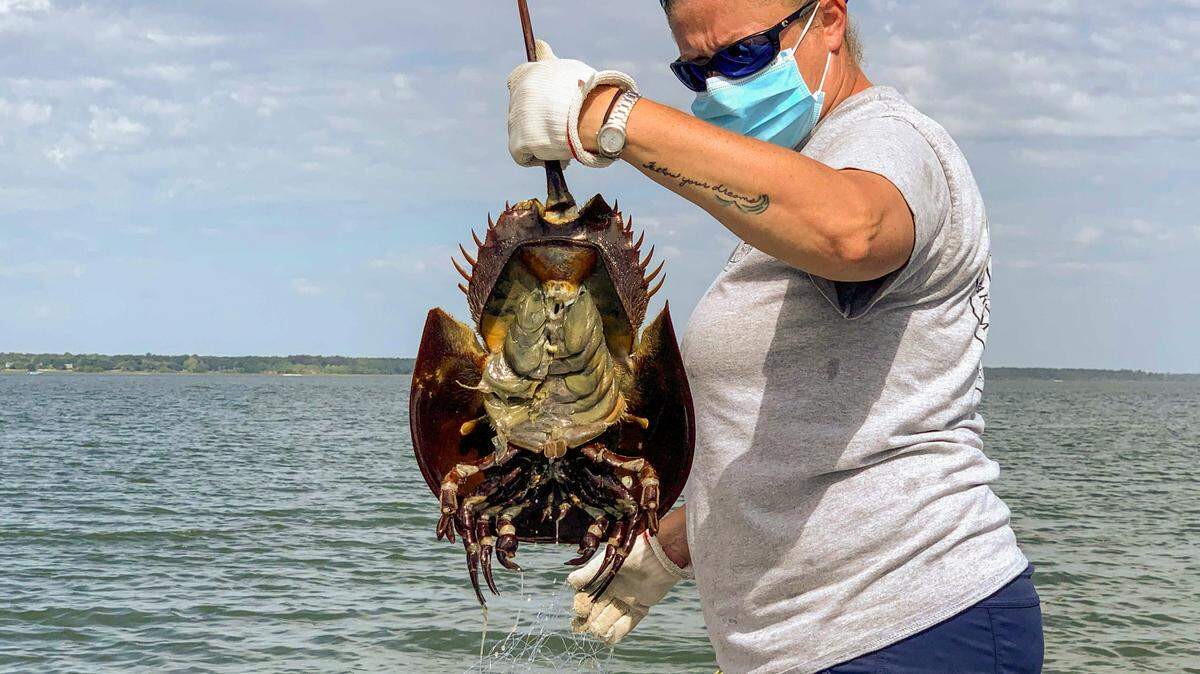
The harvest typically starts when the animals surface on beaches to mate, pulled above water by the new and full moons of spring. After fishermen bring the animals to Charles River’s West Ashley lab, technicians drain their blue blood, then return them to the sea. The liquid taken, which can amount to over half of a horseshoe crab’s total volume, is converted into a pharmaceutical product that companies use to test their vaccines and drugs for bacterial toxins.
“It’s a much needed reprieve at a critical time for the refuge,” said Lindsay Dubin, a lawyer for Defenders of Wildlife, one of two nonprofits that filed the October lawsuit against the U.S. Fish and Wildlife Service, which manages Cape Romain.
The nonprofit, along with the Southern Environmental Law Center, attested in U.S. District Court that the federal government broke laws meant to protect wildlife by allowing a harvest on the refuge without considering the harm that commercial activity might be causing to animals. Until it’s determined the harvest isn’t risking the refuge, it should be paused, they said.
But since Judge Bruce Hendricks issued the temporary ban on May 12, the environmental groups have said Charles River, who is also a defendant in the suit, has indicated it may violate the rule. The company has not agreed to ensure the crabs it purchases are not harvested from the now off-limits S.C. refuge, so it is likely to buy illegally harvested crabs while remaining “willfully blind,” the nonprofits told the court.
Charles River has said it “vehemently objects” that assertion and intends to abide fully by the order. It has also appealed the ruling.
The lawsuit is part of an ongoing conflict over Cape Romain with implications for the global industry of medical safety testing, anyone who takes vaccines or injectable drugs and ecosystems across the Americas.
The toxin-testing industry is worth more than $500 million, and Charles River provides half the world’s supply of the horseshoe crab-derived test, called LAL, that helps ensure many medical products are safe.
But LAL is not the only product that can do the job, some say. As some pharmaceutical companies have started to prefer a synthetic version already approved in Europe and Asia, called rFC, Charles River has emerged as an influential critic of the competitor that could spare horseshoe crabs but hurt its bottom line.
“The spin that’s on it — that (horseshoe crabs) are essential to the safety of human life — is overstated,” said Ryan Phelan, the executive director of Revive and Restore, a nonprofit that advocates for biotechnology and conservation. It’s shocking that America is well behind the international standard on something that is a question of our public health, ability to rapidly produce drugs and vaccines and capacity to protect endangered species, she added.
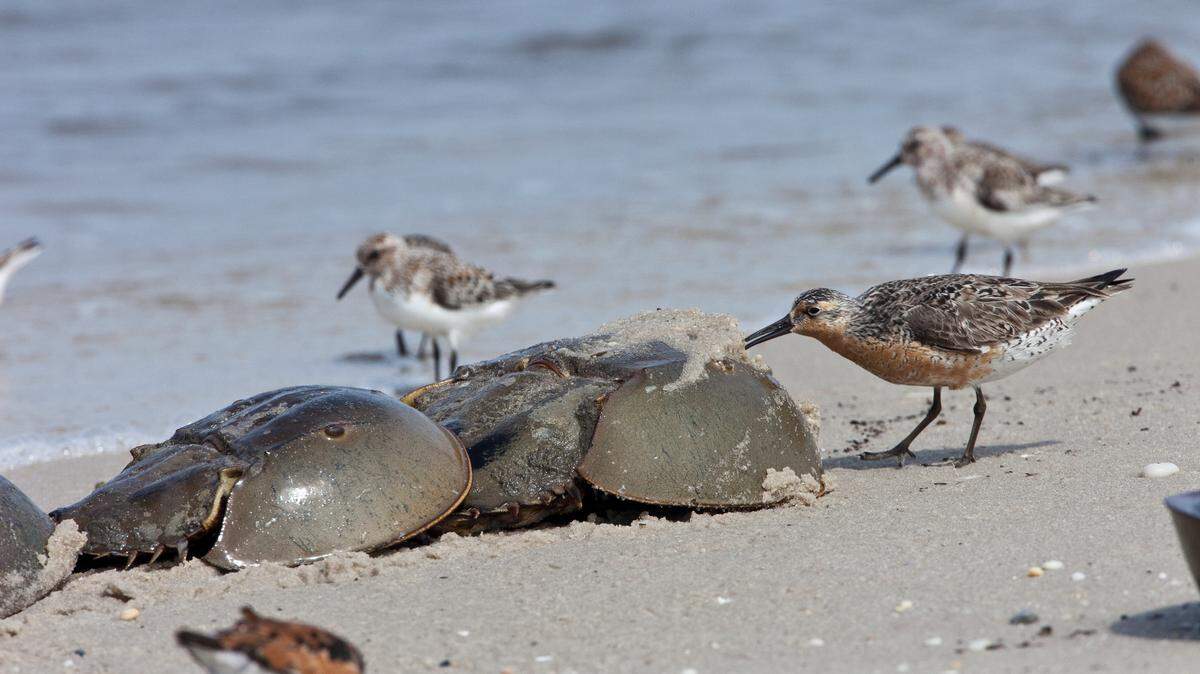
Because of a bird, what happens to S.C. horseshoe crabs also affects the coastal environment from Argentina to the Canadian Arctic. The red knot, a threatened migratory shorebird, travels every spring from the bottom of the globe to the tip-top of it, stopping only in a few places along its journey to feed. Cape Romain is one of those locations, and one of the most nutritious foods the birds eat while there is horseshoe crabs’ eggs. With fewer crabs on the beaches to lay them, the red knot’s already decreasing numbers could dwindle further, conservationists contend.
“We’re talking about a harvest in a wildlife refuge where birds come once a year to refuel,” said Catherine Wannamaker, an attorney for the SELC. “There’s no reason this harvest should be happening in that special and protected place.”
Other environmental groups agree. Pausing the horseshoe crab harvest “will be beneficial both for horseshoe crabs, which aren’t spawning in large groups like they have historically, as well as the threatened and endangered birds that rely on their eggs,” said Nolan Schillerstrom, an associate at Audubon S.C., a nonprofit that advocates for birds and their habitats.
Charles River says no one has done more over the past 25 years than it to preserve horseshoe crabs in South Carolina’s waterways, pointing out that it helped ban the use of horseshoe crabs for bait in the 1990s. “Our efforts have helped to significantly increase the population of the horseshoe crabs in South Carolina, which also supports a healthy ecosystem for birds and other wildlife,” the company said in a statement.
Meanwhile, Charles River says it should continue bleeding crabs, though research by S.C. Department of Natural Resources scientists has shown the practice can lead to the death of 20% of females returned to water.
And when arguing its case to the judge, the company has made claims that seem to contradict previous statements by its own executives, according to a never-before-reported document and interviews by the newspaper.
Troubles are mounting for the company outside of the court room as well. Earlier this month, a science paper written by Charles River employees about toxin testing was called into question by one of the world’s largest publishers of academic journals.
%20(1).jpg "Duplicate_Red Knot feeding Seabrook Island-9 (1) (1).jpg")
$2.3 million loss, or no problem? Depends who you ask
In a document filed in the lawsuit in April, Charles River’s Charleston-based corporate vice president, Gregory Marshall, described a situation that seemed to contradict the company’s history of bleeding S.C. crabs, as well as comments made by another Charles River executive months before.
Marshall characterized the nonprofits’ request to pause the harvest in the refuge as novel, unpredictable and expensive.
“Because of the novelty of the relief sought by plaintiffs and the potential for unpredictable consequences, it is impossible to ascertain with any accuracy the losses that (Charles River Laboratories) would sustain if it were precluded from purchasing horseshoe crabs harvested from Cape Romain,” Marshall wrote. “Based on the information available to us, I anticipate that it would cost the company at the very least $2,300,000.”
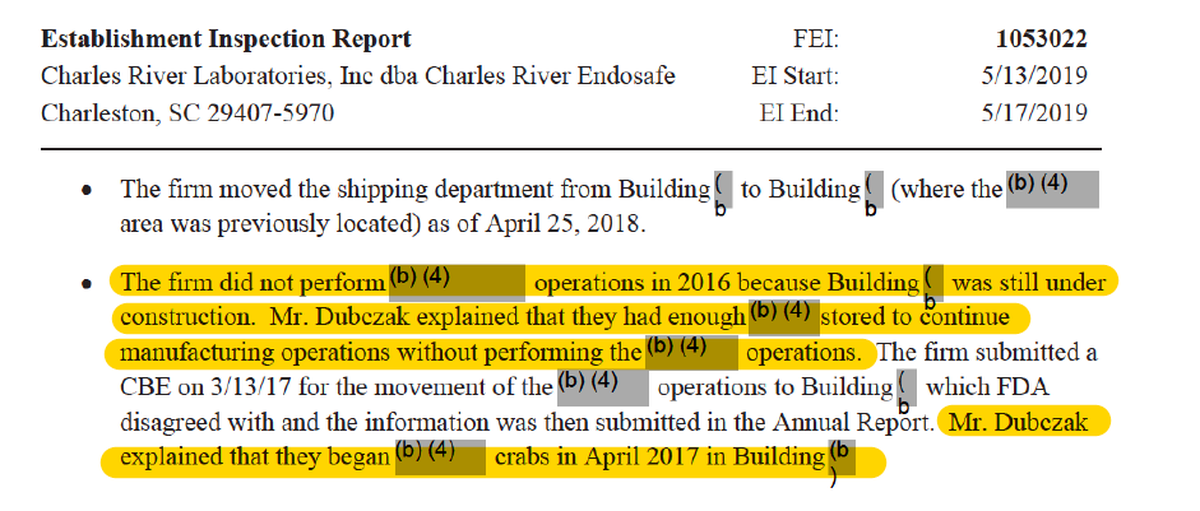
But John Dubczak, a Charleston-based executive director for Charles River, told a reporter that accountants had encouraged the multinational company worth $13 billion to take a year-long, statewide break from the harvest five years earlier while a building was under construction.
“Our accountants are saying, we’re sitting on all this money, why are we building inventory? We’ve got all this inventory,” Dubczak said. “It’s one of the risk mitigation strategies that we have, our customers expect it.”
Dubczak told FDA investigators something similar during an inspection, a document reported here for the first time shows.
A spokeswoman for Charles River declined a reporter’s request to interview Marshall, or Dubczak again.
Marshall explained his case further in the court testimony, however. Not harvesting on the wildlife refuge would impose a costly burden on fishermen who might have to travel further for their catch, he said. And stopping the harvest in Cape Romain could increase the mortality rate for the crabs which could have “unintended environmental consequences,” he added.
Data obtained from the DNR show that the 2016 pause on horseshoe crabs from everywhere in South Carolina led to more crabs counted in the ecosystem, not fewer, reporting by The State revealed. After collection was stopped altogether that year, the density of horseshoe crabs encountered by scientists in estuaries and at sea increased when compared with when the harvest was ongoing during the years before and after, annual reports show.
It isn’t the only time accounts by Charles River appear to differ from those of scientists.
Scientists push back on Charles River
Journals in the business of publishing research almost never retract their articles.
It’s even more rare that they issue expressions of concern about them, said Dr. Ivan Oransky, co-founder of Retraction Watch, a group that tracks the corrective activity internationally. The letters, often written by editorial boards of journals, are not the final word on science under investigation, but they’re an indication that “there’s something wrong here,” he said.
One of the largest academic publishers in the world issued one about an article written by three employees of Charles River Laboratories, including John Dubczak, on May 9.
In their research, the employees had shown that the horseshoe crab-derived LAL did a better job at detecting toxins than the synthetic rFC in one case, then generalized that the synthetic was inferior overall.
While the results were valid for their specific example, “the generalization, however, is not appropriate and consequently, the journal has chosen to publish an Expression of Concern, so readers are aware of those recently uncovered facts,” wrote the European Journal of Pharmaceutical Sciences in their expression, noting that it came after a thorough review. The journal is published by Elsevier, a group that oversees thousands of smaller publications like it.
“(The Charles River authors) tried to make sweeping generalizations made on a single set of data. Frankly, that’s bad science,” said Oransky. That Elsevier had cleared the statement was “pretty serious,” he added. “Journals don’t take these steps lightly.”
A spokeswoman for Charles River said that neither the company nor the authors of the study had additional insight to share regarding the editorial expression.
The company’s defense of its LAL product — and the limitations of its synthetic competitor — also appear in court filings.
Horseshoe crabs were essential to fighting COVID-19 because LAL is used for the production of COVID-19 vaccines and the synthetic is “underdeveloped,” company lawyers argued.
But in February, the U.S. government agreed to purchase at least 100,000 doses of two COVID-19 antibody drugs that were produced by American pharmaceutical giant Eli Lilly using the synthetic, not LAL.
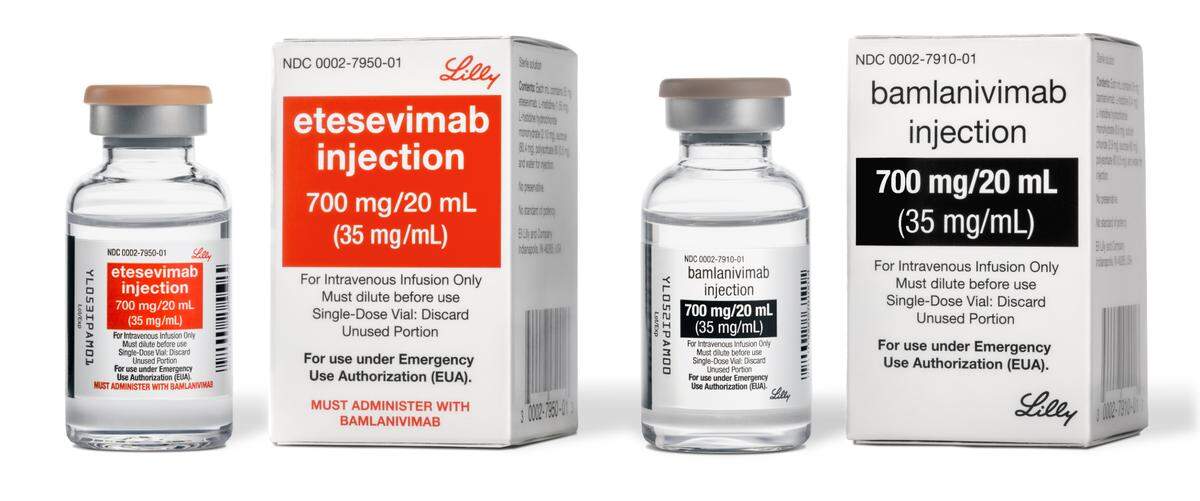
While the synthetic has not been classified as equivalent to LAL in America, the FDA is allowed to approve drugs produced by pharmaceutical companies that use it because it has been deemed analogous overseas.
“We see that there’s a better way to do it and we’re doing it,” said Jay Bolden, an Eli Lilly scientist.
In another document submitted to the court, lawyers for Charles River said something else to convince the judge to let it keep bleeding horseshoe crabs on Cape Romain, this time about local research. It seemed to contradict what the study’s lead scientist believes.
Lawyers wrote that a 2019 study by the DNR reflected that the stock of horseshoe crabs in South Carolina was genetically healthy despite several decades of harvest for the biomedical industry.
But when talking with The State about the 2019 paper, the principal investigator, Dr. Tanya Darden, said something different: Though the population is genetically healthy now, they couldn’t determine whether there had been an effect of the biomedical industry on that status with their one sampling of it.
“We can’t address that at all,” she said. “We don’t know.”
Because the research was a first-of-its-kind baseline assessment, it could take a generation — about 10 years for horseshoe crabs that can live up to 20 — before any effect from stressors, including biomedical harvesting, could be observed, she added.
Lawyers for Charles River didn’t mention another fact when they referenced the science in court: Their client helped pay for it.
Charles River gave the S.C. Sea Grant Consortium, a state agency, just over $61,000, confirmed the agency’s executive director, Dr. Susan Lovelace. The consortium used most of that money to support the genetic research.
As legal fight continues, nature doesn’t wait
In April, Wannamaker, the environmental lawyer, emailed Charles River’s attorneys to ask a question: Could they provide information about whether fishermen had started harvesting horseshoe crabs in South Carolina yet?
The company’s lawyers didn’t give any, emails show. And when weeks later the groups had a call to discuss the May order to block the harvest, they would not commit to asking fishermen whether horseshoe crabs they’d buy had been taken from Cape Romain, the nonprofits alleged in a document filed to the court.
That was the way Charles River could be kept “willfully blind” of the harvesters’ actions, and for the company to violate the order, the environmental attorneys claimed.
Charles River’s lawyers have insisted it intends to comply; it just can’t say the same for its fishermen. Since they’re not employees, the company doesn’t direct, control or instruct them, attorneys have said
But during the 2016 statewide pause in the harvest, Charles River paid fishermen, including Jerry Gault, of Lady’s Island, even though they did not harvest any crabs for the company. “They were generous,” Gault said.
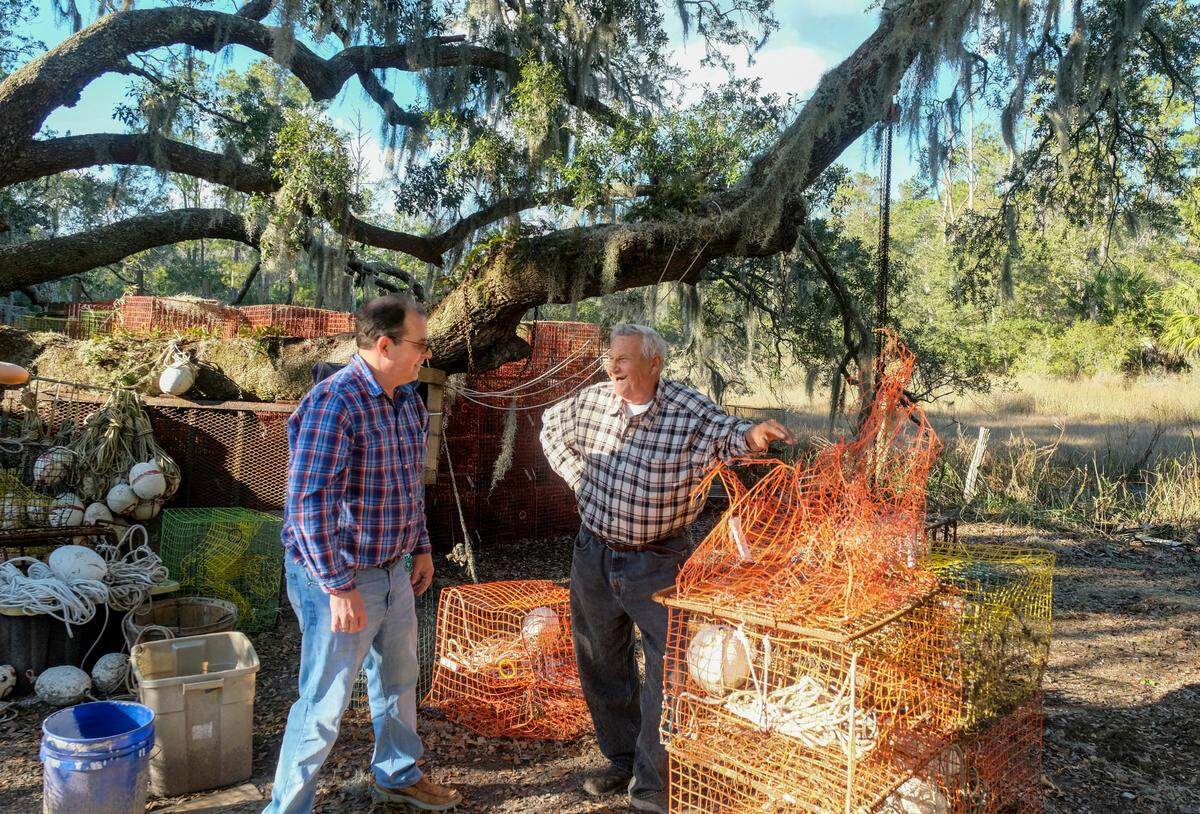
“We made sure that they were paid out accordingly because they’re dependent on us, we’re dependent on them,” Dubczak confirmed, adding that the company meets every year before the start of the season with DNR enforcement officers, scientists and fishermen to discuss the harvest ahead.
The relationships described raise questions, said Lewis Cromer, a veteran Columbia lawyer whose firm has represented clients suing state agencies and large corporations over employment disputes.
“If true, based upon the fact that Charles River apparently controlled the details of the harvesting and from time to time treated harvesters as employees, by giving them financial compensation directly when they were not working and no harvesting was taking place, would tend to bring into serious question the status of such harvesters as ‘independent contractors,’” Cromer said. “But that would be a matter for the court to decide.”
Two courts may have the chance to do so presently. On Friday, attorneys for the environmental nonprofits requested an urgent conference in the U.S. District Court to confirm each side’s obligations under the current order, and another will soon hear Charles River’s arguments to have the harvest prohibition reversed.
But nature isn’t waiting for permission to start. In a week, when the full moon coincides with the high tide, horseshoe crabs will rise before midnight to spawn along the beaches of South Carolina. Red knots are nearing Cape Romain now to look for their eggs. Birdwatchers saw 250 of them near Hilton Head Island on Friday morning. Minutes later, another observer spotted 750 farther north.
Whether crabs from the refuge will be brought in to be bled or left undisturbed to help the shorebirds migrate remains to be seen.
This story was originally published May 19, 2021 at 5:00 AM with the headline "Pharma lab seems to contradict itself, science in fight to bleed SC horseshoe crabs."
%20(1).jpg)