With ‘unparalleled opportunity’ from offshore wind energy, NC aims to create jobs
READ MORE
Renewable energy in North Carolina
North Carolina has long been seen as one of the East Coast’s leaders for offshore wind potential. The state passed a law targeting carbon emissions, and offshore wind has become a main focus of renewable energy efforts. Could your home be powered by wind energy from the N.C. coast by the end of this decade? Learn about the potential impacts on the environment, jobs and much more in this special N&O report.
Expand All
As a child growing up in Snow Hill, North Carolina, Montravias King watched good jobs leave the area, the consequence of trade policies and globalization.
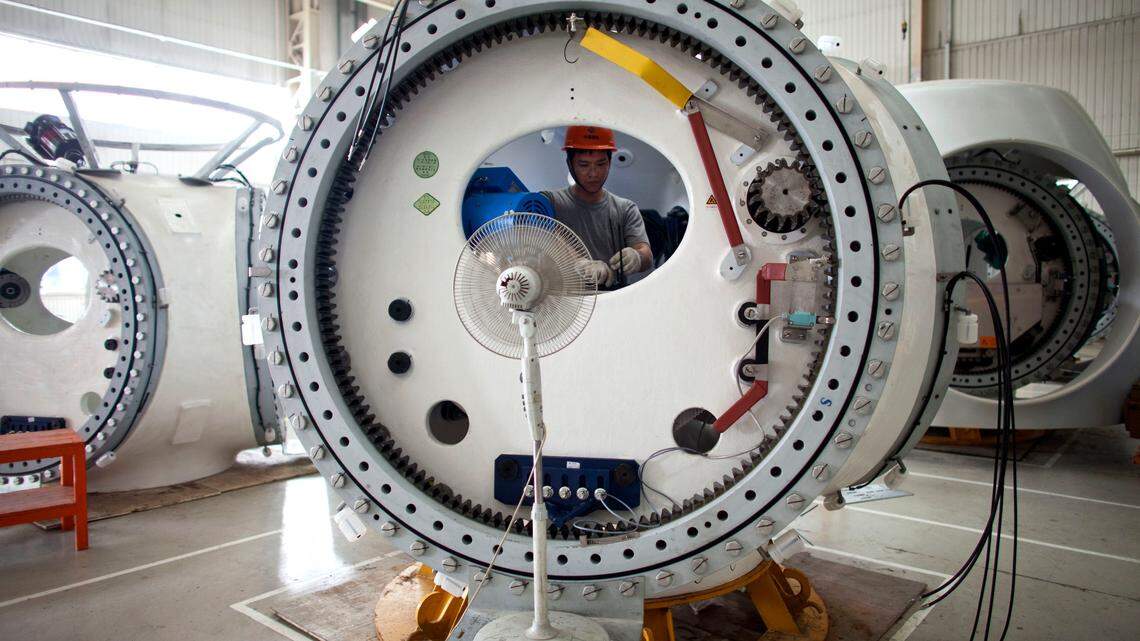
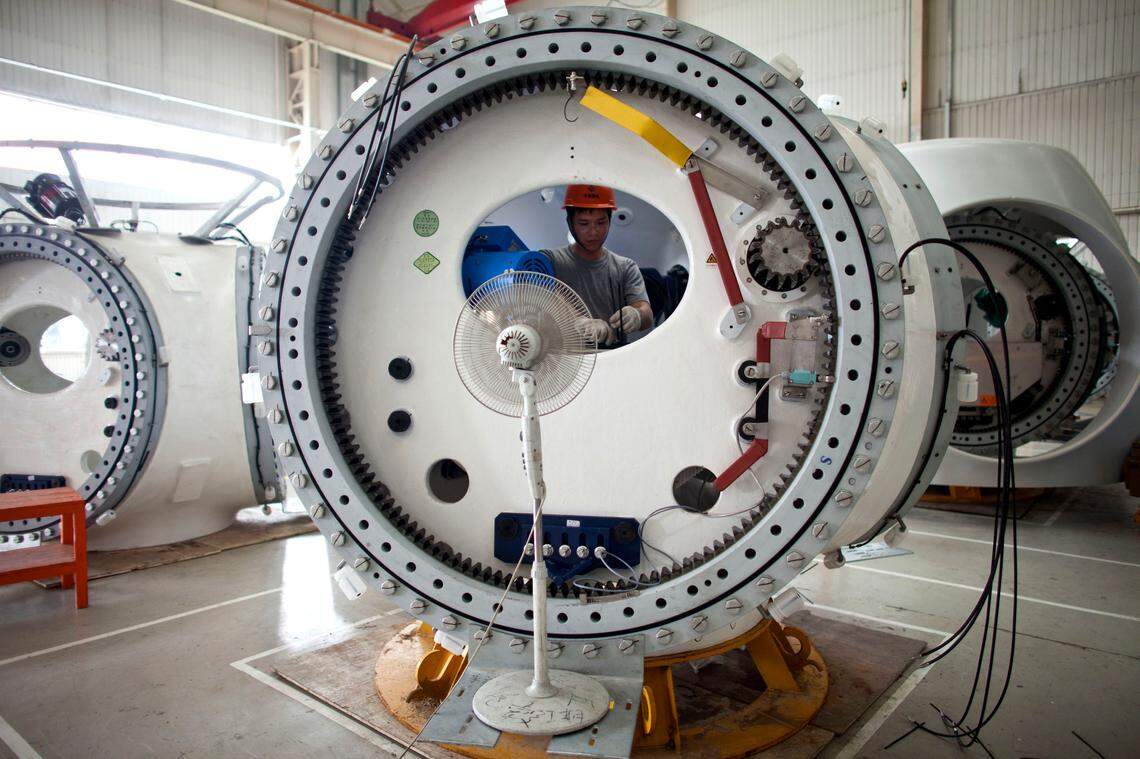
Now, King and other supporters of North Carolina’s nascent offshore wind industry see a rare opportunity: the chance to secure manufacturing jobs in a growing industry in a part of the state that has lost thousands of similar positions over the past several decades.
“It’s a once-in-a-lifetime opportunity to really transform the lives of a lot of people in our state, especially Eastern North Carolina,” said King, the N.C. League of Conservation Voters’ clean energy campaigns director.
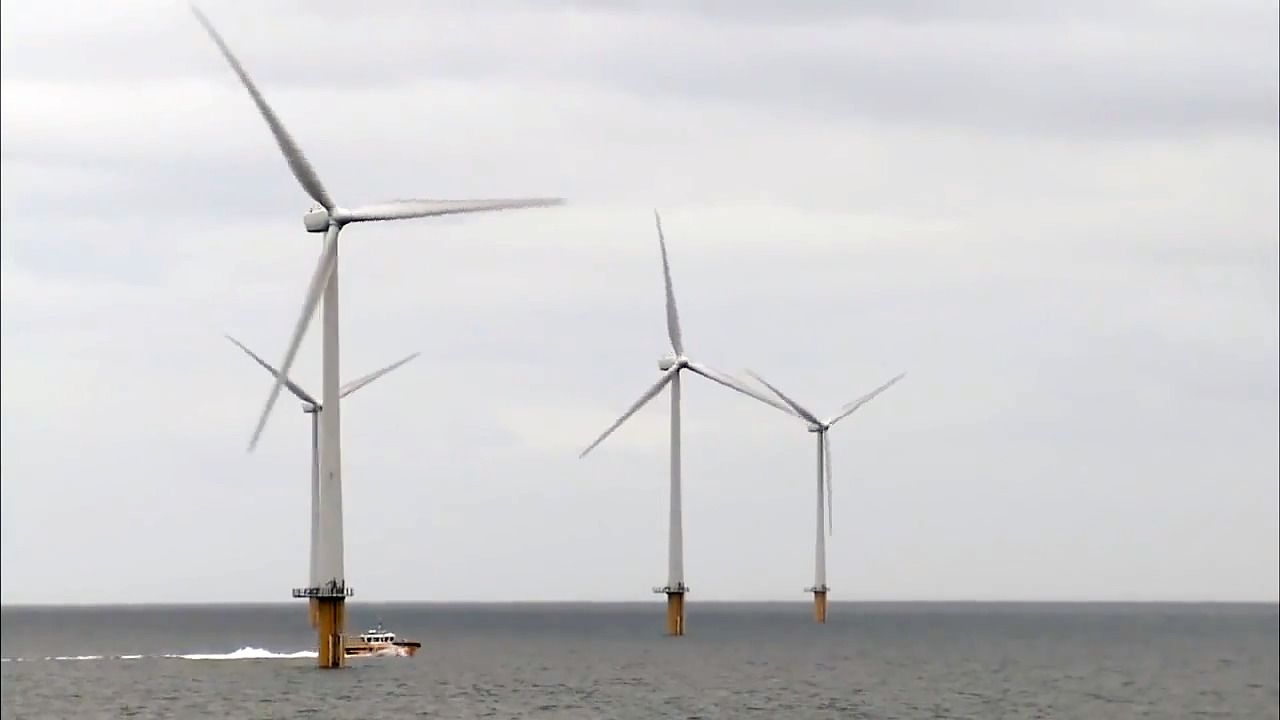
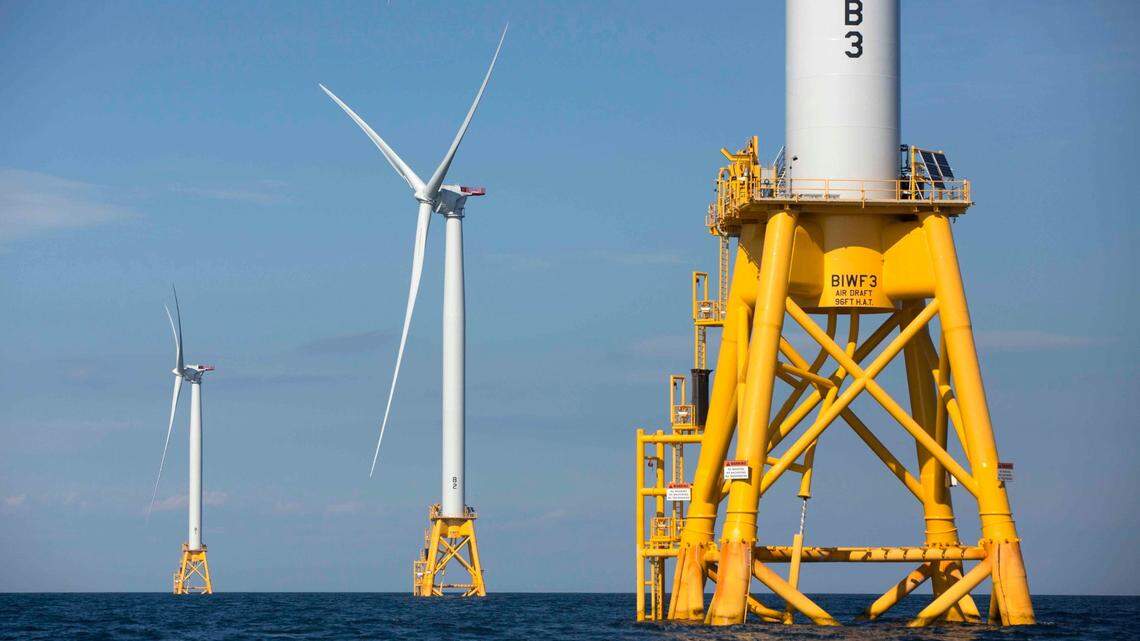
The offshore wind industry is just finding its footing in the United States, with two wind farms in the Northeast set to begin construction, a pair of pilot turbines off of the coast of Virginia, and a site leased off of Kitty Hawk. North Carolina officials have been watching the industry closely, with the N.C. Department of Commerce estimating that the state could see as much as a $100 billion impact from building up a supply chain that can provide parts for the skyscraper-sized turbines and the workforce to service them.
Jennifer Mundt will be central to those efforts in the Department of Commerce’s newly created position of assistant secretary of clean energy economic development. A former policy analyst at the N.C. Department of Environmental Quality, Mundt will help businesses across the state find opportunities in the offshore wind supply chain.
“As innovations in clean energy technologies rapidly become commercialized, our state is well-positioned to enjoy the benefits this industry will bring us, both in terms of a stronger economy and a healthier environment,” Mundt said in a prepared statement.
In 2021’s Executive Order 218, Gov. Roy Cooper set a goal of generating 2.8 gigawatts of offshore wind by 2030. That order also called for the creation of a task force to examine wind energy’s opportunity, which met for the first time Feb. 3 in Wilmington.
At that meeting, Mundt said, “We’re not too soon of an entrant (into offshore wind) and we’re not too late of an entrant, and I think I’ve come up with a good way to characterize that: We’re going to call (ourselves) the Goldilocks entrant.”
According to a recent economic development study from Environmental Entrepreneurs (E2) and the Southeastern Wind Coalition, building a 2.8-gigawatt offshore wind project would represent a $3.78 billion economic impact if parts were sourced elsewhere and a $4.58 billion impact if the project relied exclusively on turbines and substations built in North Carolina.
Building a wind farm of that size, the report said, would result in 27,621 to 30,990 jobs during construction and 923 operations and maintenance jobs for the duration of its life.
“It really presents an unparalleled opportunity, a once-in-a-generation opportunity for the United States and certainly for a state like North Carolina,” said Katharine Kollins, president of the Southeastern Wind Coalition.
The Southeastern Wind Coalition, E2 and the N.C. League of Conservation Voters are all among the groups in Offshore Wind for North Carolina, a coalition advocating for the industry.
Trailing Virginia?
Right now, it looks like most of the economic benefits from the nearly 200 square mile Kitty Hawk wind site are headed to Virginia.
An economic impact document prepared by Avangrid, the company developing the site, repeatedly touts its benefits to Virginia and the Hampton Roads region, mentioning North Carolina only in passing. Construction will bring 799 jobs to Virginia, the report said, and once the wind farm becomes operational 830 of the 929 jobs it is projected to support will be around Hampton Roads.
The Kitty Hawk project’s office is in Virginia Beach.
Despite those developments, Kollins said, “There is definitely room for North Carolina to play.”
Kollins pointed to the wind energy economic impact study commissioned by the state Department of Commerce, with more than 40 companies registering as part of the state’s offshore wind supply chain database.
That database includes potential “anchor companies” like Nucor Steel, a Charlotte-headquartered company with a steel plant in Hertford County; LS Cable, which has a factory near Rocky Mount; and Hitachi ABB, a power grid company that employs 450 people at N.C. State University’s Centennial Campus in Raleigh.
In October 2020, North Carolina joined Maryland and Virginia in a partnership that sought to turn the mid-Atlantic region into a kind of offshore wind hub. With that partnership in place, Kollins said, the states are cooperating to ensure the largest possible benefit.
“It doesn’t mean that there’s no competition between those states,” Kollins said, “but it certainly means that they’re talking, that they are coordinating which portions of the industry should we be looking at, should we be going after.”
At the Feb. 3 taskforce meeting, John Hardin, executive director of the state Commerce Department’s Board of Science, Innovation and Technology, said North Carolina is well positioned to take advantage of wind opportunities both off of its own coast but also eventually off of South Carolina, Georgia and even potentially Florida.
By working with the three-state partnership, North Carolina hopes to lure some of the wind companies that are already established in the northeast to the mid-Atlantic.
“We will be competing against each other as well,” Hardin said of Virginia and Maryland, “but we think that in this case one plus one plus one equals much more than three and the pie will be bigger and we can get bigger respective pieces if we work together.”
Kollins also said she has had conversations with wind energy companies who are intrigued by the business climate in North Carolina and whose executives like the idea of living in the state.
“There are absolutely opportunities for us to get some of the major players,” Kollins said, “but they’re not just going to fall in our lap, so the state’s going to need to work on it.”
Training a wind energy workforce
North Carolina’s community colleges are starting to develop programs that they hope will train the workforce for what the offshore wind industry requires.
This is particularly true along North Carolina’s coast, including at College of the Albemarle, which has campuses in Barco, Edenton, Elizabeth City and Manteo.
Evonne Carter, the vice president of learning at College of The Albemarle, said it is “kind of a sad reality” that Eastern North Carolina isn’t a player for big companies and company headquarters.
But with offshore wind, Carter said, “They have to come through every single one of our counties in College of the Albemarle’s region to get to Kitty Hawk.”
The college is part of the Hampton Roads Workforce Council’s application for a U.S. Economic Development Administration Good Jobs Challenge grant. College of The Albemarle is seeking $900,000 to develop a curriculum, likely at its Elizabeth City campus, that would teach 96 students skills like cable installation, wind turbine installation and maintenance and logistics.
In Carteret County, Perry Harker and other Carteret Community College leaders are also trying to map out a future offshore wind curriculum.
“We know that this is going to happen somewhere and there’s going to need to be a workforce trained for it,” said Harker, the college’s vice president of corporate and community education.
Carteret leaders are looking to the Global Wind Organization’s technician standards to determine what the college needs to offer in addition to existing courses like electrical and welding training, as well as boat-building. The wind technician program is particularly interesting to Harker, who hopes the college can have the curriculum in place within the next year, likely using grant funding similar to College of the Albemarle’s proposal.
“We’re hoping that we’ll be a destination for training,” Harker said.
This story was produced with financial support from 1Earth Fund, in partnership with Journalism Funding Partners, as part of an independent journalism fellowship program. The N&O maintains full editorial control of the work.
This story was originally published February 9, 2022 at 5:00 AM with the headline "With ‘unparalleled opportunity’ from offshore wind energy, NC aims to create jobs."