Sea change: NC is starting to make progress on wind energy, but lags other states
READ MORE
Renewable energy in North Carolina
North Carolina has long been seen as one of the East Coast’s leaders for offshore wind potential. The state passed a law targeting carbon emissions, and offshore wind has become a main focus of renewable energy efforts. Could your home be powered by wind energy from the N.C. coast by the end of this decade? Learn about the potential impacts on the environment, jobs and much more in this special N&O report.
Expand All
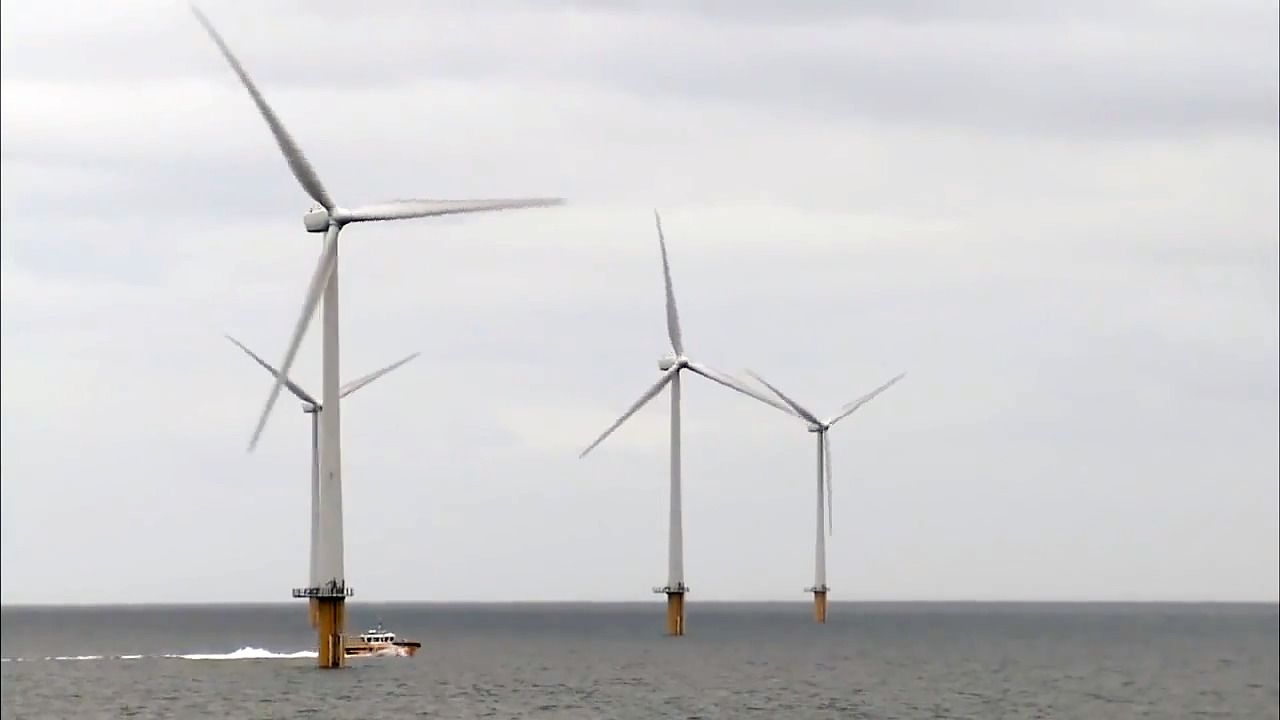
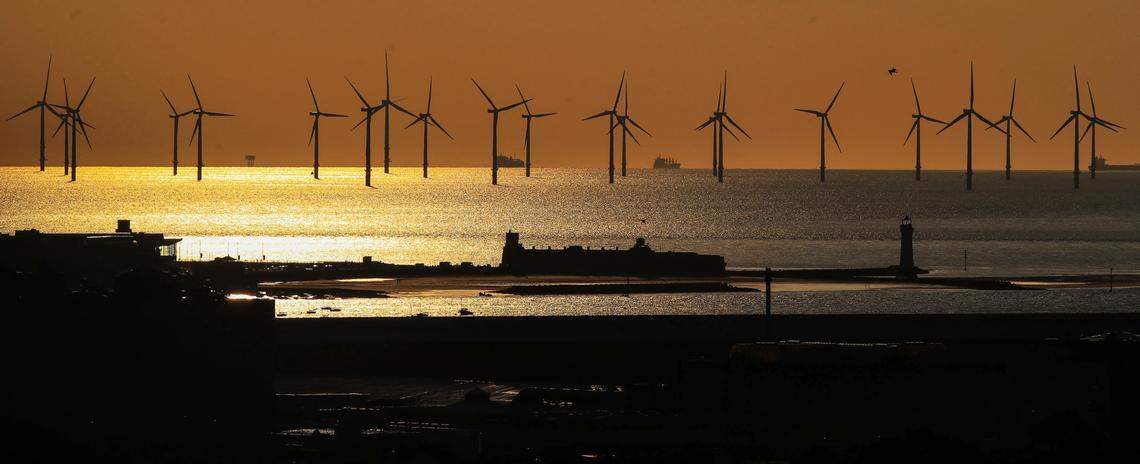
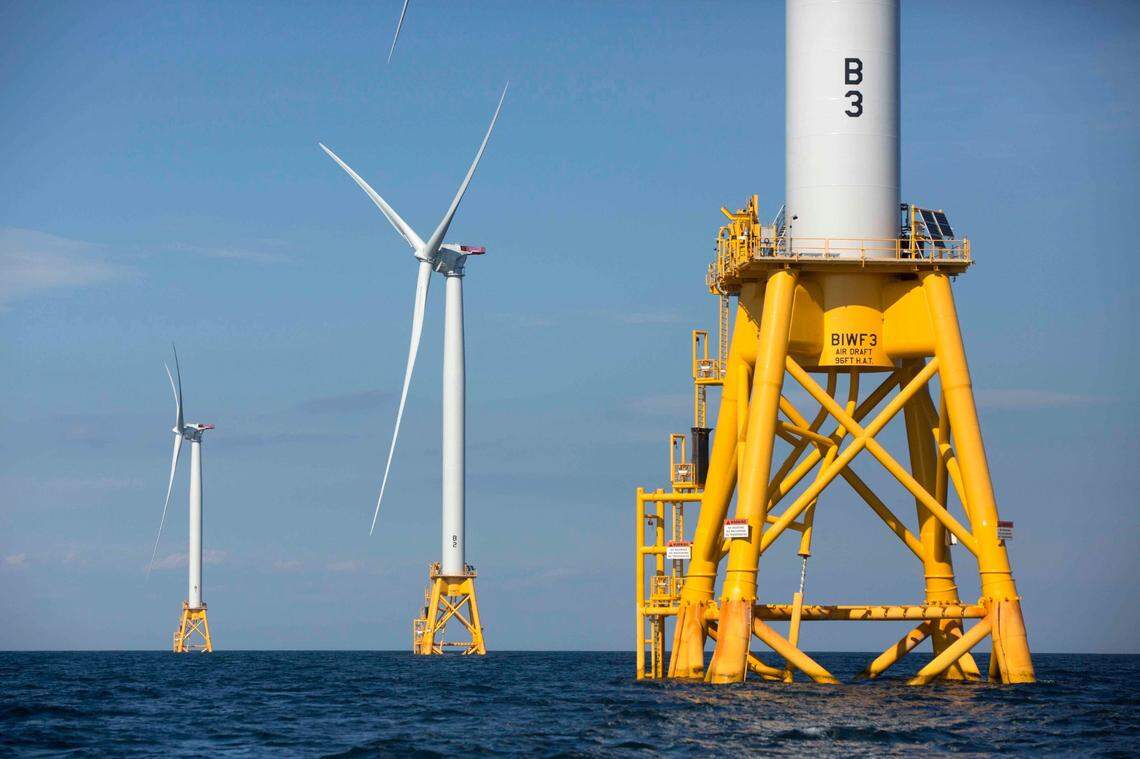
Offshore wind is having a moment, with demonstration turbines off Virginia’s coast and two large projects in the Northeast set to begin construction.
In North Carolina, offshore wind advocates are watching those developments carefully and pushing for officials to capture this moment and use it to shape an energy future that significantly reduces – and eventually eliminates – carbon emissions. Those emissions contribute to climate change, leading to the higher temperatures and heavier rainfalls that are already being observed in North Carolina.
Central to that effort are two areas the U.S. Bureau of Ocean Energy Management has identified for offshore wind farms off of North Carolina. The first, 24 nautical miles off of Kitty Hawk, has been leased to Avangrid, the American part of a Spain-based renewable energy developer. And the other, about 15 miles south-southeast of Bald Head Island, is expected to be leased this summer.
House Bill 951, which was signed into law by Gov. Roy Cooper after lengthy negotiations between the administration and N.C. General Assembly Republicans, requires Duke Energy to craft a plan to cut carbon emissions at least 70% from 2005 levels by 2030 and reach net zero by 2050.
That means more renewable power like solar and, yes, wind. That legislation came amid a federal push for more renewables, including offshore wind, and months after Cooper signed Executive Order 218, setting targets of 2.8 gigawatts of energy generated from wind farms off of North Carolina’s coast by 2030 and 8 gigawatts by 2040.
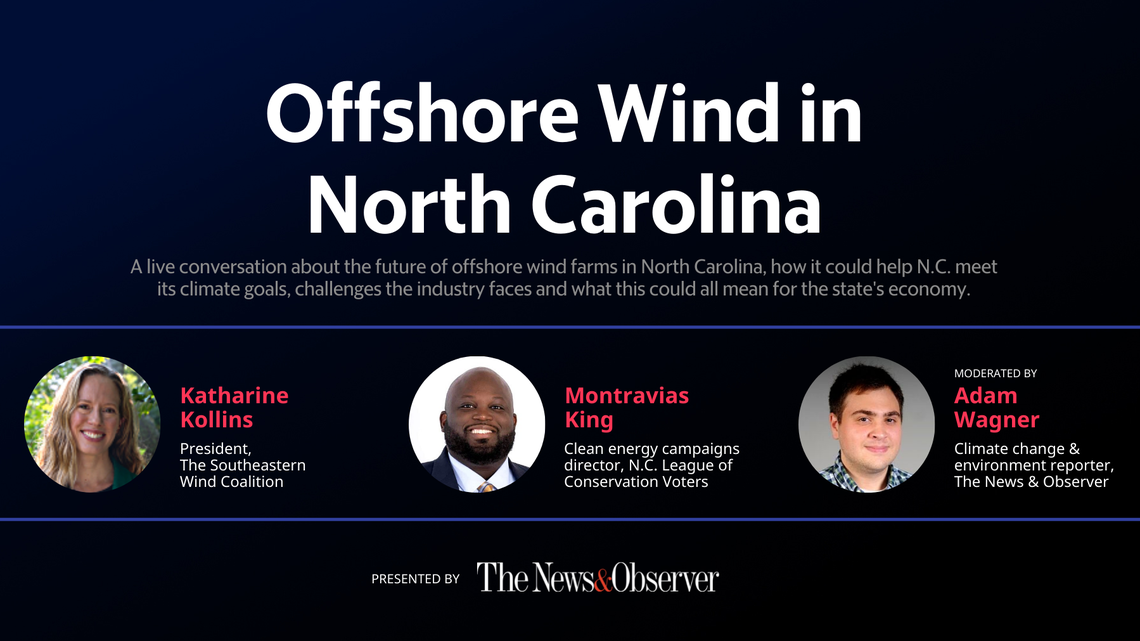
“It no longer feels like something that, ‘Oh yeah, that would be nice,’ but something that we are genuinely moving toward,” said Katharine Kollins, president of the Southeastern Wind Coalition, a trade group.
Offshore wind and Duke Energy
Leaders at the very highest levels of Duke Energy have hinted in recent months that the company is paying increased attention to offshore wind energy. In November, Lynn Good, the company’s president and CEO, told investors that offshore wind will likely make up at least some of the carbon reductions now required under North Carolina law.
“We do see a need over time to put in some of these next generation of offshore wind – very mature in Europe, not as much here in the U.S. … I believe this will be an important discussion as the carbon reduction plan is developed,” Good said.
HB 951 allows Duke to ask the state Utilities Commission to postpone its carbon-reduction deadlines if it is pursuing either an offshore wind farm or an advanced nuclear unit. Those projects both involve complicated regulatory processes.
Still, the future of up to four gigawatts of power across the two North Carolina sites — enough to power more than 1.2 million homes — remains in question. Avangrid is working through the permitting and planning process for its project, with onshore construction starting in 2024 at the earliest, while development in Southeastern North Carolina is still at least five years away.
Duke, which provides power to much of North Carolina, is thinking about bidding for the rights to develop the area off of Bald Head Island.
“Renewables will have a major role in our path to net zero. As we evaluate offshore wind, as well as other next-generation clean energy technologies, we’re monitoring the BOEM wind auction and we’ll carefully evaluate whether to bid,” said Regis Repko, Duke’s senior vice president of generation and transmission market transformation.
Through its Duke Renewable Energy Services subsidiary, Duke has built and operates 23 on-shore wind farms across the country.
Duke has not yet worked on an offshore project, but company officials only need to look across the state line for an example. Dominion Energy is planning to spend nearly $10 billion building a 2.8-gigawatt wind farm off of Virginia Beach that could be operational by 2026.
“We are thoroughly evaluating wind as an option for reaching these (carbon) goals while continuing to prioritize affordability and reliability for our customers,” said Kendal Bowman, Duke Energy’s vice president of regulatory affairs and policy.
North Carolina’s wind potential
North Carolina has long been seen as one of the East Coast’s leaders for offshore wind potential, a finding confirmed by National Renewable Energy Lab reports that investigated the wind resource available off of each state’s coastline. That depends not only on how much coast there is but geological factors that impact how hard and frequently the wind is blowing.
Harvey Seim, a UNC-Chapel Hill oceanographer, was part of a task force the N.C. General Assembly established to determine offshore wind’s feasibility in 2009. Seim’s role was to calculate whether winds off of North Carolina’s coast could support the industry.
As Seim recalled the work on a recent video call, he had his laptop propped on top of the 378-page report.
Seim found that North Carolina had significant potential for offshore wind, influenced by the state’s geography, particularly in the northeastern part of the state. The part of the state that juts into the Atlantic and makes the Outer Banks vulnerable to storms each year also brings the region close to the warm Gulf Stream.
Cold waters circulating from the north create a sharp difference between the surface temperature and that of the atmosphere above off of Cape Hatteras, creating high winds just off the coast.
“It doesn’t happen in many parts of the planet, but that very rapid increase in winds as you move upwards into the atmosphere means there’s quite a strong resource there when you might not think so,” Seim said.
If that wind can be harnessed, industry advocates believe it can provide substantial power to Duke Energy’s grid at times when other carbon-free sources, namely solar energy, are not as abundant.
Winter mornings, in particular, are a time when cloud cover and a late sunrise mean solar energy will have a hard time generating enough power to heat homes, cook breakfasts and provide hot water.
“Offshore wind is unique in that it can provide a power generation profile that’s complementary to other clean energy resources that are needed to assemble a clean energy portfolio,” said Chris Carnevale, the Southern Alliance for Clean Energy‘s climate advocacy director.
A Southeastern Wind Coalition analysis also found that wind energy is most abundant in summer afternoons, another time when Duke’s grid is most strained.
“As the sun is coming up and going down and creating those temperature changes, that’s what creates wind,” Kollins, the Southeastern Wind Coalition president, said.
Developing wind in North Carolina
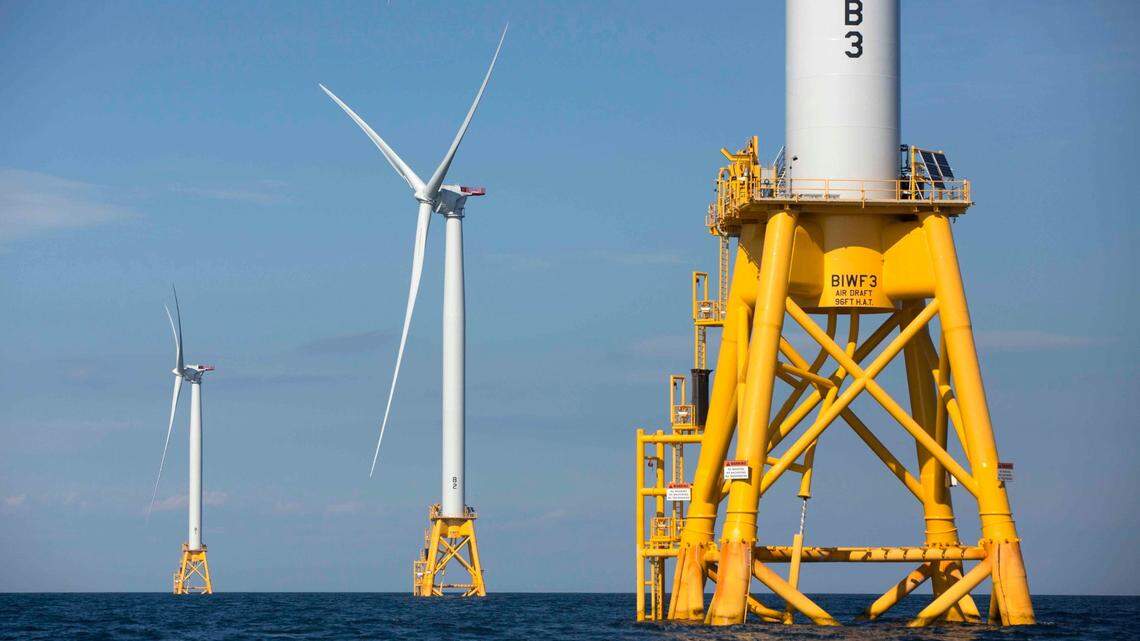
Avangrid’s proposed plans for its Kitty Hawk Wind project give some idea of what an offshore wind farm might look like in the Atlantic off of North Carolina.
When the Kitty Hawk Wind project is completed, Avangrid estimates it will have spent at least $7.5 billion on it. But a construction plan the company submitted to BOEM last year proposes developing the northwestern 40% of the 191-square mile lease area.
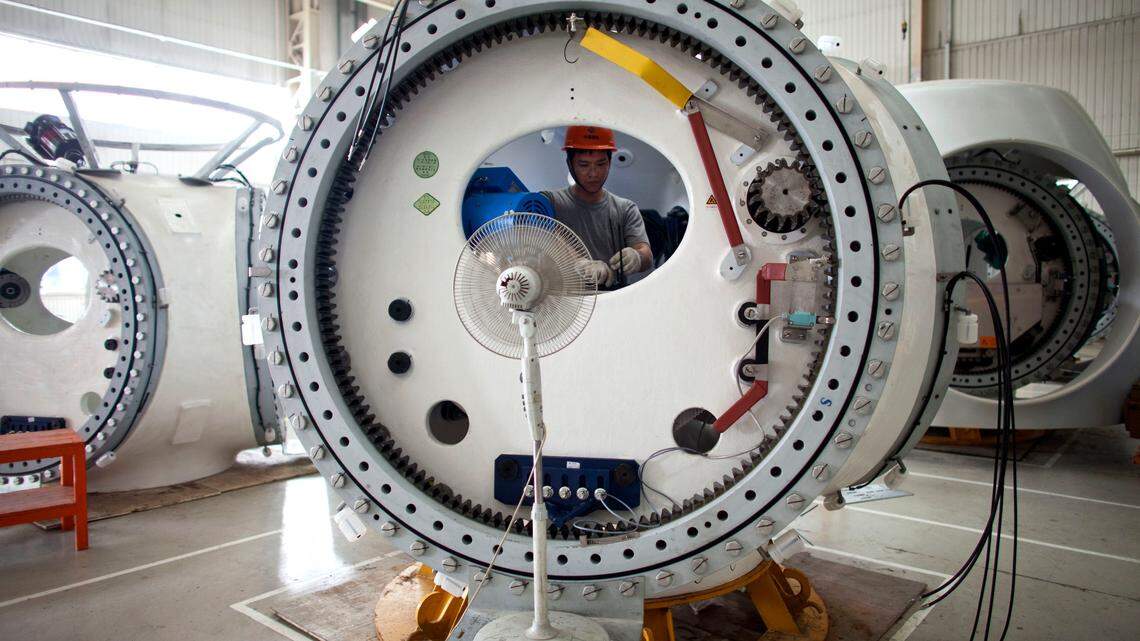
That’s enough to generate about 800 megawatts of power, energy produced by 69 turbines that could stand as much as 1,041 feet from sea level to the highest point of their blades — about the same height as the Chrysler building in New York City.
The turbines will be laid out in a grid, with rows nearly 1.4 miles apart and turbines in the rows almost a mile from each other. As wind pushes the turbines and they generate power, the energy will be sent to a service platform via cables buried roughly six feet below the seabed.
At the platform, switchgears, transformers and reactors will push the power onto land via another buried cable.
Once the power reaches shore, it enters a substation that transfers it to the grid.
Avangrid considered bringing the power ashore at nine different places, including four between Corolla and Kitty Hawk. According to the company’s construction plan, the four North Carolina sites suffered from a lack of high voltage transmission lines and large substations in the state’s northeastern corner. To bring offshore wind energy ashore there would, Avangrid wrote, “necessitate costly large-scale upgrades.” So it will come ashore in Sandbridge, Virginia, just south of Virginia Beach.
If everything goes as planned, Avangrid could start building the turbines in 2025, with the wind farm’s first stage becoming operational in late 2026.
Power from the Kitty Hawk project is likely not intended for North Carolina.
Avangrid hasn’t yet found a buyer for energy from the project, but the electricity is coming ashore in Virginia. Both federal documents and an economic impact statement prepared by the company indicate the Kitty Hawk project is designed to help Virginia meet its goal of 5.2 gigawatts of offshore wind energy by 2034, while it would also help meet North Carolina’s goal of 2.8 gigawatts of wind energy generated off the state’s coast by 2030.
Projects like Avangrid’s Vineyard Vines wind farm off of the Massachusetts coast and the Kitty Hawk project show the potential of an idea that seemed a long way off of American shores as recently as a few years ago, Kollins said, potentially leading to more investment and turbines.
“Once we see steel in the water in these really large projects,” Kolins said, “it becomes reality for a lot of people and for a lot of folks in the industry.”
This story was produced with financial support from 1Earth Fund, in partnership with Journalism Funding Partners, as part of an independent journalism fellowship program. The N&O maintains full editorial control of the work.
This story was originally published February 9, 2022 at 5:00 AM with the headline "Sea change: NC is starting to make progress on wind energy, but lags other states."