They once sold for tens of millions. How some of Myrtle Beach’s malls lost their value
READ MORE
Myrtle Beach Area Malls
Expand All
They once sold for tens of millions. How some of Myrtle Beach’s malls lost their value
.jpg)
Myrtle the Turtle and dancing under the clock. What Myrtle Square Mall meant to locals
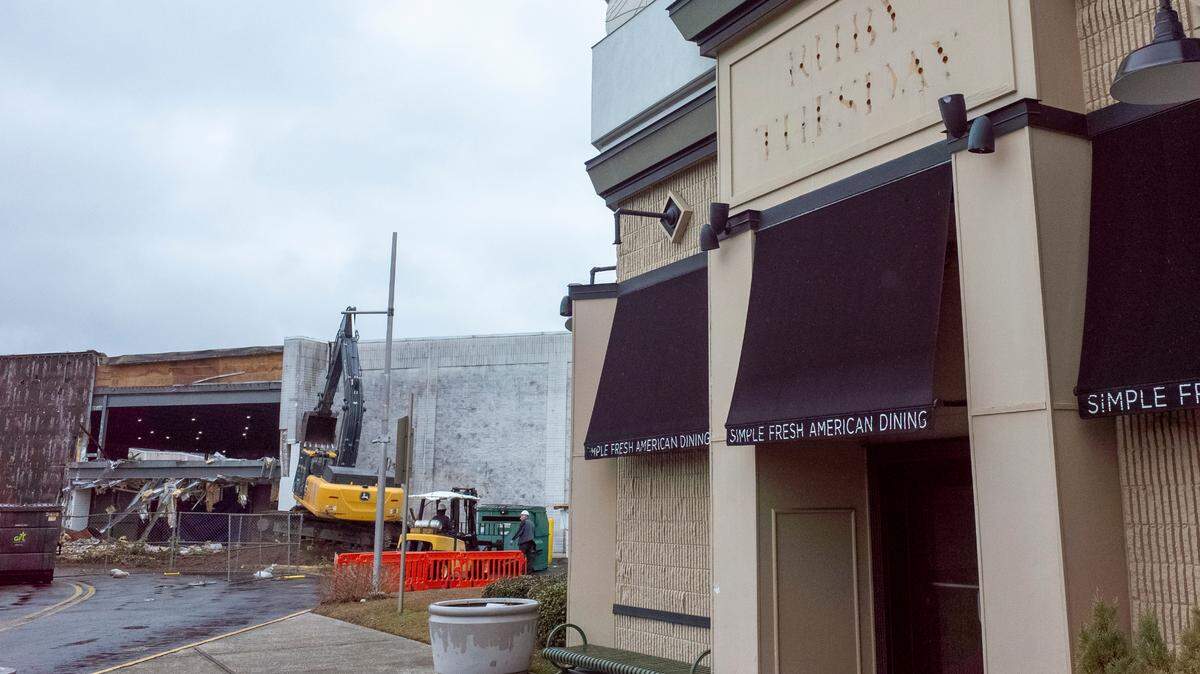
When will it open? What to know about Guy Fieri’s new Myrtle Beach Mall eatery
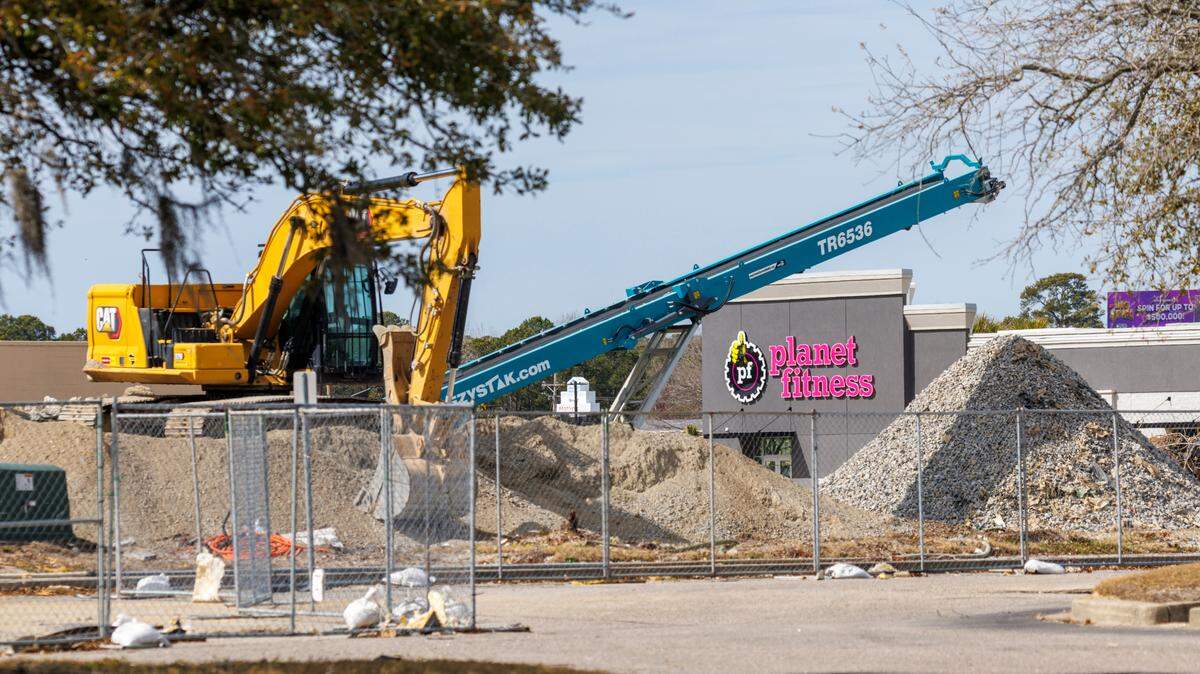
When will Inlet Square Mall’s demolition wrap up in Murrells Inlet? Here’s what to know
Steve Pruett saw firsthand how times changed for Myrtle Beach’s malls.
As a kid, he worked at the Baskin-Robbins at the now-closed Myrtle Square Mall during the summer of 1979 before moving away later.
His brother drove him to and from work, and Pruett paid him each night with a milkshake. He still remembers the smell of smoke from the cigar shop nearby and the long lines for ice cream, as the mall was the place to be for locals.
Pruett returned to the Grand Strand seven years ago to help his parents. Having operated one before, Pruett decided to open a drum store plus a consignment store at the Inlet Square Mall in Murrells Inlet.
The situation at the Inlet Square Mall in the 21st century differed from his time at Baskin-Robbins at the end of the 1970s. Instead of a thriving hub of commerce, most businesses closed after he opened his. Other storefronts fell into disrepair, although he renovated some for his use.
Unlike the long lines at Myrtle Square, Inlet Square attracted people not interested in shopping but walkers looking to stretch their legs in the expansive enclosed space.
Pruett operated there for five years before moving to his current Surfside Beach location.
He was one of the last businesses to leave the center, and Pruett said having the mall mostly to himself was nice.
Developers now see an opportunity to rejuvenate the property and started demolishing most of Inlet Square Mall in 2024. But before he left for good, Pruett took a video of the building and highlighted its empty stores and kiosks.
The dark, vacant space he captured was a final record of how times had changed from when the property joined the Grand Strand in 1990.
“It was a dying mall. It was for sale,” he said. “I was a destination business. It didn’t matter I was in a dead mall.”
Pruett saw the real-time decline that many American malls experienced during the 21st century. Consumer tastes changed and shoppers chose to take their business elsewhere. Many malls met a wrecking ball or demolition crew as their final fates.
It will take something new to bring people back to spend their disposable income.
Now, the task of revitalizing these properties falls to their owners. Replacing them with mixed-use development is a popular trend and could revitalize areas of the Grand Strand if done correctly, although still not a guaranteed solution.
As some malls became less popular, they lost their value. Here’s by how much
The market saw the loss of interest in malls Pruett observed and acted accordingly.
Investors placed less value on some of Myrtle Beach’s malls, and the price some would pay to buy them dropped by millions, sometimes in less than a generation:
The Sun News reported in 1996 that the Myrtle Beach Mall sold for $42.2 million. Horry County Land Records shows developers bought the Myrtle Beach Mall and Bass Pro Shop for less than $20 million in April 2023. The sale did not include the movie theater.
A spokesperson for the mall’s current ownership, FACE Amusement, declined to confirm what the mall paid for the firm.
The same holds true for the Inlet Square Mall. The Sun News reported in May 2009 that Inlet Retail Associates, LLC used a $16.3 million loan to buy the Inlet Square Mall.
However, the new owners struggled to carry out their plans for the location and defaulted on the loan. According to a 2009 Chapter 11 bankruptcy filing, Inlet Retail Associates, LLC owed $18.7 million on the mortgage due to late fees and accumulating interest.
In 2023, the mall’s current owner, Paramount Development Corporation, paid $6 million for the property. The loss in value on paper reflects the current state of both places.
Demolition began on the Inlet Square Mall in Murrells Inlet in 2024, ready for re-development after spending years without many tenants. The Myrtle Beach Mall near Briarcliffe Acres still has popular locations like Twin Peaks and Bass Pro Shop but also has many empty storefronts.
The loss in financial value indicates market forces impacting the Grand Strand and elsewhere. The trend isn’t inherently universal, though. Not all of Myrtle Beach’s traditional enclosed shopping centers face empty storefronts or the wrecking ball. Coastal Grand Mall’s storefronts have businesses open in them.
According to the data firm Placer.AI, Coastal Grand attracted comparable visitors to Broadway at the Beach, the strip mall Seaboard Commons and Market Common in February 2025.
Michael Watson started his professional life in retail and witnessed how the operations of traditional malls shifted. Watson spent the first 15 years of his corporate career working on merchandising, store layout and design for department stores and shops like Hot Topic, starting in the early 1990s.
Now, Watson is the interim associate chair and undergraduate director at the University of South Carolina’s College of Hospitality, Retail and Sport Management.
Watson now works in the school’s retail department, but he first noticed malls moving away from large department stores and toward creating experiences for buyers while still working in the industry.
Online shopping made consumers less willing to travel farther from their homes to shop, and Watson said large anchor stores lost some of their appeal. He added that consumers now want a more niche or specific selection, and long, inflexible lease terms plus an oversupply in the industry proved unsustainable.
Watson said that economic downturns caused by the Great Recession in 2008 and the pandemic in 2020 caused some locations that weren’t flexible or innovative to close.
“That just kind of put a spotlight on any malls that were not flexible and brands and stores that were not prepared for any kind of mobile and/or virtual and/or social media-driven businesses,” Watson said in an interview with The Sun News. “It really just increased the pace at which malls became less and less a place to do business and, for many neighborhoods, became outdated.”
Watson said mall owners lacked the resources to adjust to changing trends, and some brands and stores did not build a new vision for their business, leading to the demise of many.
“I think the flaw in the design is that malls were built for one purpose, but now they were being asked to do something else,” Watson added. “You saw what was exposed by malls closing.”
He asserted that strip malls are more resilient to changes in consumer preferences than their larger counterparts due to utilizing shorter lease terms.
According to the trade publication Property Manager Insider, strip malls typically resemble straight lines, and each store has its own entrance to the public.
Watson added that smaller-scale locations that face the public are more inviting than enclosed malls that offer no sunlight.
While Conway’s Coastal Centre has several empty storefronts now, the strip mall’s value has increased compared to how traditional malls have seen their worth decrease during the 20th century.
According to Horry County Land Records, it sold for more than $3 million in 2005. Less than a decade later, developers bought Coastal Centre for $14 million in 2024.
What did the death of America’s malls mean for Myrtle Beach? The end of an era
Despite the stark loss of value, the state of affairs for traditional retail spaces isn’t a surprise.
The death of the American mall as a hub of consumer products and socializing is a well-known phenomenon. Websites dedicated to documenting the once-great bastions of retail rot after neglect or abandonment are common.
Empty malls sometimes have a haunted quality and serve as compelling subjects for photographers and videographers to document. Some of these once-great retail giants brought low by time look similar to unexplored military bases in the ex-Soviet Union, long forgotten by a world that moved on from the Cold War when both the USSR and malls stood at the height of their powers.
The transition for Myrtle Beach’s malls symbolized the end of one era and the beginning of another. The mall industry reached its zenith and then began to decline at about the same time the Grand Strand’s population started to grow.
The fossil record of the Myrtle Square Mall is even more barren, as a little used parking lot is all that remains of the once thriving establishment. The location is nostalgic for Grand Strand locals who remember it — there’s even a Facebook page for the Myrtle Square Mall that shares photos from its heyday.
Bettie Olivieri is one such local who remembers what it was like. She’s lived in the area since 1959, and several of her memories are due to it.
Olivieri visited the mall often when her daughter was born and walked around the stores during the day with her cousin. She participated in a fashion show at the Belk department store at the mall in 1979 and even launched into an impromptu dance with her late husband, Gerry.
She still has the dress from that show and other physical reminders of Myrtle Square, as her engagement ring comes from a jewelry store at the mall. Olivieri thought calling the mall a magical place sounded peculiar, considering the concrete behemoth opened in 1975 and closed in the 2000s.
Many look at American architecture from the mid-20th century with scorn now, yet discussing Myrtle Square beckons one to look back at their memories of good times in the past.
“Everybody was so friendly,” She said. “It was just magical to walk through those doors and just be in that mall.”
Working at the Myrtle Square Mall also brought back Pruett’s fondness for the people he worked with there. He remembered the camaraderie best.
“It was a cool community people that work there,” he added. “Like a family.”
Why Myrtle Beach’s malls and shopping centers won’t go extinct
Both those memories and the malls themselves won’t disappear altogether.
The idea that all malls will go the way of the Woolly Mammoth and slowly become extinct isn’t a formality or reality. Professionals in the field witnessed the change in tide and yet many locations stayed open.
Kyle Spencer is one such expert cautioning that declaring the death of all malls is premature.
Spencer is the co-founder of NextRivet, a property and technology consulting firm that works with retail property owners. Before starting NextRivet, Spencer worked as an executive at Westfield Labs, which helped service and provide innovation suggestions for the broader Westfield Company that owned shopping centers worldwide.
For Spencer, the industry did contract. Malls closed, and many could be re-vamped or turned into something new.
Yet, customers still go to malls and physical storefronts to buy stuff.
“The main idea that malls are dead has been a story since literally 2010, and malls haven’t died,” he observed.
Watson concurred adding traditional malls near established communities offering high-end shopping options will survive — especially if they’re walkable and offer experiences like immersive AI or wellness centers.
He said Myrtle Beach’s tourism-based economy could be conducive to scaled-down versions of the traditional shopping center.
“The best and most viable model currently is malls that /awkward/ are neighborhood-centric, that are walkable and that offer a variety of things within a close proximity,” Watson stated. “(It’s) super curated, and it doesn’t take up a lot of square footage.”
What is a mixed-use development, and why do shoppers like it?
Part of providing that curated experience includes creating a new setting for Grand Strand locals to spend their disposable income.
Demand for different consumer experiences also impacts this phenomenon and could serve as an opportunity to reinvigorate large properties like traditional malls. Typically referred to as mixed-use development, the Federal Reserve Bank of Minneapolis states these projects often combine retail spaces with commercial, dining, medical and residential uses.
Mixed-use communities are becoming more popular, too, and developers across the Grand Strand are looking to capitalize by building residential and commercial blended properties. The prime example in the Myrtle Beach area is Market Common, which opened in 2008 and serves as a singular place to live, work and play.
Built on a former Air Force base, the popular district features shops, apartments, sports facilities and homes, all within walking distance.
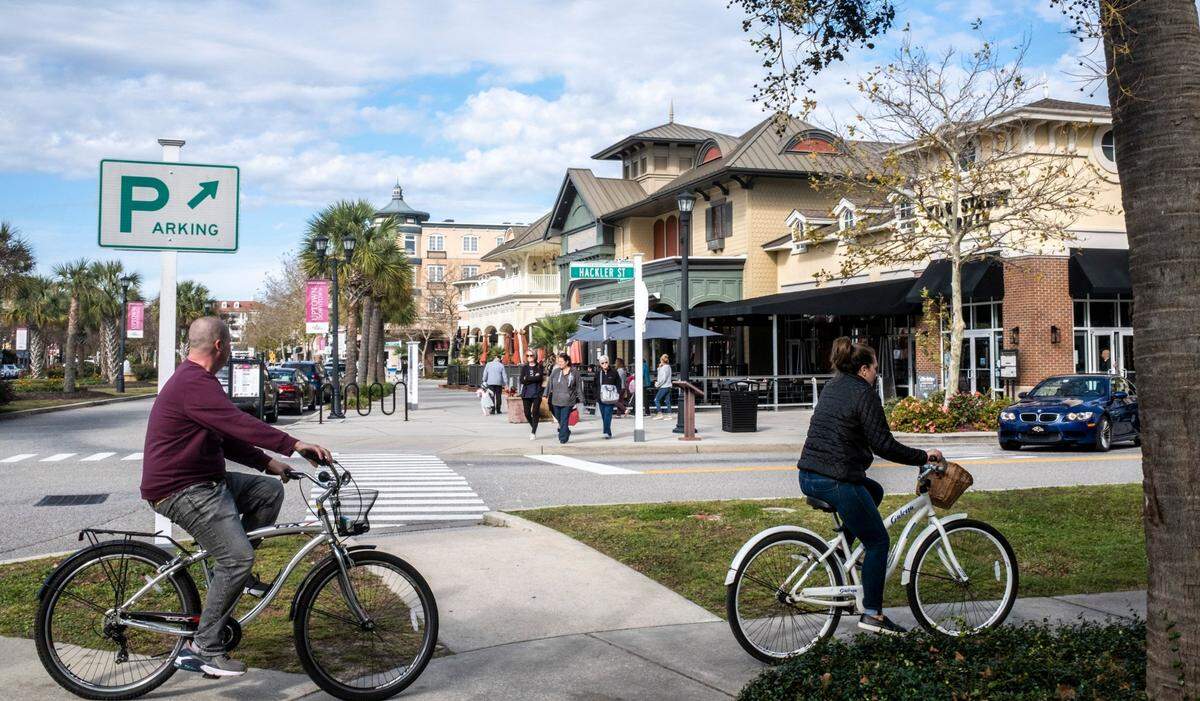
These types of projects provide consumers with a more experience-oriented in the 2020s, and Watson said that consumers today want to be able to shop, dine and live in a close space. Downtown areas have also become popular places to shop.
The shift in trends contributed to the revitalization of Conway’s downtown area, which large shopping centers once negatively impacted.
“People have this almost retro desire to hearken back to main street shopping experiences,” he added.
For Spencer, mixed-use developments serve as a strong alternative use for land once occupied by large shopping centers.
While Spencer said that mall and property owners and developers typically have a low-risk tolerance, mixed-use development is an ideal way to re-imagine hubs that fell into disrepair due to disinterest.
Living close to work, restaurants and shops locals like to frequent provides an easy way of living that’s appealing for many. In short, building a community where it once existed before. Spencer asserted that properties built decades ago, which make less income or have deferred maintenance, are good opportunities for re-investment and re-imagination.
He referred to these properties as “B malls” —part of a real estate industry grading system used to help determine the investment grade and value for commercial properties like malls.
“The biggest shift in the last five, six years, is that you don’t have to get rid of the B malls,” Spencer said. “You can repurpose and re-imagine to a mixed-use environment.,” Spencer said.
Spencer added that cutting down on the amount of retail space also helps owners provide more exclusive shopping options while avoiding providing redundant services.
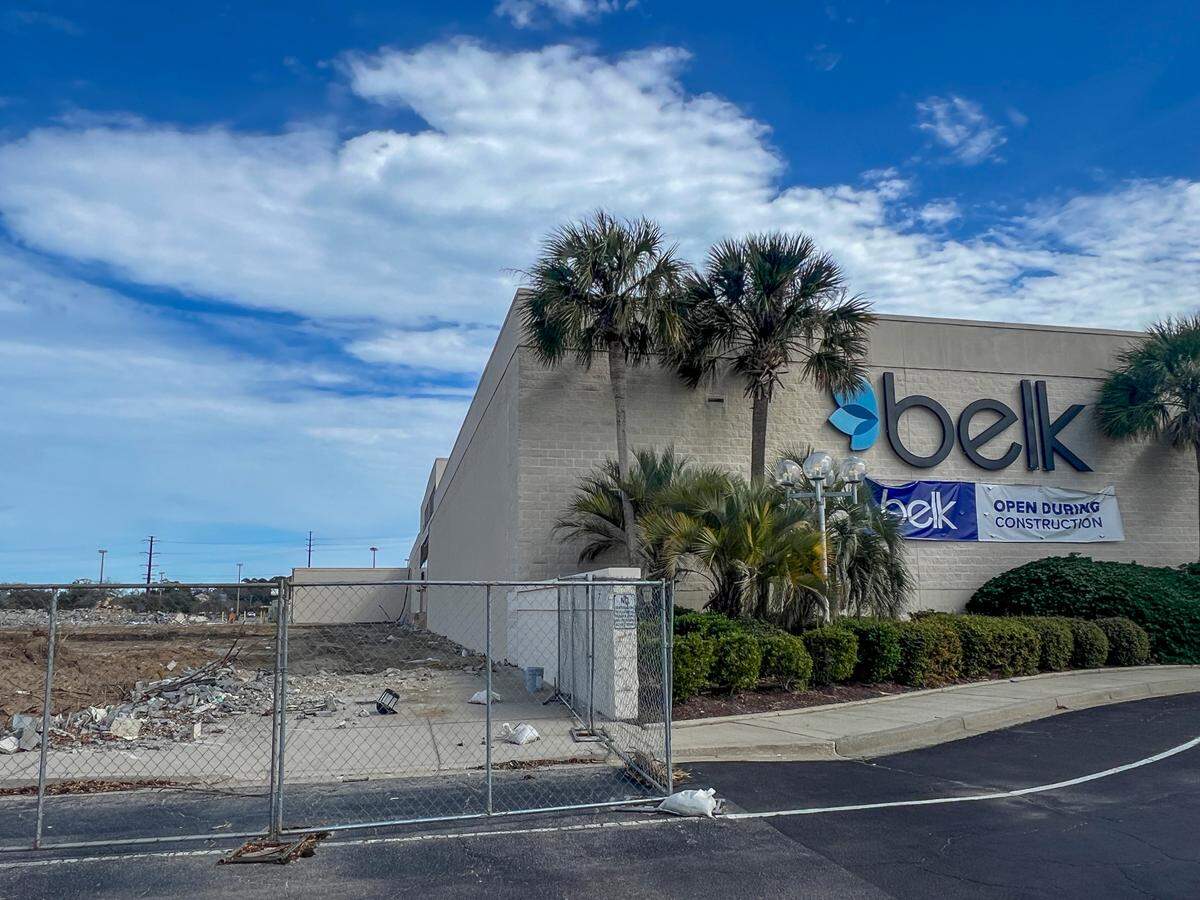
The re-imagining of Inlet Square is already doing just this. The property owners want to replace the former 500,000-square-foot shopping mall with a smaller 250,000 space with retail broken up into several smaller parcels. Watson said downsizing is the correct approach to renovating these sites.
He added that keeping such big shopping centers with extensive retail space doesn’t make sense in 2025.
“I think there has to be an intentional design decision to either segment the land into different potential experiences revolving around shopping or dedicating a smaller part to the actual retail experience and then surrounding it with other uses,” he said.
Spencer added that re-developing a property needs a holistic approach where potential residential, retail, commercial, and other projects combine into an integrated, master-planned space. Success means building a thriving new community. Failure could set a struggling property back even further.
“When you have that symbiotic relationship, that’s actually the ones that are the most successful,” Spencer said. “Those property owners that go about it that try and silo out their different asset class groups, they tend to not be as successful as the ones that are more integrated and treat the customer as a single customer.”
This story was originally published April 14, 2025 at 5:00 AM.