Backed taxes: SC Supreme Court tosses Myrtle Beach, Horry County Hospitality fee deal
Myrtle Beach and Horry County will go back to the drawing board after the state’s high court rejected a settlement over the hospitality fee.
It appears the long-standing dispute will now continue after the Wednesday ruling by the South Carolina Supreme Court.
In March 2019, Myrtle Beach sued Horry County over the collection of the hospitality fee. The tax was used to help fund road projects, but concerns were raised after the county planned to use some of the money to help construct I-73. Other municipalities then joined Myrtle Beach in the suit.
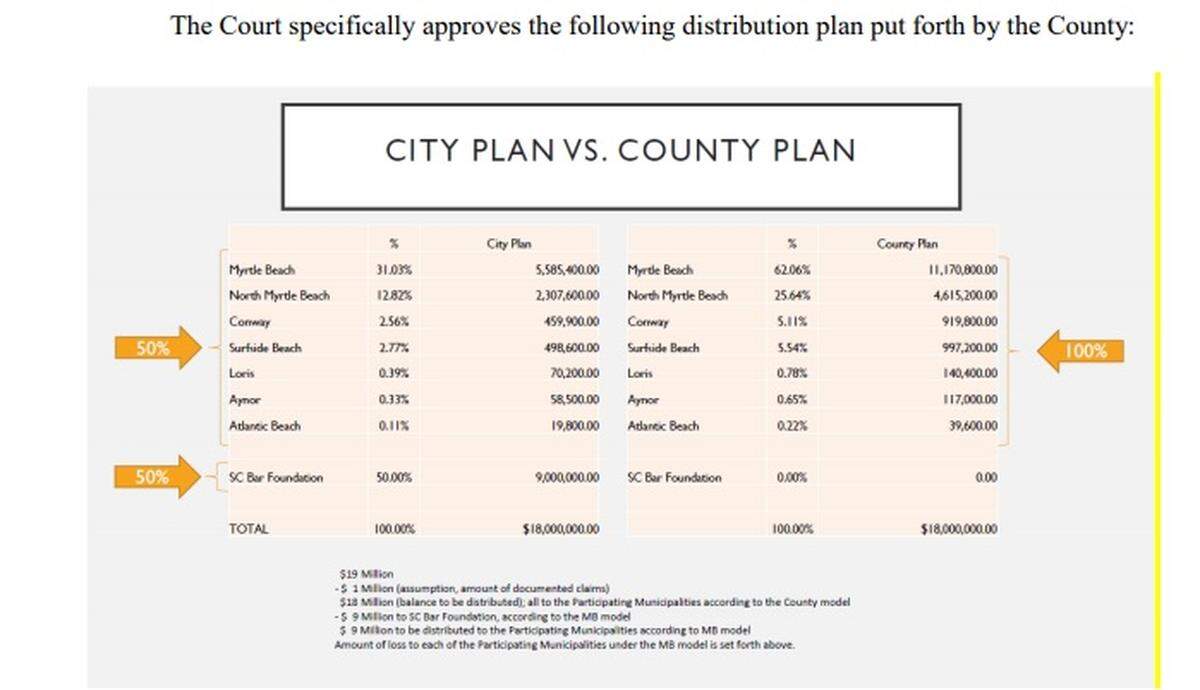
Myrtle Beach and Horry County announced in September they reached a deal over the tax. However, the settlement left a substantial decision up to a judge on how best to distribute roughly $19 million. The city’s plan called for area municipalities to receive about half the money with the other funds going towards lawyers. Horry County’s plan called for all the money to be distributed to the towns.
The two entities submitted their plans to a local judge, who sided with the county’s proposal.
On Tuesday, the South Carolina Supreme Court ruled on a fairly routine issue rejecting an Horry County appeal that prevented the county from collecting the fee while it was in dispute.
In the footnotes, though, the court noted a settlement requires all issues to be resolved. In the hospitality fee lawsuit, the city and county did not agree on how to distribute the funds, the court stated.
As a result, the high court tossed the local judge’s settlement order and rejected the agreement.
Myrtle Beach and Horry County can continue to negotiate a deal and if a new one is reached, the court can decide to approve that agreement, the Supreme Court ruled.
After the ruling, Horry County released a statement that it was posting its Friday budget retreat so staff could review the decision and determine any possible impacts on future budgets. Each year, Horry County Council county administrators hold two budget retreats, a preliminary one in the fall and another in the spring.
Due to the COVID-19 pandemic, Horry County Council decided to maintain its July 2019 - June 2020 budget without any major changes. That meant this week’s planned budget discussions would have been the first since the pandemic began, where local leaders would have had to account for the economic hit the virus has brought to the county.
Horry County’s current budget is a $459 million pot of money meant to carry the county through next summer. That itself is a $73.4 million decrease from 2018-2019’s budget of $532.8 million. At stake in the court’s ruling is another potential loss of several million, plus tax revenue losses the county has suffered due to the pandemic.
To date, cutbacks in hiring, nonessential operations and an injection of cash from the federal government allowed Horry County to maintain its financial footing. However, future budgets are likely to be impacted by the pandemic.
Myrtle Beach spokesman Mark Kruea declined to comment, saying the city doesn’t typically comment on pending litigation.
Fight over tax
Myrtle Beach sued Horry County in March 2019 over collection of the hospitality fee. Myrtle Beach officials argued in the initial filing that since 2017 the county “wrongfully imposed, collected, retained and used revenues derived from the 1.5% hospitality fee.”
The fee is collected from hotels and other accommodations.
The lawsuit stated the 1.5% hospitality tax stemmed from a 1996 program to help short- and long-term transportation needs. As part of that program, a tax would apply to Horry County municipalities called a hospitality fee, the filing states. The money funded a road improvement program throughout the county.
In 2018, the Horry County Council approved $30 million from the fee towards the construction of I-73.
However, city leaders argued they did not agree to the plan nor taxes being collected after 2017.
The lawsuit did not specifically name other Horry County municipalities - such as Surfside Beach, Conway and North Myrtle Beach - as plaintiffs, but grouped them together as similarly situated plaintiffs.
That lawsuit sparked a months-long legal fight, often in public, between city and county leaders.
In June 2019, a judge appointed to oversee the case sided with Myrtle Beach and issued an injunction that barred Horry County from collecting the fee inside of municipality limits. However, the cities could not spend the money collected.
At one point, Horry County and Myrtle Beach officials met behind closed doors for hours and announced they had reached a settlement in the case. However, concerns over using the hospitality tax to cover Myrtle Beach’s $6 million in attorney fees led to the deal falling apart.
As the sides neared appearing before the South Carolina Supreme Court on the case, they again met and tried to reach a settlement. But, confusion reigned following simultaneous meetings by both governments to approve a deal.
Myrtle Beach voted for the agreement, but Horry County voted to let the court decide how the money would be distributed. Even as the sides argued before the high court, there was disagreement with Horry County’s attorney saying that the deal was not complete.
About a month after arguing before the Supreme Court, Horry County and Myrtle Beach announced they settled the lawsuit.
This story was originally published December 2, 2020 at 6:07 PM.