Myrtle Beach, municipalities to get millions of dollars more in OK’ed hospitality fee deal
Local cities and towns will see millions of more dollars in hospitality fee payments after a judge approved a county plan over Myrtle Beach’s proposal.
On Tuesday, Judge William Seals issued an order approving Horry County’s plan on how to distribute Hospitality Fee money that was collected in the last few years. The approval was one of the final legal hurdles needed to end an 18-month-long legal dispute.
In March 2019, Myrtle Beach sued Horry County over the collection of the hospitality tax and a plan to use recent collections to fund I-73. In September, the two sides announced a settlement, but left it to a judge to decide how to distribute about $19 million in collected tax.
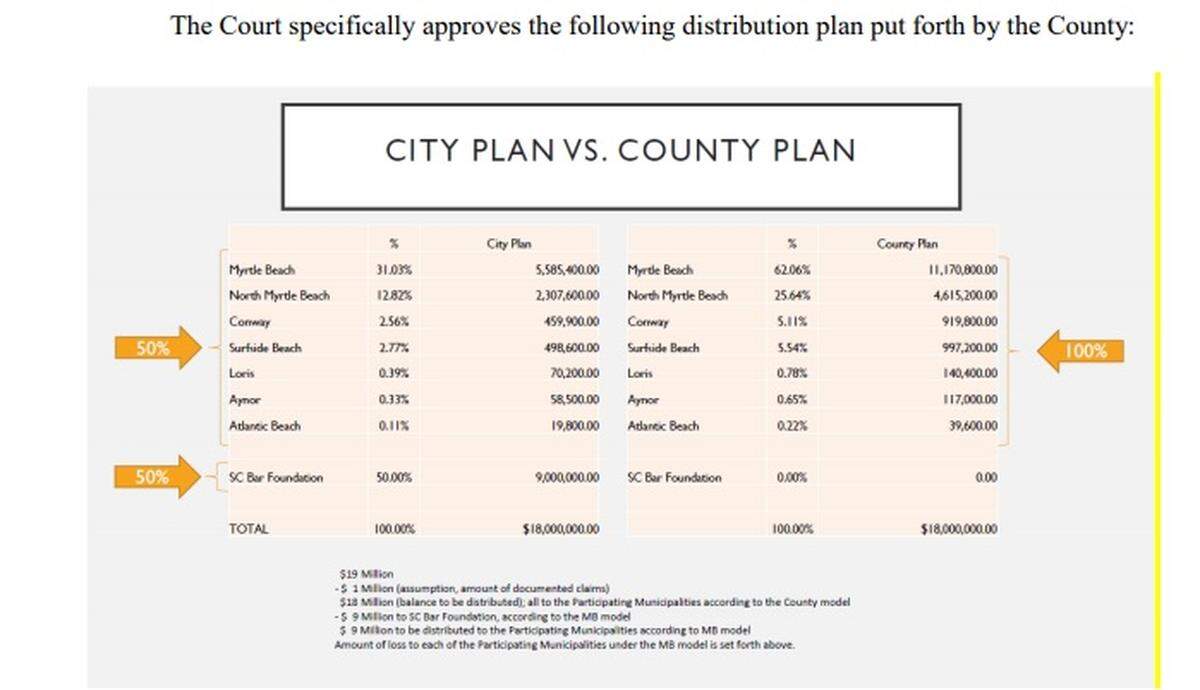
Myrtle Beach’s proposal called for 50% of the money to go to local municipalities — Myrtle Beach, North Myrtle Beach, Conway, Surfside Beach, Loris, Aynor and Atlantic Beach — and the other half to go to lawyer groups.
Horry County’s proposal called for no money for lawyer groups, and instead the cities would split the entire pot. The judge sided with the county’s plan.
As a result, cities will now receive about twice as much under the county’s proposal instead of Myrtle Beach’s plan. For example, under the approved plan, Myrtle Beach would be getting $11.17 million in the leftover money. The city’s plan called for Myrtle Beach to only receive $5.585 million.
Fight over tax
Myrtle Beach sued Horry County in March 2019 over collection of the hospitality fee. Myrtle Beach officials argued in the initial filing that since 2017 the county “wrongfully imposed, collected, retained and used revenues derived from the 1.5 percent hospitality fee.”
The fee is collected from hotels and other accommodations.
The lawsuit stated the 1.5 percent hospitality tax stemmed from a 1996 program to help short- and long-term transportation needs. As part of that program, a tax would apply to Horry County municipalities called a hospitality fee, the filing states. The money funded a road improvement program throughout the county.
In 2018, the Horry County Council approved $30 million from the fee towards the construction of I-73.
However, city leaders argued they did not agree to the plan nor taxes being collected after 2017.
The lawsuit did not specifically name other Horry County municipalities - such as Surfside Beach, Conway and North Myrtle Beach - as plaintiffs, but grouped them together as similarly situated plaintiffs.
That lawsuit sparked a months-long legal fight, often in public, between city and county leaders.
In June 2019, a judge appointed to oversee the case sided with Myrtle Beach and issued an injunction that barred Horry County from collecting the fee inside of municipality limits. However, the cities could not spend the money collected.
At one point, Horry County and Myrtle Beach officials met behind closed doors for hours and announced they had reached a settlement in the case. However, concerns over using the hospitality tax to cover Myrtle Beach’s $6 million in attorney fees led to the deal falling apart.
As the sides neared appearing before the South Carolina Supreme Court on the case, they again met and tried to reach a settlement. But, confusion reigned following simultaneous meetings by both governments to approve a deal.
Myrtle Beach voted for the agreement, but Horry County voted to let the court decide how the money would be distributed. Even as the sides argued before the high court, there was disagreement with Horry County’s attorney saying that the deal was not complete.
About a month after arguing before the Supreme Court, Horry County and Myrtle Beach announced they settled the lawsuit.