
Downtown plans have come and gone over the past two decades. Why is this time different?
Since at least the early 1990s, the City of Myrtle Beach has been tasked with jump-starting downtown redevelopment.
While plans created by consultants have seemingly been set on the shelf in the past, this time around, things are different, said Bill Pritchard, chairman of the Myrtle Beach Planning Commission.
“Not a lot’s changed, a few here and there, but not a lot,” Pritchard said during Tuesday’s Downtown Redevelopment Corporation meeting. “It can be frustrating to put all those hours in and effort and bringing the consultants in and the people and have a nice paper at the end.”
But this time, obvious involvement from the city council is a game changer, Pritchard said.
At the DRC meeting, every council member was in attendance except for councilman Mike Lowder, who was out for medical reasons. Myrtle Beach Mayor Brenda Bethune and city manager John Pedersen also were there.
Council has been working with Benchmark Planners — a consulting firm the city hired for $82,000 — to create a downtown master plan.
“In the past what they’ve generally done is they’ve appointed a committee,” Pritchard said. “It would be like the DRC trying to do it. So, having council engaged is a good first step, because, ultimately, they’re the ones that have to answer very directly to the voting populous.”
Past plans
In 1994, city council worked on a new plan for downtown Myrtle Beach, identifying three objectives — rationalize the downtown traffic system, revitalize the traditional business district and pinpoint vacant areas that need developed.
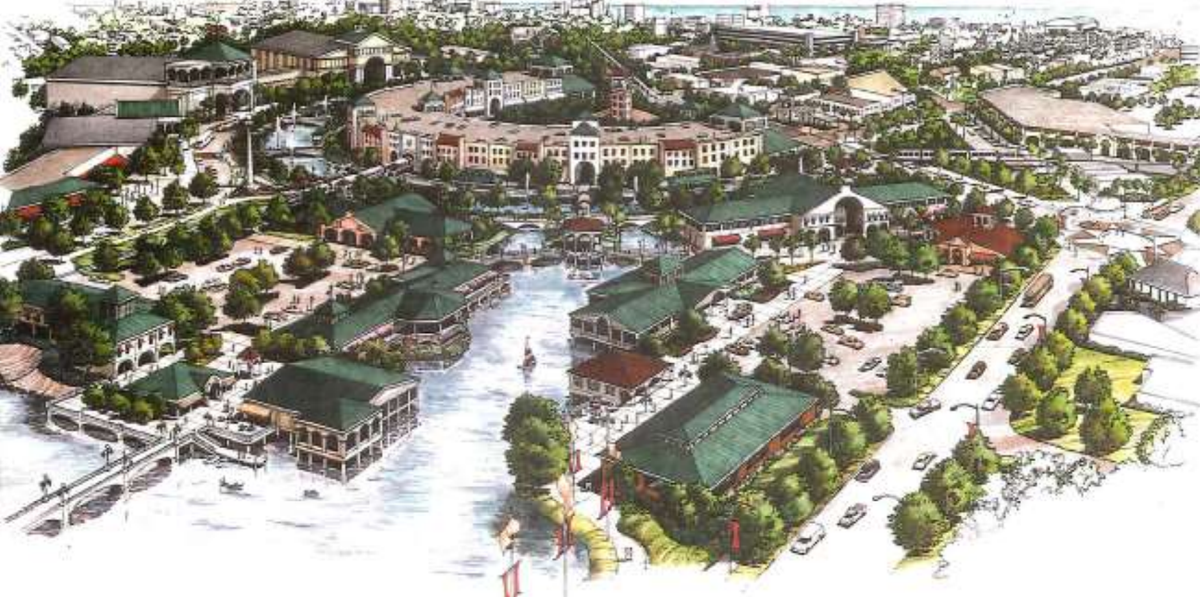
A key area council said needed developed was the industrial areas west of Broadway Street and North Oak Street. At the time, they wanted to build a new visitor center, add two theaters and 175,000-square-feet of retail. The new developments would surround a small lake and excursion train.
Nothing happened.
In 1995, Burroughs & Chapin — a privately owned real estate investment trust — built Broadway at the Beach, an entertainment complex located between 21st Avenue North and 29th Avenue North.
Broadway houses restaurants, stores, a movie theater and clubs, which surround a lake — seemingly similar to the plans proposed for downtown Myrtle Beach. The complex is at least a seven-minute drive from the downtown area.
One year later, Burroughs & Chapin announced the closing of the Pavilion amusement park, which would leave 11 acres empty in the middle of downtown Myrtle Beach.
Then-board chairman Egerton Burroughs told The Sun News in 1996 his company was working closely with the city on a redevelopment plan for the Pavilion site.
He said then that Burroughs & Chapin would have moved the Pavilion sooner, “but we’ve been holding in there to make sure the downtown is taken care of.’‘
The lot is located between 8th Avenue North and 9th Avenue North, in front of the Superblock properties.
At the time of the announcement, the city council pondered purchasing the Pavilion lot, which would cost the city between $11 and $13 million.
Despite the announcement, the park did not officially close until 2006.
In 1998, city officials and residents started to become concerned by a decrease in families visiting the area, according to a Pavilion Master Plan.
In the plan, a change from families to a younger crowd caused a “sameness” of merchandise offered, a lack of variety of restaurants, an increase in body piercing shops, low-quality motels and poor maintenance.
According to the master plan, these changes added “to the perception that the area is changing for the worse.”
Keeping with the 1994 plan, the city council again called for the reorganization of the roads and building a new visitor center. The plan also added several small parking garages, new landscaping and parks, a transportation center, a pier and boardwalk.
Again, nothing seemed to immediately come from the plans.
In 2001, the city council presented renderings for the Pavilion site, calling the ideas “The New Downtown,” with the thought the amusement park would soon be gone from the land.
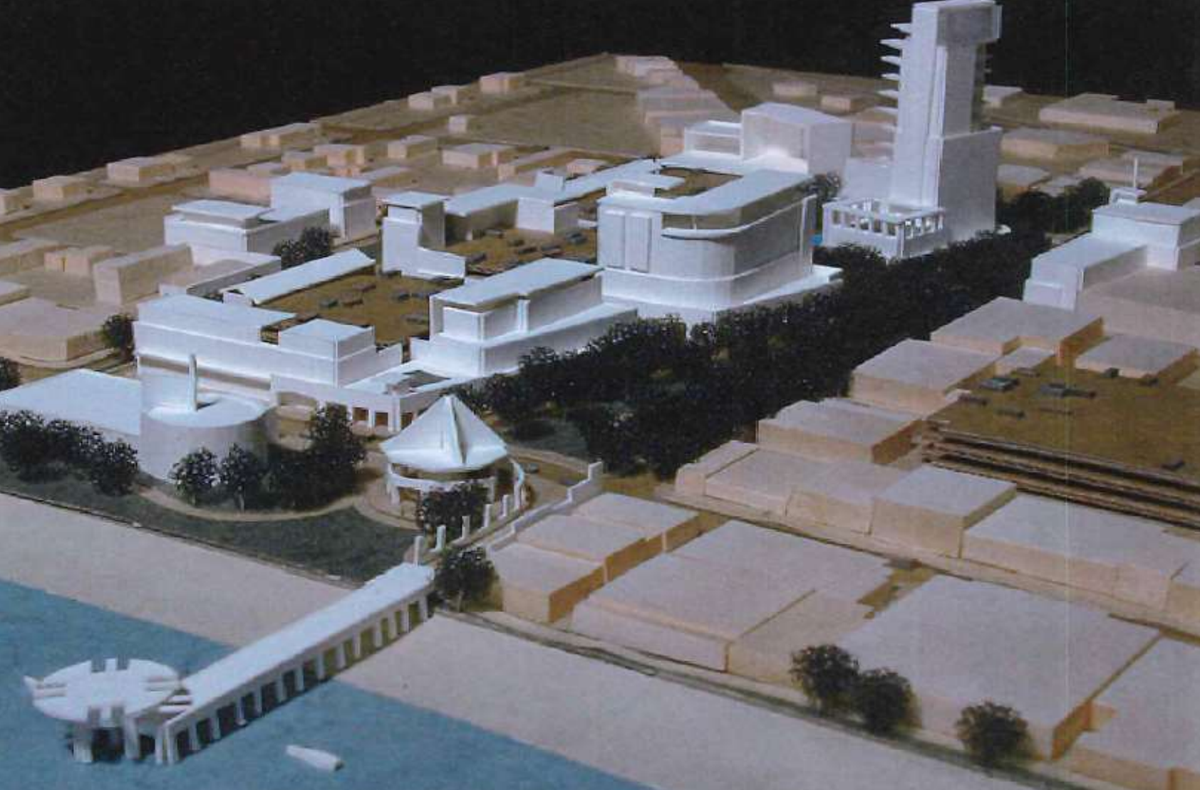
The renderings show a new pier on the oceanfront, with a highrise building and several new structures on the Pavilion lot.
The goal of the plan was to reinforce Myrtle Beach as a family destination and pitch the area as a year-round destination, encourage people to stay in the downtown area, improve the walkability of the area and reuse the Pavilion site.
However, no initial moves were made to purchase the property.
In 2006, The Sun News reported a high-end real estate investment, featuring office space and luxury housing lofts, but nothing ever came of the proposal.
Now, Myrtle Beach Zipline Adventures sits on part of the land, leaving the rest vacant. Events such as the Carolina Country Music Festival are held on the property each year.
Another shopping and restaurant complex was built in 2008, known today as The Market Common. The area is located at the former Myrtle Beach Air Force Base, along Farrow Parkway.
By 2010, the focus returned to downtown Myrtle Beach with the addition of the boardwalk along the oceanfront. But a master plan for downtown redevelopment never followed through.
In 2017, former Myrtle Beach Mayor John Rhodes suggested plans for a new children’s museum and library in the Superblock area. However, the project was put on hold during the last mayoral election.
Today, city council is still working to create another plan for downtown redevelopment. So far a deal with Coastal Carolina University to bring a new theater to the Superblock has been approved.
Downtown Master Plan: 2018
While they’re still working on a final master plan, this council has taken a first step in deciding what downtown Myrtle Beach will look like in the future, using some ideas from past plans.
So far, city council has answered a key question: will it focus on tourists or locals?
Downtown consultant Dan Douglas identified four different areas in the city to help answer that question — historic Main Street, an arts district, the Kings Highway corridor and the oceanfront.
According to Douglas, the oceanfront will pertain to tourists and Main Street for locals. The two will be tied together through the arts district.
Douglas emphasized the creation of new parks and green spaces, mainly around Withers Swash, which could potentially circle around the downtown area of Myrtle Beach, he said.
In downtown Myrtle Beach, Bethune said she wants to see cottage communities or tiny houses, where young professionals could live.
Douglas suggested public projects including a new city hall, library, children’s museum and arts district as possible investments. In the private sector, he suggested new housing and hospitality developments.
During Tuesday’s city council meeting, Douglas hinted at a new office building a developer is interested in building in the area.
“We want to make it easy to do the things you want to do in your community and make it difficult for the ones you don’t,” Douglas said.
Moving forward, the public will have a chance to give their input from noon to 4:30 p.m. on Jan. 16. Starting at 6 p.m. there will be a public workshop.
In late November, council discussed spending $20,000 on a four-day forum that would give the public a chance to sit down with planners and give their input on the plan so far.
While council did not make a decision that day, councilwoman Mary Jeffcoat said they gave direction to move forward with the one-day forum.
Council will again work with the Benchmark Planners during their Jan. 22 and Feb. 12 council meetings. A master plan will be presented on March 15.
“We’re making and investing and it’s not just going to be a plan that just sits on the shelf,” Bethune said during the Nov. 27 special meeting.