SC’s highest-paid superintendent earned rewards on district’s credit card spend
READ MORE
Unchartered Territory
Unchartered Territory is an ongoing series by The State Media Co. about South Carolina’s changing charter school landscape
Expand All
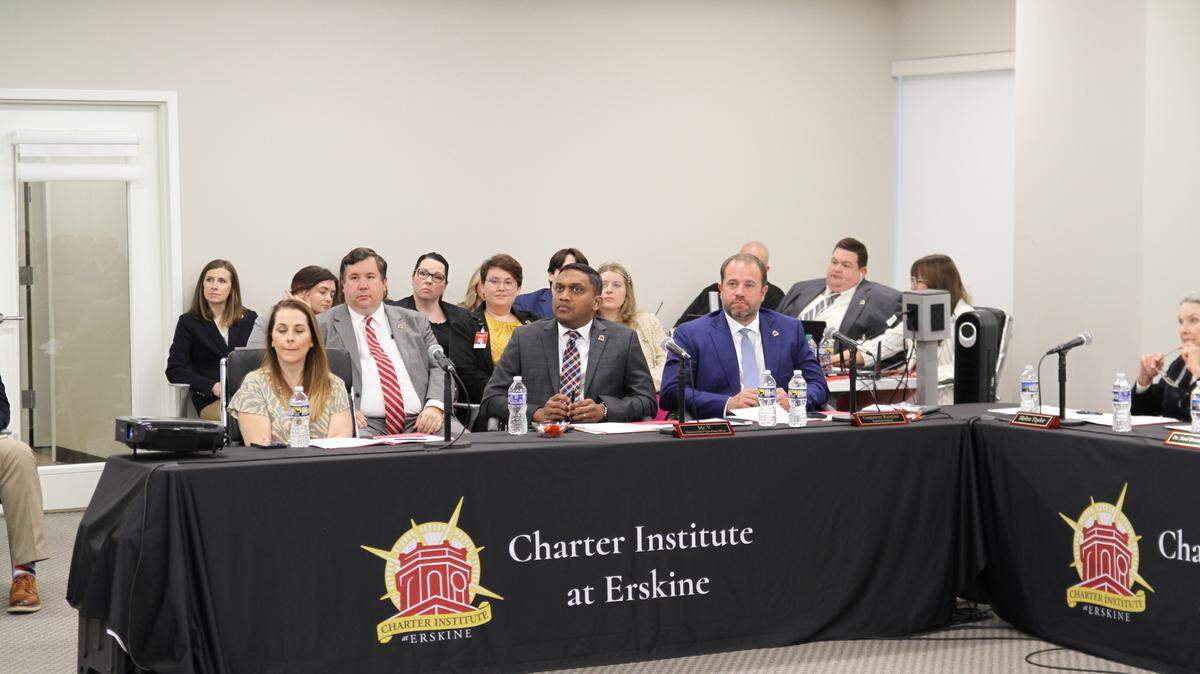
When South Carolina’s largest public charter school district opened in 2018, officials said no financial institution would provide it a revolving line of credit.
In need of funds, the Charter Institute at Erskine, a taxpayer-supported affiliate of Erskine College, relied on its superintendent’s personal creditworthiness to open a Hilton Honors American Express business card for district purchases.
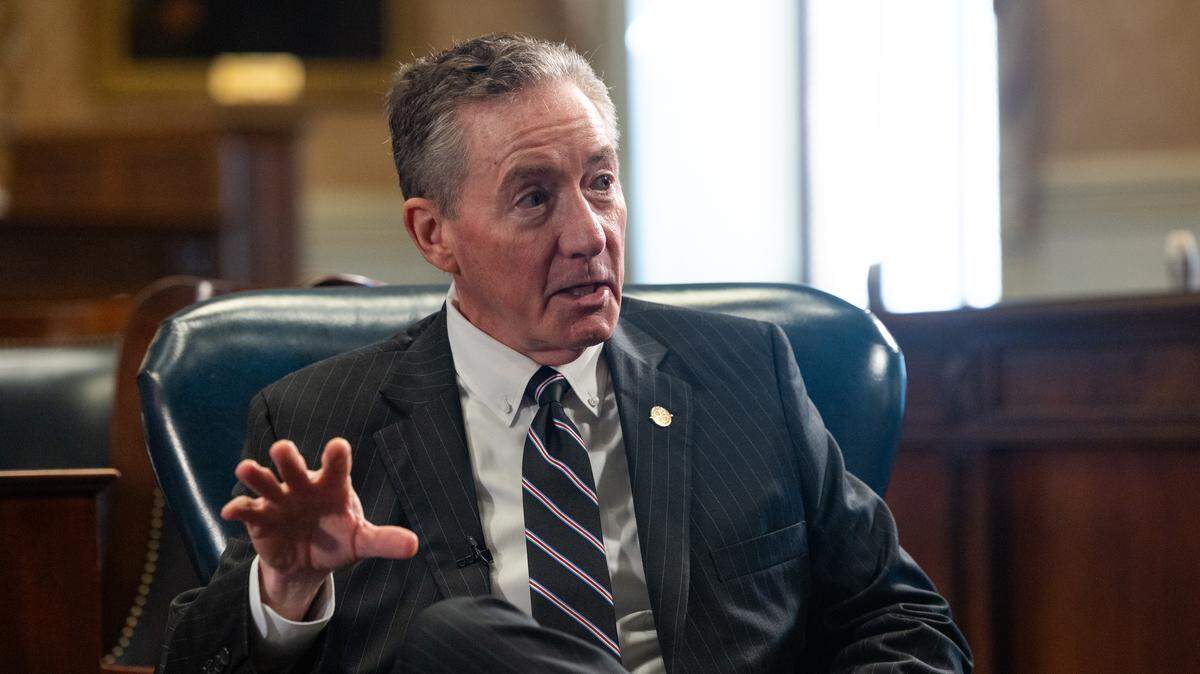
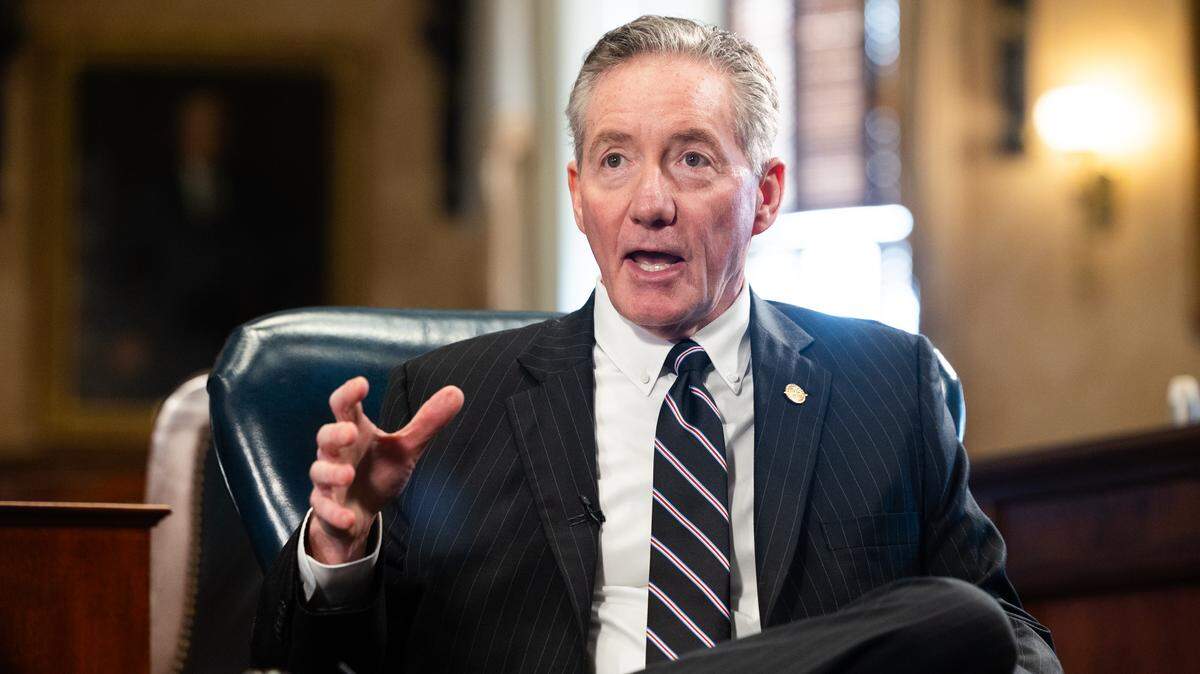
Seven years later, the district oversees 28 schools and has a $6 million budget. But its credit card remains connected to Superintendent Cameron Runyan.
Runyan, a former Columbia councilman, has historically retained the Hilton Honors rewards points that accrue from district purchases for personal use.
The more credit card spending he authorized as the Charter Institute’s chief executive, the more points he earned.
The arrangement, unique among statewide charter school authorizers, “raises numerous red flags” and may create an appearance of impropriety, said Joseph Seiner, a law professor at the University of South Carolina.
“It seems like a highly unusual practice for any organization, let alone a taxpayer-funded institution,” said Seiner, an expert in labor and employment law.
Since 2023, when the district began posting its full credit card statements online, the Charter Institute has put more than $1 million on the Hilton Honors card, credit card statements show.
Those taxpayer-funded purchases, which include $285,000 for domestic hotels and airfare, $148,000 for international travel and $120,000 for restaurants and catering, have generated more than 5 million rewards points.

Hilton Honors points aren’t convertible to cash, but can be redeemed for hotel stays, car rentals, flights and a variety of other expenses. Their value fluctuates, depending on multiple factors, but they’ve typically been worth between 0.4 and 0.6 cents each, according to NerdWallet, a personal finance website.
At that conversion rate, the number of points earned since 2023 equates to about $25,000 in travel benefits.
The Charter Institute declined to disclose how many credit card points had accrued prior to 2023, and denied a public records request for how the points were used, asserting it “does not retain documents regarding employees’ personal expenditures.”
By law, public employees are prohibited from using their office to obtain an economic benefit for themselves or their associates.
The Charter Institute at Erskine, however, argues that its employees aren’t bound by governmental accountability standards because they are not public workers.
While the district is publicly-funded and has historically behaved like a public institution, it now posits that it is a private entity and, therefore, not subject to certain legal statutes.
To make its case, the district cited a 2022 denial letter from the South Carolina Public Employee Benefit Authority notifying Charter Institute officials that because the district was “not a governmental entity” its employees were not eligible to participate in the state’s retirement system.
In a six-page letter responding to The State Media Co.’s questions about the Charter Institute’s credit card setup, a law firm retained by the district asserted it would be false and defamatory for the newspaper to suggest the district was required to turn over employee records and contracts or was governed by state ethics laws that prohibit nepotism and self-enrichment.
“The Charter Institute is committed to working openly with the press and favors transparency and cooperation, particularly as set forth in applicable state and federal laws,” attorney Barrett R. Brewer wrote in the letter. “However, employees of private institutions have certain reasonable expectations of privacy, in regards to their compensation and payroll records. We hope you are respectful of the rights of private citizens and private employees, just as the Charter Institute strives to be as respectful of the rights of the press.”
Derek Black, a University of South Carolina law professor, said it’s difficult to see how charter school authorizers, which are responsible for approving new taxpayer-funded charter schools, could be anything other than public institutions.
“How could you be allowed to bind the state of South Carolina’s taxpayers and not be a state actor?” said Black, an expert in education law who has written extensively about charter schools. “The taxpayers and the Legislature would lose their ever-living minds to think that people running around the state of South Carolina who could bind the taxpayers are not state entities.”
While the South Carolina Ethics Commission has long considered the Charter Institute a “state entity,” whose employees and officials are subject to all provisions of the Ethics Reform Act, the agency is now reassessing that determination.
Meghan W. Dayson, the commission’s director, said she hadn’t known the Charter Institute identified as a private, non-governmental entity until a reporter from The State asked her about it last week.
Dayson said the Ethics Commission, which investigates complaints lodged against public officials and employees, had based its conception of the Charter Institute in part on correspondence from the S.C. Department of Education.
In a 2022 email shared with The State, the Education department’s deputy superintendent of legal affairs advised the newly-formed Limestone Charter Association, a taxpayer-supported affiliate of the now-defunct Limestone College, that it was a “state” entity, like the Charter Institute, and should begin filing statements of economic interest with the Ethics Commission.
Dayson said her staff was reviewing that assessment in light of the Charter Institute’s 2022 denial letter from the S.C. Public Employee Benefit Authority and would be in communication with any impacted charter school authorizers.
The Charter Institute said in a statement that while it had done its best to comply with the conflicting state agency opinions, being treated as a “traditional government school authorizer” without enjoying all the associated benefits had been difficult to navigate.
“The Charter Institute welcomes the State of South Carolina resolving this conflict and clarifying a consistent application of its laws to the Institute, so that the Institute can focus on its purpose: educating the children of South Carolina,” the district said.
If it’s determined that the Charter Institute and its employees are not subject to governmental accountability standards, the finding would bolster the district’s defense of past operational and financial decisions that have invited legislative scrutiny.
The findings of a state lawmaker-requested investigation into the charter district’s financial entanglements and vendor relationships should be released in the coming weeks.
Terms of superintendent’s credit card perk remain private
Other than the minutes from a 2019 board meeting where officials discussed the district’s credit conundrum and authorized the use of Runyan’s personal credit, the Charter Institute has provided no record of a formal agreement with the superintendent and has offered conflicting information about the existence of such an agreement.
Runyan, whose $336,000 salary makes him the highest-paid superintendent in South Carolina, told The State last November that the credit card arrangement — which he said the board had recently reaffirmed — was enshrined in his contract.
“It’s essentially part of a compensation package,” Runyan explained, after confirming that he still received rewards points from district credit card purchases.
Brewer, the district’s lawyer, this week denied that the superintendent’s current contract contained a provision allowing him to retain credit card points as compensation, but defended the Charter Institute’s ability to offer such a perk.
Because the Charter Institute has refused to furnish the superintendent’s current contract on the grounds that its employees’ records are private, The State has been unable to vet either claim.
A three-year, $900,000 pact Runyan signed with the Charter Institute in 2023 — which the district produced for The State last year without issue — afforded him a variety of benefits, but personal use of the district’s credit card points was not one of them.
The Charter Institute declined to say whether it took the credit card points into account when calculating Runyan’s taxable compensation.
Such a rewards point arrangement, one expert said, would have tax filing implications.
Clinton Wallace, a professor of tax law at the University of South Carolina, explained that any benefit an employer provides an employee is considered taxable income, unless specifically excluded by Congress or the IRS.
“There are many specific exclusions,” he said, “but none that apply to credit card points.”
Credit card setup was supposed to be temporary
When the Charter Institute board formalized its credit card setup in 2019, officials presented the arrangement as both temporary and unexceptional, meeting minutes show.
Runyan, who acknowledged during the district’s July 10, 2019, board meeting that he would be personally liable if the Charter Institute defaulted on the credit card, said he hoped to secure a permanent credit solution for the district within a couple of years, minutes show.
Meanwhile, Chief Operating Officer Vamshi Rudrapati assured board members it was “standard practice” for new charter schools to use a board member or school leader’s credit line for the first two-to-three years.
The board agreed to the “continued use of the small business credit card from American Express,” recognizing that Runyan would receive the rewards points, but acknowledged it was “just a necessary procedure until more credit is earned for the Institute,” minutes state.
When asked last year why the Charter Institute was still using the credit card so many years later, Runyan deflected.
“It’s still being used because my board voted for it to still be used,” he told The State last November. “At the end of the day, the board is the final decider of all those things.”
Stu Rodman, the only current Charter Institute board member who was serving back in 2019, said he did not recall ever voting on the credit card arrangement, but saw nothing wrong with it.
“If that’s what was done, it was right at the time,” Rodman said. “I have no idea what the current status is of it.”
Brewer, the district’s attorney, said it would be a “terrible burden” for the Charter Institute to cancel the credit card at this point.
“The Charter Institute believes it would be more disruptive and costly to its business to cancel an existing account and set up a new one, than it would be to simply answer questions that improperly suggest that the 2019 account should be cancelled,” he said in a written statement.
District’s credit card arrangement is atypical
The Charter Institute’s reliance on an employee’s personal creditworthiness does not appear to be “standard practice” in the industry, as one district official asserted in 2019.
Both the Public Charter School District and the Limestone Charter Association, which authorize a combined 63 charter schools in South Carolina, have institutional purchasing cards that do not accrue any benefits or rewards, the districts said.
Angel Malone, a former charter school principal who now runs the Limestone Charter Association, said in her 25 years working in education she’d never heard of a charter school or authorizer making purchases with a rewards card connected to an individual employee.
The state’s purchasing card program, run through Bank of America, does not utilize rewards cards either, said Delbert Singleton, assistant executive director of the South Carolina Fiscal Accountability Authority.
The optional program, which has nearly 200 public sector participants in South Carolina, offers state agencies, local governments, school districts and other public bodies “the benefits of substantial savings in processing costs and ease of using purchasing cards to fulfill their business needs,” according to a technical proposal Bank of America submitted to the state treasurer in 2021.
Rather than earning redeemable rewards points for their credit card purchases, participating entities are entitled to rebates commensurate with the amounts they spend, Singleton said.
The rebates are pumped back into an agency’s operations and do not accrue to individual employees.
Local entities that choose not to participate in the state’s P-card program are free to implement alternative purchasing card systems, Singleton said, although he advised against ones with a rewards card.
“You don’t want to set up a system that’s like a personal credit card because you’re dealing with public funds,” he explained.
This story was originally published November 5, 2025 at 5:20 AM with the headline "SC’s highest-paid superintendent earned rewards on district’s credit card spend."