A Midlands charter school is paying for its principal’s criminal defense. Here’s why
READ MORE
Unchartered Territory
Unchartered Territory is an ongoing series by The State Media Co. about South Carolina’s changing charter school landscape
Expand All
A South Carolina public charter school network is paying for the criminal defense of a principal charged earlier this year with failing to report child abuse and neglect allegedly committed by a subordinate.
Invoices obtained by The State Media Co. show GREEN Charter Schools, based in Greenville, retained a lawyer for Tina Shaw, the principal of its Midlands school, on the day of her arrest in February.
Through mid-April, GREEN had been invoiced more than $10,000 by the Columbia criminal defense attorney, records show.
While it’s not illegal to spend taxpayer dollars on an employee’s criminal defense — the law actually requires it in certain instances — doing so raises questions.
“It certainly is something that you’d want to inquire about as to why it was happening and how it happened,” said Michael Montgomery, an attorney with the Columbia-based Montgomery Willard law firm.
Montgomery, a former Richland 2 school board chair who has served as counsel for several school districts, said the legitimacy of the school’s actions depends on the situation.
“My general view is that it is not something you do,” he said of using public funds on an employee’s criminal defense. “But there might be a circumstance where you can justify it because of what the facts were.”
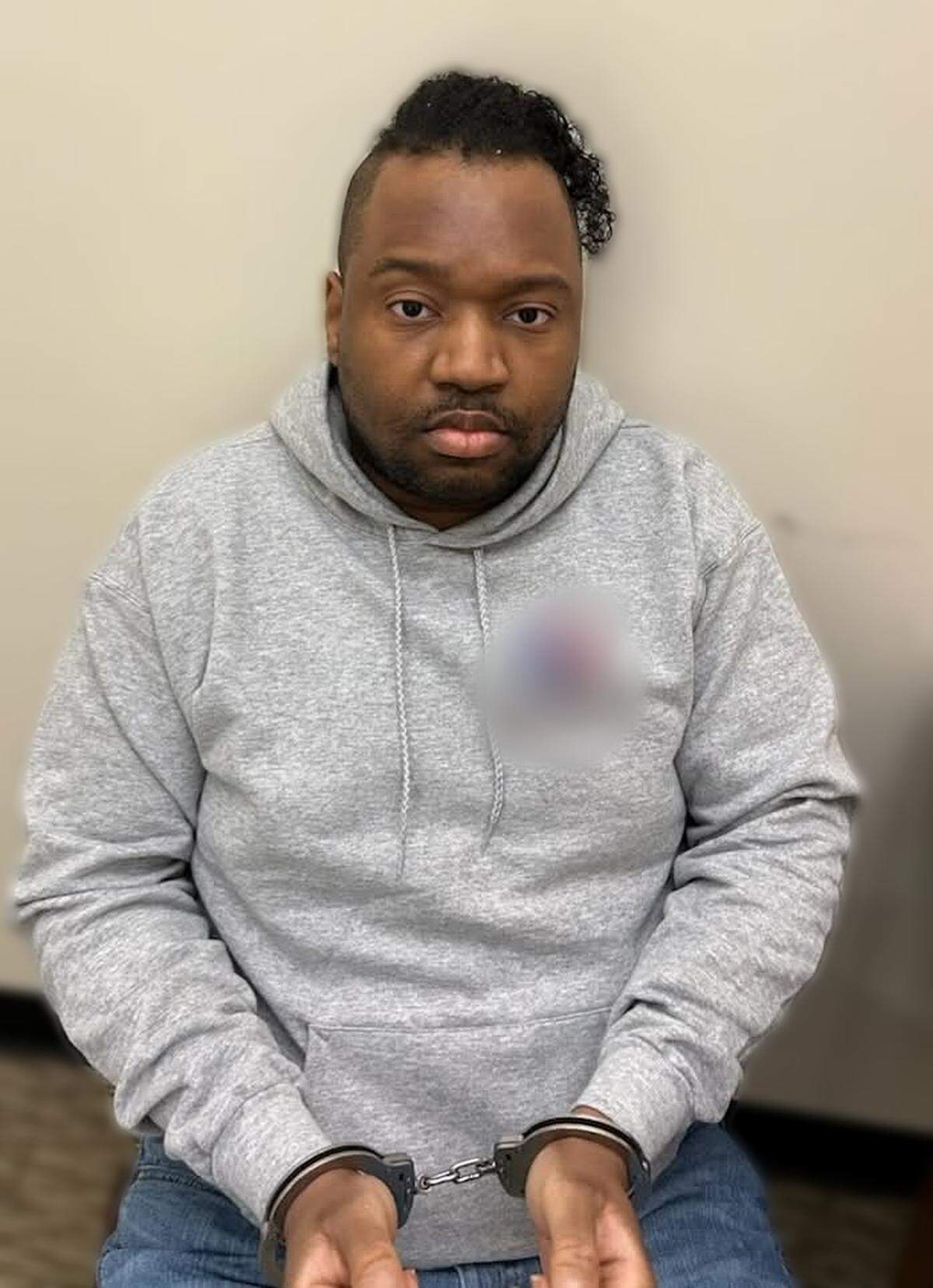
Shaw, 41, was charged Feb. 26 with failure to report child abuse and two counts of second-degree assault and battery, all misdemeanors.
Irmo police allege she failed to report child abuse allegations made against GREEN’s Midlands afterschool director, who is accused of fondling seven students, ranging in age from 5 to 12 years old.
Shaw’s assault charges stem from an unrelated incident in which police claim she performed improper searches of two students she had accused of stealing a cellphone.
GREEN terminated the afterschool director, Sulaymaan Benoit, shortly after the allegations against him surfaced, but has stood by Shaw, who was placed on administrative leave after her arrest.
The charter network contends — and documents obtained by The State corroborate — that within days of learning about the abuse allegations, Shaw notified GREEN’s human resources director, independently investigated the claims, shared what she knew with the school resource officer and provided Irmo police access to school video footage.
“We thought Tina did her job,” GREEN Charter Schools Executive Director Tom Cronin said.
Irmo police arrest GREEN principal, afterschool director
In a written statement announcing the arrests, however, Irmo police said Shaw had made her school “unsafe” and failed to protect students because she didn’t immediately alert law enforcement about the allegations against Benoit.
South Carolina’s mandated reporter law requires educational professionals to report known or suspected cases of child abuse and neglect to either the S.C. Department of Social Services or law enforcement in the county where the child resides or is found.
There is no prescribed time frame within which a mandated reporter must alert authorities, but their duty to report is not considered fulfilled until they do.
“Mandated Reporters are just that, MANDATED,” Police Chief Bobby Dale said in the written statement announcing the arrests. “Telling your human resources department does not absolve you of this duty.”

Dale later told The State that the decision to arrest Shaw hinged not just on her failure to immediately report the allegations against Benoit to law enforcement, but on her alleged failure to tell police that the school’s internal investigation had identified a second potential victim.
Records show that Shaw solicited statements from three student witnesses to Benoit’s alleged abuse the day after parents accused him of touching their daughter and that one of those students accused Benoit of touching her also.
Officials at GREEN dispute the police department’s characterization of Shaw’s response, pointing to internal emails as evidence that she thoroughly investigated the abuse allegations, which the parents of the original alleged victim told her had been reported to police, and took appropriate and decisive action.
“We take our job very seriously here at GREEN and would never sit by and let anyone mistreat a kid or not follow appropriate protocol,” Cronin said.
The charter network’s policy manual directs employees to immediately report suspected child abuse to an “appropriate supervisor, principal, guidance counselor, and/or the school social worker.”
Those GREEN representatives “will then work with the employee to contact the appropriate law enforcement and social services agencies,” the manual states.
While contemporaneous notes and emails exchanged by GREEN officials make clear that Shaw immediately reported the allegations to human resources and sought guidance on handling the situation, there is no indication that anyone at the charter network worked with her to file a report with police or DSS.
Instead, GREEN’s human resources director told Shaw she could delay notifying the school resource officer, a Richland County sheriff’s deputy, due to concerns about the officer maintaining confidentiality, according to an incident report Shaw filed.
“The principal did ask our HR director about a possible delay in sharing with the SRO on 1/30/25,” Shaw documented in her report, which she wrote in third person. “The principal wanted to ensure all information was kept confidential until we had more information about the incident. Our HR director shared it was ok to delay sharing the information until we had further insight on what occurred.”
Contemporaneous notes and emails written by Shaw and GREEN’s human resources director indicate the charter network believed police were aware of the abuse allegations and investigating them, but do not mention the legal duty Shaw had to independently report the suspected abuse. Rather, records show GREEN officials waited for Irmo police to come to them.
GREEN hires lawyers following arrests
In the days after the arrests, GREEN hired criminal defense attorney Jonathan Harvey to represent Shaw, retained the Moorman law firm to represent the charter network in its dealings with Irmo police and commissioned the Duff Freeman Seibert law firm to review all aspects of the matter and recommend process improvements.
Only the Duff contract went before GREEN’s board for a vote. The charter network opted to hire the other attorneys after consulting with the board’s lawyer, Cronin said.
“We were not notified (Shaw) was going to be arrested in the manner she was, so we had to make some very quick decisions,” he explained, adding that the board unanimously supported the decision to hire Harvey upon learning about it.
Invoices show Harvey and Moorman are charging the charter network $400 per hour and $550 per hour, respectively.
Through mid-April, the attorneys had billed GREEN a combined $13,611, records show.
It remains to be seen whether the charter network will pay the legal fees entirely out of pocket or get help from its insurance provider.
Cronin, the executive director, said he hadn’t discussed coverage of criminal defense costs with GREEN’s liability insurance carrier and declined to answer questions about any discussions the charter network’s general counsel may have had with the insurer.
Duff Freeman Seibert, which is charging the charter network $300 per hour for its lead attorney’s services, had not yet billed GREEN for its internal investigation, as of mid-April.
The firm’s March 4 engagement letter estimated the probe would take between 15 and 25 hours.
Cronin last month confirmed that Duff’s investigation had concluded and said the board discussed its findings in executive session at a recent meeting. He declined to share or summarize the report for The State, citing attorney-client privilege.
In wake of the situation — but not because of it — GREEN also recently hired a retired Greenville police major to serve as school safety coordinator, the executive director said. At its April meeting, the charter network’s board tasked a committee with defining the new position’s role, to include supervising all school resource officers and ensuring compliance with all reportable incidents.
“We did our job with regard to all of this,” Cronin said. “But his voice in that process will be a process improvement we’ve been wanting for a while.”
When can SC public schools indemnify an employee?
By law, a school district has the duty to defend an employee who has been criminally charged if the action or inaction that resulted in their prosecution occurred in the course of their employment and was carried out in “good faith.”
What exactly good faith means in that context is up for debate. The S.C. Attorney General has previously taken the position that a public official who has been indicted by a grand jury cannot argue they acted in good faith.
Since Shaw has not been indicted, however, and by all indications she attempted to comply with her school’s reporting policy, she could legitimately argue that GREEN has a duty to pick up her legal bills, Montgomery said.
“Following the instructions of your superior certainly seems to be evidence of good faith,” he said. “If the principal followed the policy and was charged because they followed the policy, they probably have a pretty good claim.”
Courts in other states have come to various conclusions regarding the question of whether public funds can be used for the criminal defense of a public official.
Some jurisdictions have found that such an expenditure is permissible if the criminal defense succeeds, i.e. the official is found not guilty or the charges are dropped. Other courts have found that it is never permissible to spend taxpayer dollars on a public official’s criminal defense.
The question does not appear to have ever been directly addressed in South Carolina, although historically, the S.C. Attorney General’s office has supported the latter position in written opinions.
In 1995, Attorney General Charlie Condon opined that a school district was without authority to pay an employee’s legal expenses in a criminal proceeding because such expenditures did not constitute a “public purpose.”
“It is for the protection of the public that our Constitution requires that public funds be spent for public purposes,” Condon wrote.
Two years later, Assistant Deputy Attorney General Bob Cook affirmed Condon’s opinion, adding that the validity of the statute requiring a school district to indemnify an employee “would also have to be addressed in any such action.”
While government agencies may rely on attorney general opinions as a guide in interpreting or applying the law, the opinions do not carry the force of law, spokesman Robert Kittle explained.
For that reason, any issues addressed in an attorney general’s opinion must still be adjudicated in court.
Reporter Hannah Wade contributed to this story.
This story was originally published June 23, 2025 at 5:30 AM with the headline "A Midlands charter school is paying for its principal’s criminal defense. Here’s why."