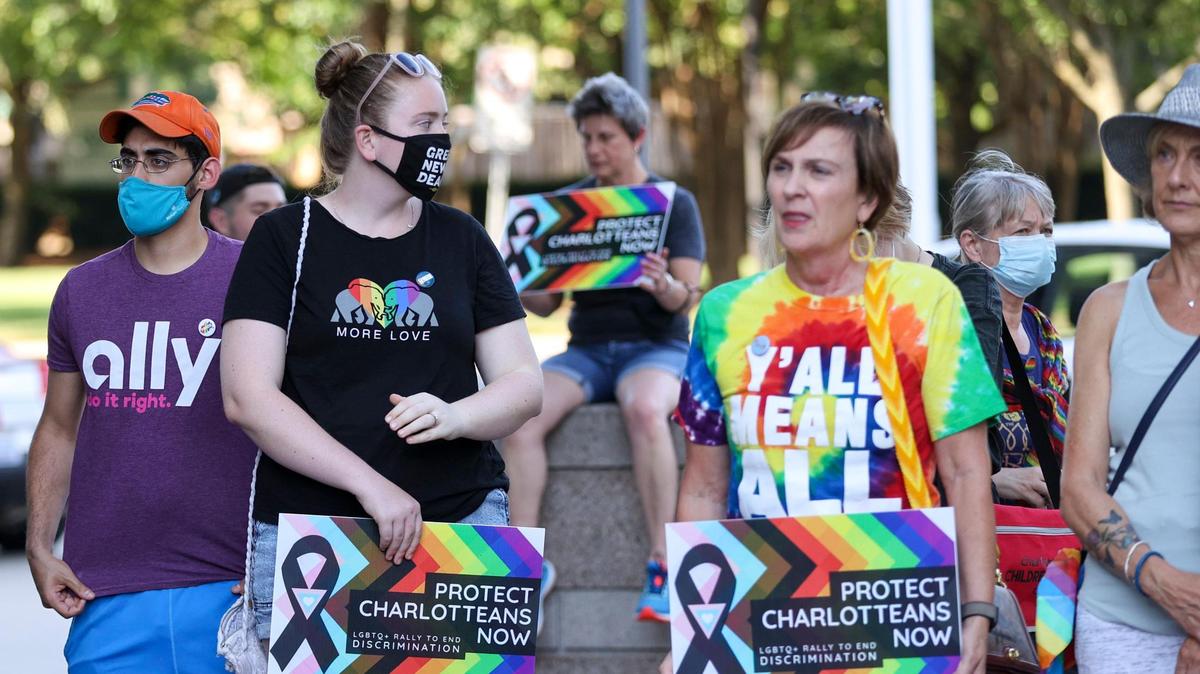
‘We do not condone discrimination.’ Mecklenburg adopts resolution to protect LGBTQ rights
READ MORE
Charlotte 2021 nondiscrimination ordinance
The Charlotte City Council, five years after HB2, passed an updated ordinance prohibiting non-discrimination based on gender identity, and numerous other areas.
Expand All
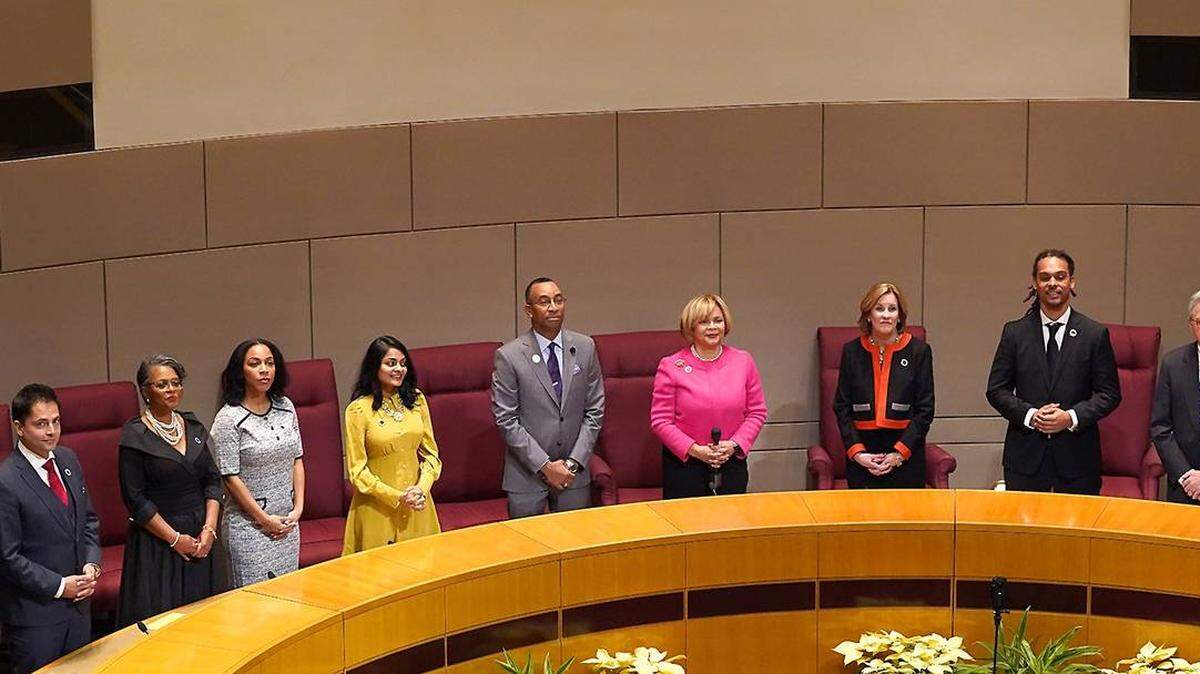
Mecklenburg County commissioners on Tuesday night unanimously adopted an LGBTQ nondiscrimination resolution, calling on local government bodies, residents and businesses to enact similar policies.
Despite substantial public opposition, commissioners voted in favor of the resolution, which also outlines protections for natural hairstyles and textures in Mecklenburg.
“There is room for all in our county,” said Commissioner Susan Rodriguez-McDowell before reading the full resolution, her voice breaking with emotion. “We do not condone discrimination against any person. Period.”
The resolution marks the first step toward a more binding ordinance, but it does not outline enforcement actions for people who discriminate against individuals based on their gender or sexual orientation, among other backgrounds.
Commissioner Leigh Altman asked the county attorney to explore Mecklenburg’s authority to expand this resolution into an ordinance.
“There is nothing radical or threatening about the Golden Rule,” Altman said of the resolution. “I’m happy that I can play a small role in protecting the basic dignity of everybody.”
The resolution reads: ”The Mecklenburg County Board of Commissioners affirms that every person deserves to be treated with dignity and respect and should be able to live in Mecklenburg County without fear, no matter their sexual orientation or gender identity, including Lesbian, Gay, Bisexual, Transgender, Queer and Non-Binary individuals.”
Unlike other declarations, Mecklenburg did not jointly craft its new resolution with the Charlotte City Council. It’s unclear when the city — and Mecklenburg’s six towns — might decide to follow suit.
Commissioners said the resolution is not about who is allowed to use public bathrooms, recalling the past controversy of North Carolina House Bill 2. That now-defunct law, among other things, discriminated against transgender residents and required them to use bathrooms that corresponded with the gender on their birth certificates. It also prevented local municipalities from enacting LGBTQ+ protective policies.
In the hours leading up to the vote, county commissioners were flooded with hundreds of emails opposing the resolution in a seemingly coordinated effort, and some spoke out against the protective measure at the meeting. Rodriguez-McDowell said that response underscored why the resolution is necessary.
“It is sad that we have to do it, but I believe we must,” Rodriguez-McDowell said.
‘Save lives’
Mecklenburg County joins other North Carolina municipalities to enact similar policies. Orange County was the first North Carolina county to pass its own LGBTQ+ inclusive ordinance in January, followed by the cities of Greensboro and Durham and the Orange County towns of Chapel Hill, Hillsborough and Carrboro.
A movement to pass an ordinance in Mecklenburg started in December.
The policies came following the sunset of the controversial House Bill 142 in December — which had replaced HB2. It returns the power to North Carolina municipalities to pass local nondiscrimination ordinances for the first time in five years.
“Tonight is a time for us to celebrate because we have certainly taken a step in the right direction,” Commissioner Mark Jerrell said. “Whenever you can acknowledge there is a need for action to take place to protect those that are vulnerable and marginalized.... I just appreciate my colleagues tonight. It speaks volumes for our community.”
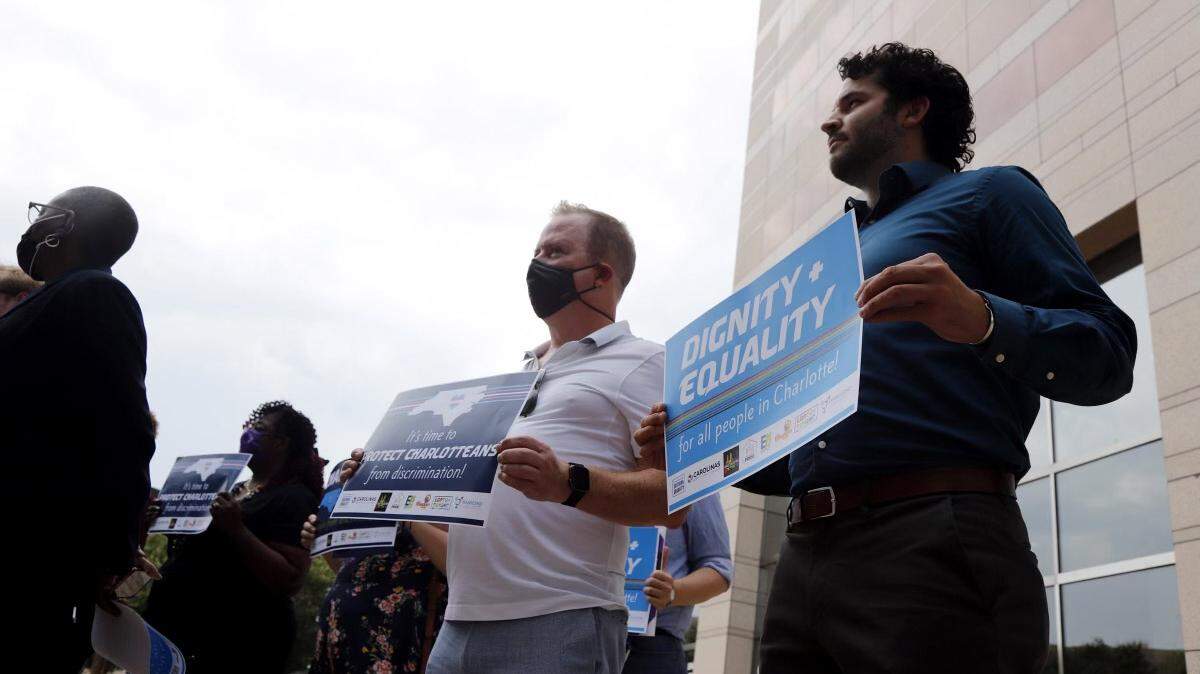
In a public forum preceding the vote, some residents applauded the resolution, while stressing Mecklenburg’s action Tuesday could be the beginning of fostering equal rights. Two residents denounced the resolution, claiming it would endanger the community in public restrooms.
Cameron Pruette, president of the LGBTQ Democrats of Mecklenburg County, said he appreciated commissioners’ efforts — emphasizing there are gaps in federal and state laws.
“You can save lives by taking next steps,” Pruette said. “I appreciate the message you’re sending tonight that Mecklenburg is an inclusive place.
Another resident, Laurel Grauer, shared a story about Blake Brockington, a transgender man and East Mecklenburg High graduate, who died by suicide in 2015 after facing discrimination.
“Democracy gives citizens unalienable rights,” Grauer said. “LGBTQ rights are also unalienable.”
What the resolution says
The resolution — drafted by George Dunlap, chairman of the county commissioners, as well as Commissioners Jerrell and Rodriguez-McDowell — supports equal treatment of all residents in government and public settings.
The resolution:
▪ Calls for nondiscrimination in government employment practices and taxpayer-funded programs based on sexual orientation, gender identity, race, religion, sex, age, national origin, veteran status and pregnancy.
▪ Promotes nondiscrimination policies in local companies and corporations.
▪ Calls for fair and equal treatment in areas of public accommodations like hotels, restaurants, hospitals, retail stores and government buildings.
▪ Aside from LGBTQ+ protections, it includes natural hair protections and prohibits discrimination based on historically Black natural and protective hairstyles, like afros and braids.
What officials say they’ll do next
Immediately following the vote, commissioners called for the county attorney to conduct a legal analysis of how far their power extends — who the resolution and possible ordinance will govern and how to enforce it.
Charlotte Mayor Vi Lyles recently said the city is working on expanding their nondiscrimination ordinance to include LGBTQ+ people, which the Charlotte City Council did in 2016.
The N.C. General Assembly responded then with House Bill 2, which overrode Charlotte’s protections. The bill was later replaced with HB 142.
“We’re hopeful that the message from the county commission comes through — that a deluge of bigoted form emails should not stop progress for equality,” Pruette told the Observer after the vote. “We’re excited to continue the work to ensure that the mayor and city council live up to their public commitments and bring forward an inclusive ordinance.”
This story was originally published February 2, 2021 at 8:25 PM with the headline "‘We do not condone discrimination.’ Mecklenburg adopts resolution to protect LGBTQ rights."