‘I did intend to defend myself.’ Boyd gets emotional during Scott Spivey hearing
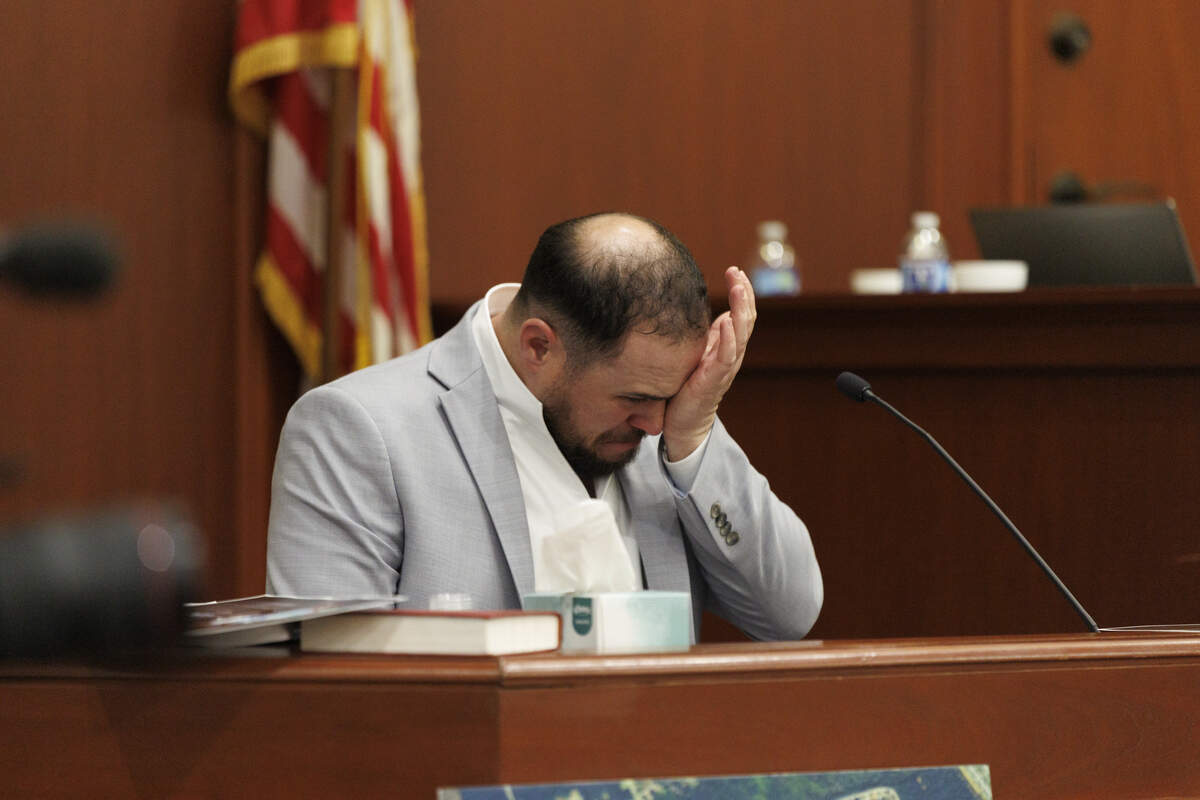
A North Myrtle Beach businessman became emotional, at one point openly weeping in a Horry County courtroom Thursday, as he described the day he shot and killed a North Carolina man nearly three years ago.
Weldon Boyd took the stand during Day 3 of his Stand Your Ground hearing in the deadly shooting of Scott Spivey.
Boyd, the owner of Buoys on the Boulevard in North Myrtle Beach, and his friend, Kenneth “Bradley” Williams, appeared in a Horry County courtroom to determine whether they will once again be granted immunity under South Carolina’s Stand Your Ground law for shooting and killing Scott Spivey nearly three years ago.
Boyd became emotional as his attorney, Ken Moss, began to question him. “It’s been a long time coming for you to tell your story,” Moss said.
Boyd shook his head, holding back tears.
Boyd said he didn’t know Spivey and had only heard of his name after the shooting.
Moss asked, “Did you intend to harm Scott Spivey?” Boyd shook his head no, again becoming choked with emotion.
Boyd testified for more than 6 hours as he described how he and Spivey encountered one another along Highway 9. He described how Spivey pointed a gun out his window at Williams’ head and then eventually ran them off the road, continuing to point his weapon at them as they tried to get back onto the road.
Then Spivey sped away, Boyd said. Boyd said he called 911 and then sped up to keep an eye on Spivey. “I’m trying to catch up,” Boyd said. “He’s running fast. I want to get his license plate.”
There were several back and forth exchanges between the two trucks along the highway. A photo taken by Boyd from his vehicle shows Spivey with his gun out the window, pointed in the air. Spivey’s face can be seen in his truck’s side mirror looking back at Boyd’s white truck as Boyd continues to follow him.
“I am following, and I relayed his location to 911,” Boyd said.
The big question raised during Boyd’s testimony is why he followed Spivey, eventually turning onto Camp Swamp Road.
“This is not what I intended. I wanted to follow him until an officer got there and got him off the road,” Boyd said. “I was just ambushed. He was sitting there waiting on me.”
Boyd’s testimony is part of the hearing that began Tuesday in front of Judge Eugene Griffith Jr., who will decide whether a civil case can move forward or whether the two men will be immune civilly for the fatal shooting of the 33-year-old Tabor City, North Carolina, man.
Boyd and Williams are facing a wrongful death lawsuit filed by the family of Spivey. The suit claims that the men pursued Spivey for nine miles before fatally wounding him in a hail of gunfire along the side of Camp Swamp Road in the Longs area.
The two men have not been charged criminally after the state Attorney General’s Office determined their actions were self-defense under South Carolina’s Stand Your Ground law.
‘I did intend to defend myself’
Boyd testified that he didn’t want any kind of “incident with that guy” before following Spivey down Camp Swamp Road.
Boyd’s 911 call on the day of the shooting was played in court, as well as audio recordings taken from his phone in the days following.
On the 911 call, Boyd can be heard accelerating as he tries to keep up with Spivey. “If he keeps this up, I’m going to have to shoot him,” he tells the dispatcher.
Boyd repeatedly tells the dispatcher that he will shoot Spivey during the call.
“I was trying to relay a really scary situation to a 911 dispatcher,” Boyd said about his words that he was going to shoot Spivey. “There was no urgency in his voice. I felt like he didn’t grasp the situation. ... (Spivey) was a danger to multiple people. He is a danger. If he shot at me, I did intend to defend myself.”
Boyd describes how Spivey “leaps” out of the vehicle and then begins walking toward his truck, and “he’s yelling and motioning.”
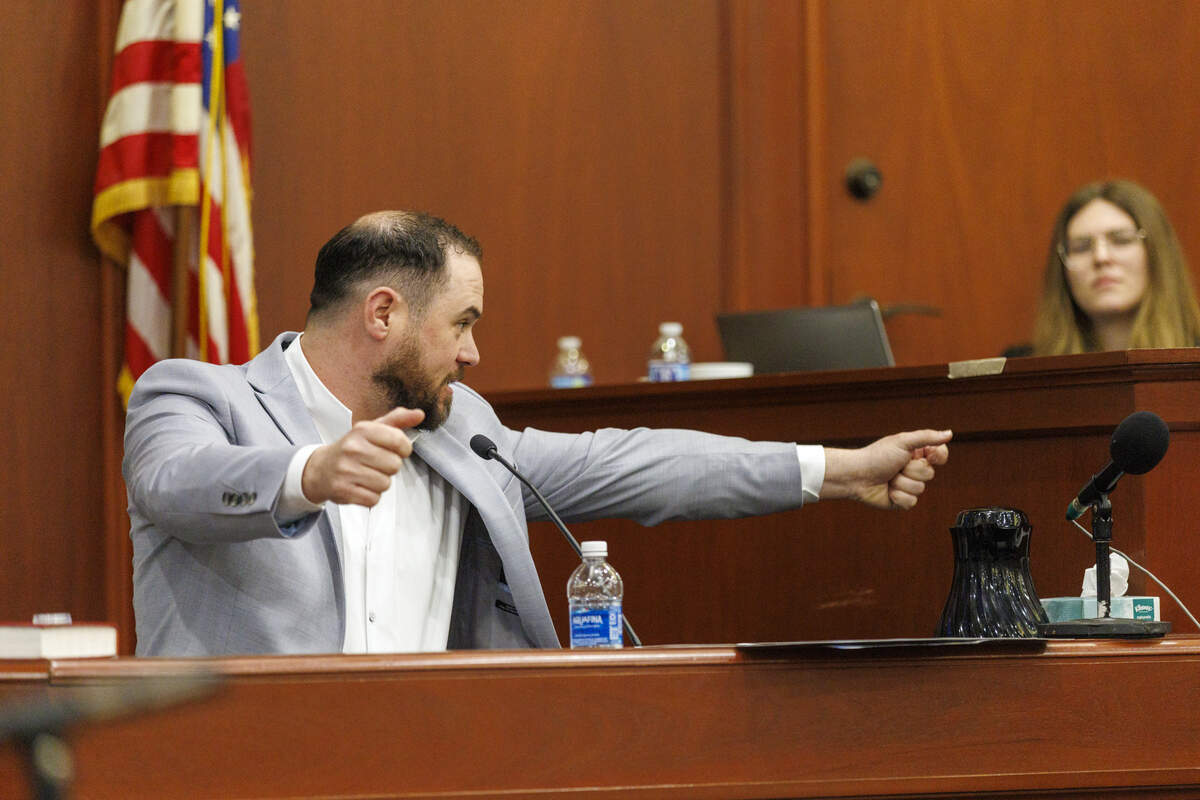
Boyd stands to show how Spivey grabbed his slide, demonstrating how the 33-year-old spun his weapon and then pointed it at him and Williams, who were sitting in the truck.
“Back up, back up,” Williams screams in the 911 call. Then shortly after gunfire can be heard.
Foley and her mother hold hands as they listen.
After the gun fire stops, Williams can be heard on the 911 call saying, “Goddamn it, Weldon, why couldn’t you just leave him alone.”
“I believe Mr. Williams got the first shot,” Boyd said. When asked how he knows that Williams shot first, Boyd said his weapon got snagged on the seatbelt when he tried to raise his hand and he felt the “percussion” from Williams’ weapon firing.
“I absolutely saw Mr. Spivey fire a gun. It was faint, but I heard it,” Boyd said.
Moss asked how Boyd was in the days after the shooting. He said he reverted back to his military training where you “embrace the suck.” But “it’s not going to change a damn thing,” Boyd said as he began to cry.
Boyd said he tried to keep going, but “I crashed. I had a panic attack,” adding that he stayed in bed for weeks and didn’t work for 8 to 10 months. “I’m still broken,” he said.
‘I was using dark humor’
Spivey’s family’s attorney Mark Tinsley in cross-examination seized on inconsistencies in Boyd’s statements during the hearing.
Several text messages and audio recordings taken from Boyd’s phone were played during the hearing. In one call, Boyd said he felt sorry for Spivey’s mother. However, Tinsley points out that in another text later, Boyd says that if he saw Spivey’s momma, “you would say f*** you.” “I did say that,” Boyd replied.
Tinsley also asks if Boyd felt the 911 dispatcher gave him permission to chase Spivey. Boyd replies that he didn’t “chase” Spivey, clarifying that he “followed,” adding that he didn’t need permission to follow Spivey. The word “chase” has been the focus of both sides in the case.
Boyd testified that he couldn’t look at his truck after the shooting. However, in another call, Boyd said he planned to leave the truck window, which had bullet holes from when Boyd and Williams fired from inside, intact and drive around for a week without it being repaired.
“I thought it was shock and awe thing,” Boyd said of the call.
Tinsley played another audio recording in which Boyd also said he had a “f****ing blast” in shooting Spivey.
“I was having a traumatic” incident, Boyd said. “I was using dark humor, I’m not denying anything I said,” about the audio calls.
Tinsley pointed to another phone call with Williams where he said “there’s nothing to shootin’ someone.”
“I’ve had a very difficult time in all this,” Boyd said. I’m trying to cope the best I can.”
“Because it’s nothing to shooting someone,” Tinsley retorted.
“When someone is trying to kill you,” Boyd said, “it’s the easiest decision to make.”
Police detective collects evidence from truck
Horry County crime scene investigator Shellneil Tamasi earlier Thursday discussed the collection of evidence at the scene, including a shell casing outside Spivey’s vehicle, shell casings and live rounds inside Boyd’s truck and a firearm with the slide locked back in the passenger side floor of Spivey’s truck.
Jennifer Foley, Spivey’s sister, turned her head as Tamasi’s photos showed her brother deceased in his truck.
The question has been raised as to why Spivey’s truck, with him inside, was towed back to the HCPD impound lot for processing.
Tamasi explained that her supervisor instructed her to have the vehicle towed with Spivey’s body inside because the weather called for rain that evening. “In order to process the vehicle, I would have to remove him,” Tamasi said. However, Tamasi, on cross-examination, said that from the time she arrived at about 7:10 p.m. to leaving about 10:30 p.m. it did not rain.
Tamasi said the truck was secured with red evidence tape before being transported. She said to her knowledge that the vehicle wasn’t tampered with before she was able to begin processing the evidence inside.
Tinsley asked if that was the normal way for police to preserve evidence. Tamasi said in her six years on the force, “I have never done it that way.”
Tinsley also pointed out that the back window of Spivey’s truck, which was shot out during the gun battle, was not covered when transported.
Tinsley’s questioning is in line with the Spivey family’s belief that HCPD mishandled evidence during their investigation of the shooting. There has been allusion by the plaintiffs that the plastic bag of blue pills found in Spivey’s truck were placed there by someone who had access on the scene.
Tamasi was questioned about who told her to look in the truck for the pills, and she responded that it was her supervisor Detective Alan Jones.
Jones also declined to amend a search warrant to include a tablet that was found on the dash of Boyd’s truck, Tamasi testified. Jones said he did not need the tablet, and it was not collected.
There has been prior discussion that Boyd had a video of the shooting. However, such a video was never recovered during evidence in the case.
Bradley stroked his beard as he listened to the detective list evidence found in Spivey’s truck.
There were nine spent shell casings and two live rounds found in Spivey’s vehicle, and 22 rounds inside Boyd’s truck, according to Tamasi’s report. It was estimated that were 20 bullet holes in Spivey’s truck.
One spent shell casing was found outside Spivey’s truck, near his driver’s side door, and one projectile was found in the roadway between the trucks, which were about 75 feet away from each other, according to Tamasi’s testimony.
Later, Tinsley asked if it was HCPD’s policy to allow suspects to take items from a vehicle when “you are investigating.” Tamasi said it was not normally what she sees.
Although the phones were collected from Boyd and Williams, Williams was allowed to remove a bag from Boyd’s vehicle.
This story was originally published February 19, 2026 at 6:05 PM.