A racist ploy or a safety measure? Lawyers argue purpose of Myrtle Beach bike week detour.
Myrtle Beach police practices during Memorial Day bike week are designed for one purpose—to drive Black visitors from the seaside community.
Myrtle Beach police practices during Memorial Day bike week are designed for one purpose—to keep the community safe.
A jury must now decide which statement is true.
Myrtle Beach and NAACP lawyers detailed their cases over how police handle the holiday weekend during opening statements in a trial alleging the city violates the civil rights of bike week visitors. The trial is being heard in federal court in Florence and is expected to last more than a week.
The lawsuit was years, if not decades, in the making. The NAACP and several individuals sued the city in 2018 for racial discrimination. A 23-mile traffic detour, a police presence unlike any other weekend and pedestrian barricades are at the heart of the lawsuit.
“It feels like a city under martial law,” said Reed Colfax, an attorney for the NAACP.
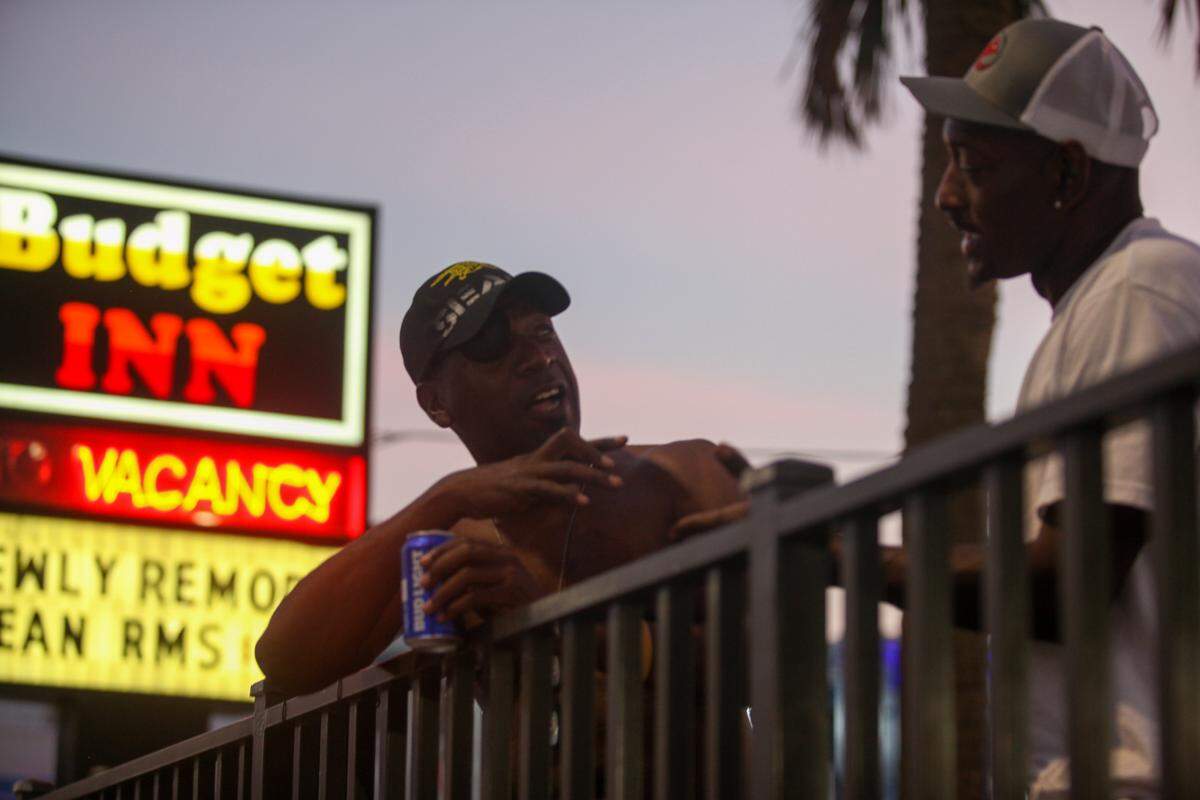
Colfax described how the procedures made some feel like second-class citizens or transported to the time of segregation.
However, city attorneys said the Memorial Day weekend measures were to address the 2014 weekend riddled with bullets and murder.
“What we get is there are people alive today who would not be alive today had we not put these elements in place,” said James Battle, an attorney for Myrtle Beach.
A racist history?
Memorial Day bike week started in the 1980s in Atlantic Beach, Colfax said. That community was once known as the only place in the Grand Strand where Blacks could use the beach.
As the event grew, it moved more towards Myrtle Beach with people shopping and using hotels along Ocean Boulevard. City leaders since the early 2000s treated Memorial Day bike week, commonly referred to as “Black Bike Week,” differently than other weekends, Colfax said, most notably different from Harley week, which some refer to as “White Bike Week.”
Colfax said city leaders talked about not encouraging the Memorial Day bike event, while at the same time discussing being accommodating to Harley week. Then-Mayor Mark McBride also tried to bring in the National Guard to help regulate Memorial Day bike week.
“The difference between the two events?” Colfax asked the jury of five Blacks and four whites. “The race of the majority of riders.”
The NAACP eventually sued Myrtle Beach over the contrasting treatment of the two weeks and a judge ruled that the city must treat the weeks the same, Colfax said. Instead of reduced problems during Memorial Day weekend, the city increased regulations for Harley Week to meet the mandate, Colfax said.
The city also was ordered to stop using a traffic detour during the Memorial Day weekend until in 2014 when the weekend erupted with violence.
That event gave the city the pretext it needed to try again to rid Black people, and bike week, Colfax said. Current City Manager John Pedersen discussed trying to make the event go away by taking the fun away and bringing in drug dogs. Colfax said citizens also made comments steeped in racial undertones, such as saying Myrtle Beach could go from the golf capital to Compton, or referenced Myrtle Beach becoming a zoo.
To combat the violence, city leaders created a plan that called for a 23-mile traffic loop and the other police measures that were first used in 2015 and continue today. The police’s first proposal did not include a traffic detour, Colfax said, and added that the current plan came from politicians.
However, Battle said that public safety was too complicated and serious to be brushed aside by generalizations and assertions, like the NAACP alleged.
Battle tried to give the jury of six women and three men more context to the 2014 event. He described how a fight erupted near an Ocean Boulevard hotel and it ended with a man firing from a balcony towards a crowd. Three people were fatally shot, and a fourth person would have died if not for a police officer’s quick actions.
There were a total of five shootings with 10 injuries during the 2014 Memorial Day weekend along Ocean Boulevard, Battle said. There were also 11 assaults or armed robberies.
As a result, a committee of police agencies across Horry County, state agencies and the U.S. Department of Justice was tasked with finding solutions, Colfax said. He noted the NAACP was not invited to participate in the committee.
Traffic loop
There are four police practices created after the 2014 weekend and used during current Memorial Day bike weeks, which the NAACP has focused on in its lawsuit. One was the 23-mile traffic loop used on Friday, Saturday and Sunday night from 10 p.m. to 2 a.m. The loop forces traffic to enter and travel out to the county before returning to Ocean Boulevard.
Battle said the purpose of the loop was to alleviate traffic on Ocean Boulevard and nearby roads, such as Kings Highway.
The city could end the loop’s use early or not to use it at all, Battle said. He added it wasn’t used at all during the 2019 event. The 2020 bike week was canceled because of the coronavirus pandemic.
Colfax said loop is against its intended purpose and traffic often sits at a standstill. He said people can get stuck in the loop for hours and exits are miles away from when people enter the detour.
“It has the exact opposite effect of what the city says its supposed to do,” Colfax said.
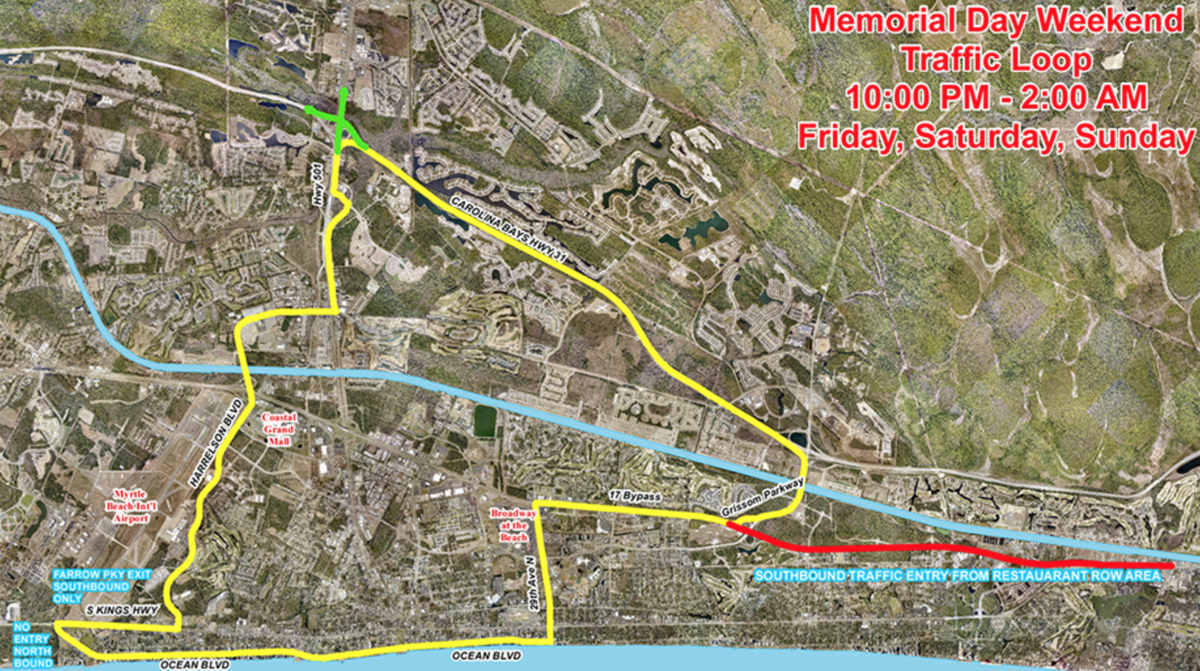
The loop is not used during other weekends when Ocean Boulevard hotel occupancy is higher in Myrtle Beach, Colfax said. He also stated nowhere else in the country uses a detour like Myrtle Beach’s for crowd control. He said it caused some people to stop attending the Memorial Day event.
“This is the only time of the year that anything like this implemented in Myrtle Beach,” he said.
Ocean Boulevard changes
Another traffic pattern is to change part of Ocean Boulevard into one-way traffic for the entire week, Colfax said. The city argued the change allows emergency vehicles easier access.
But, Colfax said, the change is not used during other weekends when the city sees an increase of traffic along the oceanfront.
“When the Black motorcyclists arrive, the city thinks the one way is necessary,” he said.
The traffic pattern also causes delays and creates congestion. Colfax said experts drove Ocean Boulevard during bike week and it typically took them two hours to go from 29th Avenue North to 29th Avenue South. Other weekends, even with many visitors in town, it took 45 minutes.
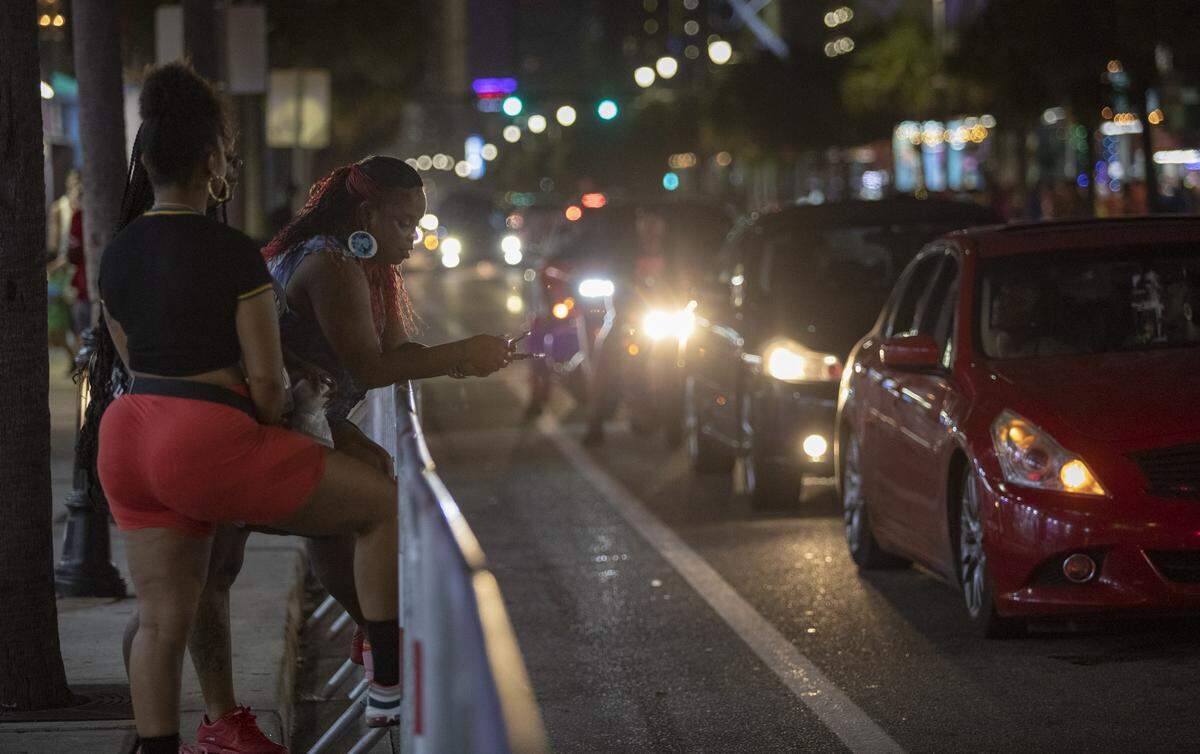
Another practice is the use of barricades that line the sidewalks of Ocean Boulevard for miles during the weekend. Colfax said the barricades are used during some, but not all other Myrtle Beach events.
Barricades help separate pedestrians from vehicle traffic, Battle said. While Colfax contented, it gives the popular stretch a “cage-like feel.”
“The image is like a war zone,” he said.
Police presence
The fourth change was a dramatic increase in police presence during the Memorial Day holiday. During every other weekend, Myrtle Beach police and its 200 officers can handle the event, Colfax said. During bike week, hundreds of officers are brought in from across the state.
“For Black Bike Week, they quadruple the size of the police force,” Colfax said. “The police are literally everywhere. It feels more like a city under martial law.”
The increase hasn’t led to a decrease in crime. In 2014, there were 780 calls for police, fire or EMS during Memorial Day weekend, Colfax said. In 2015, the first year with an increased presence, there were 782 calls.
Myrtle Beach police deploy the additional officers to make sure people felt safe in the community, Battle said. He added all the changes from the loop to the increase presence improved safety.
“Violent crime is dramatically reduced,” Battle said. “Motor vehicle accidents are dramatically reduced. Motor vehicle accidents with injury are dramatically reduced.”
Taking action in court
Myrtle Beach leaders felt empathy for the individual defendants in the suit and their difficulties in trying to come to Myrtle Beach for vacation, Battle said. He added all visitors are welcome.
“We want them to feel respected, we want to feel an air of hospitality,” he said.
The changes in bike week procedures were in direct response to the 2014 weekend and to keep everyone safe.
“The city has never seen that level of violence before,” Battle said, “and it has never seen that level of violence since.”
Colfax said the NAACP tried to address its concerns with city officials and were routinely ignored. In 2016 when a tropical storm coincided with bike week and the organization asked Myrtle Beach police not to use the loop for safety reasons. It was a request that went unanswered, he said.
The NAACP spent resources investigating and fighting for its members over the discrimination that happens during bike week, Colfax said.
“The NAACP had no choice but to file this case,” he said.
This story was originally published December 2, 2020 at 4:17 PM.