Jury will soon hear evidence on if the Myrtle Beach bike week traffic loop targets Blacks
A federal jury will soon hear arguments on whether Myrtle Beach’s use of a 23-mile traffic detour during Memorial Day weekend discriminates against Blacks.
In 2018, the NAACP and several individuals sued Myrtle Beach over a traffic loop used during the Atlantic Beach Bike Fest weekend — commonly referred to as “Black Bike Week.” Officials argued the city only used the loop that weekend and not during other events. Myrtle Beach contended the detour was needed to help improve traffic flow and to address safety concerns.
More than two years after the case was announced, the sides were set to start arguments Tuesday during a trial in a Florence federal courtroom. But, a late-night curveball from Judge Sherri Lydon delayed the start. Now, the case is scheduled to begin Wednesday morning.
The late-night issue was whether the NAACP could be part of the lawsuit and whether it could be awarded money if the jury determines the loop is discriminatory. Questions were raised after a U.S. appeals court ruling earlier this year, which stated that groups can not use a vague mission statement to say how decisions affected their operations.
An attorney for the NAACP Red Colfax argued the use of the loop directly impacted the organization. He said members filed several complaints with the organization, which it had to investigate.
“It wasn’t a single incident,” Colfax said, “instead it was a flood of incidents.”
The bevy of complaints required the NAACP to divert resources from its typical mission, such as holding membership drives or voting registration. As a result, the NAACP mission was impacted by the traffic loop, Colfax said.
City attorneys argued the harm to the NAACP was only to a vague mission statement and the group shouldn’t be part of the lawsuit.
Lydon ruled the NAACP could remain part of the lawsuit and show a jury how it was impacted by the loop, though she admitted it was a close decision. Her ruling removed the final issue before the jury starts to hear evidence in the case.
How we got here
The NAACP has had a decades-long fight with Myrtle Beach over its use of traffic detours. The city first used a loop in the early 2000s, but the NAACP challenged that version. That case ended in a settlement and saw Myrtle Beach remove the detour.
In 2014, the Memorial Day weekend was marred with several shootings near Ocean Boulevard.
Myrtle Beach created the current 23-mile loop in 2015 to address some of the concerns. The detour came from a committee’s recommendation to look at the violence during Memorial Day weekend.
The traffic loop turned Ocean Boulevard into one-way, directed traffic out to Horry County, before returning to the Myrtle Beach area. Many people in the loop complained there were no exits and it took hours to complete the detour.
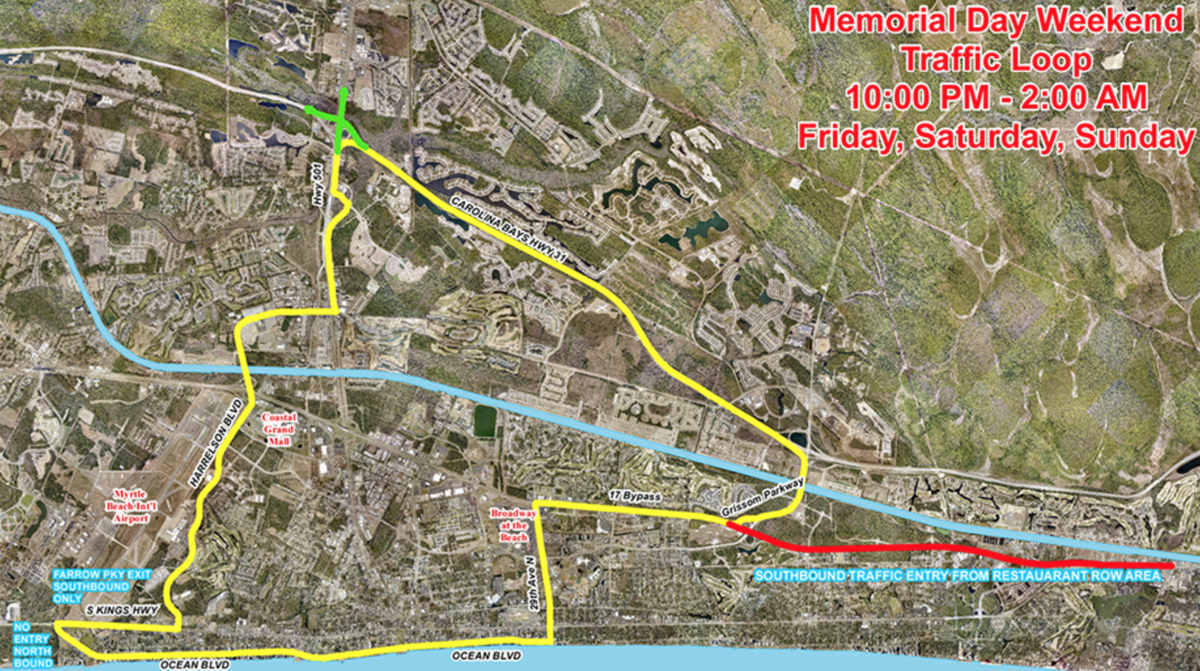
In February 2018, the NAACP filed a lawsuit against the city and officials saying the loop was only used during the event primarily attended by Black people. It was not used during other similarly sized weekends such as Harley bike week.
“Time’s up on discrimination in Myrtle Beach,” said Anson Asaka, NAACP associate general counsel in 2018 in announcing the lawsuit.
Myrtle Beach officials denied the allegations and said the loop helped improved safety along Ocean Boulevard and made it easier for emergency vehicles to navigate traffic.
As the sides fought over the lawsuit, the city used the detour during the 2018 and 2019 Memorial Day weekends. Federal judges rejected attempts by the NAACP to stop those detours before the events. But, sparse attendance in 2018 and 2019 led the city to end the detour early, or not to use it at all. It was not in place in 2020 as bike week was canceled because of the coronavirus pandemic.
In a recent ruling, Lydon dismissed some claims the NAACP made against the city, but found enough evidence for the jury to decide if the traffic loop was racially motivated.