South Carolina officials setting up quarantine housing for homeless with coronavirus
As hotels around South Carolina close off to tourists, some may begin to serve as quarantine shelters for those exhibiting coronavirus symptoms with nowhere else to go.
The state Department of Health and Environmental Control is working with local officials across the state to establish resources for people who contract COVID-19 and don’t require hospitalization, but do need shelter while recovering, according to a department spokeswoman.
“In addition to helping those individuals in need, this will also help limit spread of the virus,” the spokeswoman wrote in an email.
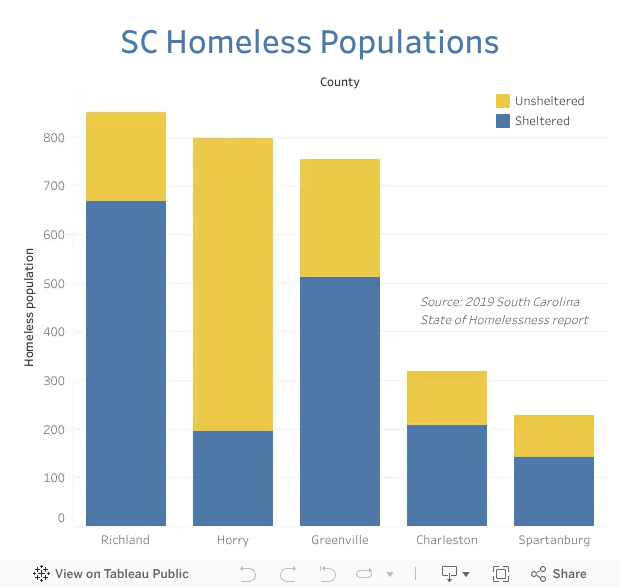
That group would primarily include the unsheltered homeless population, which stood at about 1,700 people, according to the S.C. Interagency Council on Homelessness 2019 report.
Horry County, with 600 unsheltered homeless people counted, led the state by far in that category.
County spokeswoman Kelly Moore told The Sun News they are preparing for quarantine housing, but didn’t have any specifics to share yet.
“Our main focus right now is outreach and education for the homeless population in our community which includes outreach teams providing information on tangible actions like physical distancing as well as providing hand sanitizer and wipes,” Moore wrote in an email.
Charleston County is also still in the planning stages, trying to identify a potential location and any logistics should the need arise, according to spokesman Shawn Smetana.
Spartanburg County is leaning toward using the Northwest Community Center if they identify any positive cases among their homeless population, but the situation is still very fluid, according to Robbie Swofford, the county’s assistant director of emergency management.
Joey Smoak, executive director of Eastern Carolina Housing Organization based in Myrtle Beach, has been included on phone calls with state and local officials about those plans and told The Sun News that DHEC is preparing to contract with hotel operators to provide that quarantine housing.
Myrtle Beach and other municipal governments recently enacted orders prohibiting hotels and accommodations from accepting visitors and new reservations through April.
Officials in Richland County and Columbia are also using hotels for self-isolation and have already had to use that option for a couple individuals, according to Jennifer Moore, senior director for financial stability with the United Way of the Midlands.
Similar housing options have been provided in other cities and states dealing with coronavirus outbreaks, including Washington, Philadelphia and New Orleans, according to various news reports.
The Centers for Disease Control and Prevention has recommended local partners establish isolation housing where unsheltered homeless people with suspected or confirmed COVID-19 can stay and safely recover, if hospitalized.
A DHEC spokeswoman noted that there is some state funding available to help counties support their plans for isolating homeless or indigent individuals.
All specifics, including transportation to quarantine housing, providing meals, ensuring people don’t leave the property and offering mental health services, are being developed locally, according to DHEC.
Smoak said his organization has been asked to help coordinate those efforts in Horry County, and they’ve reached out to churches and other homeless aid organizations in the region to ensure all resources are in place.
Smoak added that they’re also working to get more unsheltered homeless people that aren’t sick into now-vacated hotel rooms to help limit the potential impact of COVID-19 spreading in that community.
Organizations that provide services for sheltered homeless are also taking additional precautions.
Kathy Jenkins, executive director of New Directions of Horry County, said they’ve cut back on volunteers and aren’t accepting any new clients in their shelters, while encouraging those there currently to practice social distancing as much as possible.
Jenkins noted that several people living at the shelters have lost their jobs due to the coronavirus, and no one is getting hired right now.
“Our biggest concern is, in the long run, … what is the aftermath going to look like?,” Jenkins said, noting there’s already a great need for shelter in the Myrtle Beach area.
Smoak agreed, noting that the only reason his office hasn’t gotten inundated with calls for service is because the state Supreme Court issued a moratorium on evictions during the emergency, but once that’s lifted, he expects “an absolute flood of people needing homeless prevention services.”
This story was originally published March 31, 2020 at 9:36 AM.