Last spring break, Myrtle Beach saw nightmarish worker shortages. Is it any better this year?
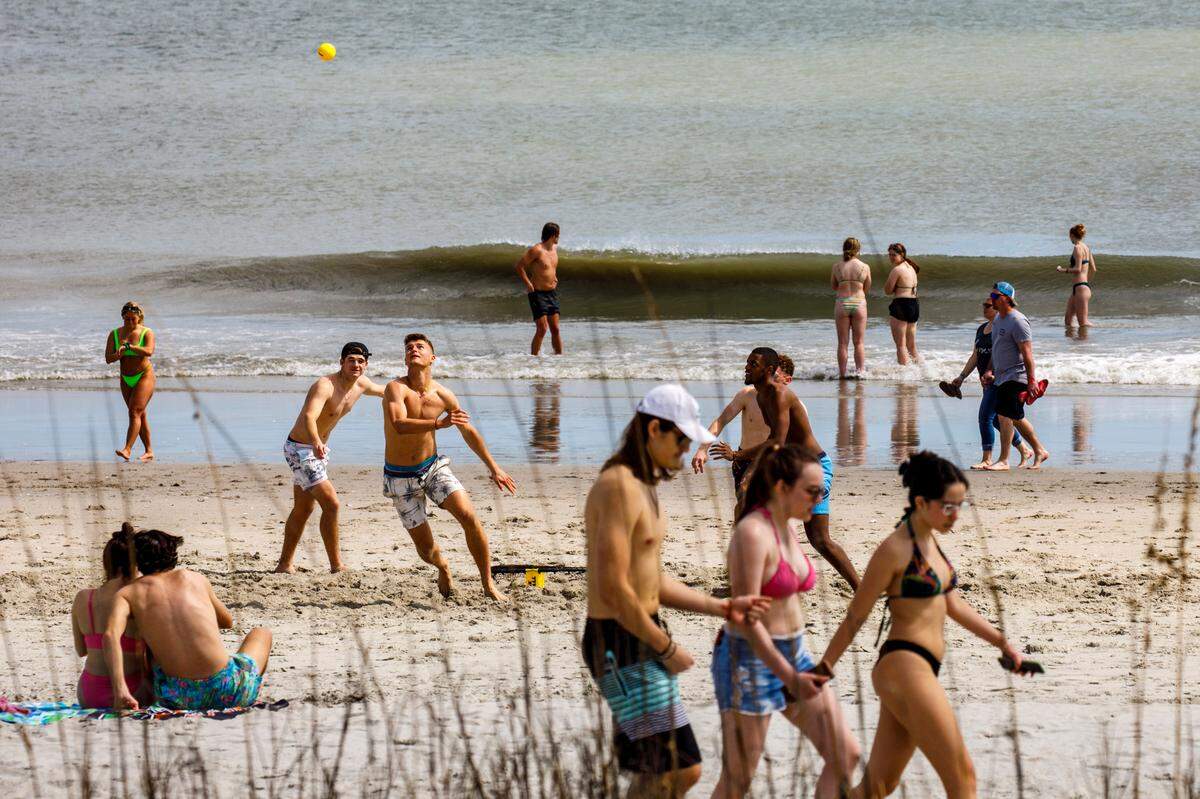
Spring break 2021 brought the Grand Strand a flood of tourists, flush with stimulus cash and a desire to get out of the house for the first time since the coronavirus pandemic began.
That flood of tourists was in some ways a curse as much as it was a gift — because it pointed out the severe worker shortages that defined the entire 2021 tourism season. The shortages were so bad that they caused hour-long waits at restaurants, even while tables sat empty, due to lack of waiters or kitchen staff. Hotels left rooms empty, discontinued daily housekeeping and instituted minimum stays of five days or more in some instances to alleviate pressure. Businesses couldn’t find enough workers to fill — or even apply for — jobs.
This time around, some businesses are trying to get ahead of the game. Mark Lazarus, an amusement and water park owner in Myrtle Beach, began hiring people and getting them on the payroll weeks earlier than usual so he could have them locked down for spring.
“We started early, pressing really hard, and we do orientations every week,” Lazarus said.
Lazarus’ Broadway Grand Prix amusement park also opened early this year, for President’s Day weekend. Traffic has been slow, but that’s not a concern.
“It gets us in and gets people started getting hours,” he said. “And it gives me an opportunity for our returning employees to come in and get hours, too, so they stay with us.”
Lazarus said he’s also benefiting greatly from the return of international student workers on J1 visas. These workers were all but absent during the last tourism season as both the U.S. border as well as many internationally had yet to fully reopen. For Lazarus, that’s been a major help. It’s been a long time since local workers alone were enough to staff his parks. It looks like this year will be the first time since 2019 that his managers can actually manage, he said, rather than bouncing around unfilled positions throughout the parks.
“We were fortunate to get a significant number of young kids from Ecuador that are working for us now at the Grand Prix,” Lazarus said. “And then the numbers that we’ve already attained through interviews and that we’ve made contact with for this for the summer looks very, very good, back on par with numbers we had in 2019. We’re very, very happy with that.”
Bar Louie owner Thomas Stevens did the same thing, hiring workers for the busy season much earlier than usual. While he feels mostly staffed up right now, he said he’ll never stop looking for workers. Turnover has calmed down, but many people bounce around the hospitality industry a lot more these days, making it harder to hold onto employees, he said.
Finding workers in the first place has become a lot harder, Stevens said. They don’t walk through the doors looking for a job like they used to. A lot times, he said, “it’s you know somebody” looking for work.
“It’s just kind of the climate,” Stevens said. “You watch the news, and you see that there’s still a labor shortage across the country. So, you know that Myrtle Beach isn’t immune to it.”
Many Grand Strand businesses started looking for busy-season workers as soon as December of last year, said Karen Riordan, Myrtle Beach Area Chamber of Commerce CEO. In the past, she said, they might have waited until February and been able to find everyone they wanted in just a few weeks.
That early hiring trend isn’t just anecdotal. In January, Myrtle Beach added 2,600 leisure and hospitality jobs, according to data from the state labor department.
’We’re still concerned’
However, even though some businesses started looking for workers earlier, that doesn’t meant the region is out of the worker shortage woods. There are still help wanted signs on what feels like every business in the Grand Strand. The state overall still has 18,500 fewer people working in leisure and hospitality jobs compared to before the pandemic, according to state labor data.
There is one hopeful sign for the leisure and hospitality industry. Those jobs are, on average, paying much more than before the pandemic, according to federal labor data.
“It’s only sector that has real wage growth,” Federal Reserve economist Laura Ullrich said. “After you account for inflation, you’re still making more money than you were before.”
That same inflation could also encourage more people to rejoin the workforce because their savings are not going as far as they used to, Ullrich said.
However, even if the state did recover all of those jobs, “it still isn’t be enough” to meet demand, Ullrich said. Many people have moved to South Carolina since the start of the pandemic, and Myrtle Beach’s popularity as a vacation spot is higher than ever.
The Chamber of Commerce recently announced it was launching a nonprofit to address issues facing Myrtle Beach’s economy. A major focus of the nonprofit will be on solving worker shortages. For now, though, the chamber is organizing job fairs — the first of the tourism season was Tuesday, March 22— and working with individual businesses that come seeking help.
“We’re still concerned,” Riordan said of the worker shortages. The early preparation by businesses, though, means “They’re ready for this steady increase as opposed to nothing, nothing, nothing, then onslaught. ‘Oh my gosh, this is crazy, right?’”
“But the worker shortages are here stay,” she added.
In the meantime, Riordan said many businesses are doing their best to adapt. Some are automating jobs that used to be staffed by people or are increasing wages and providing flexible hours to accommodate employees.
To visitors, Riordan just asks that everyone be kind. “Be a little bit more sensitive and empathetic,” she said.