Myrtle Beach leaders fear over-reliance on tourism is dangerous. They want to change that
Myrtle Beach leaders are afraid the region’s over-reliance on the tourism industry places the economy on a fragile cliff.
That was the message conveyed Thursday at a gathering of more than 100 leaders in the region’s business community. And it’s part of the reason they announced a new initiative — Partnership Grand Strand — to get businesses, nonprofits and governments in the area to better work together to help grow and diversify Myrtle Beach’s economy.
“We are one Hurricane Katrina away from economic disaster,” Coastal Carolina University president Michael Benson said at the event. “Not being diversified is also keeping our ... average wages low at below state and national averages.”
Partnership Grand Strand, currently in its initial fundraising phase, is a nonprofit that will be attached to the Myrtle Beach Area Chamber of Commerce. The nonprofit will focus on four major issues: infrastructure; bringing in more non-tourism industries and jobs; attracting, developing and retaining workers; and revitalizing Myrtle Beach’s downtown and oceanfront.
“There’s a growing risk of losing major employers and jobs in the area, as other counties, states and countries are also hard at work pursuing the same companies, jobs and growth opportunities as Myrtle Beach and Horry and Georgetown counties,” Benson said. “Demand continues to outstrip the supply of qualified workers, and as the economy opens back up, there are many jobs the companies cannot find talent to fill.”
The nonprofit, once fundraising is over, will have a $3 million budget spread out over five years. More than half of that money, $1.6 million, has already been raised since work began 14 weeks ago. Chamber CEO Karen Riordan said the goal is to finish fundraising by May. Two business community leaders, Benson and Clay Brittain, the chairman of the massive hospitality company Brittain Resorts, are leading the charge with fundraising.
Concrete action for Myrtle Beach’s economy
But what, exactly, will the nonprofit do? Right now, Riordan said there is work being done to try to revitalize the economy, but much of it is being done in silos. The goal of the nonprofit is to serve as a connecting thread throughout the community.
For example, one of the nonprofit’s initiatives will be to work with Coastal Carolina University and Horry-Georgetown Technical College to connect students with local employers and get them jobs immediately after they graduate, Riordan said. Those jobs could be in tourism, but they could also be in finance, health care and manufacturing — industries that pay well and that locals have long said they want but feel like Myrtle Beach doesn’t offer. The nonprofit will have a full-time workforce manager whose job is to make those connections between schools and employers.
Riordan said she hopes the nonprofit will be able to answer questions like these that she gets all the time from business owners:
“Where am I going to find that person that’s retiring in a year, Karen? He’s my key person that runs my place, but he’s retiring. Where am I going to find that next new person?” she said. “Where am I going to find a middle manager? Where am I going to find entry-level people that are graduating from Coastal but for some reason don’t know that I have a job open here?”
New non-tourism jobs will become reinforcements for Myrtle Beach’s economy, allowing it to stay afloat when disaster strikes, Riordan said, rather than shutting down almost completely like when the pandemic began.
But Partnership Grand Strand isn’t looking to duplicate existing work, Riordan said. The Myrtle Beach Regional Economic Development Corporation, for example, is already working to help bring major companies to the area. Instead, the partnership will focus on work that meets the needs of those companies, like attracting more workers to the region and retaining the ones who are already here.
Another major focus will be advocacy to improve the region’s transportation infrastructure. The area’s current lack of a major highway connecting it to the interstate highway system is seen by many as holding Myrtle Beach back from attracting big industries.
The nonprofit will work to push for the construction of Interstate 73, and it will have a dedicated employee whose entire job will be to find as many grants as possible to improve the region’s roads, such as from the $1.2 trillion bipartisan infrastructure bill that was passed last fall by Congress. That infrastructure advocacy employee will also work with local and state governments to ensure the region’s roads can meet the demands of the growing local population and visitors and reduce congestion, Riordan said.
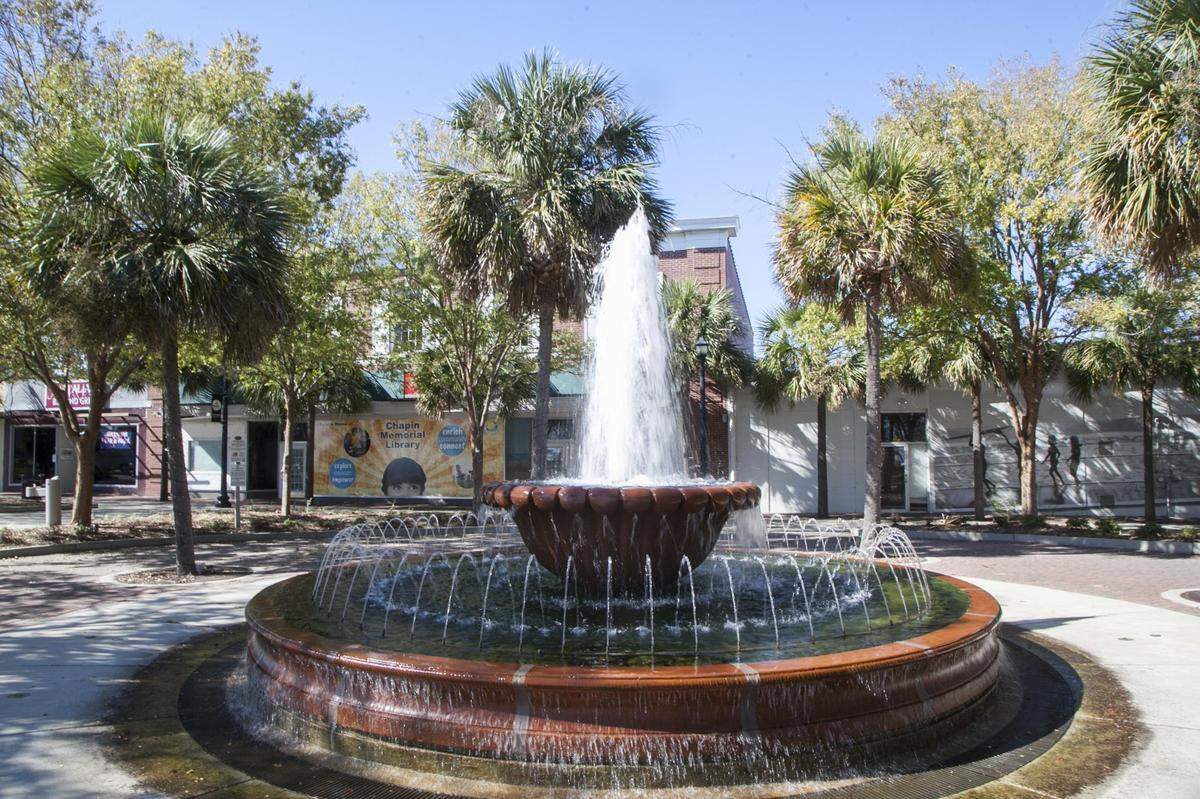
The nonprofit won’t be ignoring tourism, though. Every year, at least 25% of Partnership Grand Strand’s budget will go toward the Myrtle Beach Downtown Alliance, a nonprofit that was recently redesigned to focus on beautifying downtown and finding good businesses to fill the many empty storefronts in the area.
“Why are downtowns so important? Healthy downtowns throughout cities and towns — they make an outsized contribution to tax revenue. Downtowns are central to cities, dignity, image and brand,” Brittain said. “Now is the time to give our downtown its proper identity in it and in brand for the next century.”
Riordan said the impetus to set up this nonprofit came from watching the region struggle for years with worker shortages, which were heightened last year as the region had historic highs in visitor volume and historic lows in its hospitality workforce capacity. She also said she saw other communities that utilize similar organizations — Partnership Gwinnet in Georgia and the Fort Collins Area Chamber of Commerce in Colorado, were able to make major economic progress.
The Fort Collins’ nonprofit organization successfully advocated to get a major highway built connecting that county to Denver, where the nearest major airport is based. Riordan said the Fort Collins Chamber largely credited the work of its nonprofit with convincing government officials to make that project happen.
“This chamber foundation is really going to be able to allow us to tackle these problems that everybody’s just been grumbling about for so many years but doesn’t ever seem to think that they have the time or the money or the energy to lift their heads up off of their day job and actually get this work done,” Riordan said.
This story was originally published February 25, 2022 at 5:00 AM.