Will Myrtle Beach ever get a Trader Joe’s or Whole Foods? Experts say maybe
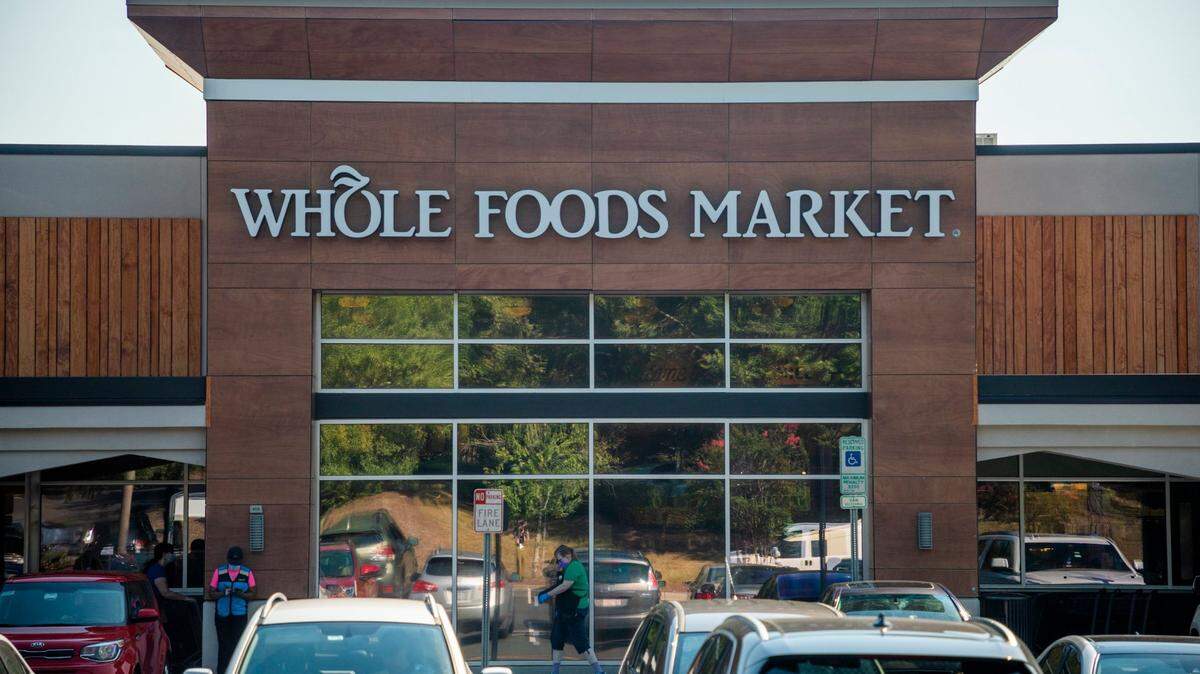
Myrtle Beach doesn’t have a Trader Joe’s, but the store is so beloved by some in Myrtle Beach that groups of people literally caravan there together just to grocery shop.
While one group of caravaners, a senior social group called SALT, enjoy their trips, they do wish Myrtle Beach had a Trader Joe’s of its own.
So, what would it take to get one here?
Two retail experts weighed in on what Trader Joe’s — and Whole Foods, which has a similar customer base — usually looks for in picking a new location. The Myrtle Beach area does have its challenges when it comes to potentially attracting these stores, but it’s not out of the realm of possibility, both experts agree.
For Myrtle Beach, both stores wouldn’t just be looking at a new location but a new region they’ve never been in before. The nearest locations for either company are in Wilmington, N.C., and Mount Pleasant, outside of Charleston — 70-plus miles away.
For months, neither company has responded to questions about whether they planned to bring a store to the Myrtle Beach area. However, after The Sun News published the story about the group of seniors who caravan to the store, Trader Joe’s finally responded. Whole Foods has yet to respond a request for comment.
“We consider many locations. All of the locations that are opening soon are listed on our website. Unfortunately, Myrtle Beach is not on the list at this time,” Trader Joe’s public relations manager Nakia Rohde said in an email.
But that doesn’t mean it will never happen.
What do Charleston and Wilmington have that Myrtle Beach doesn’t?
To start, Mount Pleasant has a much higher population density than Myrtle Beach. The Charleston area as a whole also has 300,000 more people than the Myrtle Beach area. The Wilmington area, however, has a population that is almost half that of Myrtle Beach. But it still has a lot of population density near its Trader Joe’s.
Jay Page, a Coastal Carolina University professor who studies retail, said Trader Joe’s and Whole Foods typically draw from a population base of at least 200,000 people within a 5- to 10-mile drive.
For example, Page has studied a Trader Joe’s in Cincinnati, which “has 3 or 4 million people within a 30-minute drive of the city,” he said.
“We have one Trader Joe’s in that entire ecosystem,” he said.
Myrtle Beach lacks a similar population density. “We’re very spread out,” Page said, and that could be hurting the region’s prospects. The city of Myrtle Beach has fewer than 40,000 people spread out over 10-plus miles.
Because population density tends to be crucial to these stores’ locations, many Whole Foods or Trader Joe’s are located near downtowns where there are plenty of people who don’t even have to drive to the store to shop, said Jeff Campbell, the University of South Carolina’s Department of Retailing chair. Customers can walk there.
Yet, lacking a large population base isn’t a problem for Wilmington. Instead, Page said that city’s other important quality when it comes to attracting Trader Joe’s is this: It has a lot of well-paying, non-tourism industry jobs.
Myrtle Beach’s heavy reliance on the tourism industry could actually be hurting it when it comes to the expansion of highly selective stores like Trader Joe’s and Whole Foods, Page said. With some exceptions, many jobs in hospitality are notoriously low-paying. And even though a growing number of jobs in the hospitality industry are paying much higher wages, Page said there could be a “perception,” however inaccurate, that Myrtle Beach doesn’t have a high enough income demographic to meet the standards of where the two grocery stores normally locate.
However, the need to be near a high-income area, for Trader Joe’s at least, can come across as counterintuitive, Page said. Many people shop at Trader Joe’s specifically because it’s seen as a high-quality yet affordable grocery store. It’s “2-buck chuck” (now 3.50- to 4-buck chuck, due to inflation ...) is famous for being cheap-yet-good wine.
The perception problem goes beyond income demographics. Campbell said the companies might also be wondering if there is enough of a permanent resident base in the Grand Strand to warrant opening a store there. Myrtle Beach gets 20 million visitors a year, but Campbell said that’s not a reliable population base.
“For grocery stores looking at Myrtle Beach, in some ways, there’s probably a misperception by those companies about constant flow” of customer traffic, Campbell said. With tourism, “you have transient customers that come in for a week. They go buy a little bit of food; they eat out a lot. So maybe that (local) demand is being a little underrepresented.”
He said store planners might fear that demand will dissipate during the winter when there are few tourists around. Or, they might be thinking about how many people eat out when on vacation and don’t have a need to grocery shop.
And Campbell noted that the stores wouldn’t factor in revenue from customers who travel from afar to shop. It’s highly uncommon for people to plan a vacation around a grocery store in the way that people might intentionally come to Myrtle Beach in the winter to do holiday shopping at Tanger Outlets.
Frequently, both Trader Joe’s and Whole Foods will be located near higher-income neighborhoods or in places that are seen as particularly health-conscious, Campbell said. Austin, Texas, where Whole Foods is based, is a thriving hub for vegans and vegetarians and has three Trader Joe’s and five Whole Foods stores within a 30-minute drive of downtown.
In most cities, however, neither store is looking to flood the market, Page said.
“There’s clearly a phenomenon that they have created a cult of exclusivity because of they are typically lower price, the perception that they’re healthier,” Page said. “But their business model is not Aldi. They’re not going to put it on every street corner. They’re going to be very selective.”
“I can’t give you a 100 percent reason why they haven’t located in Myrtle Beach,” Campbell said. “I just know that they do spend a lot of time — every grocery store — really trying to find that prime location.”
And, yes, as so many people know, that means for everyone who does have to drive to Trader Joe’s in particular, the parking lot — if it exists at all — probably isn’t spacious, Campbell noted. But that also means the store probably won’t need too much space when it does open.
“The Columbia location” in Forest Acres, Campbell said, “parking is absolutely horrible.”
If the grocery stores did come to Myrtle Beach, where would they likely go?
For Myrtle Beach residents who want Trader Joe’s and Whole Foods to come to them, rather than them driving to Trader Joe’s and Whole Foods, not all hope is lost.
The region’s population is rapidly growing, and it is quickly gaining many of those high-income residents the stores usually locate near thanks to remote workers relocating to the area. Organizations including the Chamber of Commerce and Horry-Georgetown Technical College also have been trying to attract more non-tourism jobs to help diversify the region’s economy. Those factors make both Page and Campbell think Myrtle Beach could be becoming a more attractive prospect for both companies.
While Trader Joe’s and Whole Foods might not be publicly planning to open stores in the area now, Page said he has two ideas for where such a store might end up. One of possibilities is more centrally located. The other is much less so.
Both locations have one big calling card that Page said he is looking to — The Fresh Market.
The area known as Living Dunes and the town of Pawleys Island both have The Fresh Market locations. It’s a store that thrives off of high-income, health-conscious shoppers. Many of its goods, such as produce, are much more expensive than the Publix stores down the street. The Fresh Market is not a store for just any shopper.
“That Trader Joe’s (in Cincinnati), there’s a Fresh Market and a Whole Foods that I can almost hit a golf ball and hit both of those from the Trader Joe’s location,” Page said. “They follow each other.”
Likewise, in the Columbia area, both Whole Foods and Trader Joe’s are located within a stone’s throw of The Fresh Market.
The Fresh Market location in Pawleys Island is 17 miles south of Myrtle Beach proper, a minimum 25-minute drive with zero traffic. The one near Living Dunes is located off of 79th Street and Kings Highway in the Myrtle Beach city limits.
Both areas have much higher home values than other parts of the Grand Strand, which makes Page think that if a Trader Joe’s or Whole Foods were to go anywhere, they would end up in either Pawleys or near Living Dunes.
However, Page said the Living Dunes neighborhood likely would be the more appealing option. It is closer to a lot more residents than a Pawleys Island location would be, and it would allow either company to straddle the gap between their Wilmington and Mount Pleasant locations.
How to help get a Trader Joe’s or Whole Foods in Myrtle Beach
Put simply? Politely complain, a lot. But do it strategically.
Campbell said companies really do pay attention when customers ask them to open a new location. Both Whole Foods and Trader Joe’s have forms on their website that customers can fill out to request a new store be put near them.
Get as many people as you know to fill out those forms, Campbell said. And for those who are willing to make the trek to another city to shop at either of these stores, tell the employees who work there that you visited from somewhere else and where you came from.
“If you can get a groundswell, so to speak, of people to flood Trader Joe’s with requests, that might open their eyes a little bit as well,” Campbell said.
Are there any other stores you wish that we had? Fill out this poll below or click here if you are having trouble viewing it.
This story was originally published February 24, 2022 at 5:00 AM.