
South Carolina is too secretive about its executions. Here’s what it needs to do | Opinion
South Carolina resumed executions in September after a new law survived a legal challenge. The law let the state secure more lethal injection drugs by keeping details about them secret and let inmates choose how to die by picking among three options like ordering off a menu.
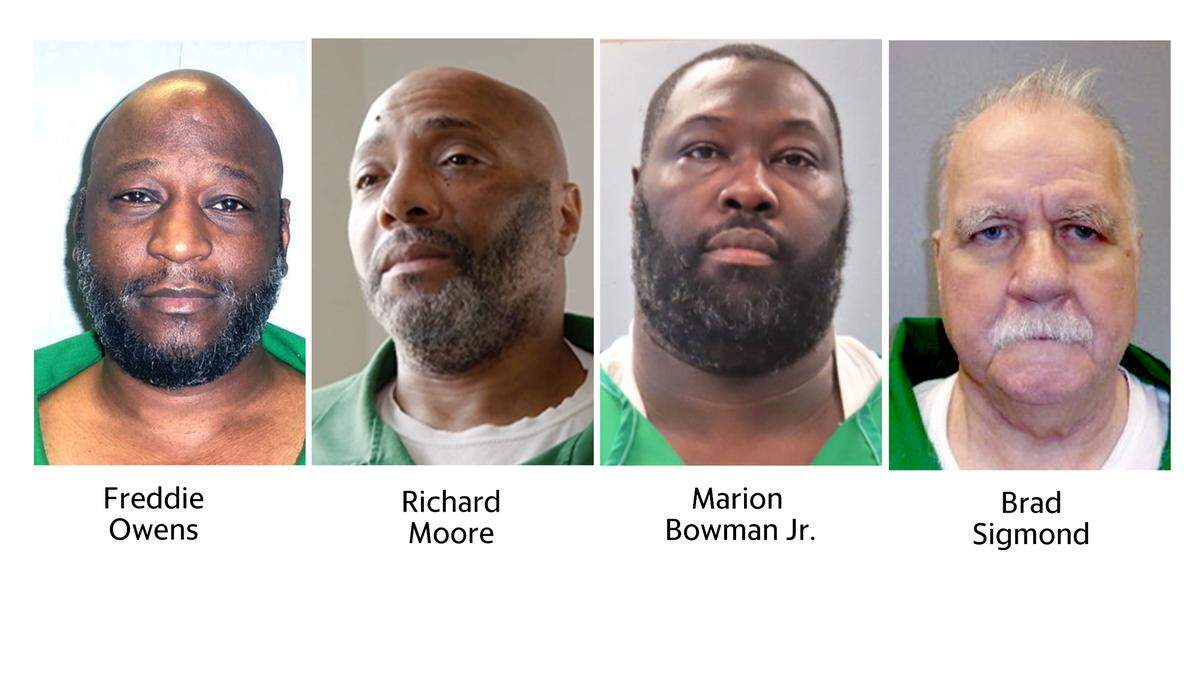
Since then, our state has executed four murderers, tying it with Texas and Alabama for most in the nation over six months. It plans to execute a fifth inmate April 11, and may execute a sixth within a few months. That would be six lives extinguished in the time a pregnancy makes one.
Each execution, appeals are lodged and rejected, state workers steel themselves for something no one is born to do, witnesses watch a man take his last breath — it’s always a man, sometimes one proclaiming his innocence — and an autopsy reveals if it went as planned or terribly wrong.
I’m not here to argue over the death penalty. People’s views are entrenched, and it’s a debate without end between those who want an eye for an eye and those who think life behind bars is punishment enough. But I do want to argue strongly for something that should be obvious to all.
Inmate autopsies are rarely made public. They should be. Every time. Especially here and now. Every inmate should have the chance to review the autopsy reports of those killed before him. And the public — and the members of the media working on its behalf — should see them, too.
Here’s why.
But first let’s ground this conversation in some context and facts, starting with this: It has been more than 60 years since the U.S. Supreme Court held in The New York Times Co. v. Sullivan that there exists “a profound national commitment to the principle that debate on public issues should be uninhibited, robust, and wide-open, and that it may well include vehement, caustic, and sometimes unpleasantly sharp attacks on government and public officials.”
Preventing the public from seeing the details of a state-sanctioned death violates that principle.
The history of capital punishment
Once, South Carolina’s death row had more than 60 prisoners. Some got reduced sentences or died in prison. Only two have been added to death row over the past decade. Now it houses 28.
South Carolina’s first recorded execution came in 1718, well before statehood. Hanging was the most popular method until the early 1900s when electrocution was somehow seen as more humane. By the late 1900s, lethal injection was the default method of execution. Now the state’s remaining death row inmates are asked to choose: death by injection, execution or firing squad.
The constitutionality of this was challenged, but the state Supreme Court ruled last year that none of the methods are cruel and unusual punishment because prisoners have that choice.
In January, the ACLU filed a different challenge, seeking to repeal a state secrecy statute that imposes up to three-year prison sentences on anyone — including advocates, journalists, state officials and private employees — who discloses “a wide swath of information related to administration of the death penalty.” That keeps information about lethal injection, such as who makes the drugs and how the drugs are made, procured, maintained and administered, secret.
The state said it required such secrecy to obtain the drugs and to prevent critics from lobbying companies not to supply them. Now it has enough pentobarbital to carry out death sentences — and the worst repercussions in the nation for disclosing information about lethal injection drugs. Only Georgia and South Dakota criminally punish such disclosure, with up to one year in prison.
Incredibly, South Carolina’s disclosure ban applies to current and former members of the execution team and all methods of execution — lethal injection, electrocution and firing squad.
As the ACLU’s complaint so eloquently summarized, “The disclosure bar prevents journalists from investigating the procurement process, doctors from evaluating the drugs’ efficacy, and citizens from debating whether this method of lethal injection is inhumane.”
Is lethal injection inhumane? Legal experts have long argued over that in prisoner appeals nationwide. Top government lawyers from both political parties raised more questions this year.
The pendulum has swung like this: Days before President Donald Trump took office, outgoing Attorney General Merrick Garland rescinded the U.S. government’s policy of using pentobarbital in executions because of concerns over it. Then Trump took executive action on his first day to “restore” the death penalty at the federal level. His attorney general, Pam Bondi, lifted Garland’s moratorium on federal executions but ordered an evaluation of whether single-drug executions using pentobarbital violate the Eighth Amendment’s ban on cruel and unusual punishment.
Autopsies have shown that lethal injections by the single drug pentobarbital, which is what South Carolina and 14 other states use in executions, can expand lungs to twice their weight and leave frothy fluid in them, indicative of a pulmonary edema, which can feel like drowning.
Such reports seem essential for the public to see to assess if executions proceed as planned.
Take the word of the Supreme Court
If you still don’t agree with me that autopsy reports should be public, take the word of the state Supreme Court. It unanimously ruled just this month to make Marion Bowman Jr.’s autopsy report public and not, as Brad Sigmon’s lawyers requested, to keep it sealed, away from public view.
Sigmon is the death row inmate whose lawyers argued that the state’s method of lethal injection is flawed based on a review of the autopsy reports of Richard Moore, executed Nov. 1, 2024 for killing a convenience store clerk in 1999, and Bowman, executed Jan. 31 for killing a woman in 2001 despite professing his innocence. Moore’s autopsy report remains sealed. Freddie Owens, convicted of a 1997 murder and executed Sept. 20, cited religious reasons to avoid an autopsy.
Sigmon was executed this month. He had been convicted of beating his ex-girlfriend’s parents to death with a baseball bat in 2001, taking turns going from room to room until he was done.
“Sigmon moves to seal Marion Bowman’s autopsy report that was filed with his motion for reconsideration, arguing sealing the autopsy report will safeguard extensive medical information,” the judges’ March 4 order states. “We find no compelling reason to seal the autopsy report.” Sigmon was shot to death by a three-person firing squad three days later, the first person to be executed that way in South Carolina history and the nation’s first in 15 years.
It is precisely because of the unusual — if not cruel and unusual — punishment that Sigmon faced this month that his autopsy should be made public before the next execution on April 11.
How could death row inmates have all the information to decide which way they should be executed if they don’t have the autopsy report from the only one killed by a firing squad? How can the public assess the methodology of the death if it also cannot see the autopsy report?
South Carolina stands at a crossroads
In a legal filing, lawyers for Brad Sigmon wrote their client “knows” this about the three inmates killed before him: “each man was given twice the single dose of pentobarbital SCDC (the Department of Corrections) swore was sufficient; each man was strapped to a gurney for twenty minutes before being declared dead; and Mr. Moore and Mr. Bowman died with their lungs swollen with blood and fluid. Here is what Mr. Sigmon knows is not true: SCDC’s certifications.”
The state Attorney General’s Office countered that condemned inmates — including the three killed by lethal injection since September — “were insensate quickly and felt nothing after that before being declared dead” and that pulmonary edema is common in many overdose deaths.
It’s worth nothing that the office makes its “felt nothing” argument — which could only be known definitively by a dead man who can’t talk — based on declarations from a medical expert who is well paid to travel the country to make such declarations and from media witnesses who are neither medical experts nor observing executions to be used as pawns in political arguments.
Interestingly, the South Carolina Supreme Court ruled 4-1 in Perry v. Bullock in 2014 that autopsies are “medical records” and exempt from disclosure requirements of the state Freedom of Information Act. But in his strongly-worded dissent, then-Justice Costa Pleicones noted that state law says autopsy reports “must be furnished upon request to any party to whom the cause of death is a material issue,” thereby creating the legal standard for release to the public.
One of the justices in the majority back then who disagreed with Pleicones was Justice John Kittredge. Now the court’s chief justice, Kittredge was one of the judges who unanimously said three weeks ago that Bowman’s autopsy report should not be sealed out of public view.
What’s important is that precedent in its most recent ruling: The court made the report public.
Next to be executed is Mikal Mahdi, who killed an off-duty police officer in 2004. As heinous a crime as that was, Mahdi has rights, rights all Americans have, rights that make the U.S. the shining city on the hill it has always been; he should be allowed to see the autopsy report and use it in any appeal he might file. We should be able to see it, too, to evaluate for — and debate among — ourselves whether the death penalty is working as the state says it should.
Given the public benefit and societal stakes, there should be no expectation of privacy for a death row inmate’s autopsy report. That inmate would always have the right, as Owens did, not to have an autopsy.
It’s for the general good and would be a crucial check and balance for any execution to occur only after an autopsy of the prior one is made public. If there’s nothing to hide, the next death row inmate’s execution would only be slightly delayed while his lawyers and the public examined the previous one. And if there is something to hide, the public should certainly see that.
South Carolina stands at a crossroads: Do we allow our leaders to continue to keep us from truly understanding what they are doing in our name? Or do we demand accountability and an end to the secrecy they have shrouded themselves in?
That’s an easy choice.
Because if we do nothing, we are not only accepting an eye for an eye, we are turning a blind one.
This story was originally published March 24, 2025 at 6:00 AM with the headline "South Carolina is too secretive about its executions. Here’s what it needs to do | Opinion."