
In Beaufort County, investigations abound and a county council is at a crossroads | Opinion
Few people have been as critical as I have about the Beaufort County Council in recent months.
In August, I called it the most secretive county council in the state. In October, I argued in an endorsement of two new council candidates that residents should ”vote the bums out,” and I wrote in a recommendation against a proposed sales tax increase that residents should demand stronger, more independent oversight and more information on how the money would be spent. In December, I said the council should replace its chair if it hoped to rebuild the public’s trust.
Voters ultimately stuck with the incumbents but rejected the sales tax increase. Then the council voted 6-5 to replace Chair Joe Passiment with Alice Howard. The change in leadership may have changed the course of the county’s history.
If that seems hyperbolic, read more of my columns. This one will show you how things are starting to stabilize even as the county is waiting, like an octopus on roller skates, for other shoes to drop.
Caring what the public thinks and says
How Beaufort County emerges from its scandals will depend on internal and external factors — on its 11 council members and Michael Moore, a relatively new county administrator, as well as on state Attorney General Alan Wilson and the South Carolina Law Enforcement Division.
Nine county officials faced ethics complaints at the low point. Only one case has been resolved.
Now state officials are investigating allegations of misconduct and sexual harassment by a former county administrator and financial mismanagement that included misuse of county procurement cards. The county spent at least $350,000 on a report on the p-card mess and then never made it public despite requests from several council members to release it.
“It bothers me,” said Councilman David Bartholomew, one of the council members calling for greater transparency. “I either want a clean bill of health or action to be taken on things that were wrong. But at the end of the day, it’s an active investigation and the ball’s in their court.”
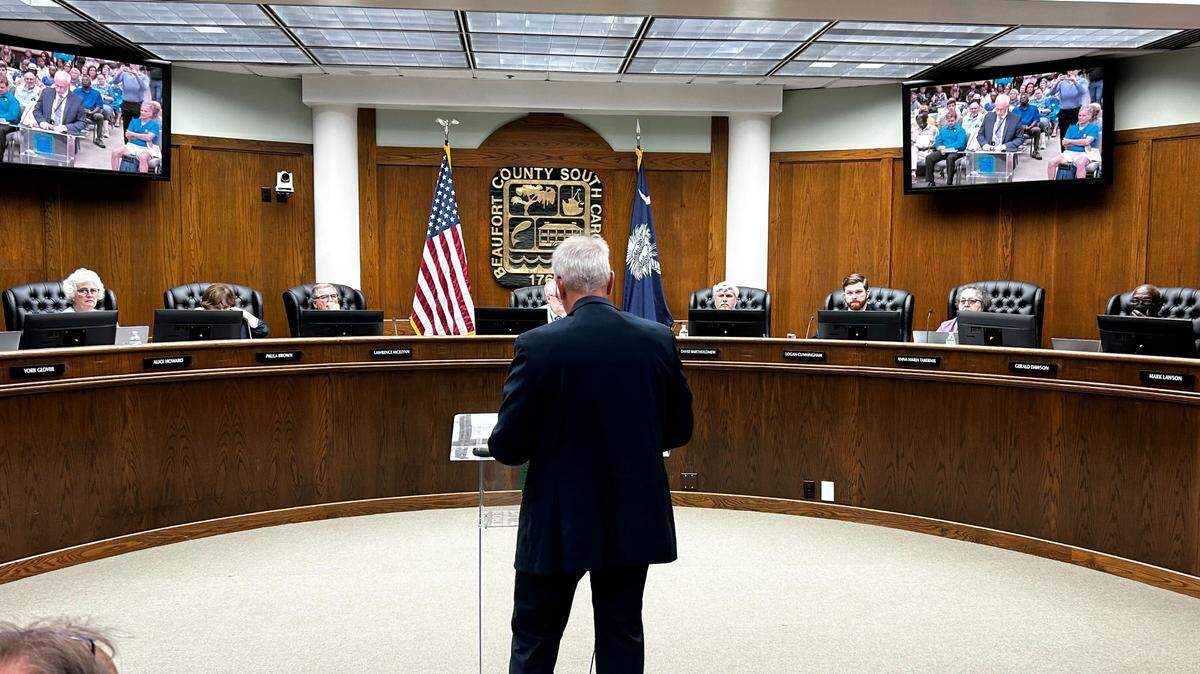
On the plus side, Howard has made several changes that suggest county officials now actually care what the public thinks and says. As the new chair, she is beginning council meetings an hour later to foster more public involvement, allowing longer public comment on any subject at the start of meetings, holding meetings countywide and providing more detail on each council agenda. If those changes seem minor on their own, they are monumental collectively. They drive a stake through the heart of the county’s yearslong modus operandi of delays, denial and deceit when the public was too often seen as a bit player rather than what it is — the boss.
“We want to be as open as we can,” Howard told me. “It’s a matter of building communication as best we can. We’ve had our turmoil with the previous administration. We want Mike Moore to be successful and for him to be successful, people have to trust what he’s doing, both externally and internally.... I give him a lot of credit.... In my opinion, he’s an excellent administrator.”
Howard lauded Moore for revising county procurement and whistleblower policies and for asking council members with whom he should meet in each district and then meeting with dozens of people.
At a January meeting on Hilton Head Island, Alex Cruden identified himself as a 20-year residential property owner in the county who was attending his first County Council meeting.
“I just want to affirm that you’re off in, I think, an excellent direction,” Cruden told the council. “I hope you keep going. I hope you’re able to respond to the genuine needs in a transparent and straightforward way.... I’m thanking you for taking this approach and letting you know that my neighbors and friends feel the same way.”
At that meeting, Councilwoman Paula Brown gave a shout out to the new county administrator.
“He’s only been in this position for seven months and during that time, we’ve had not one hurricane but we’ve had two hurricanes, and we just had a snowstorm,” Brown said. “So I want all of us to thank Mike. Give Mike a great big thank you for doing an excellent job.”
Applause rang out.
But it hasn’t all been rosy, and how Moore fits into the public equation remains a bit of a mystery even as he works to stabilize a county government that Councilman York Glover wryly notes has had eight administrators over the eight years he’s been on council.
Public involvement should be the goal
One of the next issues Moore and the entire County Council will have to address is how to prioritize the projects that could get the remaining sales tax revenue from a 2018 tax increase. How that is prioritized — and to what extent the public is involved — will be remembered when the council returns to voters seeking an additional sales tax increase, as early as next year.
From U.S. 278 corridor improvements to any number of island developments, decisions loom.
Anything short of full public involvement, such as with a new citizens’ oversight committee to prioritize and ensure the completion of projects getting limited sales tax dollars, is a step backward. Especially since the council may have broken the state’s open-meeting law when it hired Moore.
Shortly after taking the top job in July, Moore told an Island Packet reporter he would prioritize open communication with the media, engagement with the public and restructuring the county.
He has since hired a new chief financial officer and redrawn the county’s organizational chart to eliminate two assistant county administrators and streamline workloads to improve oversight. Soon he will hire a new deputy county administrator and a new county lawyer. That’s good.
He has also hired the Columbia-based law firm Bettis Law Group, which specializes in labor relations and employment law and whose lawyers can charge $320 an hour, to investigate leaks among Beaufort County government officials. Given the choice, some County Council members have consented to interviews with the firm. Others have not. None that I spoke with would talk about the investigation or items discussed in closed session. Moore may finish his probe soon.
But Moore has also declined several interview requests with reporters from The Island Packet reporting on Beaufort County. He’s a busy guy, but Moore did not respond to calls for comment from them in November and again in January. A spokeswoman said he was unavailable in January due to previously scheduled appointments. When he didn’t return a reporter’s call in February, the spokeswoman said he did not have time to talk by phone.
He has also drawn criticism from Kimberly Morgan, a former local reporter who emails council members, solicitors, investigators, law enforcement, media members and concerned citizens.
“If Beaufort County had competent, professional and probious leadership, the County would not be the subject of multiple criminal and ethical investigations,” she emailed this group on Dec. 16. “If Beaufort County had competent, professional and probious leadership, that leadership would recognize that whistleblowers are a blessing, as they are a sign that employees will not tolerate incompetence and/or corruption. Good leaders would not want to ‘make an example’ of anyone who is trying to do everything possible in their position to make their workplace and community a better place — especially after dealing with years of failed leadership, incompetence and corruption.”
Councilman Tom Reitz sees it this way: “I don’t think there should be leaks,” Reitz told me. “I think we should be more passionate about the improper behavior taking place.... If it wasn’t for the leaks, the council would not have known about it. My thing is let’s focus on cleaning up whatever it was.”
Much of that cleanup will fall to Moore. As county administrator, it’s his job.
A good conversation about leadership
Moore is a 30-year Navy veteran and a pilot with an engineering degree. He knows how to run a tight ship.
Before coming to Beaufort County, he was the assistant county manager of York County for three and a half years. I contacted him for this column to see if he would talk. He called the next day, and we talked at length. I began the call by saying more people with his background should be in government jobs. I think people who think like engineers and pilots make government more effective.
Great managers know how things get made and how to accomplish their goals consistently. They know how to prioritize difficult tasks and how to handle competing challenges, such as, for example, demands on one’s time and requests from journalists about the public’s business.
Moore said he may not always have time for an interview because of his schedule. But he is the one who made it an early priority, and busy people can accommodate brief interviews.
Moore smartly divides his job into three big priorities: personnel, facilities and finances. Putting people first is smart. They’re the heart of any organization. Priotizing workplaces — especially in government where those places are where the public gathers for multiple reasons — is also crucial. And of course you can only do what you can pay for. Short cuts often cut against you.
Moore’s goal is to understand the county completely. He is touring each council district with its council member and has just one tour left. He’ll begin public workshops with the council for the county’s new annual budget — the first with his fingerprints on it — next month. He’s focused on major issues like transportation and growth.
When I asked Moore about the leak probe, which critics call a misplaced priority, he defended it. He said he has already taken steps to reduce the number of staff members in closed council meetings.
“We want to be transparent,” he said. “But there are instances where if it’s ongoing litigation or a contractual matter that if information gets out and it shouldn’t, it exposes council to liability, so from my standpoint, it’s important the county is able to conduct business and minimize the risk to our taxpayers.”
Moore and I disagree on the leak probe. I think it was a waste of county time and taxpayer dollars for something he could have addressed without hiring an outside firm, based on what I know. But we agreed on a lot of other things in our 30-minute phone call.
I look forward to the next conversation — and to the resolution of all the investigations into Beaufort County.
The public deserves both responsible leaders and timely answers.
This story was originally published March 18, 2025 at 6:00 AM with the headline "In Beaufort County, investigations abound and a county council is at a crossroads | Opinion."