
The art of the Holocaust movie helps us process real pain and keep history alive | Opinion
Decades before he died, so that he would not die there, Steven Kende fled a concentration camp where one of his jobs was “picking up pieces of people.” He hid in bushes from his German guards and survived for days on a few frozen vegetables until he smelled goulash.
Decades before he died, so that he would not die here, if it were ever to happen again, George Zimmerman studied agriculture so that he could live off the land. He took his meals at the same time every day because for far too long, before, he had not had that luxury. He would carve apple slices each night before bed, slide them into his mouth, savor the taste and the time, two things not promised to a human being who happened to be Jewish in Europe in the 1940s.
Now, I gather with Eva Zimmerman, once married to those survivors, and her children, and their children, one of whom is my wife, on Zoom for Shabbat each Friday night. We talk of the doings of the day or the news of the week or nothing of consequence at all except that the words are ours, by and for family, when the world seems mad. Has there ever been a time when the world has not seemed mad? We say the prayers. We say goodbye. We say we’ll see you next week.
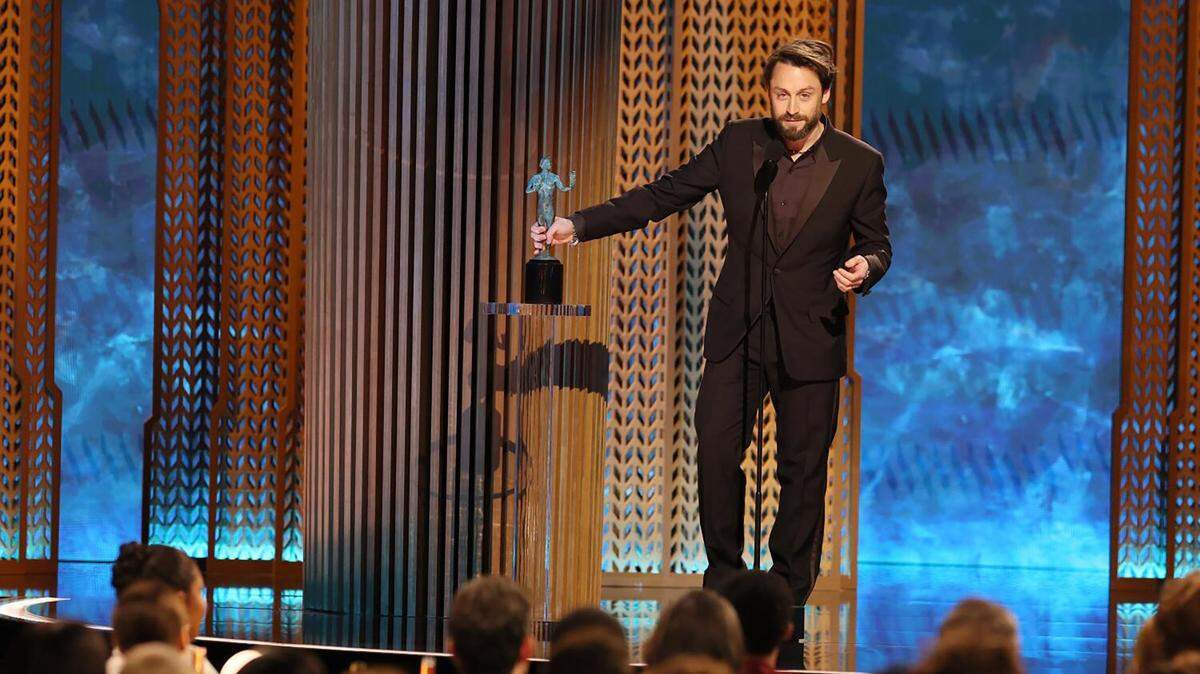
This week is different. The Academy Awards are Sunday, and “A Real Pain,” Jesse Eisenberg’s heartwarming, heartbreaking story about generational Holocaust trauma is up for two Oscars, best original screenplay and best supporting actor for Kieran Culkin, mesmerizing in the role.
It is so important to remember that the Holocaust happened, and could again. Millions of Jewish and other marginalized people were killed. Some, like Steven and George, escaped. But the anguish has not eased for the relatively few survivors and liberators left, or for their lineage.
These things are really hard to talk about — until someone brave enough begins. This year on International Holocaust Remembrance Day, that someone was Rabbi Samuel Rose, who told a crowded room in Columbia to have tolerance for immigrants and LGBTQ community members.
His remarks were cut from the video of the event by its hosts, the South Carolina Council on the Holocaust, for being too political, for tying his Holocaust remarks to the current moment. They were cut by the council’s Dr. Lilly Filler, whose mother, a survivor, ends her own personal story and powerful message about the Holocaust on the council’s website with a plea for her children.
“When there are no more Holocaust survivors to testify of the evil of the Jewish Holocaust — because in Auschwitz, the best of humanity were murdered by the Nazis — you will make me proud, dear children, if you will stand up to any form of defamation of Jewish people, and there’s one more thing. I know I’m asking a lot,” she said. “While you’re at it, speak also for other minorities because I believe in you, and we come from a decent and rich heritage, and we believe in justice and brotherhood for all people. And if you remember this, I will smile at you.”
I think Dr. Filler erred by cutting Rabbi Rose’s remarks from the permanent record.
I’d written a column in late January about the 80th anniversary of the liberation of Auschwitz, and I wrote another after the council’s ceremony, saying I wished Dr. Filler would apologize and restore the comments. Then I asked her if she would write an essay explaining her thinking. I asked others to write as well because I see my job as fostering often difficult community conversations. I asked the rabbi and a person who resigned from the council as a result of the censorship. All but the rabbi declined. I published his commentary along with a guest essay critical of his remarks that I received unsolicited.
In a brief email declining my essay request, Dr. Filler wrote, “The Council will continue its efforts for remembrance undeterred by those who would misappropriate these events to advance a partisan political agenda.” I, respectfully, think she is misappropriating the word misappropriate.
Sometimes it’s easier to process pain through art than the actual words of actual people, whether those words are Rabbi Rose’s, which are now memorialized on YouTube, or Steven Kende’s, which are on video, recorded by the Virginia Holocaust Museum, for all to see.
Who can forget the scene in the wonderful movie “Harold and Maude” when we glimpse the numbers tattooed on Maude’s forearm? Or the girl in the red coat in “Schindler’s List”? I saw that last film in a theater with my father, who had a doctorate in European history, earned in the stacks of German libraries. I can still hear the sounds of his heaving sobs in that theater.
In recent weeks, I’ve cried watching four unforgettable movies about the Holocaust, thinking of Rabbi Rose’s words, of how we should remember the past and how it is unbreakably bound to now and later. I recommend, if in the mood and mindset, watching “A Real Pain,” “The Zone of Interest” and “September 5” at home and the experience of seeing “The Brutalist” in a theater.
Each is a stark reminder that the past is always present. It’s like this quote from Ai Weiwei on a key chain accessory I carry in my pocket every day: “Life is art. Art is life. I never separate it.”
For me, words and art about the Holocaust connect past, present and future. They remind me that time is not linear but that time is a circle, that family members elsewhere and gone ahead are always at your side, that memories are blessings and that life can be hard but also beautiful.
Sunday night, I’ll be thinking of George and Steven, of Rabbi Rose, of Lilly Filler and her mother, of my wife and daughters. I’ll be rooting for Eisenberg and Culkin. I’ll be eating an apple.
This story was originally published February 28, 2025 at 5:00 AM with the headline "The art of the Holocaust movie helps us process real pain and keep history alive | Opinion."