
‘Try to be nice’? What lawmakers are getting wrong about public meetings in South Carolina | Opinion
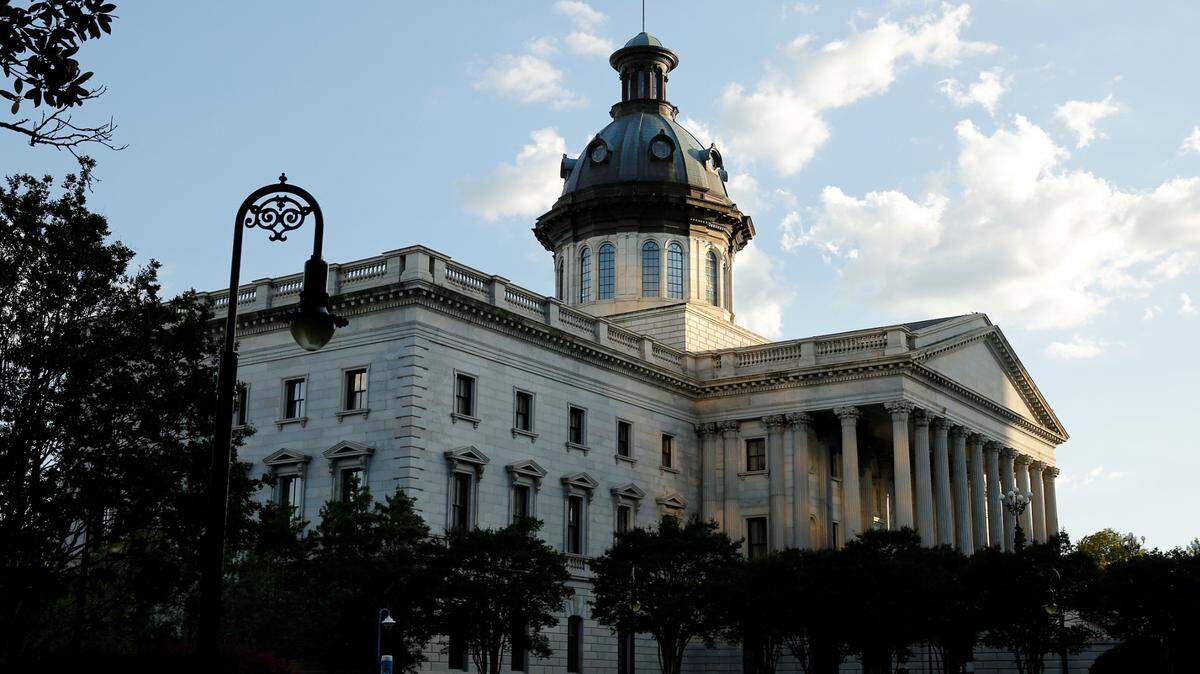
Republicans in control of the South Carolina Statehouse made education savings accounts a priority this year, so of course they must’ve been eager to hear public testimony on them. Right?
Wrong.
The Senate passed its bill in a hurry mere weeks into a five-month session without hearing from the public, and the House of Representatives took its representation only slightly more seriously.
A couple dozen speakers showed up at a House committee meeting Wednesday to speak to a seismic shift in education that people love or hate and that has twice been ruled unconstitutional by the state Supreme Court — the use of public funds for private schools. The new House bill was so different from the Senate’s version that the committee chair told speakers they “might as well” not mention the Senate’s proposed funding stream because it wasn’t in the House’s plan.
The chair also told the public — who had made time, gone to the Statehouse and sat through a series of invited, unrestricted speakers — that public comments would be limited to two minutes even if people planned to speak for the standard three on a subject close to their hearts: kids.
The public has had better days: As you’ll see, the chair also told her peers to be nice to people.
I’ll admit it: I was too busy to follow the four and a half hour House Education and Public Works Committee hearing in real time myself. Instead, I watched a video of it at double time the next day. I then called committee chair Shannon Erickson because I couldn’t believe my eyes or ears. We talked at length, and she explained her thinking and actions at the hearing in detail.
“I’m required to maintain decorum and functionality,” she told me. “My job was to make sure that everyone was heard, not that everyone got to talk as long as they wanted to.”
If that sounds curt, it wasn’t. Erickson’s philosophy and track record is to be inclusive, and ours was the kind of thoughtful conversation that makes you appreciate an elected official even if you disagree. Ultimately, I understood her thinking and valued her high standards for decorum, but I still thought she shortchanged members of the public who only wanted an extra minute.
She told me she had to limit speakers’ time because a morning legislative meeting had gone long, pushing back the start of her committee meeting. She said she was mindful of the time because she didn’t want to bring any of the audience back to resume the hearing the next day. Plus, she said, stakeholders have been discussing this issue for months since the court’s ruling.
Minutes add up, but if the tradition is to give speakers three minutes, each minute matters to them. Especially if lawmakers know how they’ll vote before the hearing and especially if some of those lawmakers also behave poorly. Erickson had to intervene multiple times, and she should be lauded for that.
It is an emotional debate.
People who support using public money for private schools are right when they say not every child learns the same, that public schools aren’t the best fit for all and that choices help, especially for families of faith who want a school with their values. People who oppose it are right to worry about oversight and opportunities for students with disabilities that aren’t the same as in public schools, to cite states where such programs devour budgets and to note South Carolina’s constitutional prohibition on direct public aid for private schools.
The Senate wants to get around that little detail by using state lottery funds to provide funding students can use at private schools. The House wants to empower a trustee, working under the state superintendent of education, to decide how to distribute money from the state general fund for private school aid.
The state Supreme Court will have to take a close look at either proposal, and that’s a column for another time. But several speakers spent their limited time warning their lawmakers this week that such plans to fund private schools with public aid are unconstitutional.
If those speakers end up being right, it will be just one more reason why public comment is so valuable. Yet its value didn’t seem clear to some lawmakers on Wednesday. Tasked with listening to the testimony and asking questions of speakers if they so chose, two lawmakers instead got into a contentious policy debate with one speaker.
Were they rude? You decide.
“I’m going to try to be nice,” Rep. Jeff Bradley, R-Beaufort, began before talking to one speaker.
“You better be,” interjected Erickson, R-Beaufort.
Addressing parent Annie Mahaffey, Bradley said, “Can somebody please tell me why we should continue down the same path doing the same things with no beneficial results? … As policy makers who are responsible for making decisions to allocate these almost $15 billion and lousy results, what are we supposed to do? Can you help us understand that? Other than continue to funnel money into the same monopolistic program that is not functioning properly.”
“Well, I think that maybe you can consider how to help it to function better,” Mahaffey replied.
“Do you feel that we shouldn’t fund students?” Rep. James Teeple, R-Charleston, asked her next. “We should fund systems?”
“I think that’s a little bit of an unfair question,” she said.
“It’s really not. It’s pretty straightforward,” said Teeple, who then shared a personal story and ended it by asking Mahaffey whether he had “the right” as a taxpayer to take his son out of “failing” public schools and put him in a better environment.
That’s when the chair cut him off and addressed Mahaffey directly.
“Annie, I’m going to tell you, ‘Thank you,’” Erickson said.
“I had a good answer,” Mahaffey said.
“I know you did,” Erickson said. “And I appreciate you standing there and being such a good sport.” Turning to her colleagues, she said, “Ladies and gentlemen, I’m going to ask you that we don’t debate with folks that come and testify before us. We take testimony, and we can ask questions but the soliloquies and discussions need to calm, please. This is a civil discussion…“I’m not picking on any one person,” Erickson added. “And I think Annie was a real good sport, and I apologize for me waiting a minute. I thought that we’d wrap it up….”
“Look, these are children, and we’re all passionate about that,” Erickson continued. “I am more passionate than probably anybody in this room so you don’t want to get me started. But these folks are, too, and a lot of them are brand new members, and I am thrilled with their passion, quite frankly, on all sides. I think a good debate is healthy, but ladies and gentlemen, let’s make sure that we do hear from folks and not, Mr. Teeple, go a little bit too far with our discussion rather than question, and I’m sorry I got to put you on the spot.”
“I was actually holding back,” Rep. Teeple said.
Such restraint.
I’ll answer my earlier question. This was rude.
Look, it’s hard to get the general public fired up about public comment at government meetings. Most people are too busy or too disinterested, or the logistics just don’t work, to spend a few hours during the day with elected officials. Or they don’t want to go through the hassle of offering points and counterpoints to politicians who have legislative deadlines and minds made up. There are more pressing matters for most people.
But public decency should be taken seriously, from the Statehouse to City Hall, especially if the public is being phased or pushed out of public meetings. Giving the public just two minutes to speak when lawmakers already have a new version of a bill they’ll quickly approve that day isn’t representative democracy — especially when they’ve had many of the details for a week and the public is only hearing about some for the first time at the meeting, as happened Wednesday.
So what’s a member of the public to do? There are clearly better ways to spend two minutes, but in theory, public comment is a vital part of democracy. I’m grateful for all who put up with the possibility of rancor to speak their mind that day. I’m grateful for Chair Erickson interrupting and admonishing disrespectful colleagues. I’m also grateful I could watch this hearing a day later because mistreating the public and making a meeting public is better than mistreating it and not.
But it’s hard for me to call something like this a public meeting.
This story was originally published February 24, 2025 at 6:00 AM with the headline "‘Try to be nice’? What lawmakers are getting wrong about public meetings in South Carolina | Opinion."