
Behind South Carolina’s role in Robert F. Kennedy Jr.’s health secretary confirmation
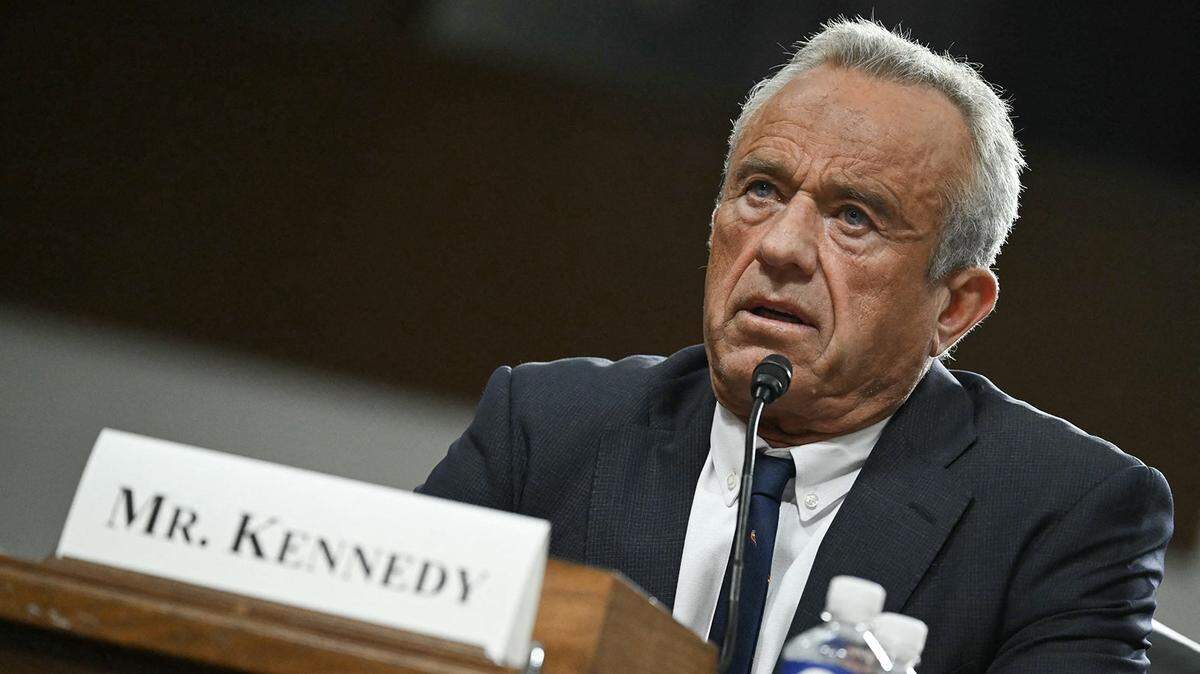
In one of the closest votes yet for a cabinet pick of President Donald Trump, South Carolina’s two U.S. senators rallied around all but one of their Republican colleagues to confirm Robert F. Kennedy Jr. as a controversial secretary of the Department of Health and Human Services, 52-48.
Every Democrat voted against him, as they have for just four of Trump’s 16 picks so far. Such robust resistance from the left is a far cry from President Barack Obama “seriously” considering Kennedy to head the Environmental Protection Agency in his own cabinet in 2008.
Kennedy’s ascent was no surprise for Americans seeing his momentum grow in recent months. But it should be stunning in a week that’s seen an avoidable measles outbreak erupt in Texas and New Mexico and a new bird flu strain detected in a Nevada dairy worker as well as a state Supreme Court hearing on a challenge to a South Carolina law banning abortions at about six weeks.
I say stunning because Kennedy could charitably be called chameleonic — and uncharitably be called an opportunist or even a liar — for big swings in his viewpoints on vaccinations and abortions.
Longstanding, principled positions may be rarer in our modern politics of alternative facts and constant fingers in the air. But Kennedy’s U-turns on important issues should concern people on the right and left as he proceeds with the president’s blessing to “go wild” on health, food and medicine.
The day Trump nominated him for the position in November, vaccine makers’ stocks tumbled.
As health secretary, Kennedy will oversee government vaccine research and recommendations, the National Institutes of Health and the Food and Drug Administration, and his priorities will be the nation’s. But troublingly, he has spent decades discrediting vaccines even though science shows they are among humanity’s most amazing inventions. They have saved 154 million lives in the last 50 years, and even Kennedy’s kids are vaccinated.
Yet in a 2020 podcast, Kennedy asked, “What would I do if I could go back in time and I could avoid giving my children the vaccines that I gave them? I would do anything for that. I would pay anything to be able to do that.”
In another podcast taped in 2019, Kennedy said of vaccination, “I know it’s a mythology to say that it cured polio and smallpox and measles, etc., but it’s just not true.” In 2023, despite evidence to the contrary, Kennedy said on a podcast that a virus in the earliest polio vaccines “killed many, many, many, many, many more people than polio ever did.”
Ignoring the science, Kennedy has also called COVID-19 shots “a crime against humanity,” on Twitter in 2022, and said in 2023, “There’s no vaccine that is, you know, safe and effective.”
Vaccines are safe and effective, so such comments would be dangerous at any time over the last five decades of world history, but are especially so in the five years since the pandemic. Now, trust in vaccines is sinking, along with vaccination rates among the nation’s children even as the number of older adults getting vaccinated for free through Medicare Part D is soaring.
Perhaps it is those who remember life before vaccines who value them the most.
During his confirmation, Kennedy sang a different tune, saying he’s not “anti-vaccine or anti-industry” but “pro-safety” and adding, “I believe vaccines have a critical role in healthcare.”
Four Republican senators who voted for Kennedy are doctors. One, U.S. Sen. Bill Cassidy, R-Louisiana, sounded a note of skepticism but ultimately voted for him, ending brief speculation he might not, speculation that doubled as hope for many concerned about the nation’s future.
The Associated Press reported that in a committee hearing, Cassidy offered Kennedy studies that have proven vaccinations do not cause autism, and implored him to accept the research.
“Kennedy would not,” the AP wrote. Instead, he responded with an article that Cassidy said had “issues.” Cassidy told him that day that stating clearly that vaccines do not cause autism “would have incredible impact.” Cassidy said, “That would have incredible impact. That’s your power.”
The lone Republican senator to oppose the vaccine critic’s confirmation Thursday was former Majority Leader Mitch McConnell, R-Kentucky. McConnell famously survived polio as a child in the 1940s — because of the polio vaccine that saved so many. He has previously credited “the miraculous combination of modern medicine and a mother’s love” for saving him.
The backing of South Carolina Sens. Lindsey Graham and Tim Scott was evident after they signaled their support following 1-on-1 interviews with him in December. During the COVID-19 pandemic, both Graham and Scott repeatedly urged South Carolinians to get vaccinated. They both shared images of themselves getting vaccinated on social media to build public trust, and Graham even made direct pleas to get vaccinated in crowds that booed their disapproval. They spoke out against COVID vaccine mandates in the pandemic, but repeatedly urged vaccination.
Yet their concerns about vaccinations took a back seat to their thoughts on Kennedy’s abortion comments before his confirmation vote. Kennedy’s position on abortion is even more unclear.
A year ago, Kennedy said he would support a federal ban on abortion after the first trimester then quickly backtracked saying he’d “misunderstood” a question. The Democratic presidential candidate’s campaign said “Mr. Kennedy’s position on abortion is that it is always the woman’s right to choose.”
In May, he wrote, “I support the emerging consensus that abortion should be unrestricted up until a certain point. I believe that point should be when the baby is viable outside the womb.” Kennedy’s stated position so concerned former Vice President Mike Pence, a national leader in the anti-abortion movement, that Pence campaigned hard to block confirmation.
Following his nomination, Kennedy said he would adopt Trump’s positions on abortion. In response to questions from Scott, Kennedy also said that he would appoint anti-abortion deputies within the sprawling federal health agency that has a $1.7 trillion budget.
“We spent more time talking about his position from a pro-life perspective,” Scott said of Kennedy. “What I love about where he is, is he’s surrounded himself with deputies that are pro-life. So what we should expect out of this nominee is for him to be a change agent. That is the goal of President Trump and is the goal that I support.”
Graham also expressed satisfaction about Kennedy’s views on abortion after talking to him.
“I had a very positive meeting with Robert F. Kennedy Jr. about his pending nomination to be HHS Secretary,” Graham wrote on Facebook. “He is well-aware of traditional Republican positions within the agency regarding pro-life policies, and I expect he will continue those traditions. The Republican Party is the pro-life party.”
So now we have a health secretary whose most recent stated views on abortion and vaccinations are nothing like his earlier ones.
Of course, everyone should be concerned. We all should all be paying close attention to health policy shifts that will emerge on Kennedy’s watch, and looking at leading indicators like stock prices of vaccine makers such as BioNTech, Moderna, Novavax and Pfizer. Science has never been more important. We are going to need it more than ever to undo any damage Kennedy may leave behind as his legacy.
Just consider this recent red flag from three assistant professors on the site The Conversation. Two weeks ago, Ohio State University’s Dominik Stecula, University of South Carolina’s Kristin Lunz Trujillo and Boston University’s Matt Motto ended an essay about Kennedy with this warning:
“Words have consequences, and we have seen the impact of anti-vaccine rhetoric during the COVID-19 pandemic, where ‘red’ counties and states had significantly lower vaccine intent and uptake compared with the ‘blue’ counterparts.
“Therefore, despite sounding appealing, Kennedy’s signature slogan, ‘Make America Healthy Again,’ could — in discouraging policies and behaviors that have been proven effective against diseases and their crippling or deadly outcomes — bring about a true public health crisis.”
That bears repeating: The health secretary could create a health crisis. That’s horrifying.
This story was originally published February 14, 2025 at 6:00 AM with the headline "Behind South Carolina’s role in Robert F. Kennedy Jr.’s health secretary confirmation."