Science fiction turned reality? A two-headed sea turtle just hatched in Myrtle Beach
Myrtle Beach definitely doesn’t have any shortage of weird, well, everything.
Last week, a Red Lobster donated a rare orange lobster to the local Ripley’s Aquarium instead of eating it.
The only art museum in the area has a 10-foot octopus made out of wire and trash on its doorstep.
And now, apparently, the region has a new strange creature in its midst — a baby two-headed loggerhead sea turtle found Thursday.
“In case you missed it yesterday, a two-headed baby loggerhead sea turtle in Garden City was released into the ocean by S.C.U.T.E.,” WPDE chief meteorologist Ed Piotrowski wrote in a Facebook post Friday. “What a sweet shot via Karen Dalton. Good luck little buddy (or buddies?).“
The baby sea turtle was sent on its away by SCUTE, the nonprofit South Carolina United Turtle Enthusiasts, which operates in Horry and Georgetown Counties.
SCUTE works in coordination with the state Department of Natural Resources. The group hunts for new sea turtle nests each morning, fences them off and puts out signs telling people to not bother the nest. Then, they keep an eye on the nests as they spend the next 45 to 70 days incubating, volunteer Terry Ann Graham said.
Graham found the turtle during an “inventory” of a nest in Garden City. Three days after each nest hatches, Graham’s group of volunteers goes through it and counts the number of successful hatches, the baby sea turtles that didn’t make it and the ones still in the process of hatching. That data is then uploaded to an online database used for tracking sea turtles around the country.
During each inventory, Graham and the rest of her group also keep an eye out for any live sea turtles that haven’t made it out of the nest yet. This year, Graham said that has been a particularly common issue because the region has gotten so much rain that the sand is much more dense, and therefore harder for the hatchlings to dig through.
“We get so much rain down here that a lot of them get caught in the sand,” Graham said.
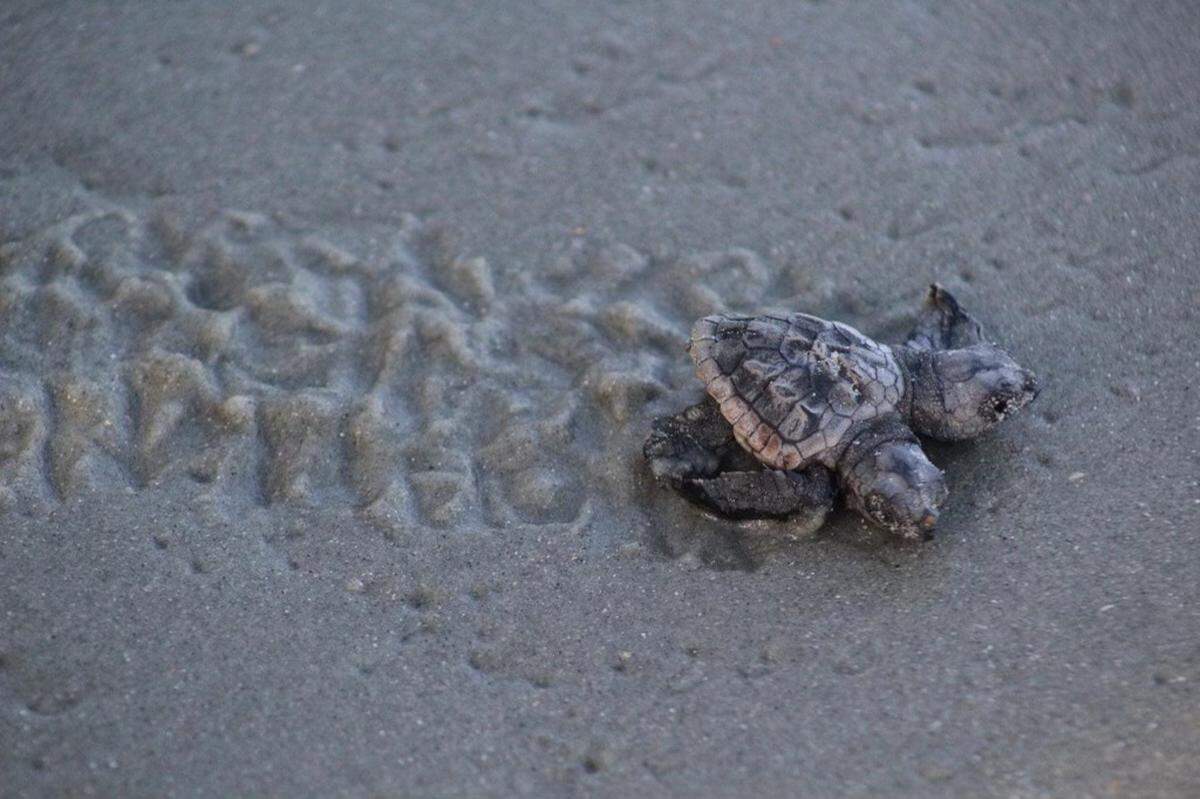
Onlookers watched the volunteers inventory the nest Thursday and were amazed when the two-headed turtle was found. Despite the excitement over the unusual find, Graham said two-headed sea turtles often have tragic endings.
“We try to explain what we do for the Department of Natural Resources” to the people nearby, Graham said. “And then we release the little guy into the water, so he’s long gone swimming out to sea.”
Michelle Pate, who manages the Marine Turtle Conservation Program for the Department of Natural Resources, said the term for an animal is called bicephaly. It happens all throughout nature, from cows to snakes.
“It’s just an abnormality and some of the reasons for it include genetics, low or high temperatures that occurred when it was incubating or some kind of environmental pollution,” Pate said. “There’s kind of all kind of potential reasons that could bring about that mutation.
“It’s a just a little genetic blip.”
Over the years, she’s seen other two-headed baby sea turtles but most of them were dead in the nest or had significant health problems, like blindness. In general, Graham said finding a two-headed baby sea turtle is pretty rare for Myrtle Beach.
“They’ve got a lot of things that go against them,” Graham said. “We were all very surprised to see a live one with two heads and had eyes and still only had four flippers.”
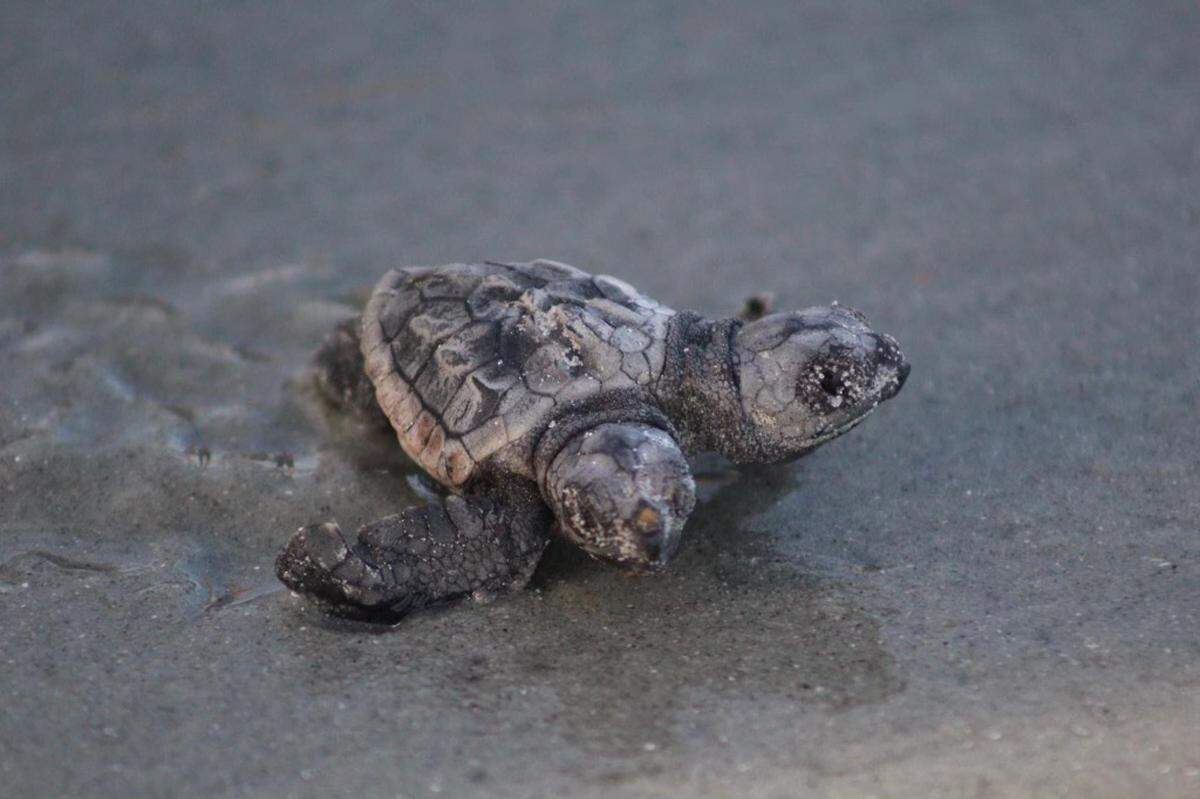
This turtle was the first live one she’d ever seen. But, Graham predicted it would have a similar ending to the others, even if its life was atypically prolonged.
“The sad thing is it’s not going to survive out at sea,” Graham said.
Two-headed sea turtles, including this one, are “very top heavy,” Graham said.
It was having a hard time walking, though she said it did “a pretty good job” considering the circumstance. However, the turtle’s struggles were quickly apparent when it washed back onto the beach and the group had to go back an hour later and help it make it back out to sea.
“The survival rate on a two headed turtle — I’ve never heard of any that survived,” Graham said.
Finding the sea turtle, especially with the beachgoers nearby, was a bittersweet experience.
“I knew it would be, you know, would be ultimately a sad ending for it,” Graham said. “But anyhow, it’s unusual, and people, when they saw it, they just thought it was wonderful.”
This story was originally published July 22, 2022 at 12:12 PM.