Proud Hilton Head fights change of any kind. Will these 5 issues force its hand?
READ MORE
The Future of South Carolina Cities
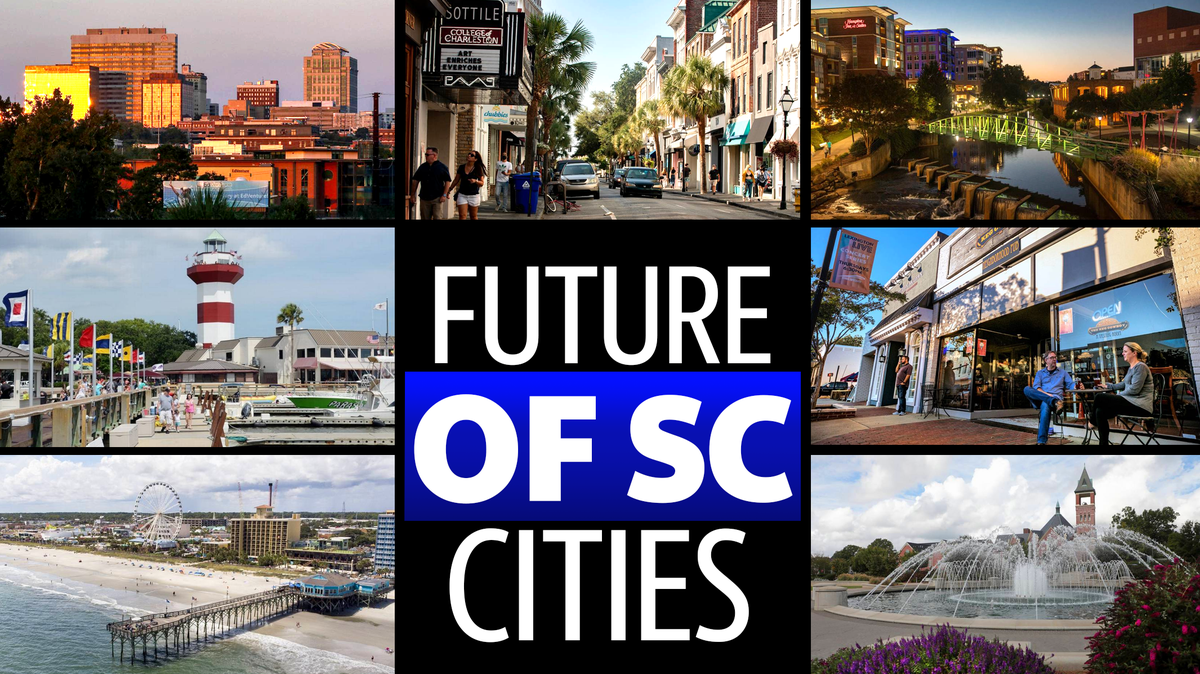
These seven cities hold the power to shape the future identity of South Carolina. Can they overcome their own unique challenges in order to become more sustainable for the Palmetto State in the long term? This is The Future of South Carolina Cities.
Expand All
For years, the residents of Hilton Head Island have wondered whether the island’s focus on creating an upscale, tourism-driven economy on a 69-square-mile barrier island was sustainable.
In 2021, the answer is increasingly grim. Visitors keep coming, and the island’s marketing is still in full force. In fact, Hilton Head continues to top national “best island” lists.
But the island’s struggles are evident to tourists and residents: The weekend traffic jams, the dearth of affordable housing for hospitality workers, the aging homes and hotels on this mostly built-out island. Even the highly-touted restaurants are scrambling to deal with rising wait times and staffing shortages.
Hilton Head Island is at a crossroads. Two massive projects — a new bridge and an expanded airport — are expected to encourage even more travel and people while the island struggles to keep up.
If the island does not address its problems, “it could devolve into a place that has even fewer and fewer permanent residents,” said University of South Carolina Beaufort Chancellor Emeritus Jane Upshaw.
“What that means: fewer and fewer people care about the common good, the hospitals, the schools, the restaurants. People won’t care about that. There won’t be a presence,” Upshaw said.
That future of Hilton Head rests on five key issues the island must address.
How to accommodate the workforce
The lack of affordable housing on Hilton Head Island is no secret.
Employees forced out by the island’s high-priced real estate market sometimes drive hours to get to work. Traffic woes, long wait lines at restaurants, inadequate staffing and diminished service all are symptoms of the underlying problem.
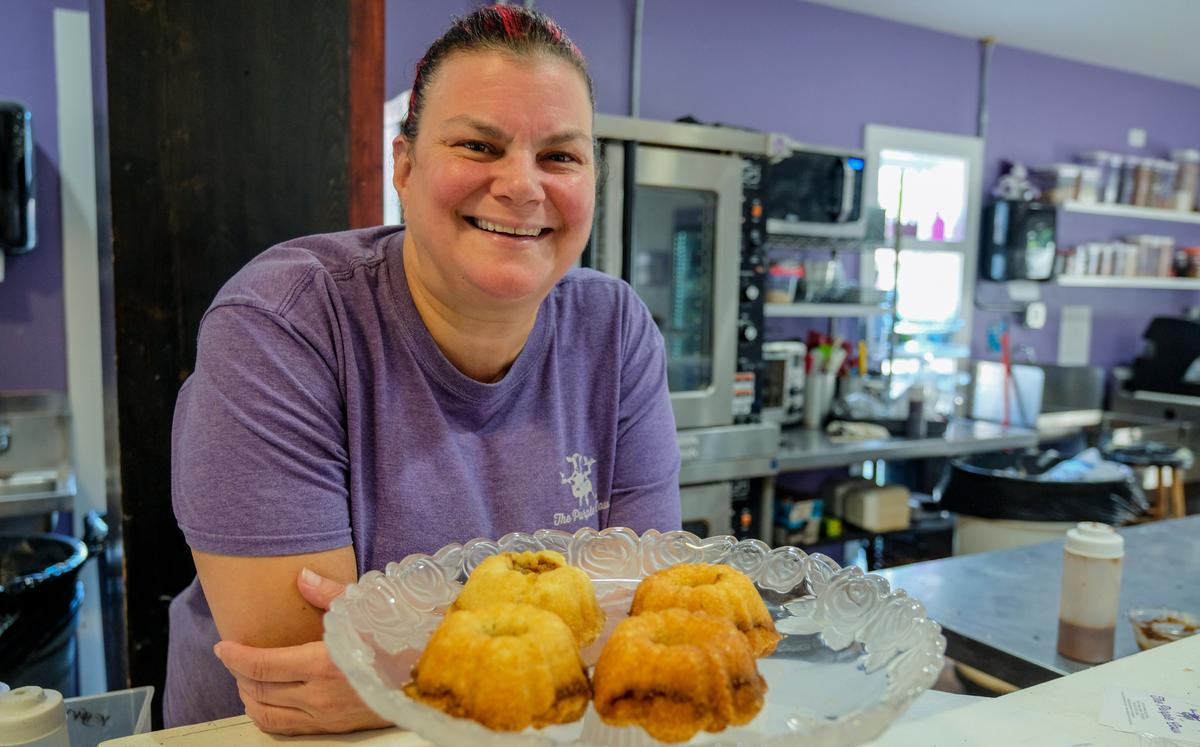
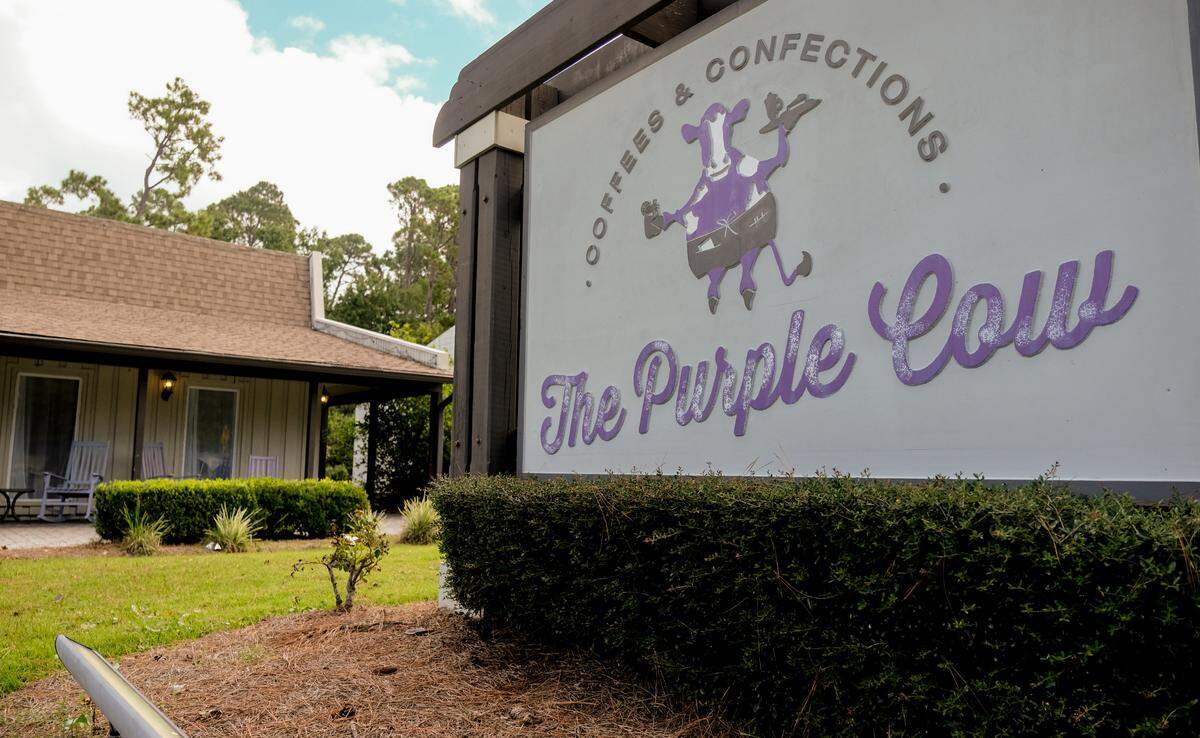
For Lisa Bernstein, owner of The Purple Cow — a dessert shop on Hilton Head’s south end — housing is the biggest issue facing the island.
And she says the town hasn’t done anything to help.
Apartment prices are out of control, she said. Landlords are doubling the price of rent from just over a year ago, and people are getting evicted, she said.
“It is disheartening to hear people say that people don’t need to live where they work,” Bernstein said. “I fear for people who can’t afford those prices. Where do they go? What happens to them?”
The lack of affordability has created an “untenable” identity crisis for the island, said Upshaw, the former USCB chancellor.
If those who travel to and work on the island can’t live there, what kind of community does that create?
A few miles west, “Bluffton is eating their lunch in terms of taking workers away from Hilton Head Island. That has got to be addressed,” Upshaw said. “It’s an issue about the quality of Hilton Head’s existence.”
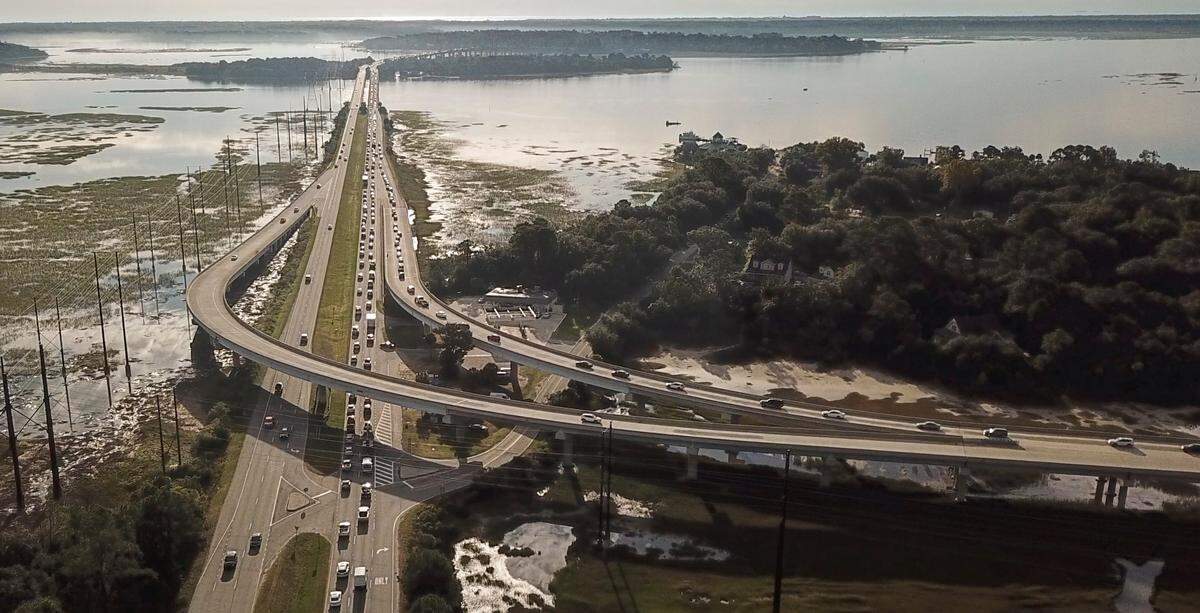
Traffic on the bridges to the island is awful, Upshaw said. And pretty soon, people will find alternative places to live, work and travel. She said Hilton Head needs to decide what to do with the U.S. 278 project — which could overhaul the existing bridges to Hilton Head and build a new, six-lane bridge between Bluffton and Jenkins Island. The estimated $290 million project has been hampered by divided public bodies and public criticism from residents.
“The alternatives are growing, big time,” she said. “It’s going to happen. It’s already happening.”
For Upshaw, the situation on Hilton Head is not sustainable. Many of the people she knows have moved to Bluffton for the updated infrastructure and more affordable housing.
“I don’t think you can say Hilton Head is thriving right now,” she said. “I think it’s struggling to survive. Young people can’t buy in one of these gated communities where the house prices are so high.”
To fix the problem, the island needs to attract young teachers, nurses, restaurant workers and entrepreneurs, she said.
Hilton Head has made some progress by developing a workforce housing program, which provides incentives for developers to build affordable housing.
Earlier this year, the town approved a bonus density proposal, which allows developers to double the number of units in a project if they offer affordable housing.
But the town has struggled to get developers on board.
“We know that we have a workforce and affordable housing crisis on Hilton Head,” Ward One Council member Alex Brown said earlier this year. “We will have to do more.”
Hilton Head Town Council member David Ames said he is “encouraged” by new Town Manager Marc Orlando’s approach to growth and development on the island “in advance of a crisis.”
“How do you create the structure of a community?” Ames asked. “I think there is an opportunity now for us to target our public investment in a way that we reinforce those values that have been a part of our community since its modern inception.”
But, Bernstein, the dessert shop owner, said Hilton Head is in “big trouble” if the workforce issue isn’t fixed. She said the island needs to cap short-term rentals and rent increases.
“It hurts me that I believe the town doesn’t care,” she said. Council members “have shown quite a bit lately that they care more about the visitors than they do the mom and pops, who are doing everything they can to keep their doors open with no to very little employees.”
Hilton Head’s environment is at risk
For some on Hilton Head, holding onto the island’s authentic environmental focus is one of the biggest challenges.
It’s easy for many islanders to look back with nostalgia instead of forward with intent.
In the 1970s, Hilton Head was a relatively untouched barrier island. Those who visited moved here on a whim. They worked odd jobs and sought to create opportunity while protecting the island’s natural resources.
Hilton Head was made up of energetic, community-minded people, longtime islanders say.
In 2002, colorful Sea Pines founder Charles Fraser died in a boating accident. Two days after his death, then-Island Packet columnist David Lauderdale wrote that Fraser “saw the world through his own lenses. He did it his way, and he did it with flair.”
“He wanted to know mankind and massage an environment that they would enjoy. It frustrated him when others did not appreciate nature, and he had sharp words for them,” Lauderdale wrote.
Almost two decades after Fraser’s death, young entrepreneurs are still on the island, but they seem less interested in the environment, said Council member Ames.
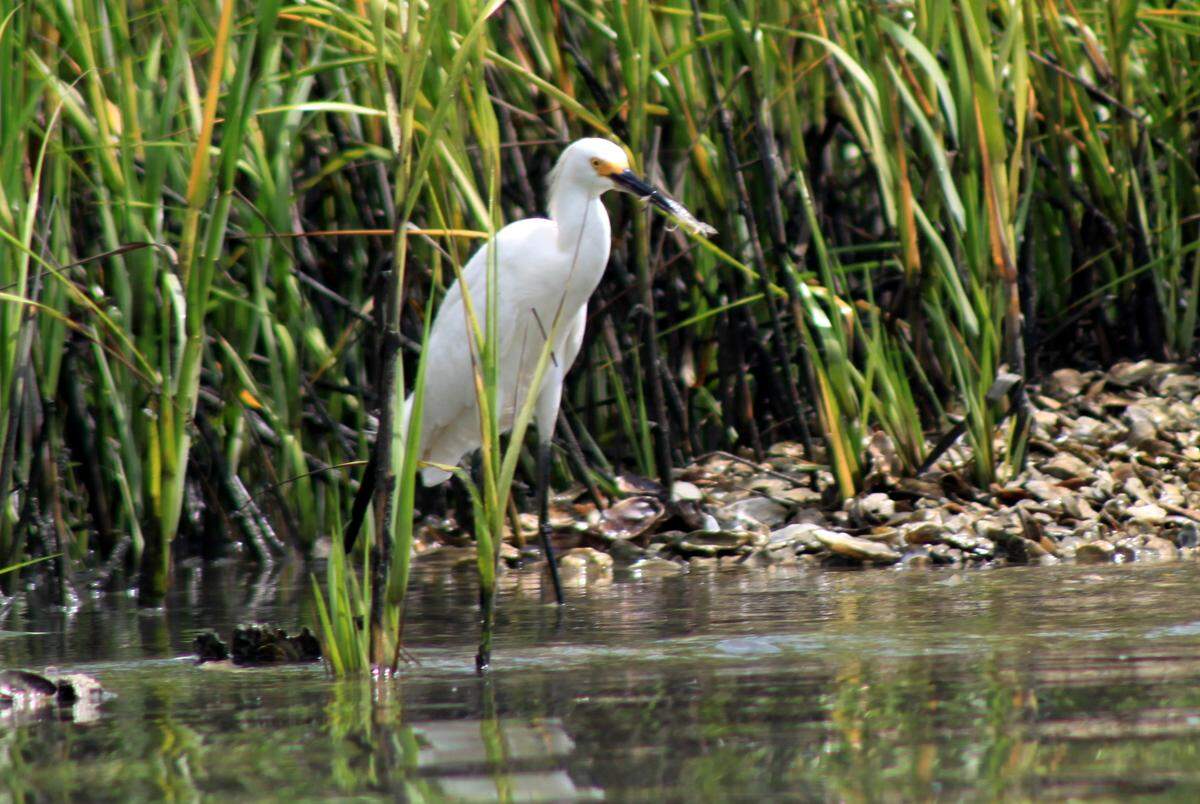
Hilton Head, Ames said, needs to reignite that spirit and pride. And that means creating a “Hilton Head 2.0 or 3.0.”
“We can’t live on our laurels,” he said. “We have to be introspective and self-critical so that we acknowledge our vulnerabilities. We have to coexist as a community towards that vision that excites us and makes us proud to be islanders.”
To protect its environment, Hilton Head must continue to focus on open space, preservation of trees, architecture and its commitment to volunteerism, Ames said.
Overpopulation is a problem and will continue to be a problem, he said.
“The real challenge we have on the island is that there has been such a dynamic or dramatic shift in population over the last few years that I don’t think the people who live on the island today are as sensitive to things that made this island unique before,” he said.
If that focus on open space and preservation is lost, Hilton Head will be “just another community,” he said.
Hilton Head appears to be at or nearing full capacity. 2020 census data released in August showed just 1.5% growth compared to the previous decade. Neighboring Bluffton, meanwhile, grew 121.2% from 2010 to 2020.
Talk of protecting the environment at the local level is important in South Carolina — a state that has failed to develop a comprehensive climate plan. Unlike North Carolina, the Palmetto State has no statewide effort to cut greenhouse gas pollution, limit sprawl or educate the public on how to adapt to the changing climate, according to The State Media Co.
So part of the challenge is admitting there’s a problem, said Town Council member Brown, who described himself as “extra critical, but optimistic” about Hilton Head’s future.
“We always argue or ignore this whole idea of climate change,” Brown said. “That’s real, too. We’ve got to talk about that.”
Hilton Head’s marketing — a double-edged sword
Tourism is Beaufort County’s second-largest industry, behind the military, at $1.48 billion.
Local groups such as the Hilton Head Island-Bluffton Chamber of Commerce receive millions of dollars each year from local governments to make sure the industry thrives on Hilton Head, in Bluffton and throughout the county.
Critics have long fought for the chamber to show receipts on how it spends the money it gets from local governments. The public should know exactly how their money is being used to promote tourism, they say.
The fight for the chamber to be more transparent in its accounting has been at the forefront of heated town council meetings, mayoral races and even sparked letters of demand from Beaufort County Council members.
But while the actual dollar amounts are enshrouded, the marketing of Hilton Head is hard to miss. It can be seen at events like the annual RBC Heritage golf tournament, in social media advertisements and, of course, in yearly “best” and “No. 1” lists.
This year, Travel + Leisure ranked Hilton Head the No. 1 island in the continental United States.
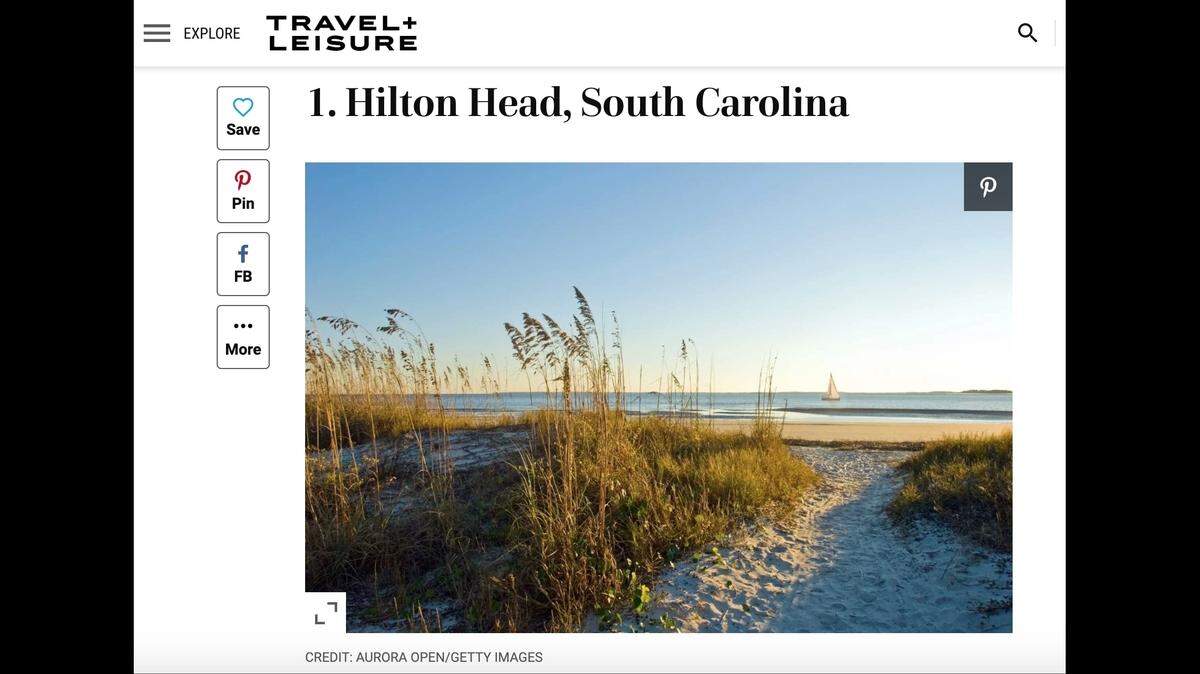
But is that publicly touted image accurate?
Hilton Head has some tough decisions to make in the next 20 years, but many organizations and groups that could play a big role refuse to admit it or say it out loud, said Brown.
“The chamber just can’t promote Hilton Head as a great place to go to the beach,” he said.
“We have for too long focused on quantity — how many visitors we’re getting to Hilton Head — as our metric of success. It has to shift into quality. I’m not talking about necessarily the quality of the visitor. I’m talking about the quality of the experience.”
Just like an elevator, Brown said, when the island reaches — or exceeds — its capacity, it’s a “very, very disappointing experience” because you don’t receive the same quality of services.
Council member Ames said the chamber is doing a great job of attracting people to the island, but the island is having a hard time keeping up. Hilton Head has to be careful about the image it presents and whether it can live up to that image, he said.
“Are we over-marketing Hilton Head? Probably,” he said. “The chamber is doing the job that it believes it needs to do to provide heads and beds for all its members. The question is: Is that getting us to a place in 10 or 15 years that we want to be? I think we have to be careful and we have to manage our resources.”
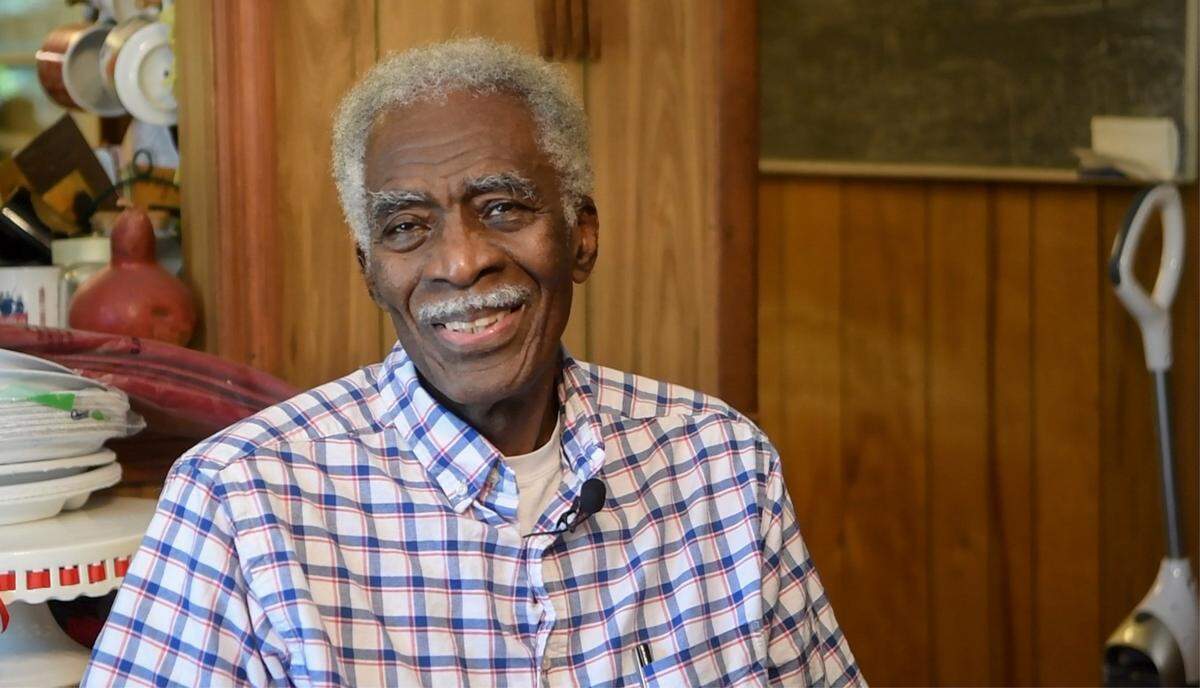
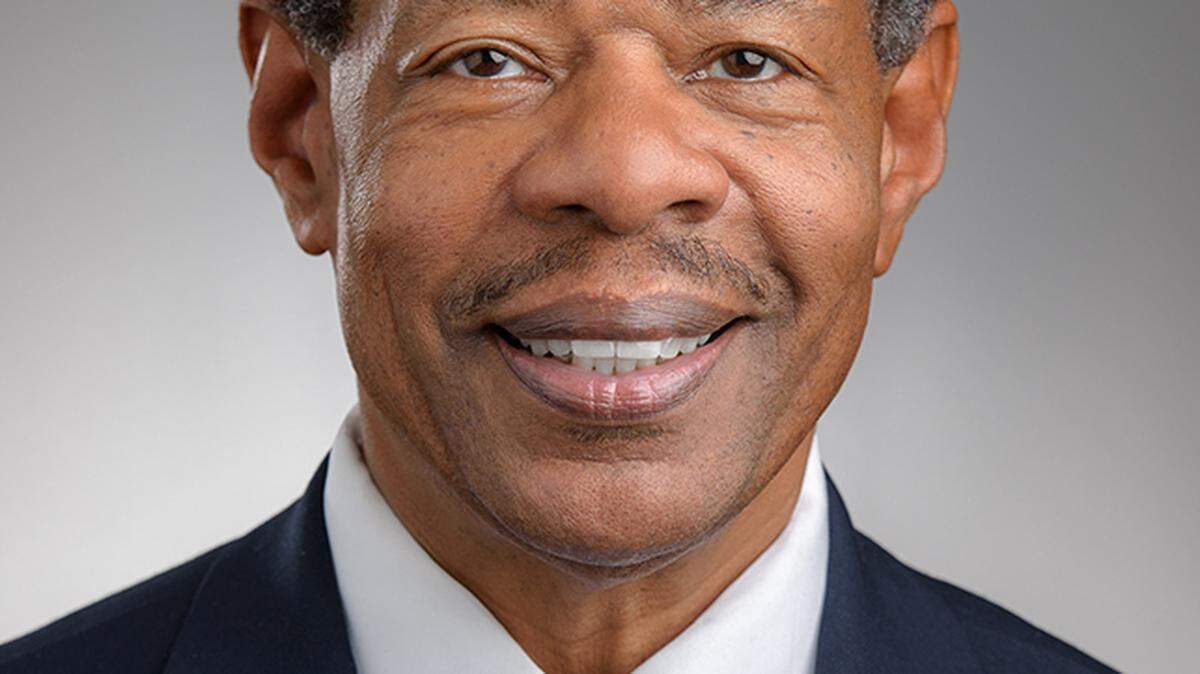
Native islander and community leader Emory Campbell said Hilton Head’s identity has been rather “helter-skelter,” where town leaders have struggled with organizing a place that benefits those who live on the island — especially native islanders.
“We market ourselves as a place to come and have fun,” he said. “That has been done even at the town level.”
Instead, the town needs to find ways to get young people to stay and build a community, he said.
Charlie Clark, the chamber’s vice president of communications, said however that Hilton Head’s issues are national — issues that were compounded by the pandemic.
She cited the island’s numerous accolades from national media outlets as an example of the island’s “strong guest experience.”
Clark said the chamber has “never measured success solely on occupancy.”
“We believe in balance — that resident quality of life should always be balanced with the visitor experience,” she said. “We also know it’s critical that our visitors have a great experience, and our businesses get that, too. If they don’t, visitors won’t be coming back or recommending Hilton Head Island to others.”
Without tourism, Hilton Head “would be a far different place with far fewer amenities that residents enjoy year-round,” she said.
Hilton Head’s infrastructure is growing old
Years ago, USCB had a continuing education program that helped participants find housing on the island. Pretty soon, after staying in rundown villas and aged-out condos, the participants wanted to stay elsewhere, said Chancellor Emeritus Upshaw.
“What had been a wonderful way to have a total educational experience for 200 doctors got changed because they no longer wanted to stay in one location. They wanted to find what they thought was their best quality,” she said.
“It came about because so many of the owners of those facilities had not invested in that infrastructure.”
As Hilton Head’s population grows, there hasn’t been a comparable commitment to spend money on infrastructure amenities and services that will maintain the island’s highly touted standard of living, Council member Ames said.
The hotels, villas and amenities, many built decades ago, are growing old.
While marketing the island’s pristine beaches and natural beauty drives tourists to Hilton Head, it doesn’t fund the infrastructure that safeguards the quality of experience for those visitors — and the quality of life of the residents who support them.
For Upshaw, the island is at a “tipping point.”
She said Hilton Head should consider new, progressive ways to encourage updated infrastructure. One way, she said, could be creating enterprise zones — areas granted special tax exemptions to encourage private economic development — outside of the gates.
Hilton Head’s 11 gated communities are a big deterrent to the island having a sense of community, she said. And local leaders and residents need to be more intentional about what is built outside of the gates, she said.
“They’ll never get rid of those gated communities because I think they’re too entrenched in terms of the real estate development,” she said. “But Hilton Head has to figure out how to create that cohesive sense of community even in the environment with the real estate development world. You just have to be intentional about it.”
Council member Ames agrees.
“I don’t think there’s going to be a time when all gates are eliminated over one night,” he said. “I think it’s going to be an evolutionary process — how that property outside the gates is planned and developed.”
Developers carefully planned the island’s gated communities through a series of planned unit developments. It was intentional and by design, he said.
But the areas outside of the gates grew by “happenstance,” he said.
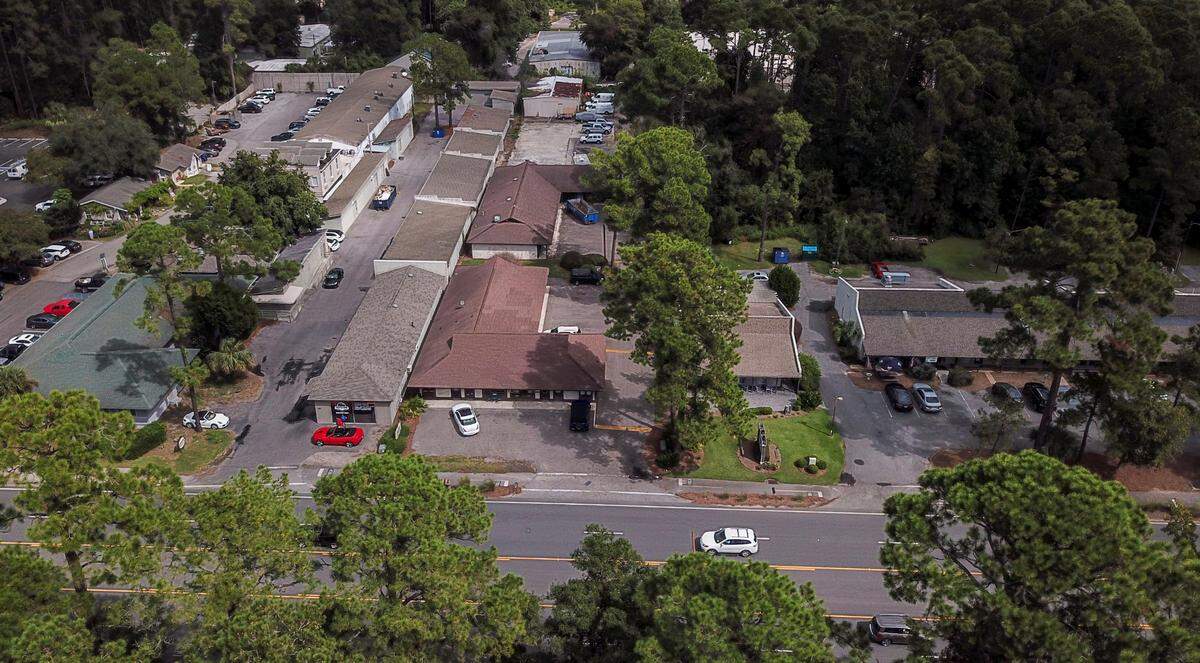
Now, local leaders and residents have to go back and make sense of areas like Pope Avenue and Palmetto Bay Road — parts of the island that were commercially developed and have fallen on “somewhat hard times,” he said.
Many of those parts of the island need to be replanned in an intentional way, he said.
Hilton Head needs young leaders. Where are they?
At the confluence of all these issues that will define Hilton Head’s future is this question: Who will step up to make sure the island addresses its issues?
Asked to name the young leaders on the island, many of the current leaders struggled. And that’s part of the problem.
On an island where the average age is 58, and the average age on Town Council is 70, a common criticism of the town’s leaders is that they don’t reflect the community as a whole.
Hilton Head can no longer rely on its vision from decades ago, Upshaw said.
“The world has changed drastically,” she said. “Our region, particularly Hilton Head and Bluffton, has changed drastically throughout the years. You’ve got to have that young mind. ...
“If you don’t have that leadership component, how are you going to craft that vision for the future?”
In 2019, some Hilton Head Town Council members joked during a workshop that their goal for the island’s future was being alive. The joke, while light-hearted, was a reminder of Hilton Head’s dearth of young voices.
“We have to do something about stopping the bleeding of our young people leaving — young people getting skills and leaving and marketing it to Atlanta or Charlotte or somewhere,” said community leader Campbell.
By not retaining young people, Hilton Head is losing diversity, new ideas, energy and creativity in favor of continuing to do things the way they’ve always been done.
Of the landscapers graduating from Clemson, the young cooks, nurses and bankers: “Why aren’t they here?” Campbell asked.
“That would be a wonderful thing to have — more young people staying here,” he said. “But when they get out of college, they don’t encourage that. They don’t even encourage internships when they’re in college.”
To correct that problem, Campbell said, it’s going to take a concerted effort that begins with instilling in younger generations growing up here that Hilton Head can be a place to live and work, enjoy life and raise a family.
In essence, Campbell said, it will take an effort that says to them:
“This is home.”
This story was originally published October 27, 2021 at 5:00 AM with the headline "Proud Hilton Head fights change of any kind. Will these 5 issues force its hand?."