A traffic stop 21 years ago took an SC man’s driver’s license. His life went with it
READ MORE
Fined Out
Fined Out tells the story of Trevor Heyward, a Black man in South Carolina who would become trapped in a cycle of poverty for 21 years after a traffic stop in 1999.
But it’s not just in South Carolina – it’s likely happening in your community, too.
Across the United States, 11 million people have suspended drivers licenses simply because they can’t pay their traffic tickets. When they’re driving under suspension, they’re fined out of working, spending time with their families and leading productive and happy lives. Here’s one man’s story and what advocates around the country are doing to stop it from happening to another person.
Expand All

A traffic stop 21 years ago took an SC man’s driver’s license. His life went with it
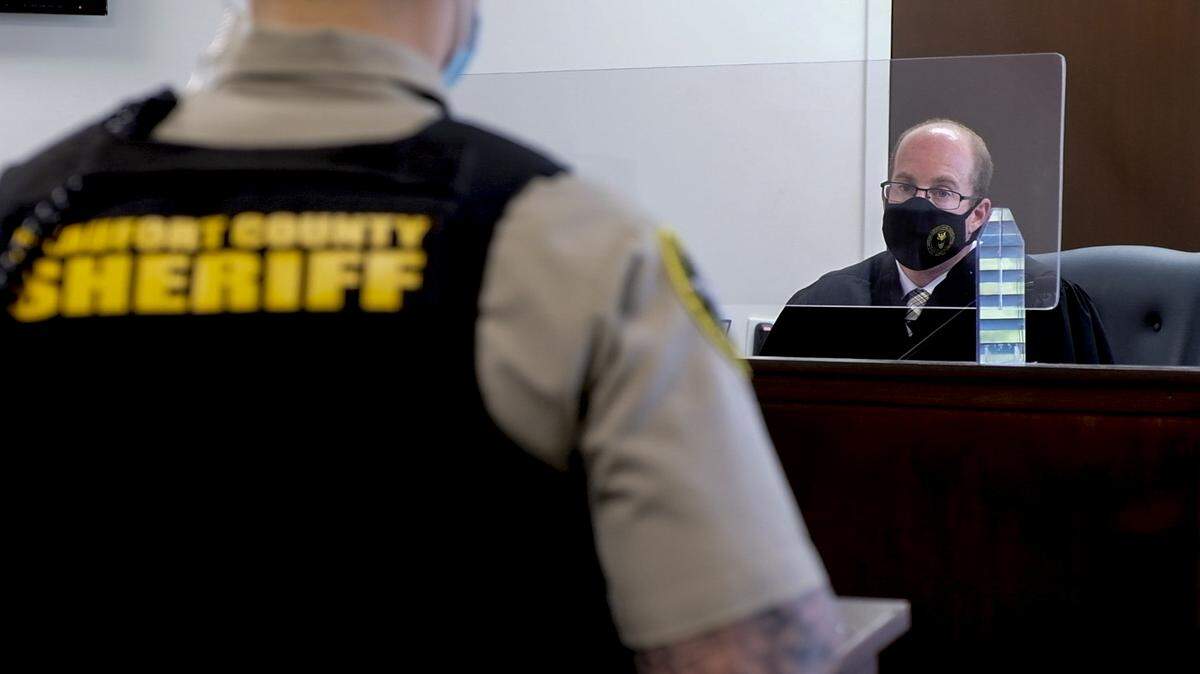
Fines. Fees. Jail. Black drivers at high risk as license suspensions triple over 10 years
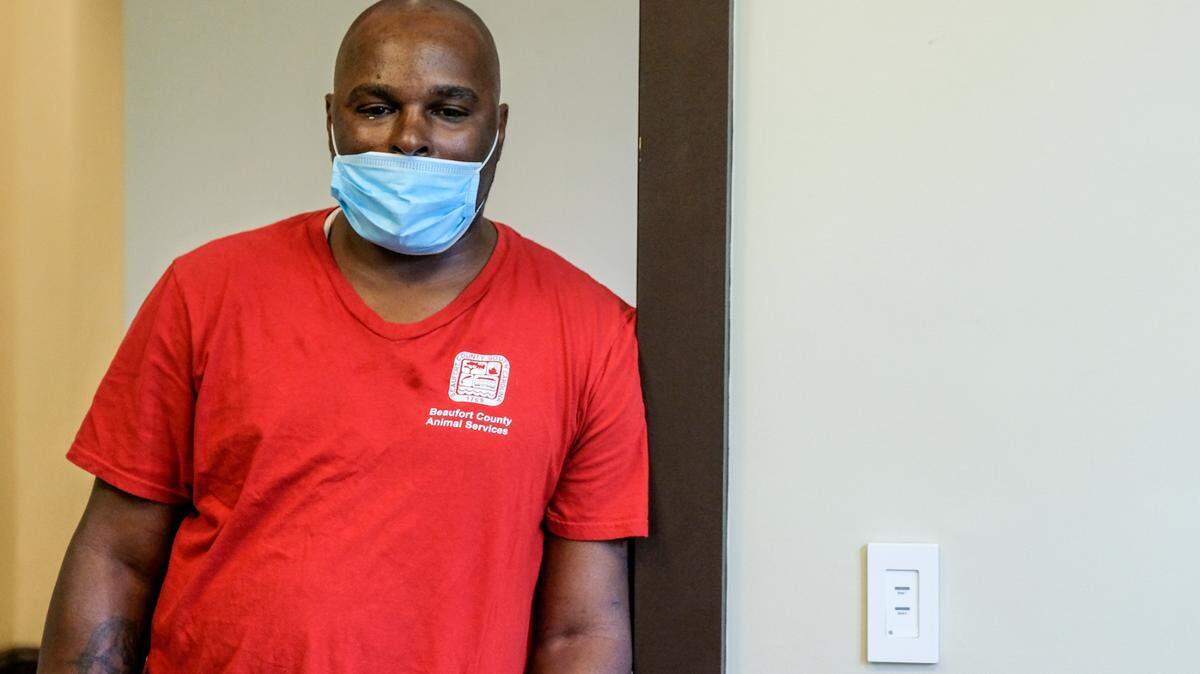
Will SC man get his license back after 21 years? An inside look at a day in traffic court

Watch: A behind-the-scenes look on the vicious cycle of SC suspended licenses
Lea este artículo en español.
Twenty one years of Trevor Heyward’s life have disappeared.
He didn’t realize it until recently, when he was sitting across the table from his driving record and a history of his arrests.
When the 43-year-old talks about his past, he leans forward and folds his hands.
Sometimes, when he gets particularly animated, he leans back and unfolds them.
He waves his hand through the air, asking “you understand what I’m saying?” or “you know what I mean?”
He wants to be understood.
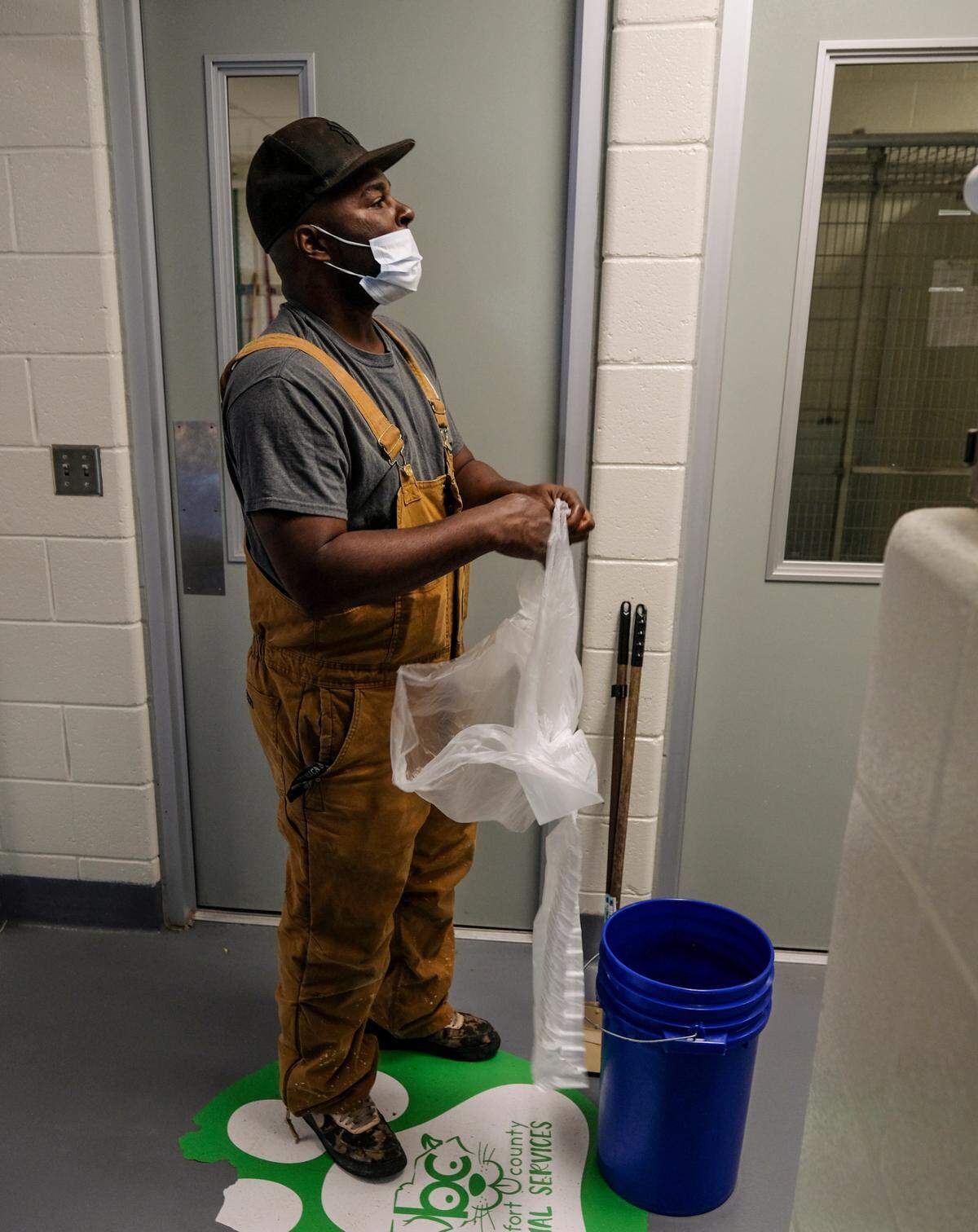
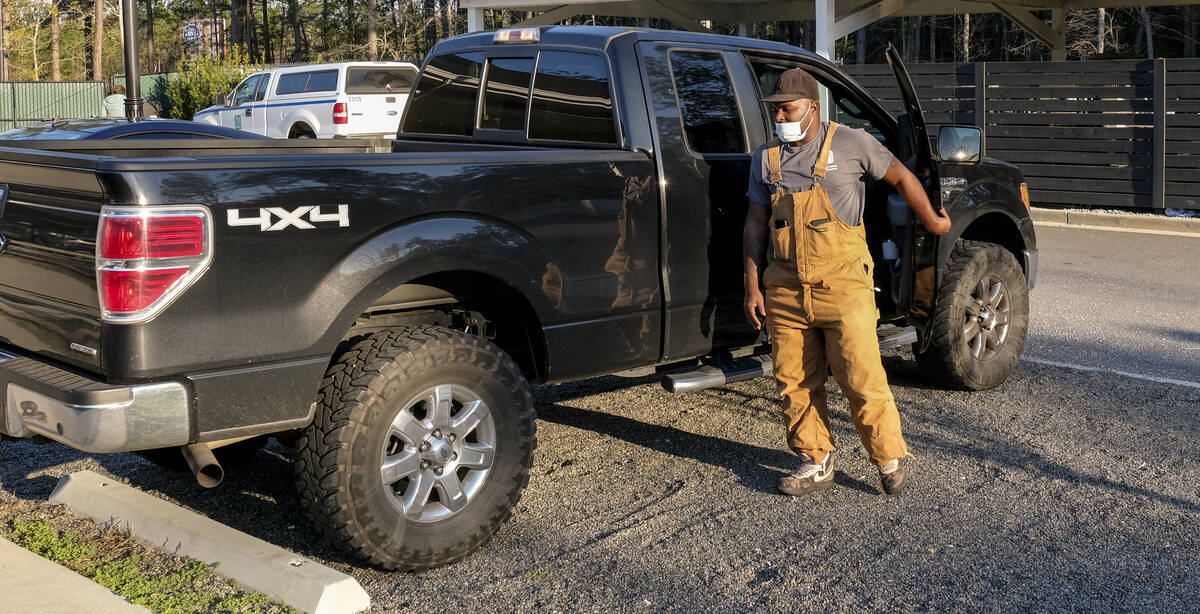
His hands, with open scratches on them from the dogs he spends all day walking, washing and cleaning up after at Beaufort County Animal Services, are weathered from working his entire life. Today, he’s in the third hour of what will be a 16-hour work day. Once Heyward finishes the day at Animal Services, he goes to his second job at a fast food joint in Beaufort until 1 a.m.
Sometimes, the Lady’s Island man says he feels like he’s running.
Over two decades ago, he was pulled over and ticketed for not having insurance on the car he was driving, not having his license on him and not wearing a seatbelt. Driving an uninsured car was unsafe, but Heyward said he couldn’t afford to pay an extra bill each month. He took the risk and drove to work.
What he didn’t know at the time is that single risk would entangle him in a legal system that would put him deeply into debt and force him to spend hundreds of days in jail during the prime of his life. It would land him in front of nearly every court in Beaufort County.
This January, Heyward learned the weight of that single traffic stop: More than $13,000 in fines, at least 330 days in jail and half a lifetime spent working to pay a debt to the state.

Today, Heyward is folding and refolding his hands as he reviews parts of this story. The Island Packet and Beaufort Gazette combed through his arrest history and jail time, tabulating for the first time in his life how much time Heyward had spent wrapped up in the system.
When he saw it all laid out in front of him, tears rolled down his cheeks.
“I didn’t realize this was my life,” he said.
The years have disappeared from right in front of him.
When he talks to people, he repeatedly asks “you understand what I’m saying?” and “you know what I mean?” to make sure they follow him.
No one ever asked him that.
Because if they had, the answer would have been “no, I don’t understand.”
Heyward has spent 21 years trying to reclaim his license, his ability to work and his life.
Across the U.S., more than 11 million people have had their license suspended because of debt — cases where drivers lost their license due to unpaid fines and fees. Cases where drivers weren’t charged with DUI or reckless driving; they just couldn’t pay.
“I feel trapped,” Heyward said as he reviewed his life story. “You understand what I’m saying?”
History of traffic stops, fines & charges
Heyward has been arrested 17 times since his first traffic stop in 1999.
Failing to pay the fines attached to the ticket for not having insurance resulted in the S.C. Department of Motor Vehicles suspending his license.
Often, a police officer pulled Heyward over, discovered his license was suspended and then ticketed or arrested him, adding new fines and jail time to his record.
The DMV then would assess reinstatement fees or add suspensions when he inevitably pleaded guilty.
The cycle continued for two decades.
He’s never been charged with reckless driving or driving under the influence. But he’s pleaded guilty to being a habitual traffic offender, which tacks on five years to his license suspension and makes it even more difficult to get to work.
Mounting costs and a court system that’s hard to decipher without a lawyer means Heyward was charged with things he didn’t understand and assessed fines he knew he could never pay.
SC man’s daily work routine
Nearly every hour he is awake, Heyward is either working to pay his bills or pay off his debts.
He wakes up at 7 every morning to get ready for work at the Beaufort County Animal Campus.
For several months, he’s been biking 20 minutes to coworker Savannah Thomas’ house, where she drives him to work in Okatie.
“I don’t want him to get caught driving without a license,” Thomas says simply, when asked why she drives Heyward 30 minutes before she needs to be to work. “I know how hard it is to get out of that system once you get in it.”
At work, Heyward cleans kennels, washes, feeds and walks dogs until 4:30 p.m. He’s been working at Animal Services for two years, but when his boss started to promote him last summer, his suspended license prohibited him from working for Beaufort County at a higher level.
His boss, Animal Services Director Tallulah Trice, began digging through his records to figure out what it would take to get his license back. At the time, he thought he owed about $2,400.
In reality, it was more than triple that. Heyward still owed $9,149, even after he’d cobbled together more than $4,500 and paid his oldest fines on his own.
The total Trice came up with was nearly an unfathomable amount of money for Heyward.
“That number was too big. I wasn’t used to working with numbers that big, not when I’m working at Wendy’s or making $7.25,” he said.
Trice spent days at Animal Services unearthing all the fines Heyward accrued that he didn’t even know about. The front office of the building became a war room for strategizing how he could pay off what he owed and requesting a reinstatement hearing from the DMV with the goal of getting his license back so he could be promoted.
Throughout those months, friends and coworkers at Animal Services made a plan to help Heyward pay off his debts. They covered the fines themselves so he could request reinstatement. Heyward said he learned more about the legal process from his coworkers than he ever did navigating the criminal justice system alone.
Working overtime to get license back
Heyward’s day doesn’t end when he finishes work at 4:30 p.m.
He and Thomas drive home, where he has just a few minutes to change clothes and put lotion on his arms and elbows before he needs to be out the door again.
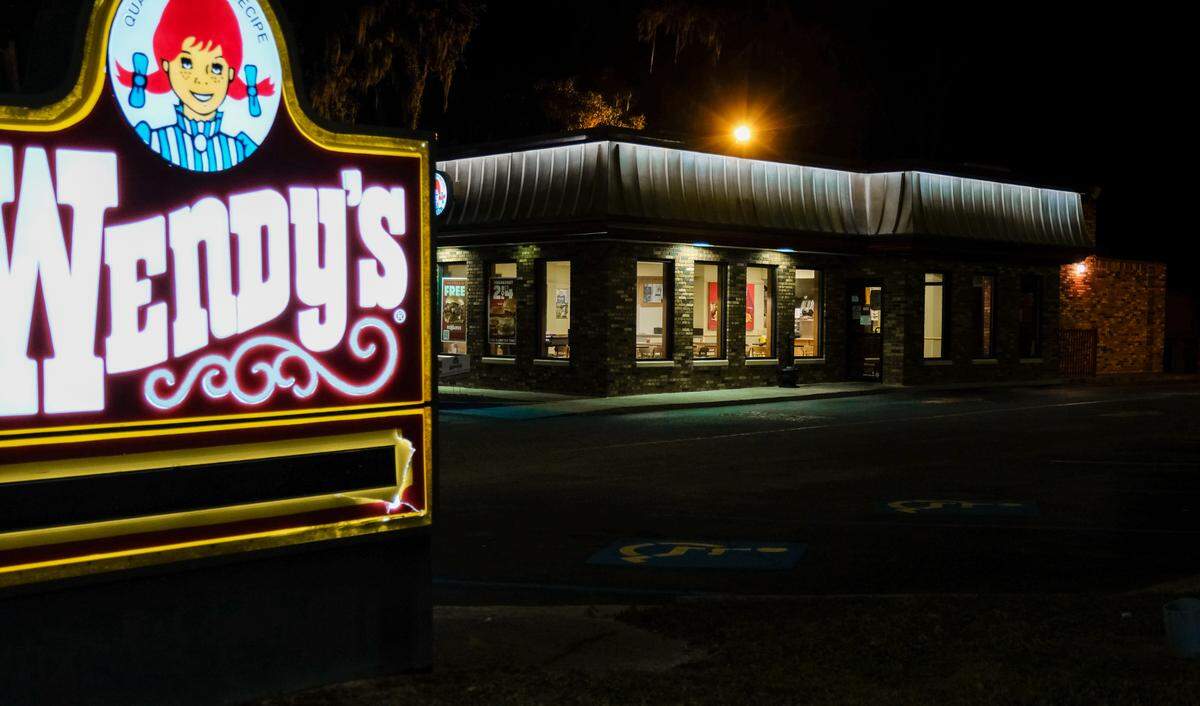
His neighbor drives him to the Wendy’s restaurant on Boundary Street in Beaufort, where he works from 5 p.m. until 1 a.m. on weekdays. On weekends, he leaves Wendy’s in the dead of night at 3 a.m.
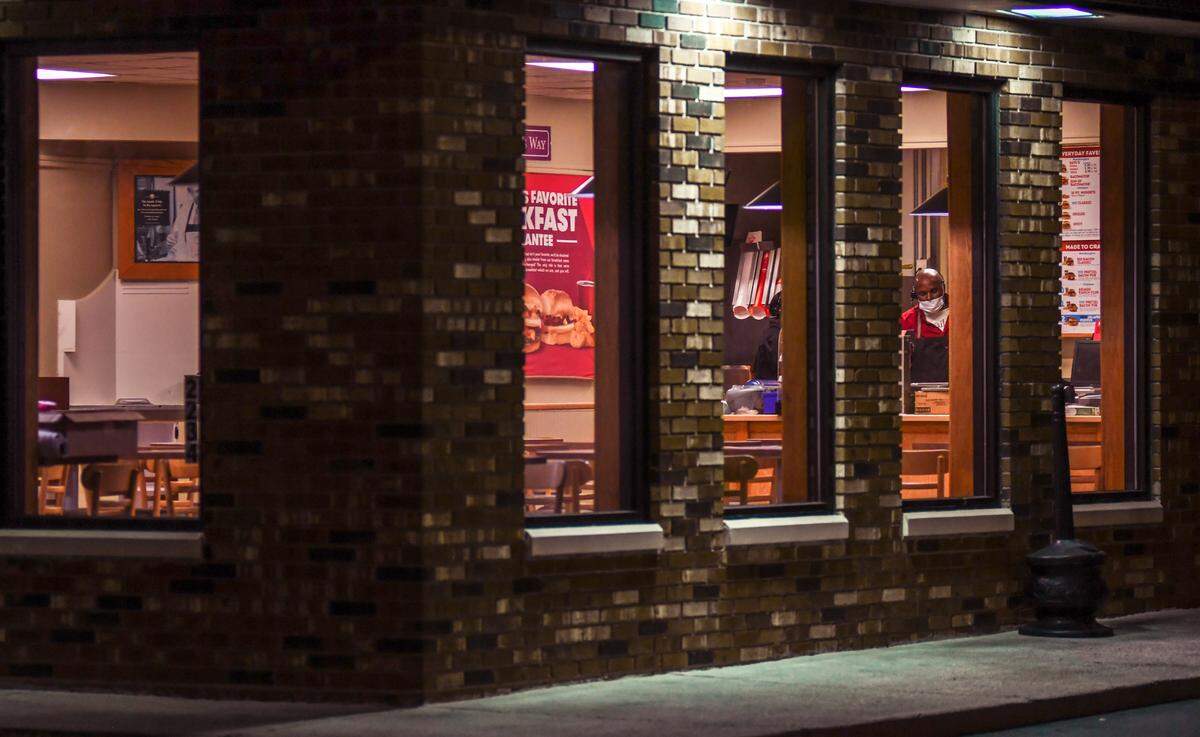
Heyward spends between 15 and 18 hours per day working. The remainder of his day is spent traveling to and from work and sleeping.
“When I got pulled over, it wasn’t like I was going to Walmart or going to a friend’s house,” he said. “I was always going to and from work.”
The Island Packet and Beaufort Gazette newspapers collected data for a month from the Beaufort County jail log to track trends in arrests for driving under suspension (DUS).
That data showed that arrests late at night — when Heyward was typically stopped — are among the most common times to be pulled over and charged with DUS.
From March 13 to April 13, more than one third of the people booked into jail for driving with a suspended license were booked between midnight and 6 a.m., when workers like Heyward are coming home from second- and third-shift jobs.
Heyward’s recent strategy for getting to work without having to drive has been successful — he hasn’t been pulled over or arrested since 2017.
But he wasn’t always comfortable having to rely on others.
For a long time, he risked driving to get to work because it was the only way. Beaufort County has very little public transportation, and the Palmetto Breeze buses that bring hundreds of people south of the Broad River every day don’t come close enough to his Lady’s Island neighborhood.
And so began a vicious cycle: Drive to work to keep his job, get pulled over, go to jail, tack more fines and tickets onto his record — and risk losing his minimum-wage job.
“In my life that’s just the chance I have to take because I have to go to work. If I don’t go to work, my life is shut down. I get arrested for not paying child support, I lose my job, and I get thrown out of my place,” he said. “You either go out and sell drugs, or you get a job. I got a job.”
Still, Heyward’s record shows the myriad ways he tried to get around driving.
In 2014, Heyward already had 10 driving-under-suspension convictions. He had spent eight months in jail. He was driving home from work in historic Beaufort on a moped, trying to avoid being pulled over for driving a car without a license, when a Beaufort police officer spotted him.
“It was just the look he gave me. He spun his neck all the way around watching me,” Heyward remembered. “I knew that look he gave me. It just freaked me out.”
Heyward turned onto the Spanish Moss Trail to avoid getting caught driving the moped. But when he emerged from the trail, the officer was there to arrest him.
He was charged with driving without a moped license and driving a motorized vehicle on the trail.
His fine for the first infraction was $137. The Spanish Moss trail rule violation cost $1,092.
Instead of making it home that day, he ended up in jail.
What DMV says about suspended license charges
Heyward’s history in the court system is hard to track down, even for him. He knows roughly how many times he’s been to jail, but he can’t keep track of the dates. The paperwork he has is riddled with jargon he doesn’t understand.
What is a “miscellaneous traffic offense”? And why does it cost me $150?
Some of Heyward’s public records list incorrect addresses — others don’t include his birth date. He’s been in front of nearly every municipal and magistrate court in Beaufort and Jasper Counties, so the paperwork is stored in several different places.
The New York native who grew up in Beaufort and Jasper Counties was charged with three miscellaneous traffic offenses on Hilton Head in 1999: Seatbelt violation, driving an uninsured vehicle and not carrying his driver’s license.
When he failed to pay the fines for those offenses, his license was suspended. Then, things snowballed.
Since 1999, Heyward has been pulled over 17 times. He’s been charged with driving with a suspended license 14 times, driving without a license four times, failing to wear a seatbelt four times, speeding three times, and drug possession three times.
He’s also been labeled a habitual offender — a person who has accumulated three or more major traffic offenses in a three-year period.
The DMV considers a DUS a “major” traffic offense, alongside vehicular manslaughter and hit-and-runs.
The agency revokes habitual traffic offenders’ licenses for five years. That set Heyward up to get even more DUS charges when he inevitably drove to work.
On its face, Heyward’s driving record put himself and others at risk. He admits that driving without a seatbelt or having small amounts of drugs were bad choices. But by and large, his record is a recurring litigation of one incident followed by years of failing to pay fines and fees, not a referendum on his driving.
In any given month, Heyward spends an entire paycheck from one of his jobs on child support to help raise his two children, which costs $720. The rest of what he makes goes toward rent on his mobile home, internet service and other bills, including some he helps his mother pay, and food for himself and his family.
The DMV offers options for drivers with suspended licenses to make it easier to get to work or pay back fines over time.
They can get a temporary license, called a route-restricted drivers’ license, to travel between work and home.
Heyward wasn’t eligible because he was a habitual traffic offender.
The DMV also offers a plan for drivers to make $50 payments on their tickets or fines when they can.
Heyward doesn’t qualify for that program, either, because of previous charges, such as failing to pay traffic tickets and not appearing in court.
So for a long time, Heyward said he gave up on paying the mounting fines.
The costs, which until January were well into the thousands, were numbers he simply couldn’t comprehend ever being able to afford while working minimum-wage jobs.
So he stopped trying to save thousands while working for $7.25 an hour and put his money toward the bills right in front of him.
“At the age of 43, I don’t have $10,000 to go in and pay. I’ve always had low-end type jobs. I had opportunities to get a better job,” he said, “but I don’t have a license.”
Driving while Black in Beaufort County
Before he stopped driving, Heyward said he was one of the only people traversing the roads between Beaufort and Lady’s Island after midnight.
His senses were heightened. He scanned the side streets, looking for police, because he knew his Black skin could make him seem suspicious.
He also knew he was breaking the law by driving. He figured if he could just get home, he’d be able to sleep for a few hours before getting up to go back to work.
Sometimes, he didn’t make it.
In December 2015, Heyward was driving home from working at Wendy’s when he swerved to avoid a pothole in the middle of his lane.
He saw lights turn on behind him and a siren blare. As he looked in his rearview mirror, he saw a Beaufort police officer swerve to avoid the pothole before pulling him over.
The first thing the officer said when he approached Heyward’s car was that he smelled alcohol on his breath.
“I said, ‘I am just getting off work and I don’t even drink.’ But he said he smelled alcohol, he asked for license and registration, and then I realized I can’t argue with him because I don’t have a license,” Heyward said.
The ticket cost Heyward $2,545.
He went to jail that night and later used a bondsman to post $1,275 bond to get out.
Bond is meant to ensure a person comes back to court. Those charged with crimes in South Carolina pay a set amount to get out of jail and then get that money back when they go to court.
However, those who don’t have all the money ready upfront can pay a bondsman 10% of the bond to get out of jail, and the bondsman posts the whole amount. While the bondsman gets all the money back when the person goes to court, the 10% paid is nonrefundable. Just one more expense for Heyward.
“To me, it’s a business,” Heyward said. “They’re making money. If I pay the fines, they get paid. If I go to jail, they still get paid.”
Heyward sees the constant fear of being pulled over intertwined with the stress of being subjected to racial discrimination.
He contrasts what happens to him with what happens to white friends when they come in contact with police.
“I know people who got a warning,” he said, or people who said officers “let them make a call or have someone come pick them up.
“I’m not going to say I’m targeted, but I don’t think it’s fair.”
In 2008, Heyward got off work on Hilton Head and learned his girlfriend was in labor at Coastal Carolina Hospital. On his way to see his daughter born, he was pulled over by a S.C. State Trooper.
He said the officer didn’t come up to his window, as is typical. Instead, he used his public-address system to demand that Heyward get out of his car, with his hands up. The officer forced him to put his hands on the back of his car, asked for his license and then handcuffed him. Heyward said he still doesn’t know why he was pulled over.
“You can ask ‘why why why?’ but when he asks for driver’s license and registration, all those ‘whys’ go out the window,” he said.
When Heyward explained that his girlfriend was having his baby, the officer didn’t let him call the hospital or his girlfriend to tell her he was going to jail.
“She had to have her baby and not know where I was. It made me look like a deadbeat, like I don’t even care and I’m not going to show up,” he said. “If that were a white person, they would at least let him call her. It ain’t nothing to make a simple phone call.”
Heyward met his daughter for the first time late the following day — when his girlfriend picked him up from jail.
Fines paid off: What’s next?
Heyward wouldn’t have tried to pay his fines had his coworkers at Animal Services not believed in him and told him it was possible, he said.
Now that he has a chance to look back, Heyward sees the hundreds of days in jail and over $13,000 he’s paid for tickets as a sinkhole. This spring, he has the opportunity to get his license reinstated. He has paid off his fines and asked for a reinstatement hearing with the DMV.
The DMV hearing officer will decide if he can get his license back and, therefore, whether he’ll get his promotion.
This story continues after the interactive.
Trevor Heyward's criminal record
* The Beaufort County Jail only stores information on non-incarcerated inmates from 2014 to present. The number of days Heyward spend in jail above is incomplete because data prior to 2014 does not exist and is not accurately reflected in the Beaufort County Public Index.
In the U.S., having a driver’s license is key to being part of society. It allows people to get jobs, travel and, perhaps most central to our democracy: Vote.
Since his license has been suspended for two decades, Heyward has never voted in Beaufort County.
He’s voiceless in the system that has impacted his life so many ways.
“They make the laws on child support and all that, but we don’t get educated about that, I learned that by working” at Animal Services, he said. “It’s up to the people who you voted in to help you, and I don’t have a voice.”
There has to be another way, he said.
Click here to read the second part of the Fined Out series.
MORE FROM THIS SERIES

This story was originally published April 29, 2021 at 9:30 AM with the headline "A traffic stop 21 years ago took an SC man’s driver’s license. His life went with it."