After 20 years and 2 trials, convicted SC killer’s journey to innocence changed history
“He’s a free man”
Inflection changes the meanings of words. It was never more evident than with those four words uttered inside an Horry County courtroom on a gloomy and overcast October morning. The suspense from the morning dissipated as did the large crowd that cycled in to see first-hand the scene 20 years in the making.
One side overflowed with joy as Gary Bennett and several lawyers celebrated his murder acquittal. The four words might as well have ended with an exclamation point.
The other half of the room was vacant, yet the feelings of disappointment hung in the air. State prosecutors and the family of Eva Marie Martin filled it for two weeks as they heard evidence about why Bennett killed Martin.
For them, the words might have trailed off in the end in disbelief.
Those words closed the latest chapter of Bennett and Martin’s saga. Two lives which have become more intertwined than either side likely prefers. Their story is of murder, of a man convicted then acquitted and losing faith in the judicial system.
Their emotions are shared, though, never at the same time.
Interviews with Bennett, Martin’s family, lawyers, court hearings, letters and documents help tell their story. Their timelines are shaped like a double-helix, diverging only to be thrust together again, years down the road.
What remains are lives ruined, anger, and lost years. There is also the question which has been the heart of the story for two decades.
Who killed Eva Marie Martin?
Moving to Myrtle Beach
Bennett and Martin didn’t know each other before Myrtle Beach. Like others, each moved to the Grand Strand from somewhere else. Bennett moved from New York in the late 1990s so his then-girlfriend could be closer to her family.
Martin grew up in Andrews, South Carolina, then moved to Horry County, where she eventually became an assistant manager of the Surfside Beach Taco Bell. She had divorced her husband, while there were arguments, there were no significant issues, her family said.
Bennett’s lawyers alluded to possible domestic violence in the home.
Martin’s children split time with their parents, her son Kelly Martin said. He said his mom frequently smiled.
“She rarely got mad about anything,” Kelly Martin said.
Eva-whom everyone knew as Marie-Martin retained some of her Georgetown County, small-town attitude. Kelly Martin said his mom let her friends hang around. Locking doors was nothing more than an afterthought to her.
“Way too trusting of people and I believe that is how she ended up in the situation she got in,” Kelly Martin said.
Bennett worked as an exterminator in Myrtle Beach, where he met Andrew Lindsey.
Before moving to South Carolina, Lindsey lived in Utah and Illinois. In Illinois, he served 15 years in state prison-for murder.
Lindsey said many details of the Illinois killing were fuzzy because he was on medication. During the Illinois investigation, Lindsey changed his story several times during the police interview.
While on parole, he met his wife, Tara. The two moved from Utah to South Carolina where Tara’s father was a police officer.
Lindsey and Bennett developed a friendship with Martin, who worked with Tara. When Lindsey, Bennett and Martin spent time together, it was mostly at dive-bars in the Myrtle Beach area. Bennett didn’t have a car, often getting a lift from his friends.
The friendship between Bennett and Lindsey had a sinister side as the two robbed hotel rooms they were supposed to be treating for mites and bugs. Bennett would later plead guilty to a buglary charge, but it was not a crime committed with Lindsey.
How sinister the relationship was between Lindsey and Bennett is where their stories start to diverge. Some say Bennett was a cold-blooded killer, he says that’s not the case.
Marie Martin’s death
Marie Martin called her son on May 19, 2000, where she asked for him to visit. Kelly Martin couldn’t make it. It was the last time he talked to his mom.
“It was tough dealing with that,” Kelly Martin told The Sun News.
Bennett and Lindsey had tried to get Marie Martin involved in their latest scheme, state prosecutors say. Investigators described Bennett as obsessed with getting the keys and combination to the safe at the Surfside Beach Taco Bell, where Martin worked.
The duo stole Marie Martin’s keys, were unsuccessful in opening the safe and couldn’t secretly return them. Taco Bell threatened to charge Marie Martin hundreds of dollars for replacements.
Bennett along with his lawyers scoff at the claim because if the group robbed Taco Bell, and covered the cost of Marie Martin’s keys, it would have meant the theft would have netted them $50. The motive didn’t make sense.
Still, prosecutors pushed forward with their theory that Bennett and Lindsey wanted to rob the fast-food joint.
On May 23, Lindsey gave Bennett and another person a ride home from the Surfside Beach Taco Bell.
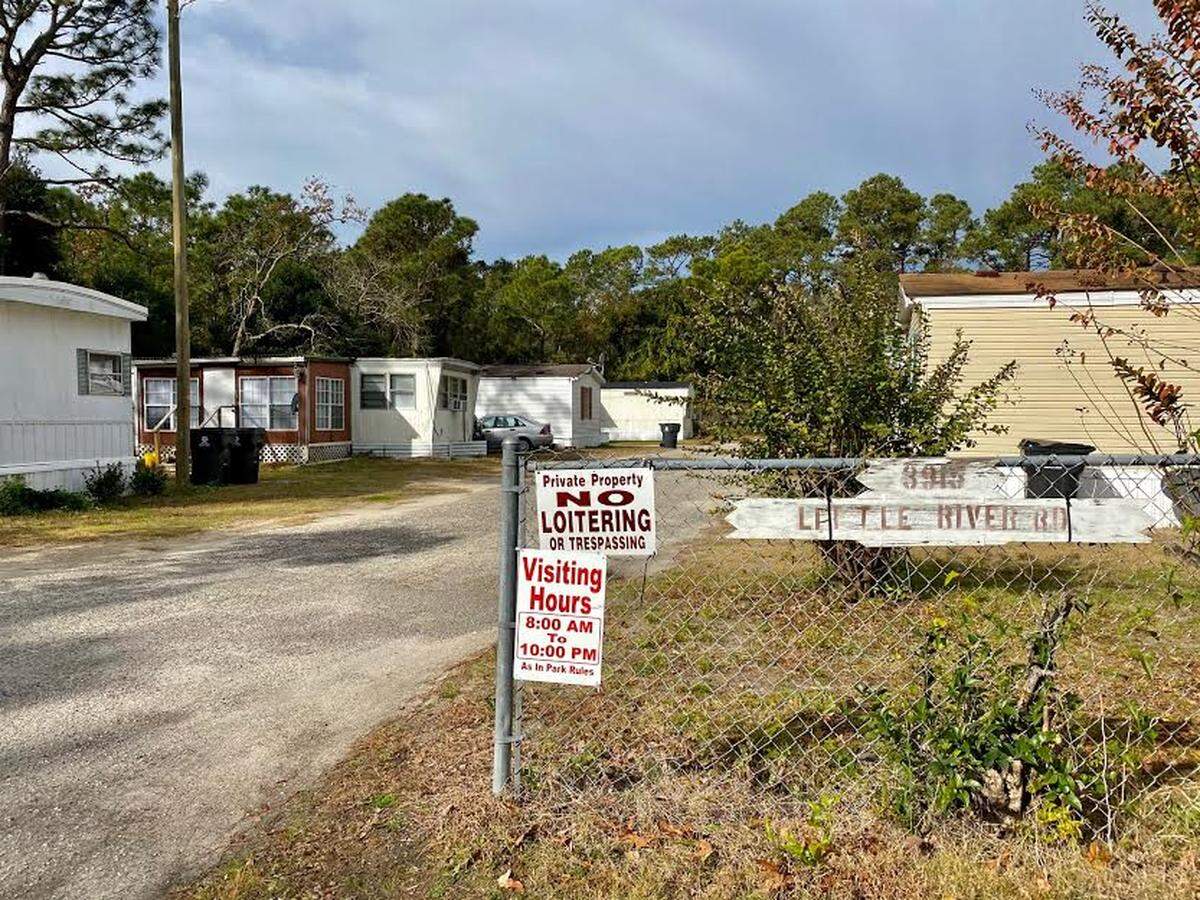
Bennett says this was the last time he saw Martin. Prosecutors and Lindsey, who testified in court, said that wasn’t true. Bennett got Lindsey to give him a ride to Martin’s mobile home off Little River Drive in the Myrtle Beach area.
Lindsey said he and Bennett waited for Marie Martin to return home. It was about 8 p.m. when he went inside Martin’s home to use the phone to call his wife
Lindsey said Bennett exchanged a friendly conversation with Marie Martin about the safe’s combination. It turned heated once Bennett told Marie Martin to stay out of his personal life Marie Martin had been trying to get Bennett’s girlfriend to leave the relationship.
Bennett and Marie Martin went to the back bedroom as Lindsey said he remained on the phone. Lindsey heard a commotion and went to the bedroom.
Martin was face down on the bed as Bennett threw items around the room. Lindsey said he turned Marie Martin over to see her throat slashed. She was already dead, Lindsey said.
A discussion ensued with Bennett and Lindsey leaving the home. Bennett carried a bag with the combination, the murder weapon and other items, Lindsey said.
.jpeg "News clippin_fitted (1).jpeg")
The two drove away and disposed of the evidence. Lindsey also said Bennett went into a store to wash the blood off his hands. (Though, during a police interview immediately following the killing he said he didn’t see blood on Bennett. Decades later at the most recent trial, Lindsey detailed the washing)
The duo returned to their separate homes. In the middle of the night, Lindsey said Bennett called to say something happened to Marie Martin.
Was he covering his tracks? Was Bennett unaware of the crime Lindsey said he committed just hours earlier?
Finding out about the murder
Bennett said he was home caring for his nearly 2-year-old daughter on May 23, 2000, when Lindsey called around 11 p.m. Lindsey told Bennett he wasn’t going to make it out tonight, which Bennett said he found odd given the late hour.
It was then a neighbor knocked on Bennett’s mobile home to tell him something happened to Martin. Bennett said his initial thought was the other person Marie drove home that night hurt her. He said he rushed to her trailer to find out what happened to his friend.
The next morning, Kelly Martin was fishing when his grandfather took a call. The 17-year-old Kelly Martin pulled in his line as they headed towards shore. Kelly Martin said he worked to hitch the boat to the trailer when his grandfather told him he had news.
“He was like, ‘someone killed your mom last night,’ and it hit me like a ton of bricks,” Kelly Martin said. “I cried. I don’t even know what emotions I had.”
Marie Martin’s death drew little attention in the community, a small blurb on the inside pages of The Sun News being some of the only coverage. Horry County police released few details to the media and made no arrests in the immediate aftermath.
For about a month, the Martin family wondered who killed Marie Martin as police investigated.
Kelly Martin was quick to praise the police for their work, though he said it was frustrating to see no arrests.
After the killing, Lindsey left South Carolina along with Tara. He said it was to get away from Bennett. They decided to go back west and Lindsey made a stop in Arizona to visit relatives in July. It was there, police surrounded him and arrested him on burglary charges. Lindsey then quickly became a target of the murder investigation.
Bennett said in the police station officers started to ask him about a murder, which left him confused. He said he offered to take a polygraph. Still, officers pointed the finger at him as a killer.
“I’m telling the truth and they aren’t believing me,” Bennett said.
It didn’t take long for Lindsey to start telling police details of the crime during a series of interviews.
He first said he wasn’t in the home, though, later acknowledged that wasn’t true. Lindsey said he lied initially to minimize his involvement. Once police revealed what they knew, he said he had to tell the truth.
“They pretty much knew everything and it became clear I needed to tell them about what happened,” Lindsey said.
In the summer of 2000, police charged Bennett and Lindsey with murder. Again, the arrest made little noise or garnered much attention in the Myrtle Beach community.
Kelly Martin said he never heard his mom mention Bennett or Lindsey.
“You start wondering who they are,” Kelly Martin said. “Me, personally, I never heard of them.”
A convicted SC killer
Bennett languished in prison for two years as he waited for his trial on the murder of Marie Martin. Lindsey pleaded guilty to the burglaries and was sentenced to 15 years in prison.
Lindsey took a deal and pleaded to an accessory charge with no additional jail time for his cooperation in the murder investigation.
In what might be the first trial in the current Horry County courthouse, a jury convicted Bennett on Aug. 6, 2002. Gary said he wasn’t upset by the decision. He knew he was innocent. He would get his day in court again.
What he didn’t expect was it would take decades.
Bennett wasn’t afraid about going to prison as he spent eight years in the U.S. Navy. Small spaces with dozens of men weren’t a bother, however this setting had a few more “crazies.”
“I learned quickly to stay out of trouble,” Bennett said.
The conviction brought slight relief for Martin’s family. A person was behind bars, but Kelly Martin said he was still angry Lindsey only got 15 years, though he understood why.
“Finally, we got this thing done. Maybe we can finally move on from this,” Kelly Martin recalled thinking. “Apparently, that was a lie.”
As the time passed, Kelly Martin said his family started to move on from Marie Martin’s death.
“We were under the assumption it was done and over with and he received a life sentence and he would never get out. To us, that was some form of justice,” he said.
Bennett got used to the routine of prison. Life consisted of working in prison construction, playing cards, showering and bed at Lieber Correctional Institute. He also worked on his appeals.
Appeals courts and the South Carolina Supreme Court rejected those efforts after six years. Bennett then turned his attention to post-conviction relief. Throughout the lengthy appeals, Bennett said he never lost hope.
“Cause I knew I didn’t do it, I just had to get into court,” Bennett said.
He also wrote countless letters while in prison. To lawyers, to the media, to anyone who would listen to tell them he was innocent. He sent hundreds of letters while in prison.
The post-conviction relief is where inmates can say how their lawyer was ineffective. In this instance, Bennett said Johnny Garner, who worked on his first trial didn’t do much work before the case. Garner would later admit to the claim.
Bennett’s relief request sat stagnant for years-nobody is sure why. Eventually, he was appointed attorney Charles Brooks. The two fought for a new trial and on Aug. 6, 2014, Judge Benjamin Culbertson granted him a new trial.
The order was issued on the 12th anniversary of Bennett’s conviction.
An appeal granted
Kelly Martin said he was confused and angry over the decision to give Bennett another trial. It caused him to question the legal system.
“What reason could they have for giving him another trial?” Kelly Martin pondered.
The family tried to prepare itself that Bennett could be acquitted. The future, once clear with a conviction, was now muddied with anxiety. Marie Martin’s murder took a toll on the family, now they were going to live through the process again.
“You could murder someone and appeal it enough that eventually you can come back to court and get a do-over? It makes you lose faith in any kind of judicial system that we have,” Kelly Martin said. “It makes you angry. It makes you cold and it makes you distance yourself from the people you love.”
Bennett had yet another attorney appointed to handle his newest trial. A prosecutor floated a plea for 30 years, which meant Bennett would have had to serve seven more years. The lawyer said it was a fair offer.
“I’ll go back to prison an innocent man…” Bennett said with tears building in his eyes as he thought about that moment. “I said, ‘I’ll go back to prison an innocent man before I plead to something I didn’t do.”
Bennett started another letter-writing campaign, this time several envelopes landing on the desk of Amy Lawrence. Faith, or Bennett wearing her down, led her to take over his fight.
“These are the kind of cases you go to law school for,” Lawrence said.
As she reviewed the evidence, Lawrence said she knew in her gut Bennett was innocent. He just needed someone to believe in him.
They believed the evidence showed Bennett was innocent. The duo believed prosecutors would feel the same way after they looked at the evidence.
“Once they sit down and review my case, they are going to know that they messed up badly back in 2000,” Bennett said. “I figured why would they risk their reputation and their career messing around with my case.”
They did not.
Fight about evidence, including DNA testing
The fight meant Bennett and his lawyers would spend the next few years in court arguing about evidence. There were allegations of misconduct by state prosecutors against the defense and by the defense against solicitors.
One centered on DNA testing of evidence. Bennett’s lawyers had to make several attempts to get items tested and the results returned.
The other issue was over tape recordings of Lindsey’s testimony. Tara and Lindsey were left alone during a portion of one interview, yet the recording continued. Several officers involved in the incident have since died.
Bennett and his lawyers argued the tapes were destroyed or altered by the state. The tapes the defense received were incomplete or only seconds long. Tara, who now goes by the last name of McDermott testified at a 2018 hearing that Lindsey confessed during the encounter.
Tara Lindsey said she and Lindsey had sex in the police interrogation room, and then Lindsey told her what he did.
“Did you kill Marie?” McDermott told the court in May 2018 about what she asked her ex-husband.
“And he said ‘yes.’”
“I said, I asked him ‘why?’”
“He said he wanted the money from the Taco Bell and all they wanted was the keys and the combination,” she said.
The tapes were hardly mentioned during the trial. That’s not uncommon as evidence can be a focal point of a hearing, but not necessarily for a jury.
The fighting among lawyers continued for years until October 2020, when Bennett finally had his day in court.
A second trial
Gary Bennett’s trial got off to a slow start as jury selection took longer than typical because of social distancing protocols in the COVID-19 pandemic. By mid-week, the jury had been seated and lawyers from both sides sniped at each other with testimony underway.
Kelly Martin wasn’t at the trial, but got updates from his family in attendance. He heard how the solicitors did the best they could given the evidence was decades old. Defense attorneys tried to raise doubt over the state’s claims.
Going through the trial brought back a wave of emotions for the Martins, including anger and hatred.
“I guess I would relate it to having a wound and it scabs over and you fall down and scrape that same spot,” Kelly Martin said. “So now it’s fresh and raw again and the same nerves are exposed.”
State prosecutors again detailed how Bennett killed over the combination to a fast-food safe. They called investigators, though those people admitted Bennett’s DNA and fingerprints were not found in Marie Martin’s home.
One of the state’s key witnesses was Lindsey. No longer the slender man with the full head of hair seen in the videos from the police interviews, now Lindsey looked like a grandfather. A potbelly protruded from his gut. The hair left on his head was gray.
Lindsey, who now lives and works in Utah driving a forklift, testified about how Bennett killed on May 23, 2000.
Listening to Lindsey could only remind Bennett how his once friend had pinned the crime on him to take attention away from himself.
“This was all generated by a convicted killer….” Bennett said. “It was just mind-boggling he could tell the police this and they could try me and convict me and sentence me to life without parole and then have a retrial. You go get this guy, wherever he’s at, and you bring him back to tell more lies.”
There was also testimony from Adam Wiseman, who said he shared a jail cell with Bennett. He testified about how he wrote a letter to Horry County police that had many details of the crime which were not publicly released.
However, defense attorneys noted jail data showed Wiseman wrote the letter before he lived with Bennett.
Lindsey’s story and Wiseman’s account became the main testimony for the state. It was up to a jury to decide if the two convicts were telling the truth or if Bennett was innocent.
Jury deliberations
The jury retreated to its jury room on Oct. 28, as the deciders of fact. Few people expected it to be a quick decision given the trial’s length. Bennett and his lawyers sat around and chatted, and waited, and chatted, and waited some more.
Martin’s family and prosecutors retreated to an office outside of the courtroom.
After a few hours, the jury emerged from its deliberations, with a question. The jury asked to hear testimony by Wiseman and the jail staff again. Lawyers tried to glean whatever information they could from the juror’s body language.
The jury returned to its deliberations and the sides could only go back to waiting.
At 6 p.m., the jury decided to break for the evening. A decision decades in the making would have to wait at last one more night.
Bennett returned to J. Reuben Long Detention Center, where inmates asked about his status. He tried to pass it off and not talk about it. He didn’t want to get his hopes up.
Around 3 a.m., the pessimistic mood took over as Bennett penned a letter to his lawyers, Lawrence, Aimee Zmroczek and Sarah Austin. He asked them not to forget about when he was sent back to prison. He wanted to know if he could still call them.
The next morning he delivered it-they didn’t want to read it.
“Sarah was like, ‘Gary cut that s**t out, you’re going home today,’” Bennett remembered.
“I didn’t even read it,” Austin added.
The Martin family also had to wait. They pondered if justice would be served. For them, justice meant Bennett would return to prison.
“It’s just anxiety, it’s just wondering, are we gonna be done with this again?” Kelly Martin said the night before the verdict. “Finally, is this going to be the ultimate end or is this going to be a travesty of justice? And allow a man who killed someone and murdered someone to go free.”
The wait was much shorter as within an hour of resuming deliberations, the jury said it had a verdict. Bennett, Martin’s family, lawyers and curious onlookers shuffled into the courtroom as 20 years of waiting, of fighting, of anger, of fear reached its crescendo.
The verdict
As the jury entered the courtroom, Bennett said he wasn’t worried about his future. He was worried about his lawyers.
“It’s like I don’t worry about me. I was worried about them,” Bennett said. “I’m thinking if I’m wrongfully convicted again, I can handle it. I can go to prison. I don’t want to go, but I can go and we’ll fight this fight again.”
Lawrence told Bennett they loved him and knew he was innocent. Bennett started to lose faith as he wondered where his lawyers’ confidence went.
“In that last second it got me,” Lawrence said, “because you never know what a jury is going to do.”
Hand in his pocket, Bennett stood to Lawrence’s right as the clerk read the indictments against Bennett. It’s been decades since he stood in the spot to hear he was going to prison for the rest of his life. Would this time be different?
The clerk read the numbers as Bennett pleaded in his mind with her to get to the verdict. The first charge up was murder.
“We. Find. The. Defendant...”
She paused. Right then. The moment seemed to cause time to skip. It caused heartbeats to skip. It’s been 20 years, what was another second? An eternity it seemed.
“...Not guilty.”
The words caused Bennett to wrap his arms around the more diminutive Lawrence and put his head down. His lawyer could only have her jaw drop to her shoes as she looked around the courtroom. A gasp went up from the crowd. The other two verdicts still needed to be read for armed robbery and burglary, but they were inevitable “not guiltys” after the first verdict.
Twenty years of fighting and telling anyone who would listen that he didn’t do it. Now he had 12 people who believed him. The 12 people who mattered the most.
As the courtroom cleared, Bennett celebrated. That is when the lawyers asked if he had to go back to jail for processing, and the judge said he was a free man.
“I’m ready to go free,” Bennett said. “Let’s go.”
Overwhelmed by the moment, Bennett could hardly conceptualize how he felt caught up in the emotion of being freed. He hugged his legal team, people he knew, he spoke briefly with The Sun News.
At the same time, word spread among the Martin family about the verdict. Kelly Martin, clearly angry, vented about the decision.
For the Martin family, it was the opposite end of the emotional spectrum. It was anger. The justice system, in their eyes, had become a farce. A man’s persistence led to a “do-over.”
Now, in their eyes, a killer was free.
“Today our whole beliefs, values, and ethical base has ravaged by turmoil, tragedy and disappointment. All of which have been perpetrated at the hands of one greedy, sadistic, pathetic person masquerading as a man going by the name Gary Bennett. We grieve this travesty today but as we did in the past....we grieved as a family, we hurt as a family and we will recover and heal as a family,” Kelly Martin told The Sun News.
Kelly Martin added he wanted people to know Bennett wasn’t the victim in the saga and he had no doubts Bennett killed his mom.
“I’m angry. I’ve never had my mom’s temperament, her ability to forgive, her ability to find kindness in people and her inept ability to always been chipper when the world was gloomy.
You took more than a mom, you took a gift to so many people. In this life everything comes full circle and we always get what we give, with that being said and that always being the case you have a very short and eternally hard path to journey down.
“Forgiveness isn’t even in the equation at this point.”
Justice denied?
Bennett ruined many lives with his actions, Kelly Martin said. He specifically said his children will never get to meet their grandmother.
“Had you known my mom you never would have done what you did to my mom,” Kelly Martin said he would tell Bennett. “It would take a lifetime to fix what he’s undone just by one selfish act.”
Solicitor for the 15th Judicial Circuit Jimmy Richardson said Martin’s family watched prosecutors try their best, but the state faced an uphill battle retrying a 20-year-old case.
“We’re sorry, we did the best that we could,” Richardson said he would tell Martin’s family.
Some breaks benefited the state, Richardson said, specifically citing the letter Wiseman wrote. The county’s top prosecutor said he could not remember an informant’s letter with that much detail in other cases.
The case was never overturned for something prosecutors or the court did wrong, Richardson said. It ended with a retrial because Bennett’s lawyer at his first trial was not effective.
He described the long, winding path the case took and how the jury had 10 days to hear all the evidence of the last two decades.
“I knew that the jury had a herculean task to hear all that and to put in their mind this was 20 years ago,” Richardson said.
Bennett is still amazed about why the state prosecuted despite all the evidence he and his legal team provided. The DNA, the tapes, everything. It devalued the justice system in Bennett’s eyes.
“I would like the citizens of Horry County to know what happened in this case and they should be upset with the people who represent the judicial system. What they did jeopardizes the judicial system. ‘Cause it works when everyone does what it is supposed to do.”
Free from prison
Despite the judge telling Bennett he was free, it turned out he did need to return to J. Reuben Long Detention Center for processing. His lawyers had already gotten Bennett’s personal belongings even before the trial.
“It was kind of like a ceremonial moving-Gary-out-before-we-start-the-trial. It was a little cocky,” Austin said with a little laugh.
Even though he was free, he wasn’t treated like it. Horry County Sheriff’s deputies shackled and handcuffed him. Bennett was confused as he was found not guilty, yet he was loaded in the back of a police vehicle.
One last time, he was treated as a convicted killer.
During that last trip to jail, many would think about the first moments of freedom. Bennett did too, but his plan was much more mundane.
“It was my ‘one last trip’ that was enjoyable,” Bennett said. “ All week long I made that trip through Conway. I’m getting old now, I kind of like older things. When I kept looking at them trees on Elm Street, the big ole oaks, they are just majestic.
“I’m like, ‘holy cow, look at these things. ‘I gotta look at ‘em one more time. I hope to see them again, up close.”
When he arrived at the jail, officers removed the shackles. His waiting wasn’t over. Despite being found not guilty, Bennett said people being released on bond were freed before him.
When it was just him in the room, a sergeant told him his release would take just a minute longer. It’s been a while since they did “one of his.”
“One of what?” Bennett asked.
“A not guilty verdict.”
Freedom after murder conviction
Bennett’s lawyers pulled into the parking lot of J. Reuben Long Detention Center right as Bennett emerged from the walkway leading out to jail. A sign read “inmate exit” was directly behind him.
Bennett cracked that lunch was on him using the money he had leftover from the J. Reuben Long commissary. He asked where he wanted to go for lunch. They settled on IHOP.
The meal was filled with laughs as Bennett and his lawyer recounted the fight for freedom. At one point, a staff member quietly asked if Bennett was the person they saw on the news.
The rest of the day was spent getting Bennett settled. His lawyers found him a hotel room along the beach and he had to go to Walmart. Bennett spent 20 years in prison and needed everything from clothes to toiletries.
At night, Bennett was free. On his own. Nobody lawyers. No shared cells.There was no noise, it was too quiet.
“I laid there, there’s four pillows on the bed and I put all four together and they’ll still not hard enough,” Bennett said. “I kept tossing and turning.
“The bed is unbelievable for me to lay in bed with a remote control and watch TV and what I wanted to watch, not what 40 other people wanted to watch. It was pretty, pretty, and I can’t even describe it.”
By 3 a.m., an awake Bennett called one of his lawyers to wake her up and say he couldn’t sleep.
“I should be sleeping like a baby. It was nice and cool in there with the comforter over me instead of some thin wool blanket, I’ve been sleeping with a wool blanket for almost five years now.
“It was pretty amazing.”
The next few days included getting used to modern life, a life no longer shaped by prison routine. It also meant adapting to all the technological changes since 2000. Bennett said he spent the mornings on his balcony watching people along the beach.
“Is this real? I’ve got to be dreaming. After 20 years, I woke up to a block wall. For 20 years I woke up to a block wall,” Bennett thought.
What does he wake up to now?
“Freedom. Life.”
Remembering the story
Just because Bennett is free doesn’t mean he has fully embraced freedom. He admitted in the days after his release he didn’t’ go out much. He felt more comfortable in his small hotel room.
“It’s intimidating to me,” Bennett said, which is why he likes having his lawyers around to help him adjust.
Today, Bennett has returned to the northeast, where he is spending the holidays with a relative. He said he wants to return to the Myrtle Beach area so he can be close to his lawyers. They are working to find him a job and housing. The Veteran’s Administration is helping as well. His legal team is considering future options because of his incarceration.
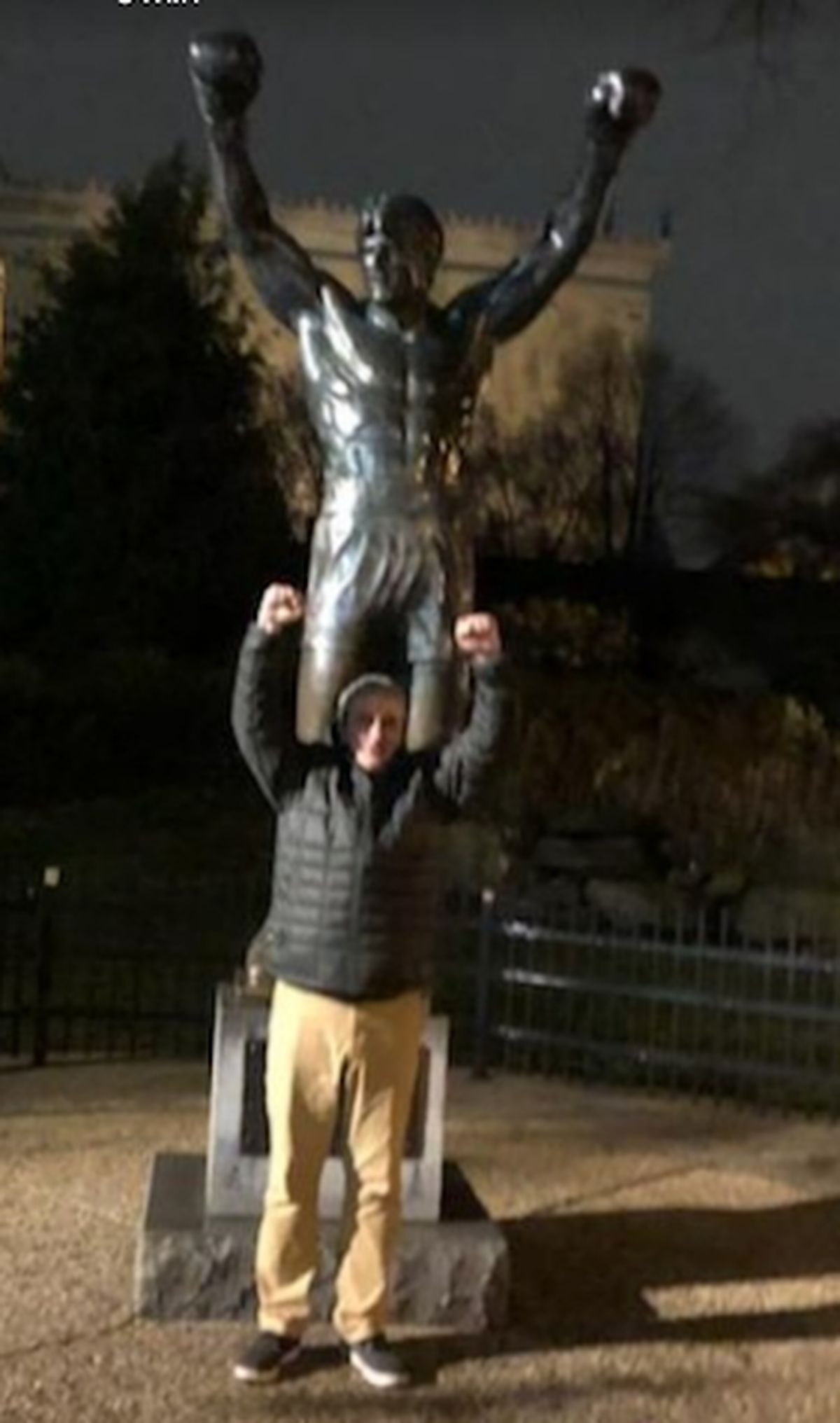
“I’m really anxious to where I can really be independent and just rely on myself,” Bennett said.
Kelly Martin said he would have never thought his mother’s death would still be in the news in 2020. He figured 17 years ago that in 2020 Bennett would be locked away, out of sight and out of mind.
“This feels like groundhog day, it’s happening again,” he said.
Kelly Martin hoped the Myrtle Beach community remembered his mom as someone with a broad smile not just the woman murdered in Bennett’s case.
“I want them to remember her hardworking nature, her love for her family, her compassion, her love for her friends, her ability to trust and her kindness,” Kelly Martin said.
Bennett lost a friend with her death. She wasn’t some stranger he was convicted of, then acquitted of, killing. Marie Martin gave Bennett rides and joined him at karaoke.
If granted one wish, Bennett said it wouldn’t be for the world’s best lawyer or a pile of money. It would be for Marie Martin’s spirit to walk into the courtroom to tell people what really happened. Bennett said, then maybe her children could admit he was innocent.
“I would like [the family] to say, ‘Gary, I know you didn’t do that,’” Bennett said.
What we don’t know 20 years later, is who did.
This story was originally published December 10, 2020 at 7:00 AM.