
For-profit vs. nonprofit: Do some NC nursing homes cut corners on staffing and quality?

A nationwide struggle to hire and retain caregivers is causing North Carolina nursing homes to reach a crisis point — a trend that endangers thousands of residents, our investigation has found. An influx of for-profit nursing homes and fewer regulations during the pandemic are compounding the crisis. So what should families do to protect their loved ones?
- Part 1: ‘People can die.’ Staffing crisis endangers thousands inside NC nursing homes
- Part 2: Do some for-profit NC nursing homes cut corners on staffing and quality?
- Part 3: Need to find a high-quality nursing home in North Carolina? Here are some tips
- Part 4: At the worst time, North Carolina nursing home residents lost key protections
- Part 5: She didn’t have to die, her son says. Was short-staffed nursing home to blame?
- Part 6: Troubled NC nursing home failed to protect residents from abuse, investigation finds
- Part 7: ‘You just can’t give good care.’ Nursing home aides struggle with daunting caseloads
- Part 8: ‘Outside the box’ solutions helped this nursing home excel, despite staffing challenges
- Tell us your thoughts: What have you experienced or witnessed inside NC nursing homes?
For-profit nursing homes in North Carolina tend to operate with significantly slimmer staffing and more deficiencies than nonprofits, a Charlotte Observer analysis has found.
In North Carolina, for-profit companies own more than 80% of nursing homes, compared to about 70% nationally.
The federal Centers for Medicare and Medicaid Services uses a five-star scale to rate nursing homes on key measures: staffing levels, the results of government inspections and quality measures, such as the number of pressure ulcers and urinary tract infections among residents. On average, for-profit homes in North Carolina earned significantly lower scores than nonprofits on each measure.
Some for-profits have bucked the pattern, garnering excellent ratings. White Oak Manor, in Tryon, for instance, has earned five stars from the federal government, with above-average scores for staffing, quality and health inspections.
But more than two-thirds of for-profit nursing homes in North Carolina earn just one or two stars for staffing, the Observer found.
Studies have found a similar pattern nationally, with nonprofit homes generally providing a higher quality of care than for-profits.
It’s a pressing concern now as nursing homes struggle with a shortage of caregivers, a factor that threatens the quality of care.
“The for-profit homes are driven by profit,” said Bill Lamb, a board member at Friends of Residents in Long Term Care, a North Carolina group that advocates for nursing homes residents. “When you look at where you squeeze profits out of a long-term care facility, staffing is where you begin.”
A pattern of understaffing?
Advocates for residents point to three dozen for-profit nursing homes in North Carolina that were bought beginning in 2016 by the Portopiccolo Group, a New Jersey investment company that owns a number of homes that have been hit with stiff regulatory actions.
After suffering one of the most deadly COVID-19 outbreaks in North Carolina, one nursing home acquired by Portopiccolo in early 2020, the Citadel at Salisbury, was placed on the federal government’s “Special Focus” list, reserved for the poorest-performing facilities.
In a federal class action lawsuit filed last year against the Citadel, families of two residents allege that “systematic understaffing” led to a host of problems, including residents frequently not receiving medications, showers and needed medical attention. The home has more than 70 residents and there were days when only three CNAS were on duty to care for them, the lawsuit says.
“Defendants had the financial resources to ensure better staffing,” the lawsuit states. “...However, part of Defendants’ for-profit private-equity business model was to cut costs and reduce staff to minimum numbers.”
Portopiccolo’s North Carolina nursing homes had an average profit margin of about 13% in 2020, compared to an average of about 10% for all homes in the state, according to figures provided by snfdata.com, a company that compiles data from Medicare cost reports.
In a court filing, Portopiccolo called the families’ claim of understaffing “meritless,” saying the nursing home mistakenly under-reported the hours worked by agency nurses. Company representatives declined the Observer’s request for an interview.
The state cited another Portopiccolo home, Accordius Health at Salisbury, for putting residents in “immediate jeopardy” in September 2021, after a man with a history of eating items from the trash reportedly ingested a mouse. After being cited, the facility addressed the concerns of regulators, according to state records. Among other steps, the nursing home reeducated staff members on how to handle residents who eat from trash cans and put inedible items in their mouths.
Still, the large majority of the company’s North Carolina homes earned just one or two stars for staffing and overall performance on the federal government’s five-star rating system.
Residents have borne the brunt of staffing shortages, some former employees say. Brittany Osterhus, a former occupational therapist at the Salisbury nursing home, testified in a deposition about a day in August of 2020, when she found nine of her 11 patients “completely saturated with urine and/or feces.”
“One patient had it up to their shoulder blades,” Osterhus testified.
(What have you experienced or witnessed inside NC nursing homes? Let us know.)
‘Profits over people’
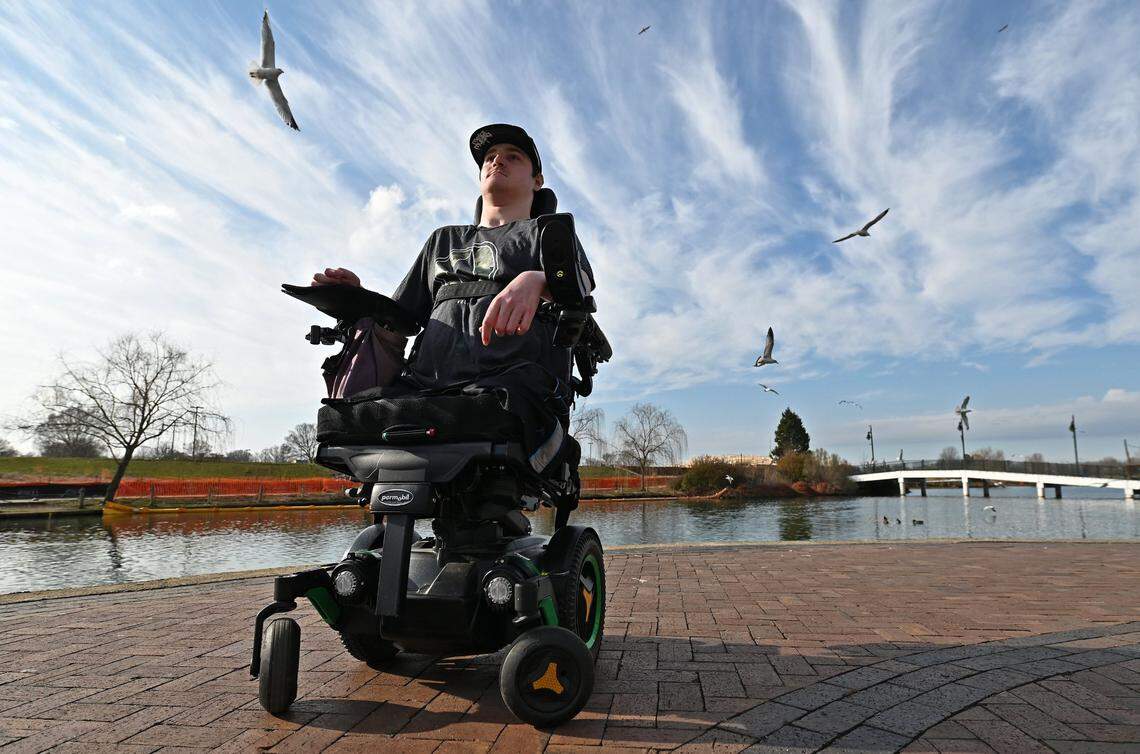
Jeremiah Manson, who is far younger than most nursing home residents, said he and others suffered because of staffing shortages at one Portopiccolo home.
While only 31, Manson has required nursing home care for years because both of his legs were amputated after a car crash when he was a teenager. He needs help from nurse aides each day to get out of his bed and into a wheelchair.
For most of 2021, he lived at Pelican Health Randolph, in Charlotte’s Cotswold neighborhood, a Portopiccolo-owned facility where he says residents routinely waited two or more hours to get their call bells answered.
“What if someone’s having an emergency?” he asked. “They could die.”
During weekends at the nursing home, Manson said he often saw just three nurse aides on duty to care for 80 residents. There were only one or two nurse aides working some nights, he said.
Some days, he said, he had to wait five or six hours for nurse aides to help him get dressed, out of bed for the day and into his wheelchair.
Manson recalled a traumatic night in November, when he felt pain in his back and chest so severe that he found it hard to breathe. At about 8 p.m., he pushed his call bell. No one responded until the morning — roughly 12 hours after he’d first called for help, he said. The nursing home finally sent him to the hospital.
For Manson, that was the final straw. He decided to move to another nursing home.
“This place does a terrible job with staffing,” he said, a few weeks before moving out. “They put profits over people.”
A spokesman for Portopiccolo said the company doesn’t discuss care provided to specific residents.
This story was originally published March 27, 2022 at 6:00 AM with the headline "For-profit vs. nonprofit: Do some NC nursing homes cut corners on staffing and quality?."
.JPG)