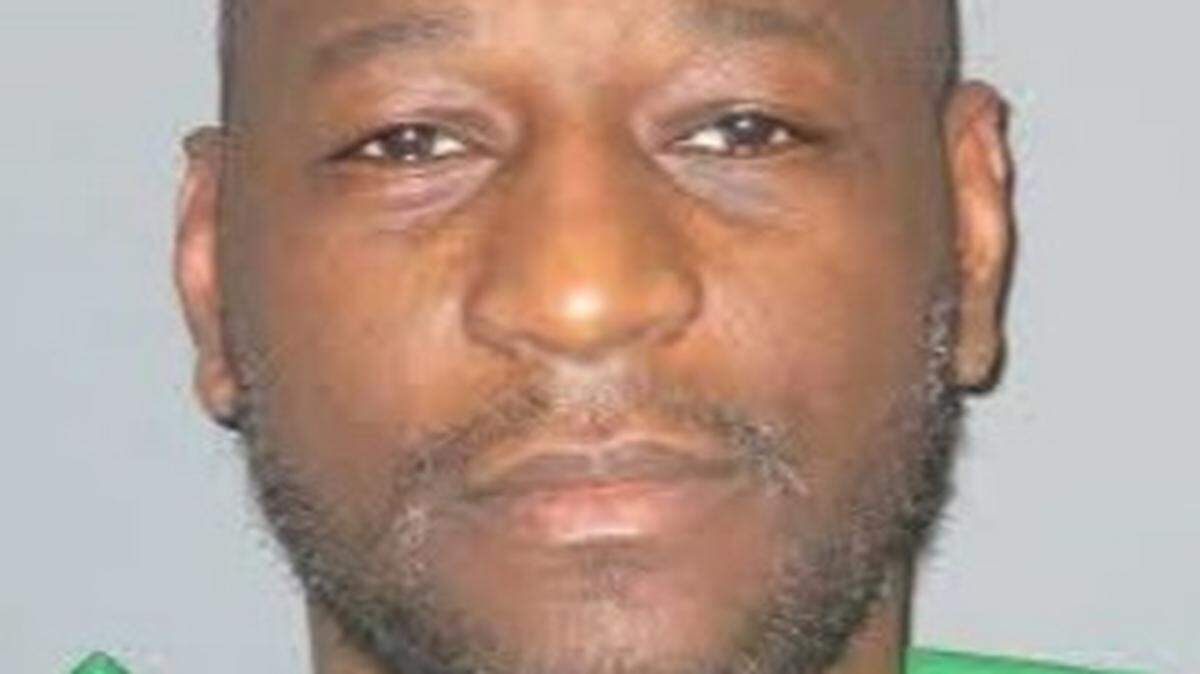
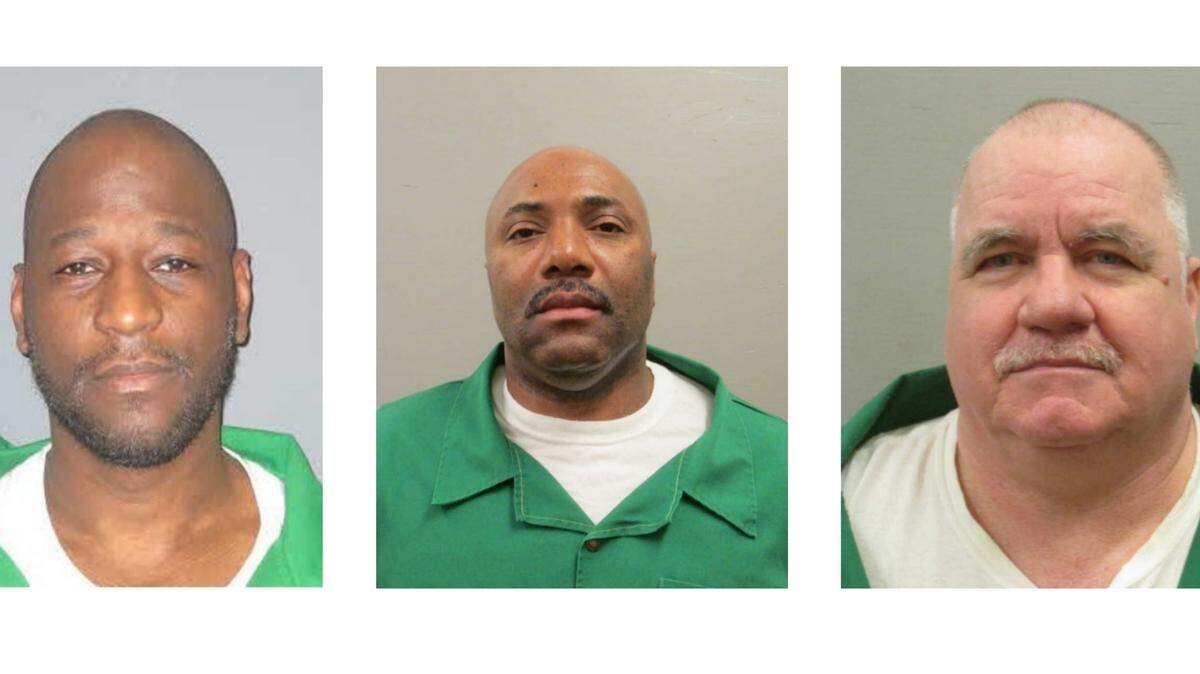
Electric chair or firing squad? These 3 SC death row inmates may soon have to choose
READ MORE
The death penalty in South Carolina
After a decade-long hiatus from carrying out executions, South Carolina passed a bill allowing death row inmates to be executed by firing squad or electric chair. Read more of The State’s coverage on the S.C. death penalty here.
Expand All
After lawmakers passed a bill to combat a nationwide shortage of lethal injection drugs that has ground the mechanisms of capital punishment to a halt, South Carolina is set to end a decade long execution drought.
Now, three men — Freddie Owens, Richard Moore and Brad Sigmon — whose executions have been ordered but postponed because of the state’s inability to carry out executions, will be the first to test South Carolina’s new death row system, where death row inmates have to choose between death by electric chair or firing squad.
While Moore’s case is currently under consideration by the state Supreme Court, attorneys for Owens and Sigmon filed a lawsuit challenging the constitutionality of the new law and requested their executions be blocked until the lawsuit is resolved.
State lawmakers revamped the system this year after South Carolina prison officials yet again reported they did not have the necessary drugs to carry out an execution by lethal injection.
South Carolina needed to seek alternative methods of execution after drug companies cracked down on how their products were being used in the early 2010s. Drug suppliers began refusing to sell drugs to those who sought to use them for lethal injections. The move was to prevent their products from being associated with executions and to shield themselves from backlash.
In 2013, South Carolina ran out of the drugs needed to administer a lethal injection. The state has not been able to buy them or get them compounded since, according to Department of Corrections officials.
Under the state’s old law, inmates were given the choice between lethal injection and the electric chair, but if they chose to die by lethal injection, and the drugs were not available, the state could not force the inmates to die in the chair.
That law forced the state into a 10 year period where executions could not be performed, and Owens, Moore and Sigmon all received stays of execution.
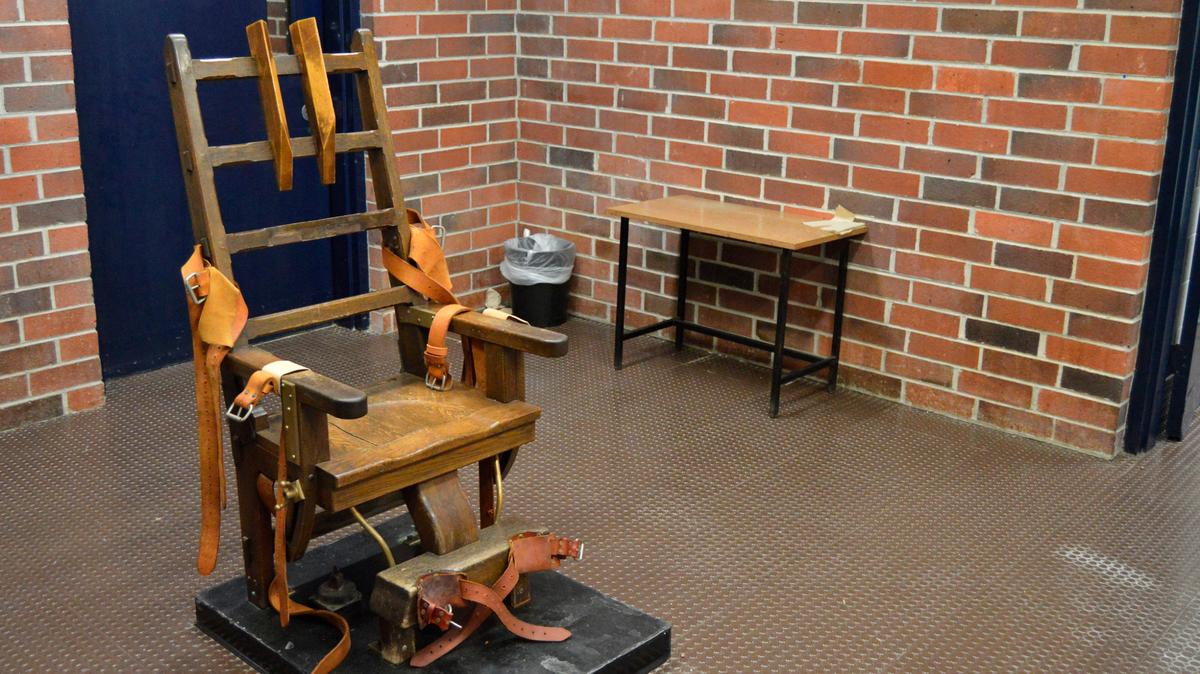
But under the bill recently signed into law, the electric chair will become the default mode of execution, meaning that if the drugs for a lethal injection are not available, inmates can be executed by electric chair. If Corrections has the ability to carry out an execution by firing squad in time for the next scheduled execution, however, inmates will also be allowed to choose if they’d like to die by firing squad instead of the electric chair.
Now that the bill has passed, new execution notices have to be issued to Owens, Moore and Sigmon by the state Supreme Court. Those documents will be issued once the Department of Corrections tells the court that they now have the means to carry out an execution. As of Wednesday, new execution notices had not been issued.
Once the notices are sent out and received by the inmates, the executions will be scheduled for the fourth Friday following receipt.
Lawmakers rushed to pass the executions law amid years of appeals from critics in the Legislature and in among prisoner advocates who question whether using methods other than lethal injection is humane.
“The Supreme Court of the United States has repeatedly said that lethal injection is the most humane method of punishment,” said John Blume, the Director of the Cornell Death Penalty Product and the founder of Justice 360 in Columbia, a group focused on equity and transparency in the criminal justice system.
Lawyers from Justice 360 are working on the cases of all three inmates who have received stays.
“Bringing back old methods of execution that we got rid of because they were significantly less painful and degrading than the electric chair and the firing squad is not the answer.”
Democrats, who fought the bill citing their objections to capital punishment, have called lawmakers’ vote to pass the bill a direct vote to kill Owens, Moore and Sigmon.
“If you vote for this, you’re voting to kill at least three people,” S.C. Rep. Justin Bamberg said during a House Judiciary Committee meeting on the bill.
Here’s a look at the three men whose previously scheduled deaths had been postponed, as detailed in various court documents and old news stories, and what the new law means for them:
Who are the men facing death?
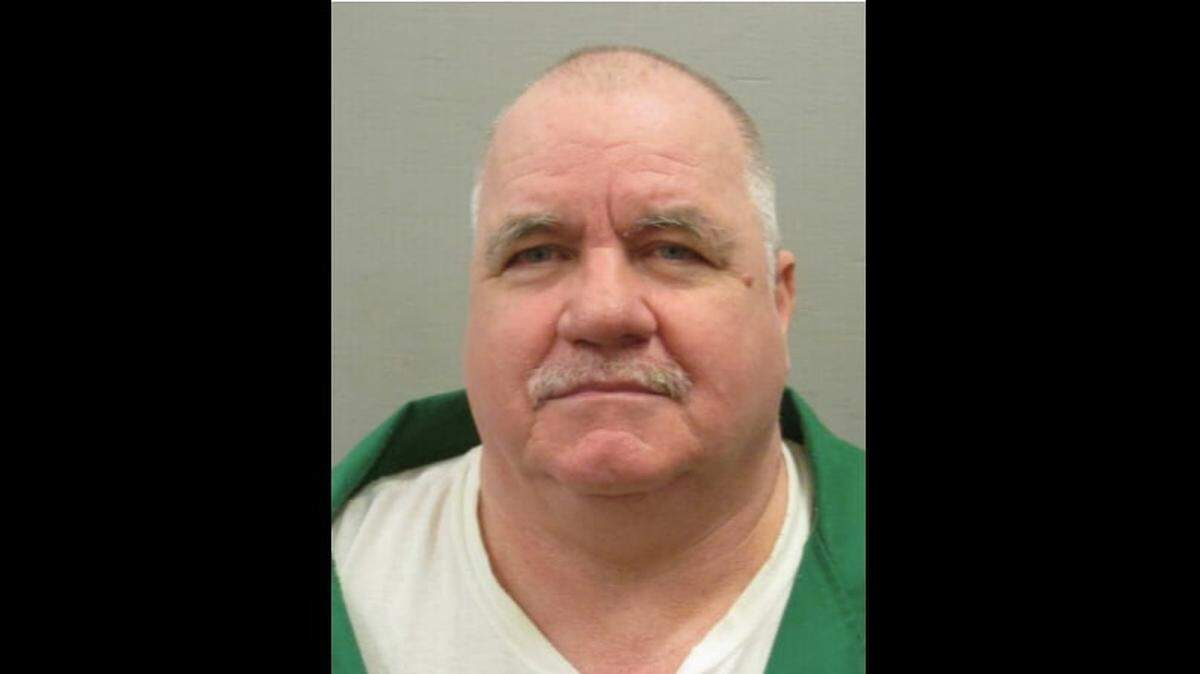
Richard Moore, 56
Moore has been on death row the longest of the three who have received stays of execution. He was incarcerated in 2001 after he was tried and sentenced to death for the killing of a convenience store clerk during an armed robbery in Spartanburg in 1999.
According to Moore’s attorneys, Moore entered Nikki’s convenience store without a gun. The store owner kept a gun behind the convenience store counter, and the clerk, Jamie Mahoney, took it out.
Moore and the store clerk wrestled over the gun, and Moore shot the clerk, an eye witness was cited as saying in court documents. The clerk died within minutes of being shot in the chest. The witness said Moore also shot at him, but the witness dropped to the floor and pretended to be dead.
Moore fled from the store with $1,408, but was soon caught by a Spartanburg County deputy. According to court documents, Moore was bleeding from his arm where he’d been shot during the struggle, and he quickly confessed.
In 2001, Moore was found guilty of murder, assault with the intent to kill and armed robbery. Prosecutors also tacked on a firearms use enhancement.
Moore was initially scheduled for execution on Dec. 4, 2020, but he was granted a stay of execution in November 2020 because the Department of Corrections didn’t have access to lethal injection drugs.
Moore’s lawyer, Lindsey Vann, said the inmate’s case may not be affected by the change in law.
The Supreme Court decided to reconsider his case “to determine whether the death penalty is disproportionate in his case given the fact that he entered the convenience store without a gun and without any intent to cause harm,” she said.
The court heard arguments on his case in early May. The court had yet to issue an order as of Friday.
Moore got a hearing in the U.S. District Court of South Carolina in 2019 on whether the death sentence was disproportionate, but the court ultimately ruled against him.
Justice 360, a firm where Vann serves as executive director that advocates for fairness and transparency in the criminal justice system, says on its website that Moore is “deeply remorseful and prays for forgiveness for his actions and the pain he caused Mahoney and his family and Moore’s own children.”
Freddie Owens, 43
Sentenced to death three different times for the same crime, Owens is the most recent death row inmate to get his execution postponed. The day before lawmakers took up the execution bill on the House floor, Owens was granted a stay of execution “until SCDC advises the court it has the ability to perform the execution as required by the law.”
Owens’ lawyers were unable to be reached for comment.
Owens was convicted first in 1999 for the shooting of a convenience store clerk during a Halloween 1997 robbery spree. According to court documents, Owens and three friends decided to hold up a group of local businesses. After midnight, the group split up, and Owens and a friend went to rob the Starvin’ Marvin Speedway Gas station in Greenville County.
Security footage showed the pair wearing masks and leading Irene Grainger Graves, 41, to the store’s safe. Graves didn’t know the combination, according to court documents, and one of the men, later determined to be Owens after his friend testified against him, fatally shot her in the head.
At trial, a psychologist testified that Owens has an anti-social personality disorder and came from a broken background. He grew up facing physical and psychological neglect and had been removed from his home at a young age by the Department of Social Services, a psychologist testified, according to Spartanburg Herald-Journal story published after his sentencing. At the age of seven, Owens also witnessed his grandmother shoot someone.
Ultimately, Owens was convicted of murder, armed robbery and criminal conspiracy.
As Owens awaited to hear the penalty for his case, he killed a fellow detainee at the Greenville County Detention Center, Christopher Lee, 28, according to a Spartanburg Herald-Journal story published after his sentencing for the gas station killing. According to the news article, Owens told state police that he punched Lee repeatedly, stabbed him in the eye with a pen, choked him, stomped on his head and body, burned his eyes with a lighter and stabbed him with a pen up his nose.
Prosecutors presented Owens’ confession about killing Lee to the jury before they sentenced him for the gas station murder.
Owens’ capital conviction has been vacated by a court twice. Once, his attorneys argued that the court had wrongfully denied them more time to investigate the confession linked to Lee’s killing, and the Supreme Court agreed and vacated the death sentence, according to court documents.
During his second sentencing, Owens waived a jury sentencing and chose, instead, a bench trial. The Supreme Court later ruled that the trial judge erred and “injected its personal opinion into Owens’ decision,” according to court documents. The second death sentence was then vacated.
Owens was sentenced to death for a third time, and despite his appeals, the sentence was upheld by the S.C. Supreme Court in 2008.
Owens’ most recent execution date was set for May 14, 2021, but Owens was granted a stay until the Department of Corrections had the ability to carry out a death sentence.
Owens has exhausted all of his regular appeals, but he and Sigmon are currently involved in a lawsuit against the Department of Corrections over the new execution law. Sigmon and Owens have asked the court to weigh in on whether the retroactive nature of the law — which is what requires current death row inmates to choose between the electric chair and the firing squad — is unconstitutional.
Owens’ lawyers have asked the state Supreme Court to keep his stay of execution in place as the court considers the legality of the new law.
Brad Sigmon, 63
The final inmate who received a stay of execution was Sigmon, who was convicted and sentenced to death in 2002 for a double murder in Greenville County.
Sigmon’s attorneys were unable to be reached for comment.
Sigmon was convicted of beating the parents of his ex-girlfriend, David and Gladys Larke, to death with a baseball bat, according to to Spartanburg Herald Journal story written about Sigmon’s arrest in 2001. After committing the murders, Sigmon also tried to kidnap his ex-girlfriend, but she managed to escape, though she had been shot in the foot.
Tensions between Sigmon and the Larkes were high after his girlfriend ended their relationship and her parents served him with eviction papers, according to court documents. Sigmon and the woman had been living together in a trailer next to the elder Larkes.
After the murders, Sigmon fled from South Carolina, leading police on an 11-day man hunt across state lines.
Sigmon was later located at a campground in Tennessee, and when he was arrested, he confessed to Tennessee officers and Greenville County detectives, according to court documents. He admitted his guilt again at trial.
Sigmon was convicted on two counts of murder and one count of burglary. During sentencing, the defense presented testimony saying that Sigmon had issues as a child with abandonment and neglect. He had an extensive history of drug use, aggravated by his “recurrent major depressive disorder,” the defense said, according to court documents.
Sigmon was granted a stay of execution on Feb. 4, 2021, due to the shortage in lethal injection drugs. Sigmon has exhausted all of his regular appeals, but his lawyers have asked the state Supreme Court to keep his stay of execution in place as the court considers Sigmon’s and Owens’ lawsuit.
South Carolina’s last executions
South Carolina’s last execution was carried out in 2011.
On May 5, Jeffrey Motts, 36, was killed by lethal injection. He’d been convicted of killing his cellmate at Perry Correctional Institution in 2005 as he was serving a life sentence for killing two people during a 1995 robbery in Spartanburg County, the Associated Press reported.
The last execution via electric chair took place on June 20, 2008, when James Earl Reed was put to death.
Reed was convicted of killing Joseph and Barbara Lafayette, the parents of his ex-girlfriend. Reed shot and killed the pair in 1994 in their Charleston County home.
At trial, Reed represented himself, something that lawyers tried to use to delay the execution in his final days. Reed was convicted in only 30 minutes. For the sentencing hearing, Reed asked for a lawyer, but a judge refused, and Reed was sentenced to death.
Days before Reed’s execution, the Supreme Court issued an opinion in an unrelated case, ruling that a defendant can be ruled competent to stand trial, but still may be found unable to serve as his own lawyer. Lawyers who were not involved in the case or in contact with Reed questioned whether Reed was competent to represent himself at trial and asked if he was entitled to a new one because he had an IQ of 77. An IQ of less than 70 is considered an intellectual disability.
The effort ultimately failed.
The lawyers initially obtained a stay of execution from a federal judge, but later the stay was vacated by an appeals court. Shortly before Reed’s execution, the lawyers asked the Supreme Court for a stay, but in less than an hour, the court ruled the state could carry out the execution, the Post and Courier reported.
Descriptions of Reed’s death in the electric chair are hard to find, but news reports from the time don’t mention any mishaps. The electric chair is known to sometimes result in botched executions.
According to The Death Penalty Information Center, the United States saw 84 botched electric chair executions from 1890 to 2010. Botched executions could result in officials having to “flip the switch” to electrocute inmates more than once and even inmates catching on fire.
South Carolina is one of eight states that use the electric chair. The others are Alabama, Arkansas, Florida, Kentucky, Mississippi, Oklahoma and Tennessee.
The S.C. Department of Corrections is wholly prepared to carry out an execution by electric chair, according to department spokesperson Chrysti Shain.
Shain said the department has a team that “continually trains to perform these duties,” and the chair is routinely checked to make sure it’s operational.
South Carolina has never used the firing squad as an official method of execution.
With the passage of the new law, the Department of Corrections needs to write a policy and create protocols for how to carry out an execution via firing squad, Shain said.
“We would look for guidance from other states and the courts as to what has been deemed constitutional,” Shain said.
Just three states — Utah, Mississippi and Oklahoma — offered the firing squad as a method of execution prior to South Carolina passing its legislation, according to the Death Penalty Information Center. All three offer lethal injection as their primary mode of execution.
Utah voted to bring back the firing squad in 2015 for similar reasons as South Carolina: the state couldn’t obtain the necessary drugs to administer a lethal injection. Prior to that, Utah saw its last firing squad execution in 2010, when convicted killer Ronnie Lee Gardner was strapped to an execution chair, marked with a target and shot four times by five anonymous marksmen armed with rifles. One shooter was given a blank so no one would know who killed Gardner, according to news reports.
Proponents for the firing squad argue it’s far more humane than the electric chair.
In contrast to the electric chair, death via the firing squad has resulted in no recorded botched executions from 1890 to 2010.
On the Senate floor, S.C. Sen. Dick Harpootlian, a former solicitor who tried death penalty cases, advocated for the addition of the firing squad to the bill on the premise that performing executions using the electric chair is a “horrible, horrible thing to do to another human being.”
“They’re dead instantly,” the Richland Democrat said of the firing squad. “The actual pain and suffering of death, it’s actually the least painful and the least suffering of any manner of death.”
This story was originally published May 20, 2021 at 5:00 AM with the headline "Electric chair or firing squad? These 3 SC death row inmates may soon have to choose."