
Horry County beaches battling bacteria near swimmers. The solution? Oyster shells
Beaches along Horry County’s coast have long struggled with water quality, especially near stormwater swashes after heavy rain.
The City of Myrtle Beach and North Myrtle Beach have initiated several deep water ocean outfall projects to push stormwater over 1,000 feet offshore, but Horry County is planning a different approach: placing manmade oyster reefs in swashes.
Oysters naturally filter sediment and bacteria. Horry County Watershed Planner Brent Carey wanted to find a clean and cost-effective way to improve water quality throughout the county and area beaches, so the county developed their own oyster recycling and reef building initiative under the guidance of South Carolina Department of Natural Resources, with hopes of building reefs in swashes.
But there are limiting factors: recycled shell availability, public interaction with the reefs and correct conditions for the oysters to thrive. So how would the program help water quality issues at Horry County beaches, and what will it take to get there?
How do oysters improve water quality?
Oysters act as a natural filtration system – trapping sediment and digesting bacteria – pushing out clean water. One adult oyster can filter up to 2.5 gallons of water in one hour, or up to 50 gallons a day.
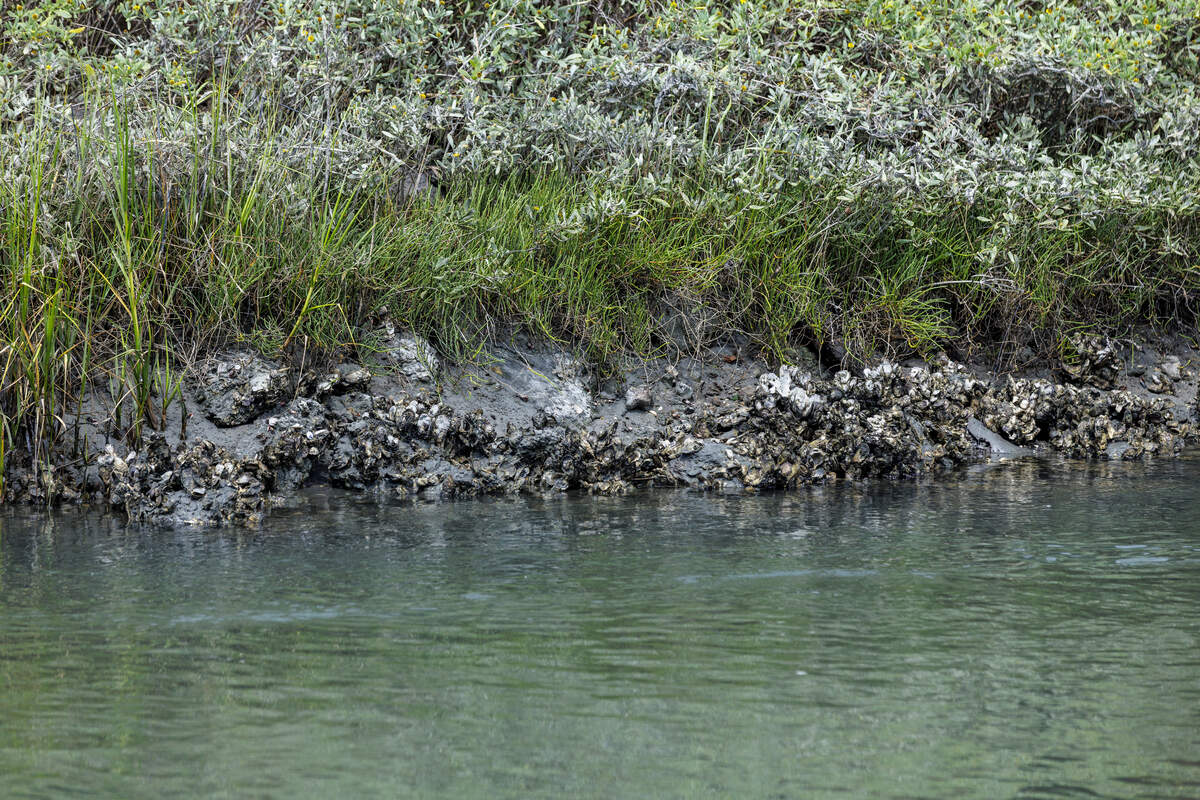
South Carolina’s oysters typically grow in estuaries, which are critical habitats for many marine species while they are developing. These oysters rely on the intertidal exchange of water to protect them from predators while low-tide exposes them. The quality of oyster reefs often reflects the health and ecological function of an estuary.
But oysters only build in areas with a hard surface for them to attach.
How would placing oyster reefs in stormwater swashes work?
Other municipalities have engineered large, and costly, projects to address water quality at beach locations.
“While some nearby municipalities have installed deep-water ocean outfalls, those types of projects are not always practical for Horry County. In general, these projects are more feasible where there is a higher density of beach outfalls located in close proximity,” county spokesperson Tony Casey said.
The county is expanding its recycled oyster reef program to address the water quality issues at Horry County beaches.
The county collects recycled oyster shells and builds manufactured wire reefs, also referred to as oyster baskets. Oyster larvae attach to the wire reefs and build upon each other into new living reefs, feeding on the calcium of the recycled shells.
The county’s program began in Murrells Inlet and the Garden City marsh in 2024 as a pilot program, and about 500 reefs have been placed in tidal creeks and estuaries. Horry County is home to the largest manmade oyster reef in South Carolina, Carey said. The county has partnered with the SCDNR for site location permits and deployment of the reefs.
Since the wire reefs have proven to attract swarms of oyster recruits, Carey said it’s time to expand the project to promote water quality in other parts of the county.
“Murrells Inlet gave us a place to develop and refine the concept, and we’re going to continue to work down there in Murrells Inlet, of course,” Carey said. “But we’re also evaluating our other coastal areas where these oyster reefs are going to be able to provide these benefits of water quality, shoreline stabilization and habitat restoration.”
The wire reefs placed in swashes would be prioritized in locations with long-term swimming advisories designated by the South Carolina Department of Environmental Services. The county has worked with SCDNR for permitting and logistics of the locations, although a timeline for installation and site selection is still underway.
Carey said the baskets would need to be placed in areas upstream where fewer people would be able to interact, but also to start filtering bacteria before reaching a more public area.
Horry County in desperate need of recycled oyster shells
The project is entirely dependent on the amount of oyster shells that are recycled. Over 100 restaurants serve oysters in Horry County, and only one participates in recycling the oysters, Carey said. Most of the oyster shells harvested and served in Horry County end up in the landfill as food waste.
Horry County is lagging behind individual South Carolina cities, including some far from the coast, in oyster recycling, Carey said.
“It’s this concept we’ve tried to create where it’s reef, restaurant, reef,” he said. “We really need to change the culture.”
Now Carey is looking for grant funding to create a collection route to increase the number of participating restaurants without placing an additional task on them. There are already several recycling locations in the county for anyone to drop their shells.
“This affects our visitors. This affects our locals,” Carey said. “My favorite part of the program is you give an ordinary person an opportunity to directly contribute to restoring our coastal environment.”