
SC tests beaches for bacteria biweekly. What are Myrtle Beach visitors swimming in?
The Grand Strand boasts 60 miles of beachfront, attracting millions of tourists each year to bask in the sun, sand and surf.
But as visitors dip their toes into the ocean, how do they know what they are swimming in?
Years of ocean water testing shows that several beach locations in the Myrtle Beach area are more likely to have elevated levels of bacteria.
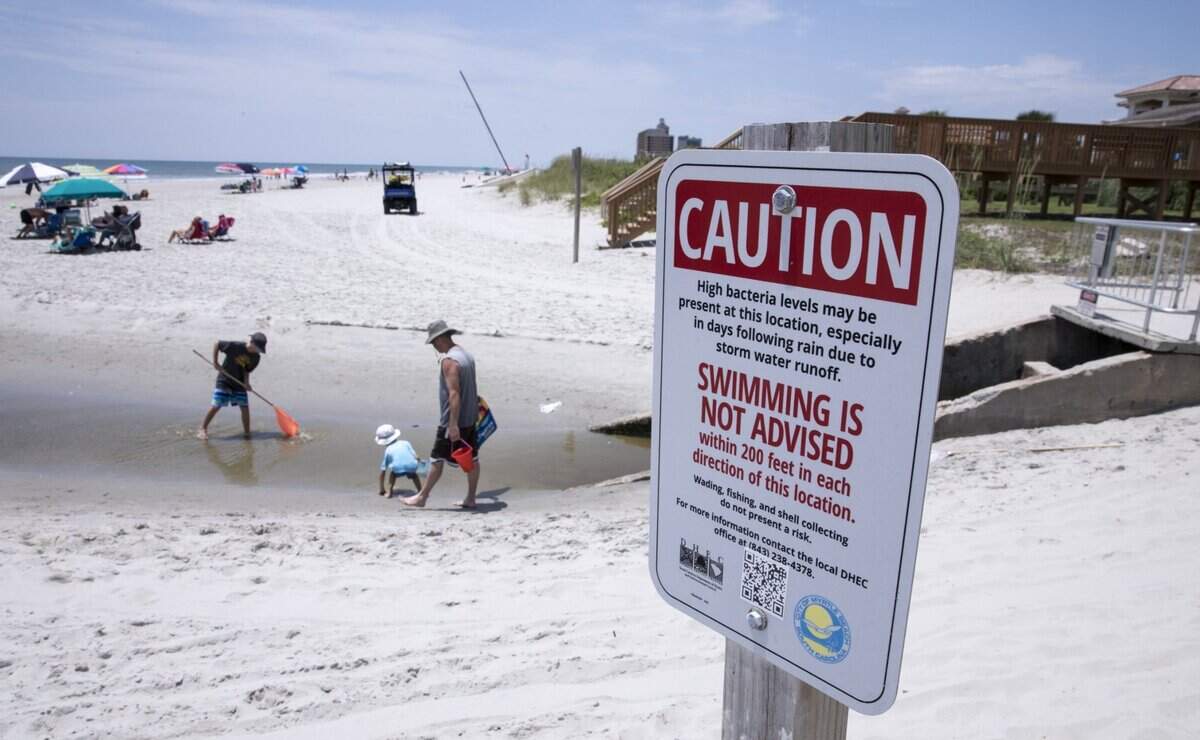
South Carolina’s Department of Environmental Services tests ocean water from 122 stations along the state’s coast between May 1 and Oct. 1 for elevated levels of Enterococcus bacteria, indicating possible contamination from fecal waste. Areas with elevated levels are typically located near stormwater runoff pipes or swashes.
After periods of heavy rainfall, runoff is more likely to contain elevated bacteria levels. If so, temporary swimming advisories are issued. Long-term swimming advisories are issued when more than 10% of data from the last five years exceed the bacteria level threshold.
The Grand Strand has more long-term swimming advisories than any other coastal area in the state. There are currently 18 long-term advisories, with most beginning in 2007 and 2008.
“As development increases, impervious surfaces also increase, which can result in greater volumes of stormwater runoff,” SCDES spokesperson Vanessa Diaz said by email, adding that changes in bacteria levels are difficult to contribute to a single factor.
With more risk of bacteria being present near ocean outfalls, what’s being done to address it?
What are monitoring stations being tested for?
SCDES tests the ocean monitoring sites for Enterococcus, bacteria that holds up better in salt water conditions and is easier to detect.
Enterococcus is a type of bacteria that is naturally present in warm-blooded animals, including humans, pets and wildlife. While they are typically not considered harmful to humans, their presence in the environment could mean other disease-causing organisms may be present.
“It can be indicative that other bacteria might be present if bacteria levels are high in this indicator species,” said SCDES Aquatic Resource Monitoring Manager Courtney Kemmer.
If levels of these bacteria exceed 104cfu/100mL (colony-forming units per 100mL), a short term advisory is issued, with the bacteria typically only being present for one or two days. Additional testing is conducted every day until levels fall below the threshold, and the advisory is removed.
Each station is tested once every two weeks, and areas with long-term advisories are tested every week. Data for the long-term advisories are recalculated every year.
Most short-term advisories are issued after periods of heavy rainfall, when stormwater runoff traps debris and pollutants.
“These pollutants can include fecal bacteria from wildlife, pets, streets, yards and other urban sources,” Diaz said. “Some stormwater outfalls discharge directly onto beaches, which can contribute to increased bacteria levels in nearby ocean waters.”
Very few short-term advisories have been issued this season, as there has been a lack of rainfall.
SCDES warns against swimming in swashes or drainage creeks, as elevated levels of bacteria could be present. Potential health impacts include gastrointestinal effects, like upset stomach. Exposure to bacteria mainly occurs after swallowing water, so activities like wading, shelling and fishing don’t present a risk. Avoid entering swashes with open wounds.
Bacteria can be present in surf zones near swashes for several hours after rainfall. As soon as the water flushes the system (about 48 hours), bacteria levels usually return to normal, Kemmer said. Swimming in the ocean away from swashes generally does not pose a high risk outside of periods with heavy rainfall.
Locations with long-term advisories include:
Briarcliffe Acres:
- White Point Swash, issued in 2008
Arcadia: (between Myrtle Beach and North Myrtle Beach)
- Singleton Swash, 2020
- Bear Branch Swash, 2007
Myrtle Beach:
- Cane Patch Swash, 2007
- 64th Ave. N, 2023
- 24th Ave. N, 2007
- 8th Ave. N, 2007
- Withers Swash, 2007
- 15th Ave. S, 2021
- 23rd Ave. S, 2023
- Midway Swash, 2007
- Beaver Dam Creek, 2008
Ocean Lakes Family Campground:
- Seaside Drive N, 2008
- Seaside Drive S, 2020
Surfside Beach:
- 16th Ave. N, 2023
- 11th Ave. N, 2020
- 5th Ave. N, 2008
- 13th Ave. S, 2008
Short-term and long-term advisory locations can be found on SCDES’s beach monitoring website, as well as additional information about testing and swim safety.
How are stormwater outfalls being managed along the Grand Strand?
To combat the frequent chance of contaminated stormwater being present near popular swimming areas, both North Myrtle Beach and Myrtle Beach have initiated deepwater ocean outfall projects. Since 2002, six projects have been completed in North Myrtle Beach with two more projects in early development. North Myrtle Beach anticipates five more at various locations, city spokesperson Lauren Jessie said by email. There are currently no long-term advisories in North Myrtle Beach.
In 2009, the City of Myrtle Beach developed a master plan to replace smaller beach pipes with fewer, larger pipes, and has since completed four projects, with another under construction at 24th Ave. N.
The outfall projects filter and redirect stormwater 1,500 feet from the shoreline. They remove up to about a dozen pipes off the beach upon completion, city spokesperson Meredith Denari said by email.
But these projects are time-consuming and costly, with each project estimated to take four to five years from engineering to completion, Denari said.
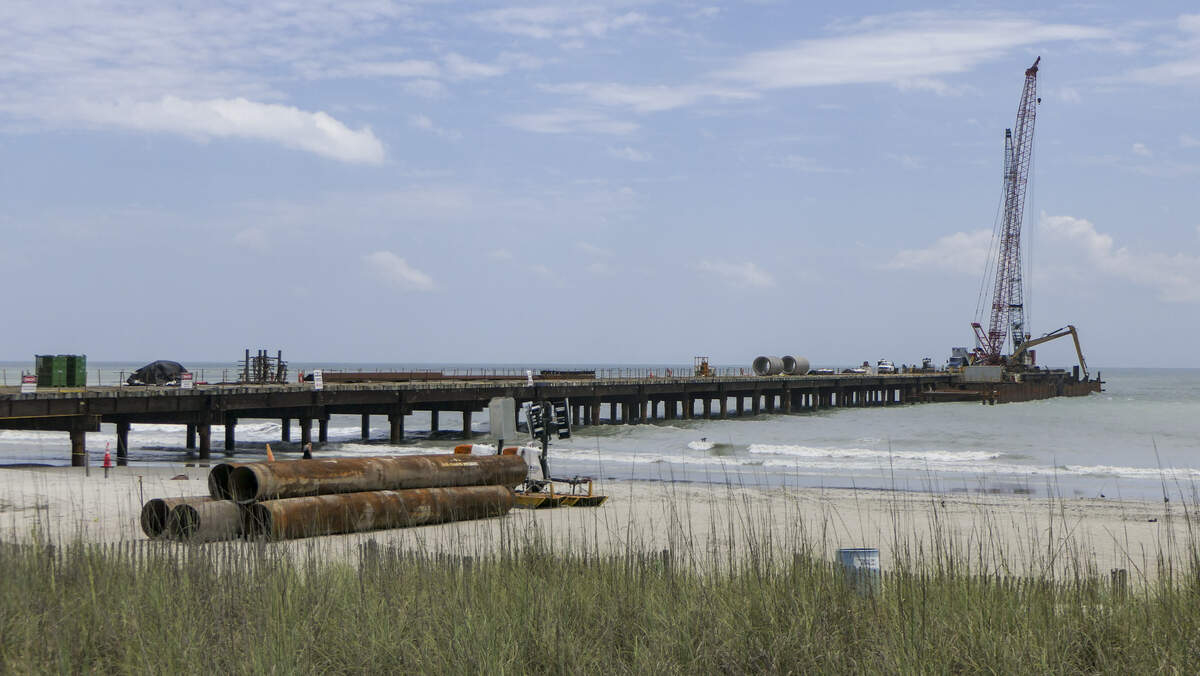
The current project at 24th Ave. N costs $42.6 million, with $30 million coming from state funding. It underwent construction in September 2024 and is estimated to be completed by the end of this year if the rest of the work stays on schedule. It was initially projected to be completed in early 2026 but was delayed by severe weather.
“At times, the conditions were so extreme that the force of the waves damaged the steel sheet piles,” Denari said. “While that can happen, it’s uncommon. When equipment is damaged and must be repaired or replaced, it naturally extends the project’s timeline.”
The City of Myrtle Beach spent $75 million in stormwater maintenance prior to the 24th Ave. N project.
The projects not only reduce risks of bacteria being present near swimming areas, but they reduce erosion and flooding after heavy rainfall. Beach accesses at construction sites are closed to the public for safety.