
Did city know about PFAS near Myrtle Beach Airport prior to ocean study?
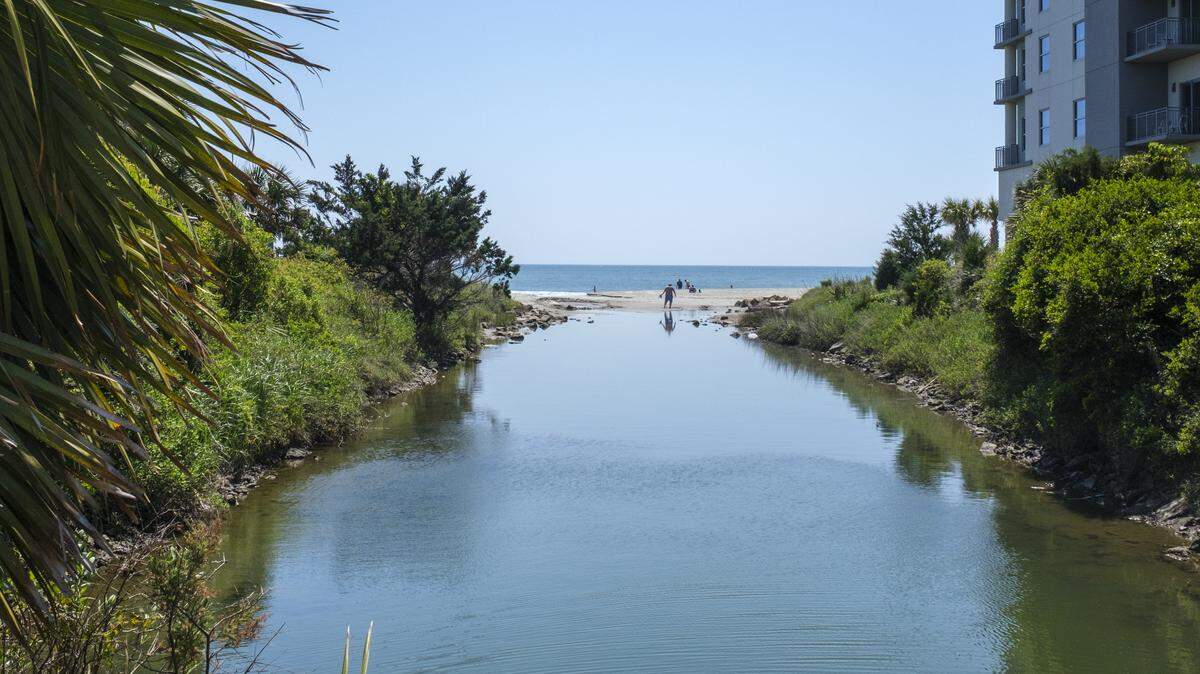
A two-year study found “alarmingly high” levels of PFAS, or forever chemicals, are present in Midway Swash, an onshore drainage creek just north of Springmaid Pier that is connected to the Myrtle Beach International Airport.
While researchers said they contacted city and county officials about the findings of the project before they issued a news release, Myrtle Beach leaders said they were not notified of the ongoing study and the results.
However, the city has known about the presence of PFAS near the Myrtle Beach airport for decades.
Dr. Till Hanebuth headed the Coastal Carolina University study in partnership with the Winyah Rivers Alliance. The study was intended to sample several areas of each of the rivers in the Winyah Bay Watershed for elevated levels of PFAS and to determine how they move throughout the watershed, but they tested areas around the Myrtle Beach airport since it was a former Air Force Base.
“It’s not new information that around the former Air Force Base and the modern airport that the contamination is really high,” Hanebuth said. “What is new is that we can really show how they just drain it to the ocean.”
Hanebuth said with help from the university he had contacted about 25 people within city and county leadership, including the Mayor of Myrtle Beach, regarding the elevated levels.
City of Myrtle Beach Mayor Mark Kruea said as of Thursday morning he could not find that he had been contacted. He said PFAS contamination came up a few years ago as something the city would need to address at some point, particularly with drinking water.
“It’s a growing concern nationally, something that we need to pay attention to,” Kruea said. “(I) have not seen this particular study, have not been privy to that at this point, but we’ll certainly take a look at it.”
PFAS, per- and polyfluoroalkyl substances, are a group of manufactured chemicals that take a very long time to dissolve, making them harmful to human and animal exposure.
The U.S. Air Force used firefighting foam beginning in the 1970s, which is now known to contain PFAS. The Myrtle Beach Air Force Base was designated a Superfund Site by the Environmental Protection Agency after it closed in 1993. The transformed site was awarded a Federal Facility Excellence in Site Reuse Award in 2019. A 2020 Department of the Air Force study showed high levels of PFAS in surface water, groundwater and soil, Hanebuth said.
City of Myrtle Beach spokesperson Meredith Denari said the city has known about PFAS being present near the Air Force Base for decades. She said South Carolina Department of Environmental Services monitors wells in and around the former base, and that residents should know it is a safe place to live.
“If there were an issue, (SC)DES would be all over it,” Denari said.
Hanebuth said the levels found in the swash are almost 100 times higher than the maximum level allowed by the EPA for drinking water. The levels in the ocean foam were over 10 times the limit for drinking water. Regulations have yet to be defined for PFAS limits in waste, sewage and ocean water, he said.
South Carolina Department of Environmental Services spokesperson Laura Renwick said by email the U.S. Air Force is investigating the impacts of PFAS from the former Myrtle Beach Air Force Base, but the investigation hasn’t reached the swash. Once the investigation is complete, the USAF will evaluate appropriate remedial actions.
Renwick said the agency does not test ocean water for PFAS, as there are no federal standards for ocean water. SCDES samples over 120 beach locations weekly from May 1 to Oct. 1 each year for high levels of bacteria.
Renwick said the agency has always recommended people avoid contact with water coming from stormwater outfalls or swashes within a given beach.
The primary routes of human exposure to PFAS include consumer products such as clothing, upholstery, carpet, household products and nonstick cookware, as well as food, food packaging, drinking water and indoor dust and air, Renwick said by email. SCDES recommends people educate themselves about PFAS and the many ways they come in contact with them daily.
This story was originally published May 14, 2026 at 12:59 PM.