
Water testing found dangerous chemicals flowing onshore in Myrtle Beach into ocean
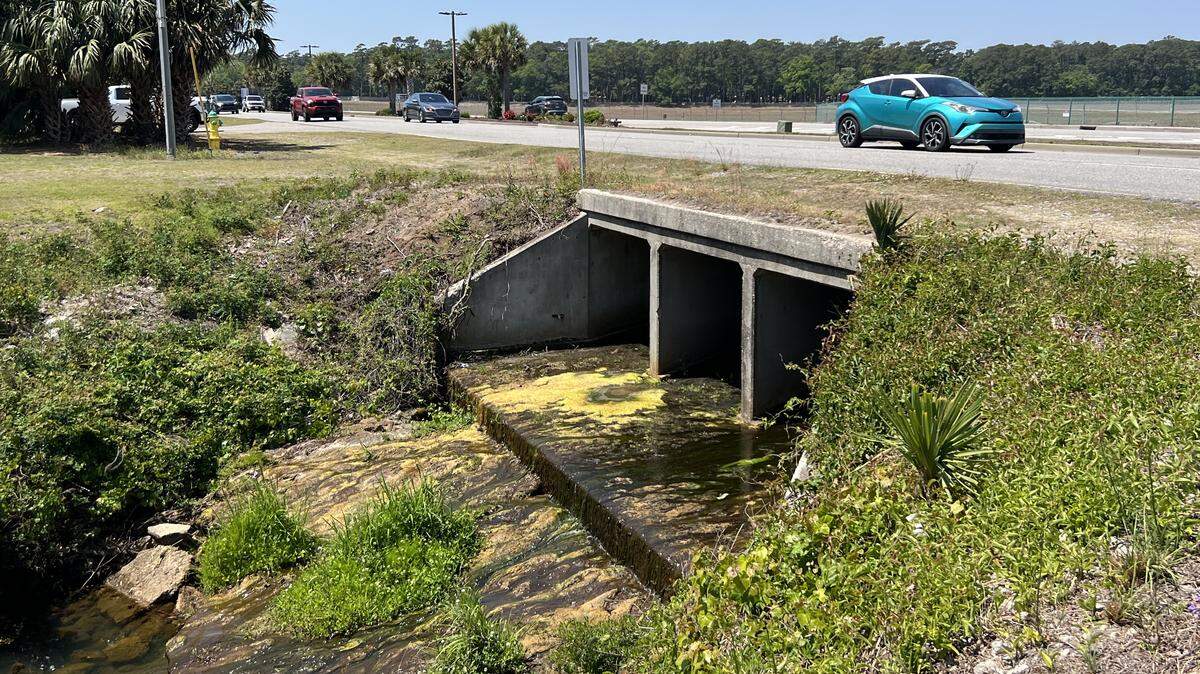
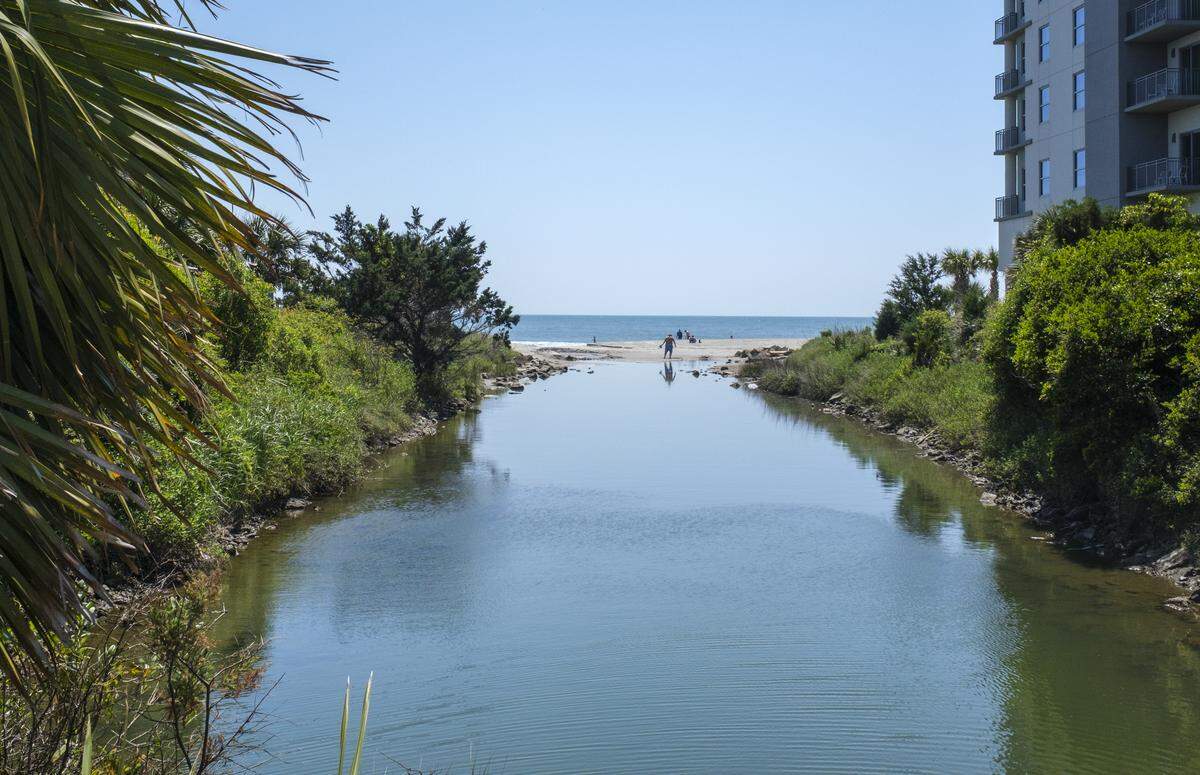
A two-year study found high levels of PFAS, or forever chemicals, are flowing from the Myrtle Beach International Airport to Midway Swash, an onshore drainage creek just north of Springmaid Pier.
The airport is the site of the former Myrtle Beach Air Force Base, which now spans Market Common. The sample found “alarmingly” high levels of PFAS in water, soil and ocean foam, and was the site of the highest levels of PFAS in the entire Winyah Bay watershed study area.
“You see people or kids playing in there all the time in Midway Swash,” Dr. Till Hanebuth of Coastal Carolina University, who led the study, previously told The Sun News. “You don’t want to have anyone touching this water.”
.jpg "AHAbeachride14 (1).jpg")
PFAS, per- and polyfluoroalkyl substances, are a group of manufactured chemicals that take a very long time to dissolve, making them harmful to human and animal exposure.
The U.S. Air Force used firefighting foam in the 1970s, which is now known to contain PFAS. The Myrtle Beach Air Force Base was designated a Superfund Site by the Environmental Protection Agency after it closed in 1993. The transformed site was awarded a Federal Facility Excellence in Site Reuse Award in 2019. A 2020 Department of the Air Force study showed high levels of PFAS in surface water, groundwater and soil, Hanebuth said.
“It’s not new information that around the former Air Force Base and the modern airport that the contamination is really high,” Hanebuth said. “What is new is that we can really show how they just drain it to the ocean.”
Hanebuth said the university had contacted about 25 people within city leadership, including the Mayor of Myrtle Beach, regarding the elevated levels.
Mayor Mark Kruea said as of Thursday morning he could not find that he had been contacted.
“It’s a growing concern nationally, something that we need to pay attention to,” Kruea said. “Have not seen this particular study have not been privy to that at this point, but we’ll certainly take a look at it.”
City of Myrtle Beach spokesperson Meredith Denari said the City has known about PFAS being present near the Air Force Base for decades. She said South Carolina Department of Environmental Services monitors wells in and around the former base.
“The most important thing for our residents to know is that it is a safe place to live,” Denari said. “If there were an issue, (SC)DES would be all over it.”
But Hanebuth said the levels found in the swash are almost 100 times higher than the maximum level allowed by the EPA in drinking water. There are no regulations, or suggestions, of limits for surface and groundwater, he said.
Coastal’s project funded by SC Sea Grant Consortium and South Carolina Office of Resilience aimed to generate a data set of a section of the state that had very little focus before, but also to understand how PFAS is traveling throughout the Winyah Bay watershed, Hanebuth previously told The Sun News. In partnership with Winyah Rivers Alliance Riverkeepers, the project discovered multiple areas with high levels of PFAS.
What other areas detected high levels of PFAS?
According to a press release, the Little Pee Dee River also contained elevated levels of PFAS, linked to a pollution plume originating from the Chemours PFAS production facility in Fayetteville, North Carolina.
Downstream areas of the Waccamaw River are mainly impacted by discharge from wastewater treatment facilities in Conway, Jackson Bluff and Bucksport. Upper portions of the river show relatively low concentrations.
The Atlantic Intracoastal Waterway PFAS contained comparatively low levels due to tides mixing with the ocean, effectively diluting the water.
Debra Buffkin, executive director of the Winyah Rivers Alliance, said the team is working to secure funding to continue testing and monitoring the rivers and other waters. It’s an important community resource that she wants people to feel safe using and drinking.
“Our communities use these rivers for swimming, for kayaking, for boating, and we want people on the water. We want them to enjoy it,” B
The state environmental department tests more than 120 beach locations for high bacteria levels across South Carolina, including swashes, weekly from May 1 to Oct. 1 each year. The testing does not include PFAS contamination.
Findings of the PFAS study were formally shared with each funding partner and with the South Carolina Department of Environmental Services to support response efforts, according to a press release. A SCDES spokesperson said the data has not been shared with the agency.
A full report of the study area will be released later this summer, the release said.
This story was originally published May 14, 2026 at 7:44 AM.