
Costs, water quality & medical waste: answers about the Myrtle Beach sewer break
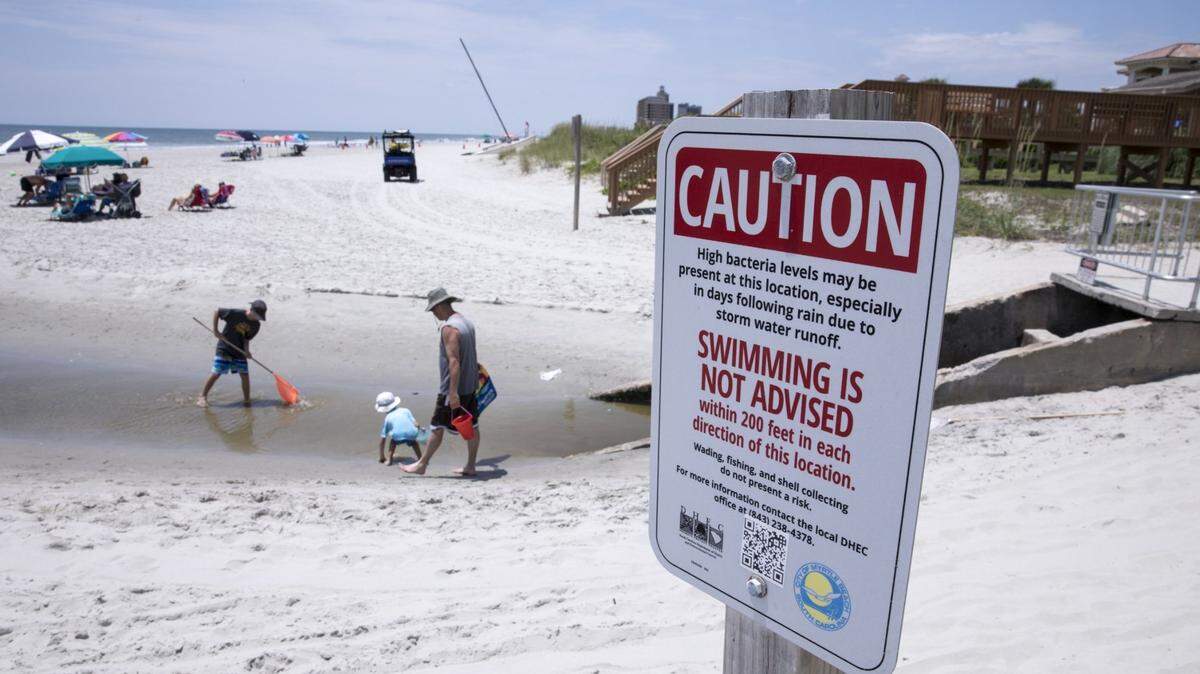
After an eight-inch sewer force main break flooded the area around Briarwood Drive and 76th Avenue North Friday, the city of Myrtle Beach says no medical waste spilled out onto streets and taxpayers won’t cover the clean-up operation.
The break originated from stump removal at a construction site at the corner of 17 Bypass and 76th Avenue North. According to city spokesperson Meredith Denari, all clean-up and repair costs will be recouped from the contractor.
Denair said she didn’t know how much the clean-up and repair operations would cost.
The resultant sewage flowed along portions of 76th Avenue North, Seville Drive and the Seville stormwater pond. Before crews could repair the break and stop the flow, spillage went into the stormwater system.
Despite concerns that hospital waste spilled out in the sewer break, the city insists the affected sewer line doesn’t serve Grand Strand Regional Medical Center.
“The hospital is connected to a separate sewer line and pump station that were not impacted. Hospital management also confirmed that only domestic wastewater, nothing hazardous, is discharged into the municipal system,” Denari said in an email.
Was the sewer break cleaned and repaired?
Public Works crews responding to the break shut down the nearby pump station to stop the flow, closed three valves to isolate the line, blocked further flow into storm drains and deployed industrial vacuum trucks to recover the wastewater.
Following South Carolina Department of Environmental Services, SCDES, protocols, the city treated affected areas with chlorine and powdered lime. Denari said the clean-up measures were completed before roughly 7 inches of rain hit Myrtle Beach. That rain cleared the Seville storm pond, according to the city.
Did the sewage impact local water?
Although the break won’t impact drinking water, the stormwater drainage affected by the spillage impacts the Canepatch Swash on the beach by 64th Avenue North.
But even before the sewer main break, experts recommended avoiding swimming within 200 feet of the swash. The Canepatch Swash is one of nearly 20 outfalls in the Grand Strand where SCDES has issued a long-term swimming advisory due to the levels of enterococci — an intestinal bacterium found in humans and other animals.
According to the city, SCDES conducted an on-site review of SCDES staff conducted an on-site review Monday, verifying that the city handled the break satisfactorily. The Sun News has requested a copy of the SCDES report.
The Sun News also reached out to Coastal Carolina University for their water quality findings from tests performed at the storm system outfall Monday. The city says the testing found results consistent with typical historical readings.
“It was repaired, and there are no future impacts from this,” Denari said. “I think it’s also important to note that these things, while uncommon, they do happen, and they occur in all communities. It’s happened in the city before, and it unfortunately will happen again.”