
Want to avoid a shark attack while swimming in SC? A biologist says you should do this
As millions head to the South Carolina beaches, they’ll likely share the water with sharks.
“There are, within that surf zone, sharks actively swimming in and out of people all day long,” said South Carolina Department of Natural Resources lead shark biologist Bryan Frazier.
Here’s what you need to know about sharks –– and shark attacks –– in South Carolina waters.
How common are shark attacks?
Although sharks are common in South Carolina waters, bites are rare.
“Sharks in the water are not something [people] should be scared of,” Frazier said. “If sharks wanted to target us, people would be getting bitten every day.”
The Palmetto State averages roughly four shark bites a year, according to Frazier, and there hasn’t been a fatal attack since the 1840s.

Why do sharks bite?
While sharks seeking out humans for a meal is familiar enough on screen, Frazier says most shark bites are actually a case of mistaken identity.
Humans aren’t a primary prey species for sharks, but a shark pursuing smaller prey in an area with people might accidentally bite someone.
“If they’re chasing schools of bait, they’ll come up pretty shallow,” said Frazier. “However, that’s infrequent, and it’s usually because they’re chasing a school of bait fish up into those shallow waters, and that’s generally what they’re doing in that surf zone is they’re actively feeding.”
How can you avoid a shark attack?
Although shark bites are rare, there are steps that can help prevent an attack. As with most potential risks, it’s a good idea to stay situationally aware.
“The biggest thing is being aware of your surroundings,” Frazier said. “If you see large schools of bait, pelicans diving right in that surf zone, those are indications that there’s a lot of bait around. And when there’s a lot of bait around, there’s going to be a lot of predators around.”
To avoid an accidental swipe from a shark’s teeth, steer clear of their usual meals.
Wardrobe can also be a factor. Wearing shiny metallic materials in the water can increase the risk of a shark encounter because the flash might resemble reflective fish scales.
Does blood really attract sharks?
Sharks have a powerful sense of smell and can detect bodily fluids in water, according to the Florida Museum. But blood in the water doesn’t necessarily invite an attack.
“Sharks don’t really see us as a prey source, so even though they might detect that blood, it’s not going to trigger their senses like if it was one of their primary prey species that’s struggling and bleeding,” Frazier said.
However, if you have an open wound, it’s probably best to stay out of the ocean for other reasons.
“If you have a wound that’s actively bleeding, you don’t want to be swimming anyway,” said Frazier. “Ultimately, bacteria and things that are in the water are going to present more of a danger than sharks.”
Which sharks live along the South Carolina coast?
A variety of shark species are found throughout South Carolina waters, but some pose bigger risks than others.
Atlantic sharpnose, blacknose, bonnethead, and finetooth sharks are all common in the Palmetto State, but don’t pose a threat to humans. Bigger predators, however, can be trouble.
“We have what are considered all of the largest sharks that can pose a threat to people,” said Frazier. “We have large bull sharks. We have large Tiger sharks, great hammerheads. Those are all present in South Carolina and in abundance.”
Bites from these larger species can be more severe and even life-threatening. Fortunately, most South Carolina bites come from blacktip sharks, which tend to be minor.
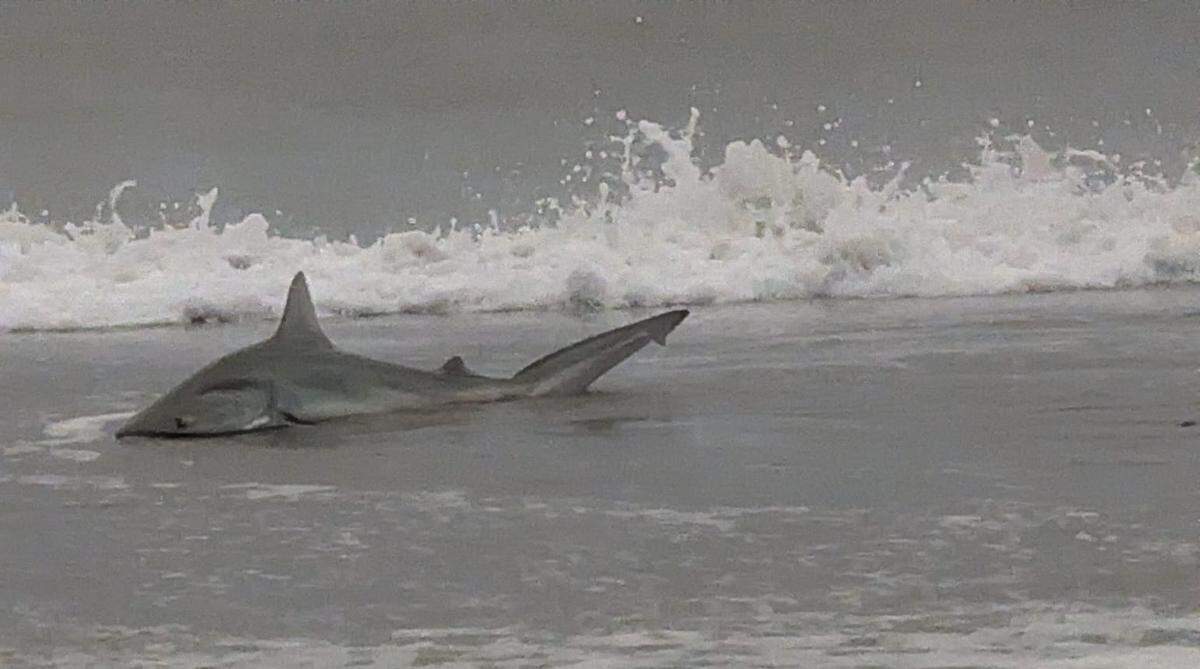
Blacktips are the most likely culprit because of their prevalence and propensity to feed in surf zones, sometimes spotted chasing schools of bait in just a foot of water.
No matter the species, it’s important to remember that sharks don’t seek out human prey and that, even in the rare instances where attacks occur, the animals are simply living in their natural habitat.
“The ocean is their home, and we’re kind of guests in it, but just knowing that they’re sharks present shouldn’t be a deterrent to enjoy the water,” Frazier said.
This story was originally published May 14, 2025 at 7:07 PM.