
Wife blames inattentive lifeguard in husband’s 2020 Myrtle Beach drowning
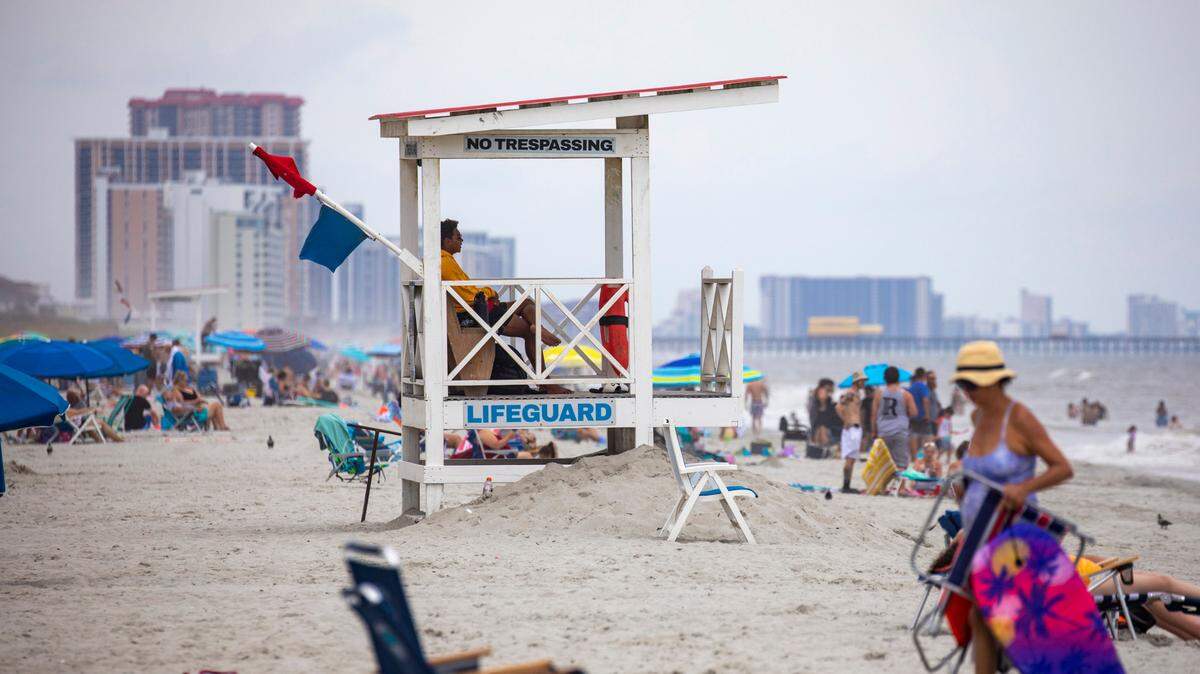
The widow of a Florida man who drowned on vacation in Myrtle Beach is suing a lifeguard company, alleging that it failed to properly advertise dangerous swimming conditions that contributed to his death.
The June 16 complaint from Phalda Morris also blames John’s Beach Service and one its lifeguards at the time for using a “dual role” system that had would-be rescuers splitting their time between watching the water and handling rentals.
It asks for a jury trial citing negligence leading to the wrongful death of 52-year-old Franklin Morris.
“The dual role life guarding is a key component to this case, no doubt,” said attorney Christoper Pracht.
John’s Beach Service could not immediately be reached for comment June 20. No attorney is yet listed for them, according to court records.
Pracht was part of the legal team that last summer secured a $20.7 million judgment against Lack’s Beach Service, which a jury found liable for the 2018 drowning death of Zerihun Wolde as a result of its use of the dual role life guarding practice.
According to the lawsuit filed last week in the 15th Judicial Circuit, Morris and his family went for a swim on June 19, 2020 in the area around 16th Ave. N, a life guarded beach under the jurisdiction of John’s Beach Service through a franchise agreement with Myrtle Beach.
“Upon information and belief, the National Weather Service issued an alert on or before June 19, 2020, stating that there were high rip currents present in the Myrtle Beach area. John’s and the City of Myrtle Beach knew or should have known of the rip currents and specifically the alert from the national weather service. Rip currents are a highly dangerous condition,” the lawsuit states. “Franklin Morris and his family were never informed about the alert from the National Weather Service by John’s or the City.”
Morris and his son entered the ocean under a sunny sky that masked any threat of a deadly current.
Winds were blowing north at 4 mph and it was about 82 degrees at midday, according to archived weather reports.
The complaint says Morris’ son was able to escape the currents, but “only after being personally alerted ... did any employee or agent of Defendant enter the water in an attempt to rescue Franklin Morris.”
Dual role life guarding has been widely debunked and proven to be a lethal system
The U.S. Lifesaving Association, America’s largest water safety group, estimates a person swimming on a beach patrolled by organization-certified guards have a 1 in 18 million chance of drowning.
Industry leaders have told The Sun News that Horry County and Myrtle Beach, which attract more than 20 million visitors annually, were the only places where the “dual role” model was in place - although not for much longer.
Earlier this year, city and county leaders amended franchise agreements that separate guard duties from rental sales. In Myrtle Beach, the changes took affect immediately. The city has contracts with John’s and Lack’s that expire in 2024 and 2025 respectively.
At the county level, contractual changes include:
- Lifeguard services must remain separate from rental operations and identified by different-colored clothing
- Rental operations staff may assist lifeguards in emergency situations as long as they are properly trained Lifeguards will be fully staffed from 9 a.m. to 6 p.m. daily instead of two rover teams covering the beach from 5 p.m. through 7 p.m
- Lifeguards will make it obvious when they are leaving the beach for the day at 6 p.m.
- Franchise fees will remain the same as the current agreement
- Annual review of the franchise agreement fees
- Umbrella spacing to include areas of 50 feet along with current 10 feet between groupings of 10 umbrellas. Thirty of the 50 feet will be for the public placement of umbrellas
Neither lifeguard provider is USLA certified
Nick Jackson, general manager of John’s Beach Service, told Myrtle Beach officials in January that his company plans to seek USLA certification.
Former USLA president Chris Brewster, who testified on behalf of Wolde’s estate, said the city and county have made their beaches safer with the new deals in place.
“The primary goal of the USLA is drowning prevention and the national standards set for lifeguard operations are laser focused on that goal. We believe that lifeguard agencies that follow those standards will very, very rarely encounter drownings at their beaches,” he said. “I would expect that this change in both Horry County and Myrtle Beach will result in a significant improvement in beach safety.”
Pracht said the June 16 suit was filed to beat a statute of limitations, and he expects more information to emerge as the case moves through court.
“One of the unique things about Myrtle Beach as opposed to other beach communities is not only the dual role life guarding, but it also has a tendency to have really bad rip currents,” he said. “I really want these lifeguard companies to think about what they can do to improve warnings and inform the public.”