
‘Needs to stop’: Myrtle Beach lifeguard practices are not standard, experts say
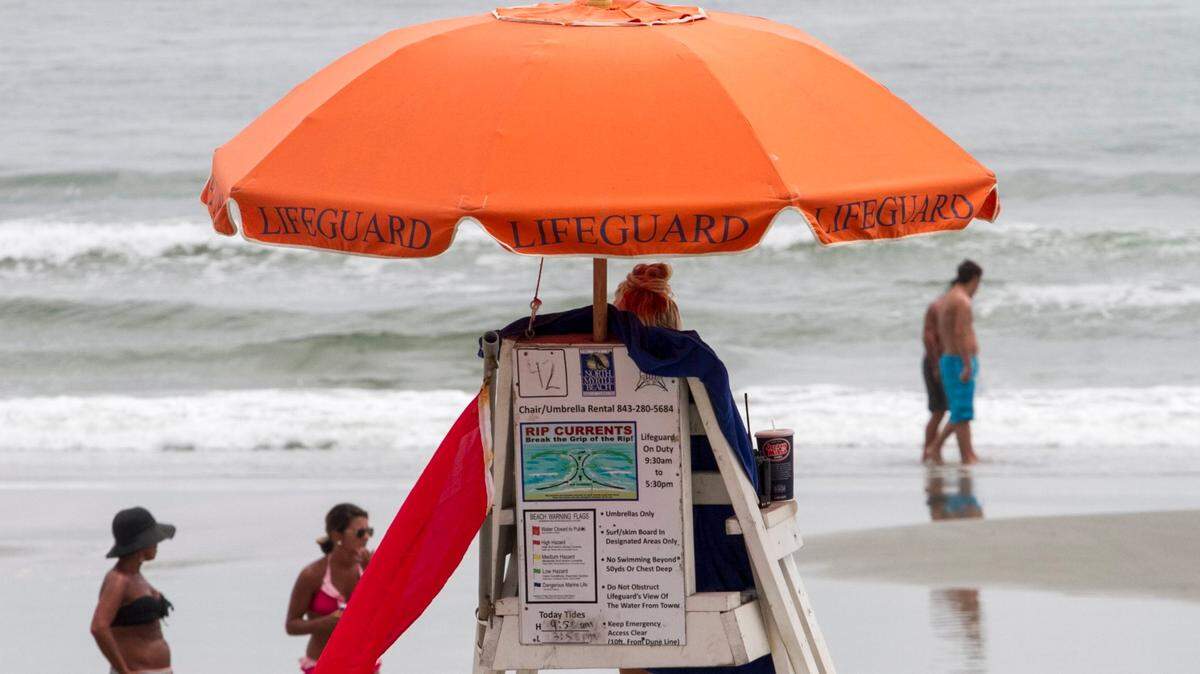
Myrtle Beach, a city of 33,000 in the heart of South Carolina’s Grand Strand, is unique in America for running a system that allows for-profit companies to make money from equipment rentals in exchange for providing lifeguards.
Within the aquatic safety community, it’s a model known as “dual role” lifeguarding that is so unorthodox the nation’s leading lifesaving group refuses to accredit businesses and communities that use it.
“The only place I’ve ever heard that term is Myrtle Beach. It doesn’t exist anywhere else,” said Chris Brewster, chairman of the U.S. Lifesaving Association’s national certification committee and former chief lifeguard for the City of San Diego.
Myrtle Beach has deals in place through 2024 and 2025 respectively with John’s Beach Service and Lack’s Beach Service, granting them exclusive access to profit from equipment rentals.
’Bad practice that needs to stop’
Lack’s Beach Service was found liable July 29 for the 2018 drowning death of Zerihun Wolde, who was pulled under by a rip current on a stretch that was supposed to be monitored by a lifeguard.
A jury awarded his family $20.7 million in damage following a 2019 wrongful death suit brought by Wolde’s fiancee, Mesawaet Abel.
Four months before his death, city officials extended their agreement with Lack’s but added several more safety precautions, including additional supervision requirements and more lifeguards.
“I was not surprised by the verdict, but it seemed to me very clear that the jury was trying to send a message that this was a very bad practice and that it needs to stop,” said Brewster, who testified in Abel’s case as a paid witness.
In South Carolina, Charleston County Park and Recreation, Hilton Head-based Shore Beach Service, the Myrtle Beach Fire Department and North Mrytle Beach are all USLA certified.For more than decade, Lack’s was able to claim affiliation with the association, but neither it or John’s Beach Service are USLA certified, according to a directory search of its members.
Lack’s sought USLA certification in 1990s
Brewster remembers when Lack’s Beach Service first approached the USLA for its backing.
It was 1995, and America’s premier aquatic safety group got a never-before-seen request by a Myrtle Beach company that wanted its stamp of approval.
But what made this application complicated for the organization’s certification committee is Lack’s Beach Service ran a for-profit model that required its first responders to also rent out chairs and umbrellas.
When I saw that, it immediately raised a red flag for me because I was really concerned about this issue of combining public safety and commerce,” Brewster, who at the time ran the committee and was the chief lifeguard for the City of San Diego, told The Sun News Aug. 2. “This was something very unusual to most of us, and so there was a very spirited debate.”
In January 1996, Lack’s Beach Service won the coveted endorsement, but Brewster clarified in a letter about the only way they could hold on to accreditation.
“You have agreed to modify your operation in such a way as to ensure that lifeguards assigned to supervise the aquatic area shall not be subject to duties that would distract or intrude their attention to proper observation of persons in the waterfront area, or that prevent immediate assistance to persons in distress in the water,” Brewster wrote in a Jan. 27, 1996 letter. “This change is a critical aspect of your certification.”
In 2008, the organization began investigating claims that Lack’s Beach Service wasn’t honoring its part of the deal and yanked its backing.
By coincidence, the city that year was also hosting the National Lifeguard Championships, so Brewster was in town.
“When I visited there, I just took a walk on the beach and took a look at what going on and it became abundantly clear that Lack’s was not meeting the standard,” he said.
Attention on water at all times
Wolde was a skilled avid swimmer, but on the afternoon of Aug. 23, 2018, found himself essentially running on what Brewster called an “aquatic treadmill.”
“In this case, you’re swimming and making no progress. Rip currents vary tremendously with respect to how strong they are, how wide they are, the direction they pull,” he said. “Most people are not able to swim faster than the current so ultimately tire out and submerge, just because they’re completely fatigued.”
That’s why lifeguards can’t have their attention pulled away from the water.
“Someone in distress in the water can’t call 911, and so the only way that an emergency responder is going to be alerted is through visual recognition,” Brewster said.
This story was originally published August 8, 2022 at 5:00 AM.