DHEC changes way they share beach closure news to Strand swimmers. What you need to know
Beachgoers spending time along the Grand Strand will be responsible for monitoring water quality levels before hitting the surf as the S.C. Department of Health and Environmental Control suspends news releases in lieu of a new informational website.
DHEC introduced a new beach website, CheckMyBeach.com, that will detail water quality levels and broadcast short- and long-term swimming advisories along beach’s in Myrtle Beach, North Myrtle Beach, Surfside Beach and Horry County. The goal of the site is to provide accurate, up-to-date information directly to beachgoers, officials said.
However, press releases to local media announcing swimming advisories will be suspended when the beach monitoring season begins May 1 through October 1. Myrtle Beach Spokesperson Mark Kruea said the new system is a much more timely and accurate method of reaching beachgoers. who need the information at that moment.
“The news releases often took on a life of their own, lasting days and weeks beyond the time period covered in the release,” Kurea said. “Cancellations of advisories rarely received equal reporting.”
Short-term swimming advisories are issued when the ocean water exceeds a value of 104 colony forming units of enterococcus bacteria, resulting in a potential risk for other organism that may cause disease in humans, such as gastrointestinal illness or skin infections. Advisories are lifted once the water levels return to normal.
.jpg "Swimming_Advisory_Infographic (1).jpg")
DHEC collects water samples weekly during the beach monitoring season, though there are currently 13 beach monitoring locations, including Withers Swash, currently under a long-term swimming advisory.
“One of the things that we really want to try to work on though is trying to improve these swimming advisory notifications to people, especially to those people that are already at the beach because they are the ones that are most at risk,” said program coordinator Lindsey Walkemeyer. “That’s even in regard to whenever these swimming advisories are lifted; we want to make sure people know it’s safe to swim in those areas.”
Enterococcus is a bacteria that lives in the intestinal tracts of warm-blooded animals and people, and can cause streams and rivers to become contaminated by fecal waste, according to the U.S. Environmental Protection Agency.
Sources of fecal indicator bacteria, such as enterococci, include wastewater treatment plant effluent, leaking septic systems, stormwater runoff, sewage discharged or dumped from recreation boats, domestic animal and wildlife waste, improper land application of manure or sewage, and runoff from manure storage areas, pastures, rangelands, and feedlots, according to the EPA.
Enterococci poses a threat with the possible presence of disease-causing bacteria, viruses and protozoa.
“It’s really important that we get these advisory notifications out to people as soon as possible because when a sample is submitted because there’s a lag time in getting those results because it does take 24 hours to process a sample,” Walkemeyer said. “We really envision CheckMyBeach to be an education tool for people.”
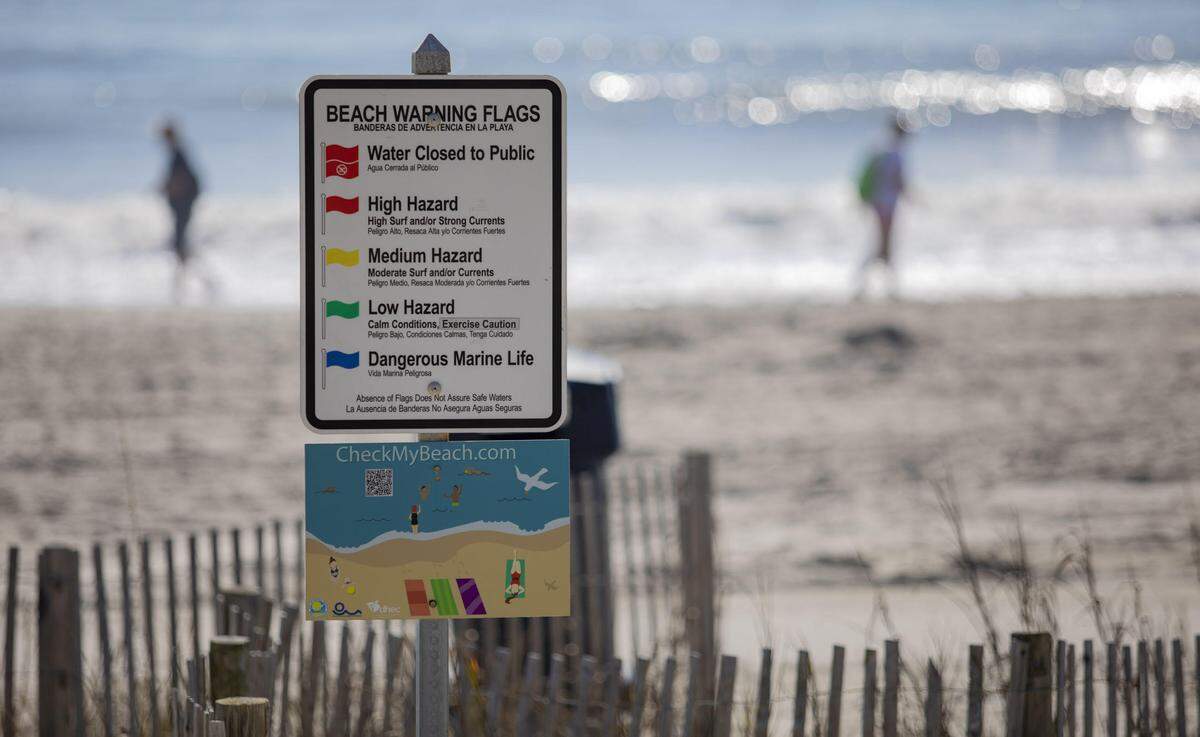
The website will also provide essential information about the beach, including beach safety, rip currents, beach warning flags and links to local municipal government pages. DHEC has partnered with local municipalities and area chambers of commerce to encourage visitors and residents to utilize the website through brochures and signage.
In Myrtle Beach, signs about the website will be posted along the beach and at Myrtle Beach State Park, with fliers and brochures also available at oceanfront hotels, Walkemeyer said. North Myrtle Beach, Surfside Beach, and Horry County will promote the site through various sources while posting signs at various beach access points.
Walkemeyer said DHEC plans to expand the program statewide next summer.