Is Duke Energy to blame for Horry County’s latest flooding problem?
Horry County Council is looking for answers about why rain from North Carolina isn’t better contained.
Council Member Tyler Servant called into question the dammed lake near the Duke Energy Blewett Falls Hydro Station. He thinks a massive discharge of water near the station increased the severity of flooding locally in the past week.
“Either we can work with the entities in North Carolina or we can hold them accountable possibly through the court system,” Servant said.
Servant asked Horry County staff to investigate if the Blewett Lake’s discharge increased the severity of flooding.
Typically when Horry County experiences flooding from the rivers, it is due to rain events in North Carolina. Slow moving waters means the flood reaches Horry County a week or so after the storm passes.
Servant presented a hydrology report from the United States Geological Survey showing more than 150,000 cubic feet of water discharged per second on Feb. 7 near the Blewett Falls Lake along the Pee Dee River.
The discharge rate was above 100,000 cubic feet per second for two days after the rain. Cubic feet is how discharged is measured and the volume of water released.
Generally, less than 10,000 cubic feet are discharged every day from the same location.
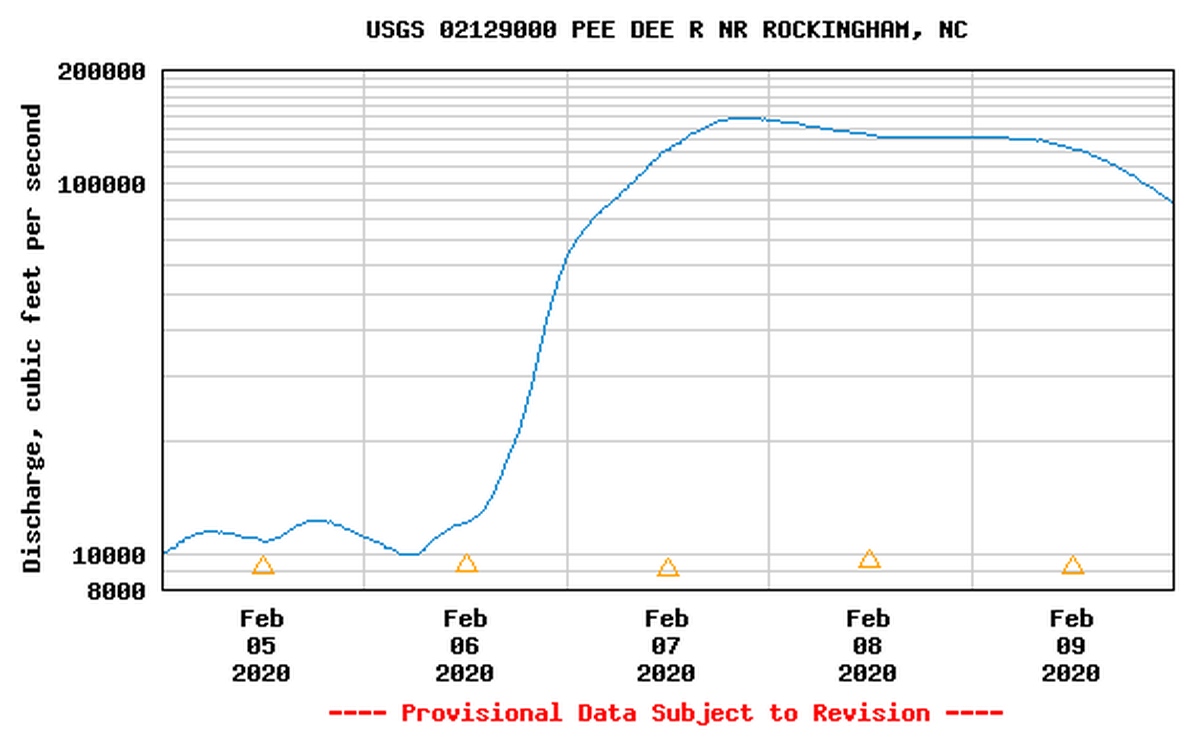
Servant doesn’t think it’s a coincidence that this high level of discharge occurred a couple weeks before flooding in Horry County.
“It doesn’t seem fair that they have a dam in North Carolina that is overflowing, and the residents of Rosewood have to pay for it,” Servant said, referencing the Socastee neighborhood.
The lake is a part of a hydro station operated by Duke Energy.
Company Spokesperson Heather Danenhower said how the lake discharges water is federally regulated and being responsible upstream neighbors is something the company takes seriously.
“Duke Energy closely monitors conditions and weighs these factors when making operational decisions but can’t control high water flows,” Danenhower said.
Typically ahead of a storm, Duke Energy works closely with meteorologists and experts to determine how much water it needs to push out through spill gates to ensure the pond doesn’t overflow, Danenhower said. The Blewett Dam, built in 1912, does not have spillgates.
During the period of Feb. 5-7, about 5 inches of rain fell in the area near the Blewett Dam, according to Danenhower.
The lake at Blewett Falls should contain at a maximum 100 feet of water, according to data from Duke Energy. On Feb. 8, water levels exceeded 105 feet on average during the day, the highest it’s been in the last 19 months.
Danenhower said there are a lot of contributing factors to flooding and that downstream conditions in both the Little Pee Dee and Great Pee Dee rivers better explain why the floodwaters were so bad when all the rivers meet in Georgetown.
“There was significant rainfall and stream inflows below Blewett Falls Lake. The Little Pee Dee and the Great Pee Dee rivers merge — meaning not all of the river flows into Horry County would come from water Duke Energy passed through Blewett Falls Lake into the Great Pee Dee,” Danenhower said.
When the Blewett lake exceeds its capacity, Duke Energy notifies the National Weather Service and local emergency operators, Danenhower said.
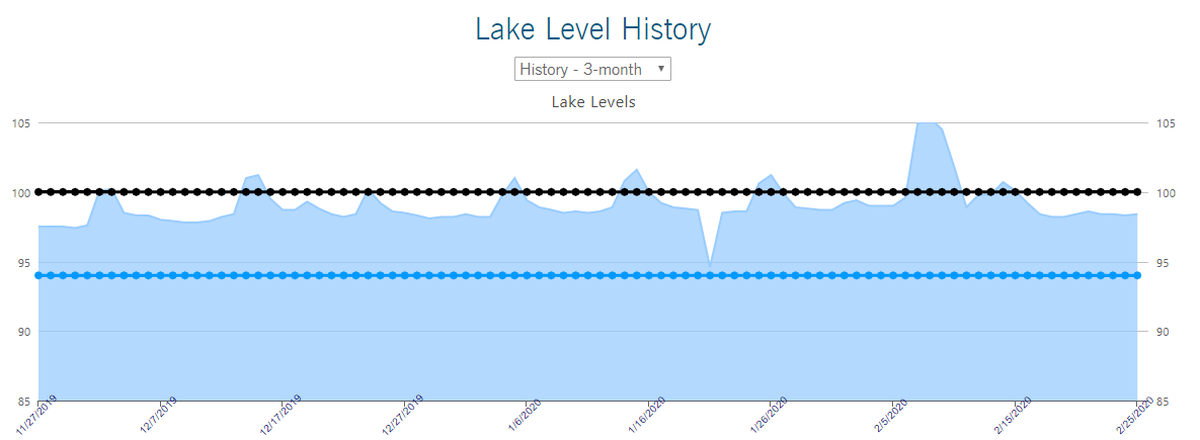
Servant wants Horry County staff to report to council at the March 24 meeting about Blewett Lake and if it had a significant impact on local flooding. He hopes the information can help better understand the causes of flooding that extended well beyond Horry County’s borders.
Council Member Harold Worley said he thought Servant was onto something by pointing out the discharge spike ahead of Horry County’s flooding. Worley added, however, he’s been working with North Carolina leaders to begin a region-wide study of where stormwater discharge can be improved.
“We’re faced with flooding, but they’re facing it in Brunswick County,” Worley. “They want to be involved.”
This story was originally published February 25, 2020 at 6:09 PM.