Myrtle Beach Downtown Redevelopment Corporation talks disbanding. Here’s what that means.
Change is on the horizon for the Myrtle Beach Downtown Redevelopment Corporation after its chairman requested city leaders disband the organization.
With city officials focused on executing the Downtown Master Plan, DRC board Chairman Chuck Martino suggested Myrtle Beach discontinue all contractual arrangements with the organization by the end of October. At its June meeting, the DRC decided it should refrain from aiding in the implementation of the master plan, Martino said.
The Downtown Master Plan, which was approved in March, aims to bring change to four districts: Oceanfront, Kings Highway, Historic Main Street and an Arts District. City officials approved the second reading of an ordinance on Tuesday to establish an Arts and Innovation District.
The new district includes approximately 56 acres with 155 parcels along Main Street, Broadway Street, Oak Street and 9th Avenue North. Properties within the proposed district are currently zoned downtown commercial and mixed-use medium density.
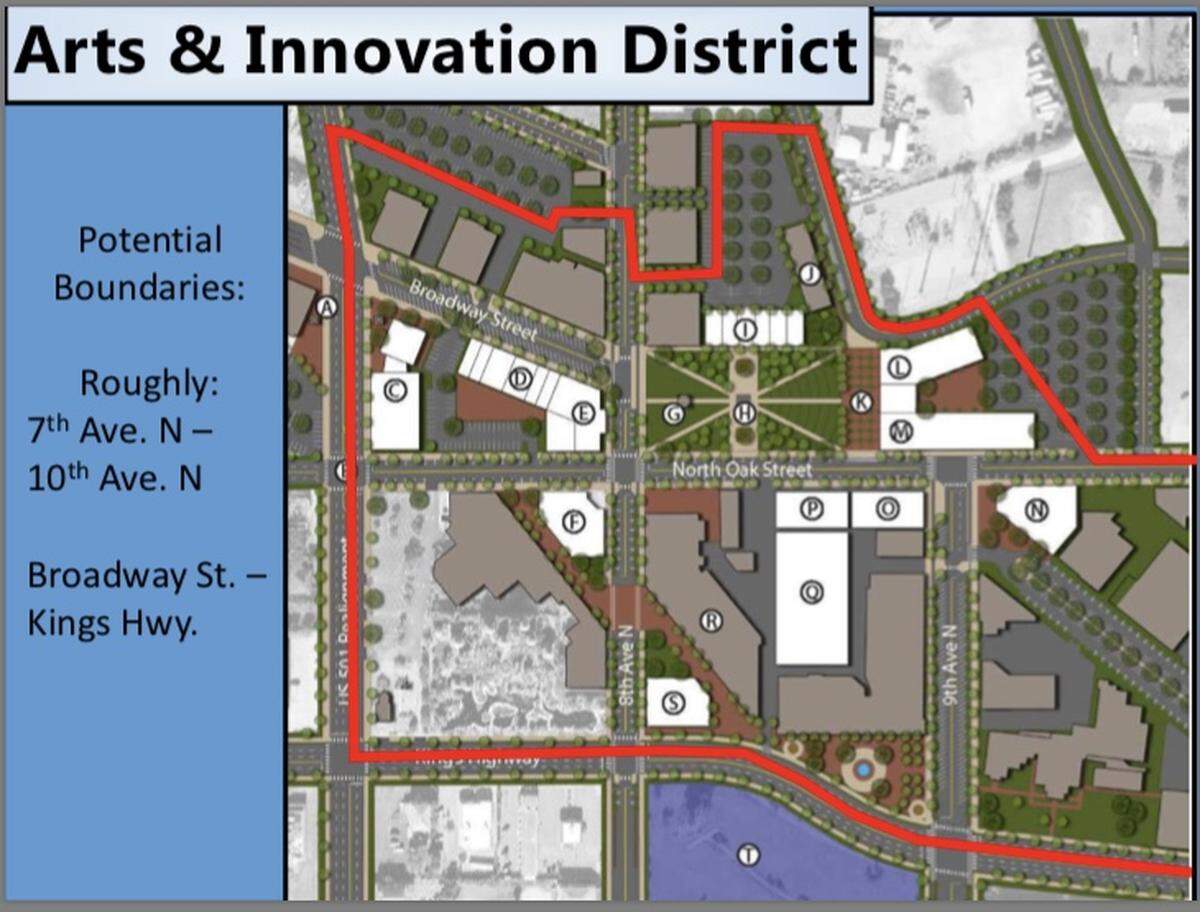
“The master plan is very well managed by staff and council, and it really is a council and staff-driven process,” Martino said during Tuesday’s City Council meeting. “The amount of funding that will be necessary to make that happen is going to involve you all looking at how you balance revenues through that process.”
The corporation, which has been in existence for more than 20 years, has been involved in purchasing Superblock properties in downtown Myrtle Beach for future redevelopment and previously helped redevelop the Boardwalk and Plyler Park.
In the event of a dissolution, the DRC’s bylaws direct all of its money to go to the city, City Manager John Pedersen previously told The Sun News.
Martino noted the biggest contract the corporation has with the city is through parking fees. The corporation, which owns a parking lot downtown, generates about $2 million annually, minus the approximately $850,000 they pay to the company that manages paid city parking spots.
Martino suggested city officials place the parking revenue into an enterprise account that could fund enhancement services and a new parking deck in the downtown. Along with absorbing revenue, Myrtle Beach will also convert DRC staff members into city employees, officials said.
Officials questioned if another entity would provide a presence in the downtown. Martino recommended the city form a new group comprised of business and property owners who can focus on downtown’s continued success and sustainability.
“Build an organization from scratch and not try to morph anything that already exists,” Martino said. “I think it would be better for that group not to carry the past burdens of any other entity.”
Lauren Clever, executive director of the DRC, suggested city leaders use Columbia’s City Center Partnership as a model it could emulate moving forward. She cited the Columbia group as a good representation of its 36-block area, with it seeing “over $500 million” in private investment, economic growth and a substantial increase in residents from 200 to over 1,600 since its formation in 2001.
Clever said the group is funded through hospitality taxes, city and county contributions, donations, grants and sponsorship.
“Nobody is looking for a decision today,” Clever said. “This is worthy of conversation and to determine what it is that the structure should really look like and the services that need to be provided in these particular areas.”
With city officials assuming governance of the master plan, Pedersen asserted there’s no rush to form a new corporation. Pedersen suggested council take up to a year to decide a direction that would benefit the city.
“This is a direction in which we want to move,” Councilman Phil Render said. “I think we’re clear on that.”