As COVID-19 ravaged Horry County, leaders faced a choice: Public health, or the local economy
This time last year, the very first COVID-19 cases were being confirmed in Horry County. First one, then another, then a small handful each day.
In that way, the Grand Strand was lucky: while the coronavirus pandemic ravaged other cities and states early on, Horry County made it to June 1 with fewer than 30 deaths and 500 total cases, merely a blip for a county of more than 300,000 people.
Just days later, though, South Carolina’s health agency deemed Horry County a COVID-19 “hot spot.” Soon after, local leaders found themselves forced to govern a tourism-driven economy in the midst of a bonafide virus outbreak.
Along with other governors, S.C. Gov. Henry McMaster took action early and closed restaurants and moved schools to virtual learning. COVID-19 was a serious threat, that move said, and South Carolinians needed to stay safe. Horry County locked down, too.
But then it was tourist season. McMaster allowed restaurants to partially re-open. People were allowed to gather indoors and out. Horry County followed suit, easing restrictions. Case numbers skyrocketed. The deaths soon followed. As visitors flooded Ocean Boulevard and Ocean Drive hotels, motels, restaurants and shops, the virus spread like it hadn’t before. Soon, hundreds of people in Horry County were testing positive, with a dozen or more dying, each week.
The pandemic then pushed local government leaders to take their strictest action yet: By the July 4th weekend, most of the elected councils in Horry County had voted to invoke a state of emergency with many requiring that residents and visitors wear face coverings in shops, grocery stores and the like.
The timing of those restrictions, and the area’s response to the pandemic as a whole, revealed the central conflict for local leaders: Preserve public health, or preserve the local economy? Horry County is an economy heavily reliant on tourism, which means seasonal businesses making a healthy profit during the warm months from thousands upon thousands of out-of-towners. And it’s those businesses, and those visitors, that pay for a large share of the infrastructure and services the year-round residents enjoy. A fee charged on restaurant meals and event tickets helps pay for roads. Other tourism-related taxes help pay for local police. Business license fees pay for firefighters, public works and help ensure the garbage is picked up and taken to the dump.
But the easing of restrictions just when people most want to gather together most contributed to the rapid spread of the virus here. It was a conundrum: Enact harsh restrictions that could stem the flow of tourists and potentially harm businesses, thereby devastating the local economy and governments alike, or keep the county open, risking the lives of the public.
“It’s a damned-if-you-do, damned-if-you-don’t situation, there’s not a right or wrong answer,” said Duane Parrish, South Carolina’s parks, recreation and tourism director. “You hear the term walk the fence, you’re trying to please both sides. There’s probably not a better example of that than the pandemic. You’re trying to protect public health and you’re trying to protect your community.”
A controversial approach
On the whole, Horry County’s leaders attempted to aim down the middle, instituting some public health protections but largely seeking to keep businesses open and the local economy humming. That approach appears to have softened the economic blow to the county, and has meant that budget holes caused by a downturn in revenues for Horry County, Myrtle Beach and others have been smaller. Horry County, for example, is preparing to issue $3.5 million in new bonds due to surpluses in parts of the budget.
“If you cut out people being about to go out to eat, if you cut out people being able to stay in the motel, you’re killing local business,” said County Council member Johnny Vaught, who was critical of the county’s face covering mandate, one of the few restrictions the council enacted.
Council member Bill Howard, who represents part of Myrtle Beach, concurred.
“You can’t protect everyone from everything unless you shut down the economy and we weren’t about to do that,” he said.
But that down-the-middle approach carried with it the risk that the virus would spread across the county, infecting and killing residents.
“Quite honestly, my takeaway, my point of view, the county was not forceful enough in doing what they had to do and they didn’t go far enough in doing what they had to do,” County Council member Gary Loftus, who represents part of Myrtle Beach, said.
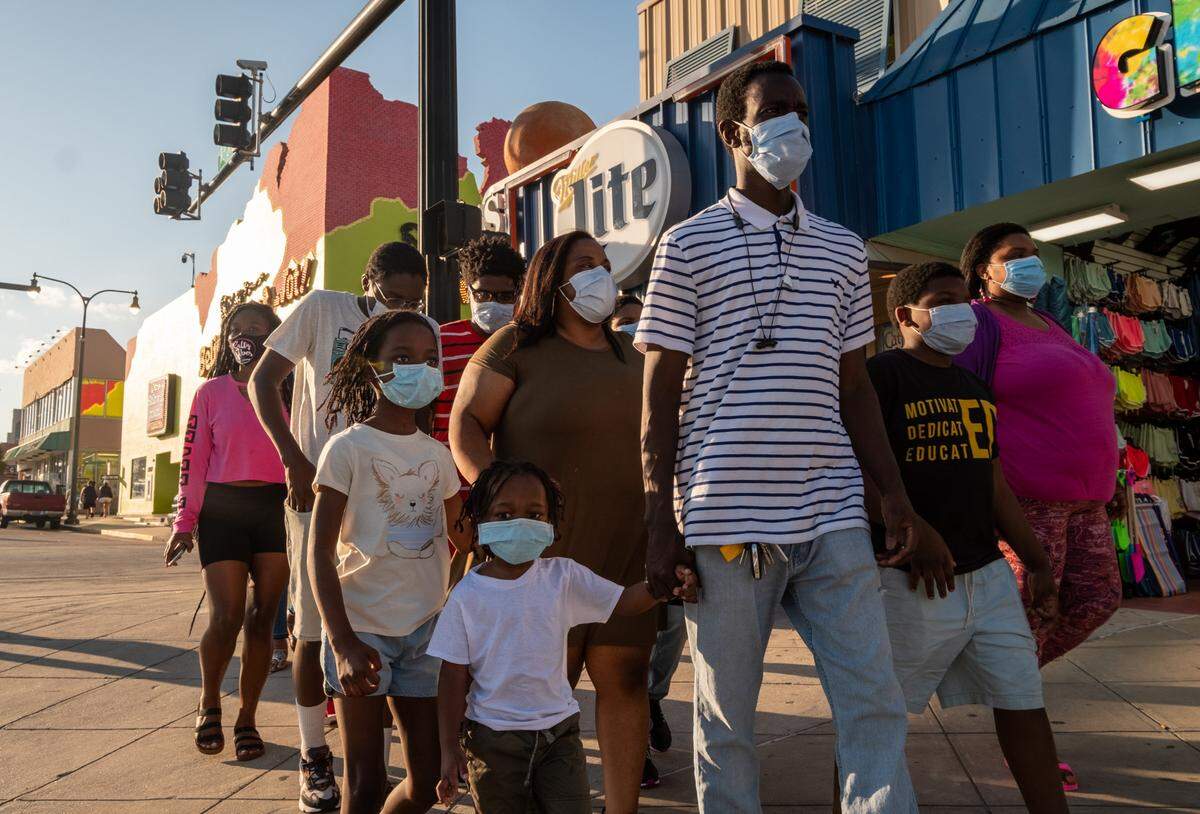
The strongest measure local leaders implemented was requiring face coverings when residents and visitors entered businesses and public buildings. Stricter measures like limiting outdoor gatherings and having police break up gatherings — measures that other localities in South Carolina enacted — were never considered. Even the face covering mandates were controversial. From the time Horry County’s mandate came up for renewal in September it remained controversial until councilors voted to do away with it in October. Mask mandates were less controversial in the cities, but as the vaccine rollout has begun, North Myrtle Beach has begun rolling back its mask mandate.
But the mask mandates came with a caveat: Almost no one enforced them. While the cities and Horry County outlined fines that police could charge people if they were caught in a store without a mask, officials were open about the fact that no one had been fined and that they weren’t interested in, or capable of, enforcement.
“It was a paper tiger, we couldn’t enforce it,” Vaught said of the county’s mask mandate. “We didn’t have the manpower, it wasn’t enforceable for us to do that. I don’t think that’s our job. You can tell people to wear a mask but don’t criminalize them.”
Now, nearly 36,000 Horry County residents have caught COVID-19 and 542 of them have died from the virus. Reflecting back on the past year, some are asking the question: Could local leaders have done more? A lack of aid from the federal government meant that people had to continue working throughout the pandemic, meaning further spread of the virus. Loftus wondered if, under different circumstances, the county could have done more. Could it have put laid-off people to work in safer environments? Could it have worked more closely with businesses to keep people safe?
“I wish there would be a way to come up with something,” he said.
Assessing the county’s response, County Council Chairman Johnny Gardner said the administration ran a tight ship and steered the county’s thousands of staff members successfully through the crisis. No major budget crisis befell the county, and no employees were laid off, evidence of a job well done, Gardner said. In terms of if the county could have enacted or enforced public health measures more effectively, Gardner said he felt like that was a point that will be debated for years into the future.
“I welcome anything, constructive criticism, criticism, whatever, but I can’t think of anything we could have done that we didn’t do, short of having a complete and total lock down,” Gardner said. “And I think that would have devastated us worse.”
Controversial restrictions, widespread consequences
By and large, local leadership across the Grand Strand delegated the responsibility of mitigating the coronavirus pandemic to individuals. That was exemplified, in part, by the multi-jurisdictional marketing effort “Greater Grand Strand is Open.” In videos posted online, local mayors assured visitors that it was safe to travel here and encouraged residents and business owners to practice social distancing and personal hygiene. The effort also asked people to “consider” wearing a face covering when out in public.
The actual restrictions local leaders put in place proved to be much more controversial than the marketing campaign.
Along with the rest of the country, Horry County enacted a state of emergency and shuttered government facilities in the first months of the pandemic, but reopened in May. Then, fearful of a greater spread after July 4th festivities, Horry County Council called an emergency meeting on July 3 and enacted a state of emergency that included a mandate that residents and visitors wear face coverings.
That emergency order and mandate was to last for 60 days and when Gardner, the council chair, allowed it to automatically renew in September, some on council were incensed.
“It is terrible and it is tyranny to try to slide something like this over the people of Horry County,” Council member Al Allen said of the procedural mechanism Gardner used to extend the mandate.
For the next two and a half months, County Council members argued over whether or not to keep the mask mandate in place. Some argued that keeping the mandate was important to protect public health, while others said it should be a matter of personal choice. By late October, council had voted to end the mandate, despite a last-ditch effort by some to reinstate it. Despite the reluctance of the council to mandate face coverings, some knew it was important to do, rather than just encouraging residents and visitors to wear them.
“It’s not going to do any good, (saying) ‘strongly encouraged.’ We have to require them until at least the vaccine is out there, then people can say. ‘Hey, I’m going to stay indoors until I get a vaccine,’” County Council member Howard said at the time.
Indeed, data showed that when Horry County had the mandate in place, COVID-19 cases and deaths fell, and began to rise again after the mandate was repealed. While other factors, like travel during the Thanksgiving and Christmas holidays, played a role, a majority of the COVID-19 deaths in Horry County have occured in the four-and-a-half months since the county’s face mask mandate was repealed, than in the seven-and-a-half months prior.
But while County Council bickered about the mask mandate, the virus took a heavy toll on the communities they represent. In Socastee, for example, a COVID-19 outbreak at the Socastee Church of God caused a majority of the congregation to contract the disease, leading to 20 cases of the virus and seven hospitalizations, according to Bruce Rabon, the church’s state administrative bishop for South Carolina. The pastor of that church died from the disease, and the church stopped having services for several weeks.
Workers in the Grand Strand, too, have said they were at risk. According to safety complaints filed by workers with the federal Occupational Safety and Health Administration, 37 workers said their employers weren’t following proper safety guidelines, leaving them at risk of getting sick.
From car dealerships, to restaurants to grocery stores, workers frequently said their employers did not have social distancing requirements, didn’t require employees to wear face masks and weren’t taking other precautions like frequently sanitizing work surfaces.
One employer, according to one complaint, “allowed an employee who tested positive and had symptoms of COVID-19 back to work. The employee could have infected other employees.”
At another workplace, another complaint said, “There are employees working after testing positive for COVID-19 including the front of house manager. Other employees are being forced to work in this environment and threatened to be terminated if refused. No masks are allowed and no CDC guidelines are being followed.”
Throughout the pandemic, the news agency Reuters found, OSHA has failed to fully investigate the flood of COVID-19-related complaints it’s received. That’s left state or local officials responsible for keeping workers safe. In South Carolina, employers are encouraged to follow CDC and state guidelines, enforcement of indoor mask mandates varied from place to place.
The number of cases and deaths is now falling off again — perhaps for good — as the vaccine becomes more widely available across the country and Grand Strand. And with no formal restrictions in place, and little will reinstate them, some County Council members are left to using their bully pulpits to urge caution until a full reopening is safe.
“The minute the numbers go down everyone starts rushing to open back up and that’s not the way you do it,” Loftus said. “The numbers have to go down and approach zero.”
A different approach in the cities, but a flouting of the rules
In Horry County’s cities — namely Myrtle Beach, North Myrtle Beach and Conway — mask mandates have been less controversial, and in place for much longer. But as in the county, there was little local enforcement. Intent on following federal and state health guidelines so as to keep their economic engines running, city leaders, too, took a down-the-middle approach, enforcing a number of safety measures but not going as far as other cities have.
Even with the lax enforcement of a mask mandate, for example, North Myrtle Beach Mayor Marilyn Hatley said tourists were unhappy.
“We felt like we had to be careful,” Hatley said. “We had to be safe, and we felt like our tourists would be happier and be willing to go on vacation and come to North Myrtle Beach, if they knew that we were putting safety precautions in.”
But, she added, “Our tourists were not happy, and I think we wanted to have as good a summer as we could have.”
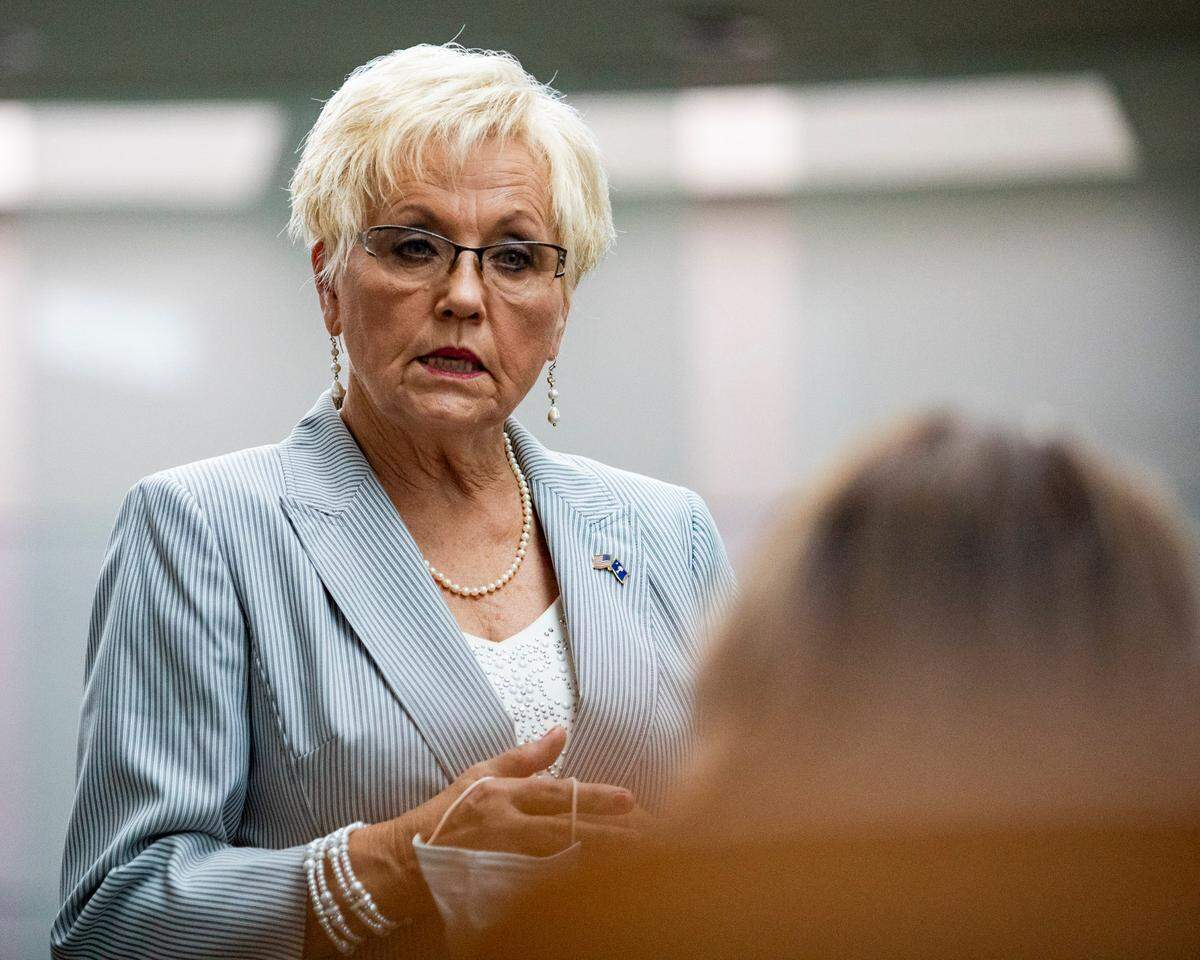
Myrtle Beach, which gets millions of tourists a year, also put a mask mandate in place last year and has continued to renew it every month since it was adopted in July. Mayor Brenda Bethune previously told The Sun News during a live forum that she thinks the city’s tourist area had so many visitors last year because people saw how the city responded to COVID-19.
“They saw we were being very careful about our COVID-19 restrictions and asking people to take personal responsibility,” she said.
Bethune said the city may have possibly made some mistakes early on, but said it has always been focused on the well-being of residents and tourists.
“When we put things in place like a mask order, it is not done to hurt people or to hinder people from living their lives, it is done to keep people safe,” she added.
Surfside Beach Mayor Bob Hellyer echoed those same sentiments, saying the town’s responsibility is ensuring its residents and visitors are safe.
“We were doing everything that we could to do that,” he said.
The town council did not adopt a mask mandate like many of the other local governments in Horry County, but the board did pass a resolution requesting that people wear one.
“Our belief is that the residents of this town would go where they need to go, where they felt safe, and they would stay away from places that they didn’t feel safe in,” he said.
Hellyer said the town was also focused on making sure local businesses would still have income during the pandemic, and he thinks that everything turned out well.
“We wade through it,” he said. “Our economic crisis wasn’t as bad as the other people around us.”
But even with the tighter restrictions in the cities, some residents and visitors flouted the rules. In North Myrtle Beach, for example, a semi-annual shag dancing festival was called off in the fall due to the pandemic, but several club owners went ahead with a similar event anyway. Several attendees said social distancing and mask-wearing was not enforced. A month after the festivities wrapped up, five people who attended had died and nearly two dozen had gotten sick.
And recently, though city officials called off the annual St. Patrick’s Day parade, some businesses and residents chose to hold the event anyway.
In Myrtle Beach, though in accordance with state rules, large gatherings at the convention center have also been common.
In Conway, which is less reliant on tourist traffic and dollars, enacting and maintaining protective measures during the pandemic has been a smoother process. In December, and again in February, city officials voted to reenact a mask mandate. Other responses to the pandemic, like allowing restaurants to seat customers outside on city roads and sidewalks, have passed easily in council. Conway Mayor Barbara Jo Blain-Bellamy said not having safety measures in place was like “playing Russian Roulette.”
“The person standing next to me in a line at the store, the person next to me wherever, may be that bullet in the chamber. They may not be,” Blain-Bellamy said in December. “I believe that while people have all kinds of personal rights, when those rights impact whether or not I have a chance to live, or whether my mother gets to live, I believe that gives us not only an opportunity but a responsibility to try to safeguard the life and health of others.”
Is anyone to blame?
Responding to a public health crisis like the COVID-19 pandemic is usually a job that requires coordination between federal, state and local officials. Federal officials provide funding, best practices and manpower if needed. State officials are closer to the source of a problem and can better respond to the specific needs of counties and communities. And local leaders are there to directly assist people in crisis and communicate to state and federal officials what resources they need.
But unlike other disasters, the coronavirus pandemic became political early on, and many crucial decisions about how to respond were left up to local governments, according to Lior Rennert, a public health professor at Clemson University.
“I think what you saw in South Carolina is a lot of decisions were left up to local leaders,” Rennert said. “My hypothesis is that a lot of this was due to politics. The pandemic became very political early on and the implementation of these measures became dependent on constituent beliefs.”
For example, McMaster never ordered a state-wide face covering mandate, but instead left that decision mostly up to local governments. What happened, then, Rennert said, is that some communities were willing to obey a face covering mandate, while others were not, be it for political reasons or other beliefs. That dynamic played out in Horry County. Leaders believed for their constituents would agree to and abide by a face mask mandate, but only for a limited time. Requiring compliance with a mask mandate for the duration of the pandemic was out of the question, a reality that hasn’t been the case in other parts of the country.
“I think (council members) did as much as they could do without creating conflict, unnecessary conflict,” Worley, who represents North Myrtle Beach on the County Council, said of the dynamic. “Some people you can’t protect them from themselves, and in a situation like that you have to back off.”
That could have been a fatal choice, Rennert said. Social distancing and face masks were two of the most effective tools to combat the spread of the virus, he said, and it was up to local leaders to strictly enforce those measures. That enforcement, plus a gentle easing of other restrictions could have allowed the Grand Strand to experience a safer tourist season, Rennert said.
“You can allow tourists in, you can allow people on the beach, you allow people to rent hotels,” he said, noting that social distancing and mask-wearing are musts in those situations. “You have to get creative to allow economic activity and uphold the measures that we know work.”
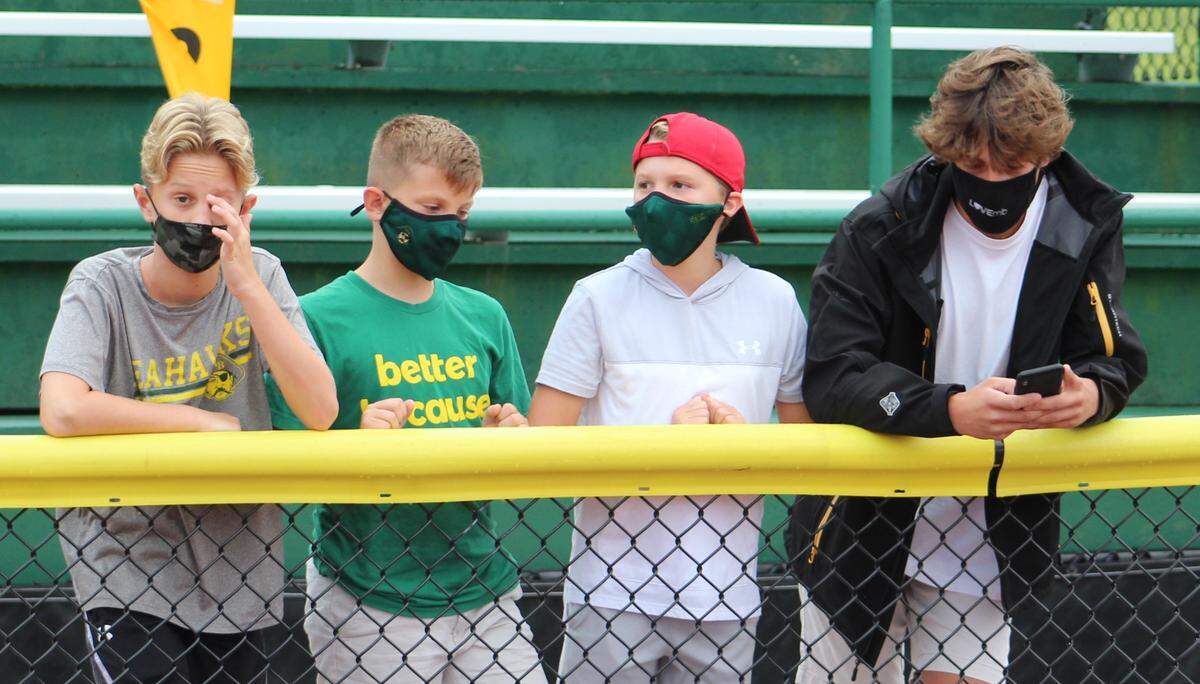
But the blame isn’t wholly on local officials. Early, mixed messages about the effectiveness of face masks caused confusion among Americans and allowed groups of anti-maskers to gain a foothold in public discourse and public policy. In addition, simply tracking the number of cases and deaths caused by the virus proved to be a large hurdle, as the United States lacks a centralized system for collecting and reporting such medical information. That left individual states scrambling to quickly assemble their own data-tracking methods, something that caused headaches for local leaders.
“I think the major problem that I saw in us making decisions was getting good information,” Vaught said. “We couldn’t get info from (the South Carolina Department of Health and Environmental Control), we couldn’t get demographics on who was getting sick. Then we went into panic mode and that was based on the confusing information. We were all making decisions basically in the blind and I hate doing that, I hate knee-jerking.”
Ideally, Rennert said, governments at all levels would have had some sort of protocol or plan for how to confront a pandemic before the first COVID-19 particles reached the United States. Then, government officials at all levels would have coordinated efficiently to share information and resources and craft a response that protected people’s health and allowed as much of normal life and economic activity to go on.
“And we did not do a great job of that in this country.”
This story was originally published March 17, 2021 at 6:58 AM.