Pain, loss and now, hope: 1 year of COVID in Horry County in your neighbors’ words
Hope is finally starting to feel tangible in Horry County with the COVID-19 vaccination effort ramping up across the state. One year ago, it was a different story.
In early March 2020, “coronavirus” was simply a new word that carried a far-off, not-too-serious threat to most people in Horry County. With a certain naivete and no idea of what was to come, residents went to restaurants, anticipated celebrating St. Patrick’s Day with friends, bought tickets for concerts planned for the summer and hotel stays were booked for winter getaways.
The coronavirus felt far away. Then it hit home.
The virus jolted Americans from their status quo. Widespread uncertainty and fear was accompanied by a newfound respect for others, particularly essential workers and those on the front lines. The pandemic took place against the backdrop of a tumultuous local and national political landscape, a coronavirus-era presidential election and a nationwide racial reckoning spurred by the killings of Ahmaud Arbery, Breonna Taylor and George Floyd.
Reality now looks vastly different than it did one year ago, and The Sun News documented each step of the way.
By the end of 2020, 4,885 people had died of the coronavirus in South Carolina, including 266 in Horry County. As of Sunday, 27,572 cases have been confirmed and COVID-19 has been linked to 422 deaths in Horry since last March.
Over the past year, reporters have spoken with hundreds of Horry County residents and visitors about how the virus and its economic ripple effects changed their lives. They’re parents, nurses, teachers, tourists, political leaders and business owners. They’ve been infected, laid off, evicted and stunned by the grief of losing loved ones.
This is the story of COVID-19 in Horry County, in your words.
Spring: ‘None of us have ever dealt with this before’
On March 15, the county reported its first case of the virus, and thus began a year of insurmountable pain, ominous uncertainty and immeasurable loss.
Two days later, S.C. Gov. Henry McMaster ordered the closure of dine-in service. Schools across the state shuttered. “Work from home” was suddenly the only option.
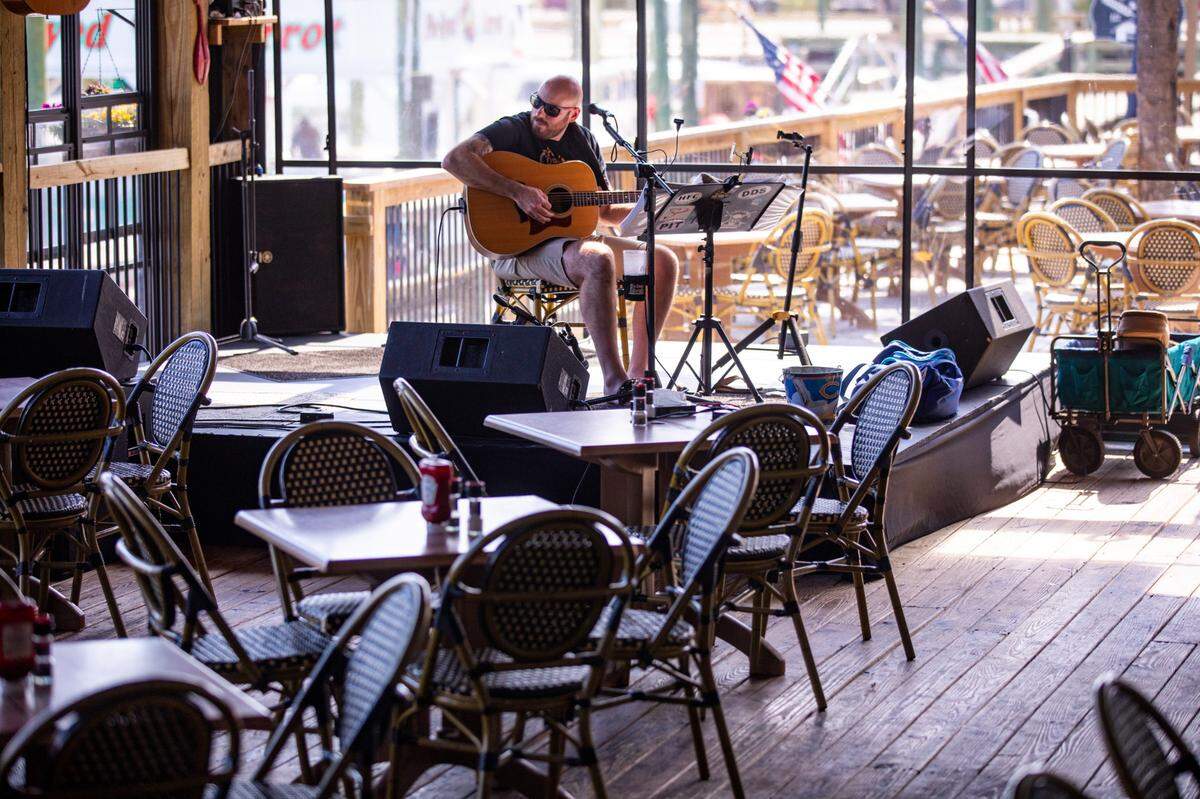
The phrases “social distancing,” “herd immunity” and “wear a mask” weren’t yet part of our everyday vernacular. Many were all but certain we’d return to “normal” by the time summer rolled around. A vaccine was still something of a pipe dream.
In March, people across the world screamed out of balconies and banged on pots and pans in a distanced support of “healthcare heroes.” Board games and puzzles, baking banana bread and sourdough, learning TikTok dances and lots of Netflix dominated the lives of those stuck at home.
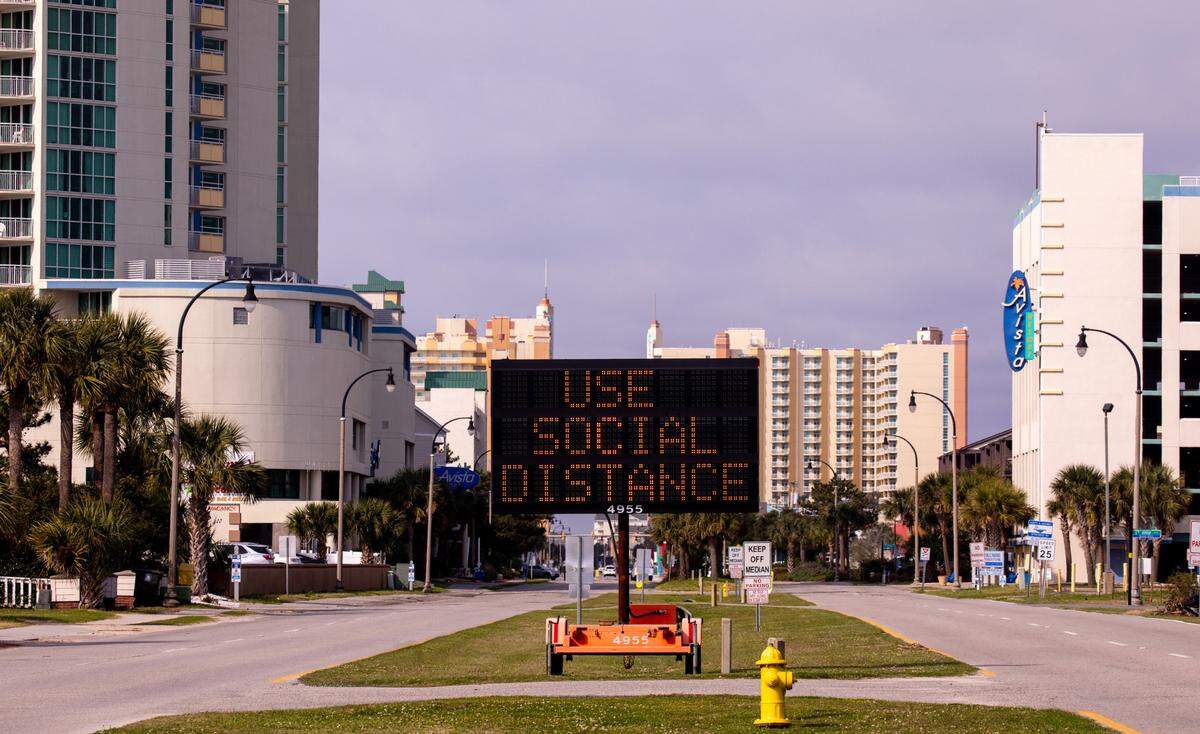
Days after most public places closed suddenly, hundreds of college students flocked to the beach instead of sheltering in place.
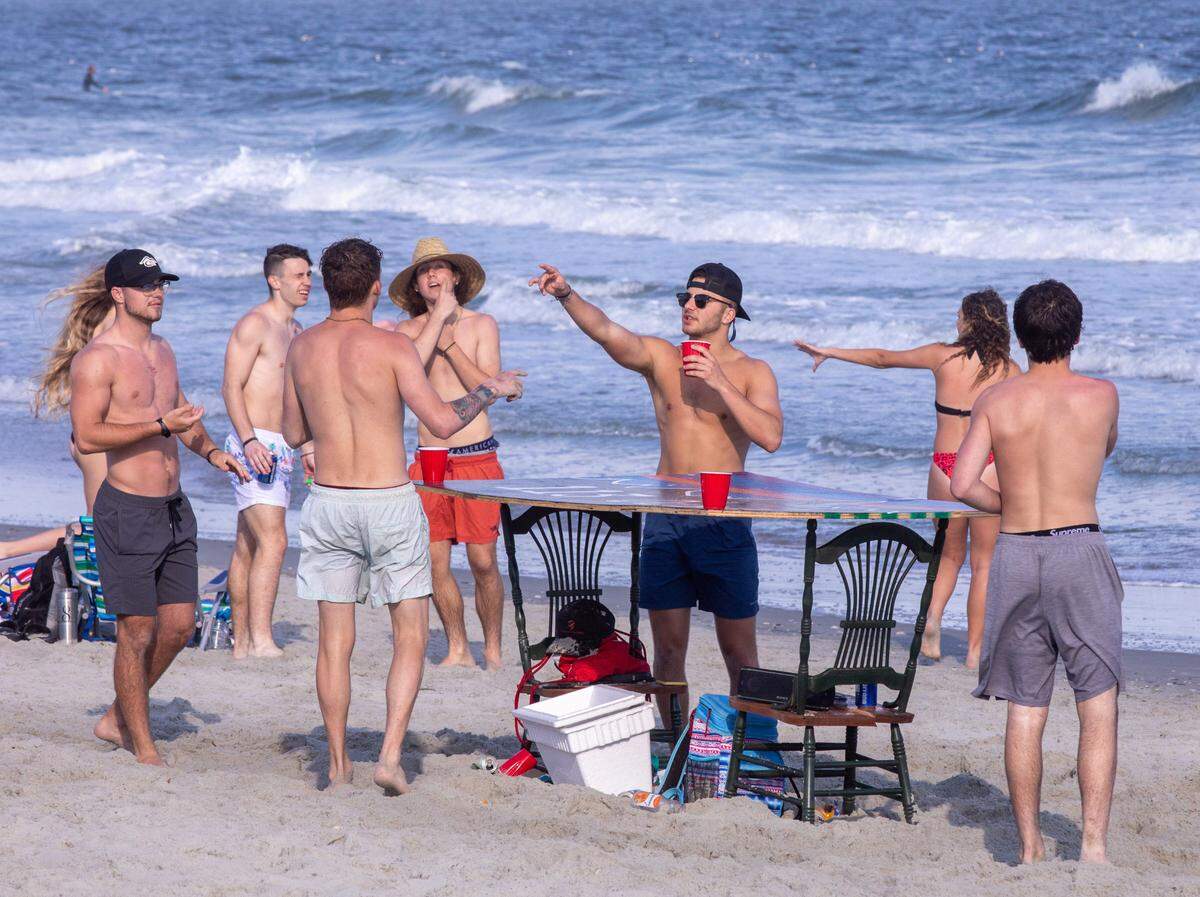
“It’s very unfortunate the coronavirus is going on, but like, we’re all here and we’re still having a good time,” Coastal Carolina University student Madelyn Long said in March while partying on the beach.
When news of the beach party spread, the backlash was swift. It was one of the first hints that the spread of the virus was nothing to scoff at, and it was something to be taken seriously. Soon after, beach access was closed entirely.
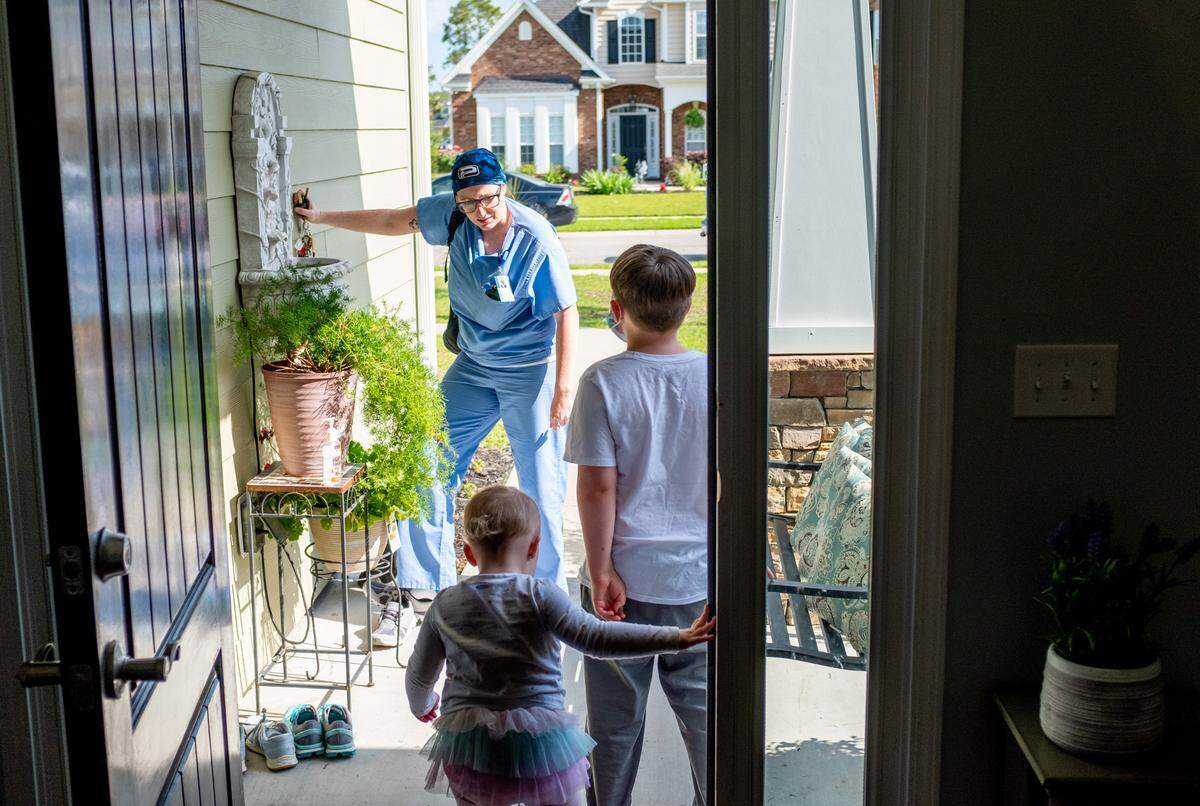
For those healthcare heroes who still went to work, the pressure was overwhelming.
Kelly Hahn, a nurse in the area, stressed about the availability of personal protective equipment and waited until after a shower to hug her kids when coming home from work.
“I’ve never been this stressed in a job,” Hahn told The Sun News. “I’m on the verge of tears half the time.”
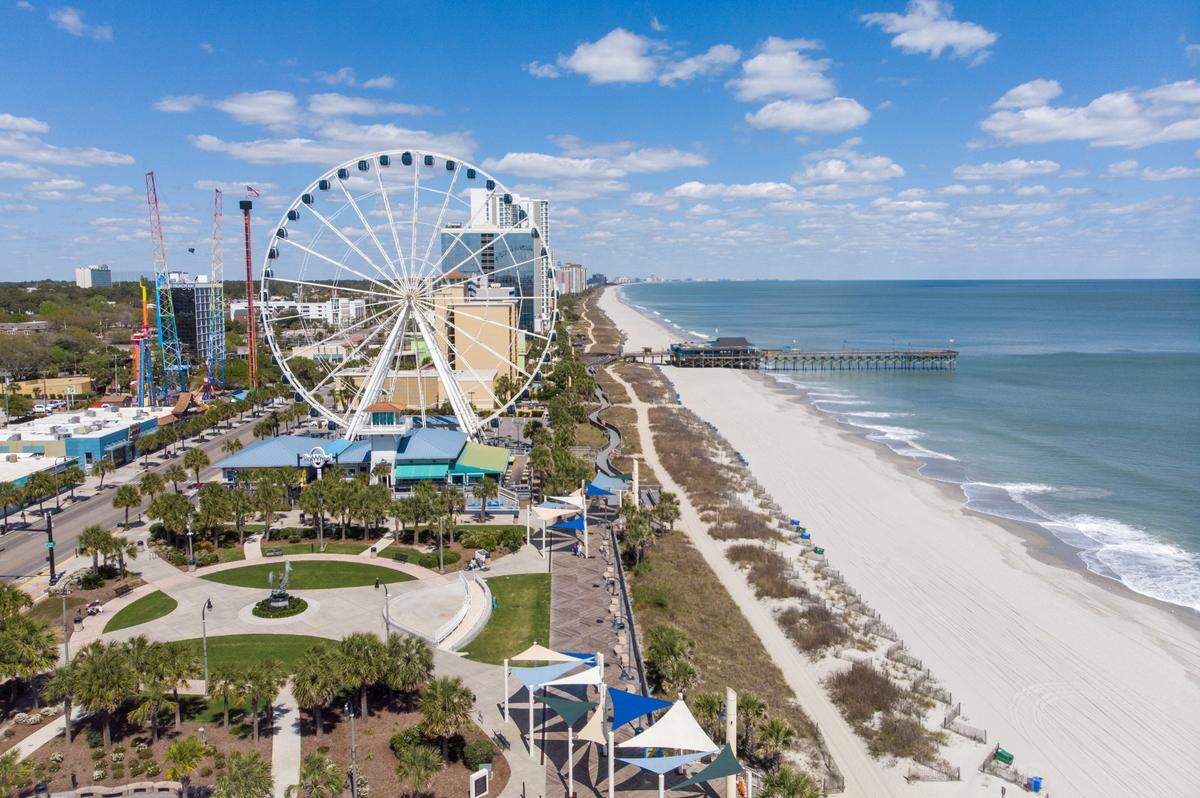
Instead of a bustling spring break season in Myrtle Beach, business evaporated. Restaurants and hotels closed, and their employees were left hanging.
“I don’t know how I’m going to pay my bills coming in,” owner of La Dolce Vita Villas Angela Visalli said in March. “This year is like a whammy because we don’t know when it’s going to end.”
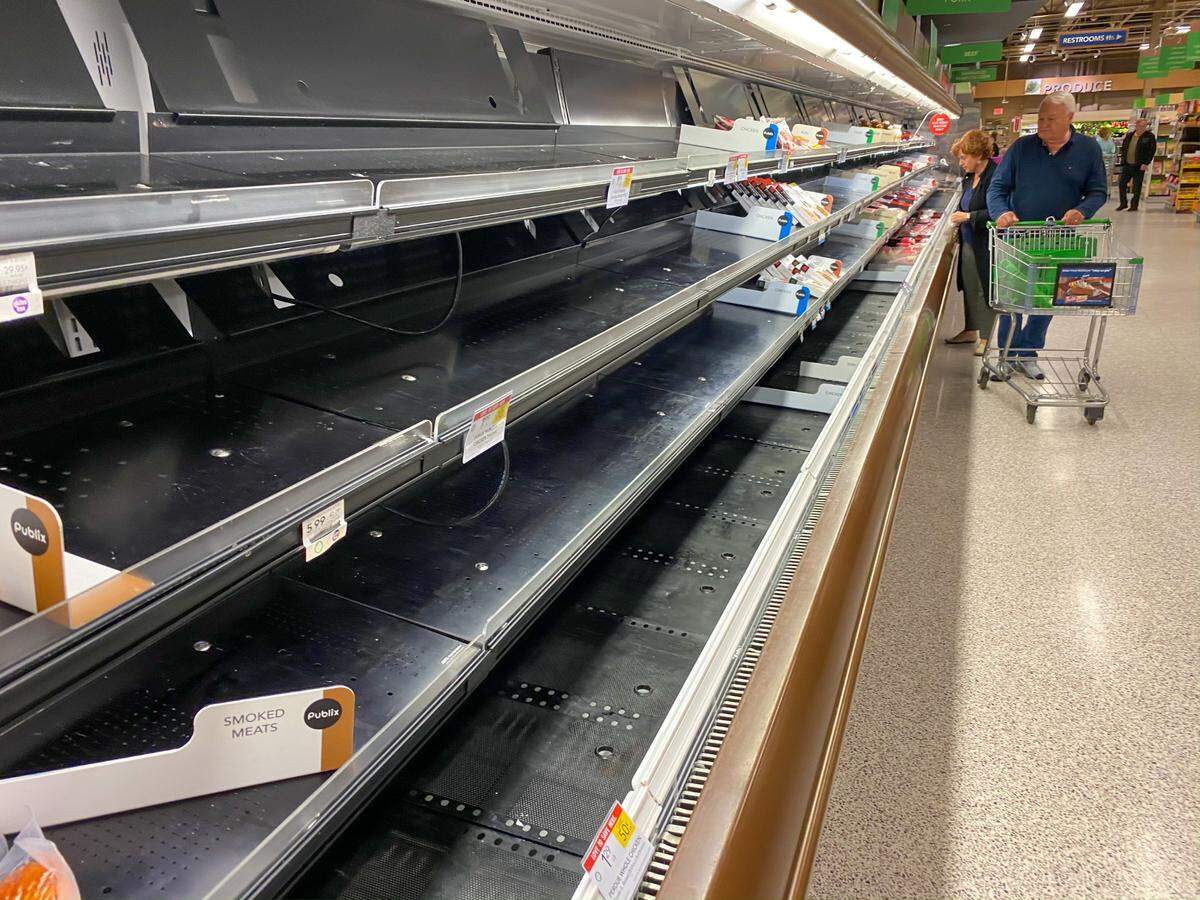
Mounting uncertainty led to “panic buying” and cleared shelves at grocery stores across the county.
“None of us have ever dealt with this before, so we’re really trying to figure this out as we go. There’s no precedent for this,” said Anna Bowers, a spokesperson for Boulineau’s Food Supply as the store’s stock was ravaged during the early weeks of the pandemic.
Horry County Schools, like districts across the country, abandoned their buildings in favor of online classes, forcing teachers to materialize virtual lesson plans out of thin air. Parents were left floundering for childcare options and many settled on the not-so-perfect balance of working from home while chaperoning their kids’ online classes.
Parents felt the pressure of educational needs in extraordinary circumstances, too.
“There’s just no way I can provide them what they get at school,” said Amanda McDowell, who has three children, one who suffered a traumatic brain injury and one who is on the autism spectrum.
Cases of the coronavirus rose steadily in Horry County, but the spread wasn’t yet uncontrollable. The uncontrollable part, for many, was the loss of income and any ability to plan for the future.
Many Myrtle Beach businesses rely heavily on international students who come to the area on a work visa to work for the summer. In April, that program was canceled to stem the spread of the coronavirus, leaving the businesses and workers without much to plan for.
“At first we didn’t know what we were going to do,” Jean Pierre Campoverde, an international employee from Ecuador, told The Sun News last April. “We didn’t have any money, we couldn’t pay the rent and we were afraid because of the coronavirus.”
Near the end of April, locals could once again visit the beach. For some, it was “like Christmas morning.” But seeing people on the beach was a slap in the face to some COVID-19 patients.
Vicky Gore and her husband Jeffery had both tested positive for the coronavirus, which they described as “unbearable,” back when the county only had around 150 cases.
“It’s not affecting them. They feel like, ‘Oh well, I’m fine,’ and they are going to the beaches and going out on the water,” Vicky Gore said in April. “It’s very frustrating because until people take it seriously, I don’t feel we’re going to recover.”
Summer: ‘Hey, we’re back’
Restaurant employees rejoiced in May as service was opened once again. But, like every glint of hope in 2020, that optimism was tainted with worry as the coronavirus spread further across Horry County.
“I’m happy from one point to open, but from another I’m concerned,” Tanya Romanenko, owner of Old Town Crepes, told The Sun News in May. “As an owner, I have full responsibility about what happens and if tomorrow, God forbid, something happens.”
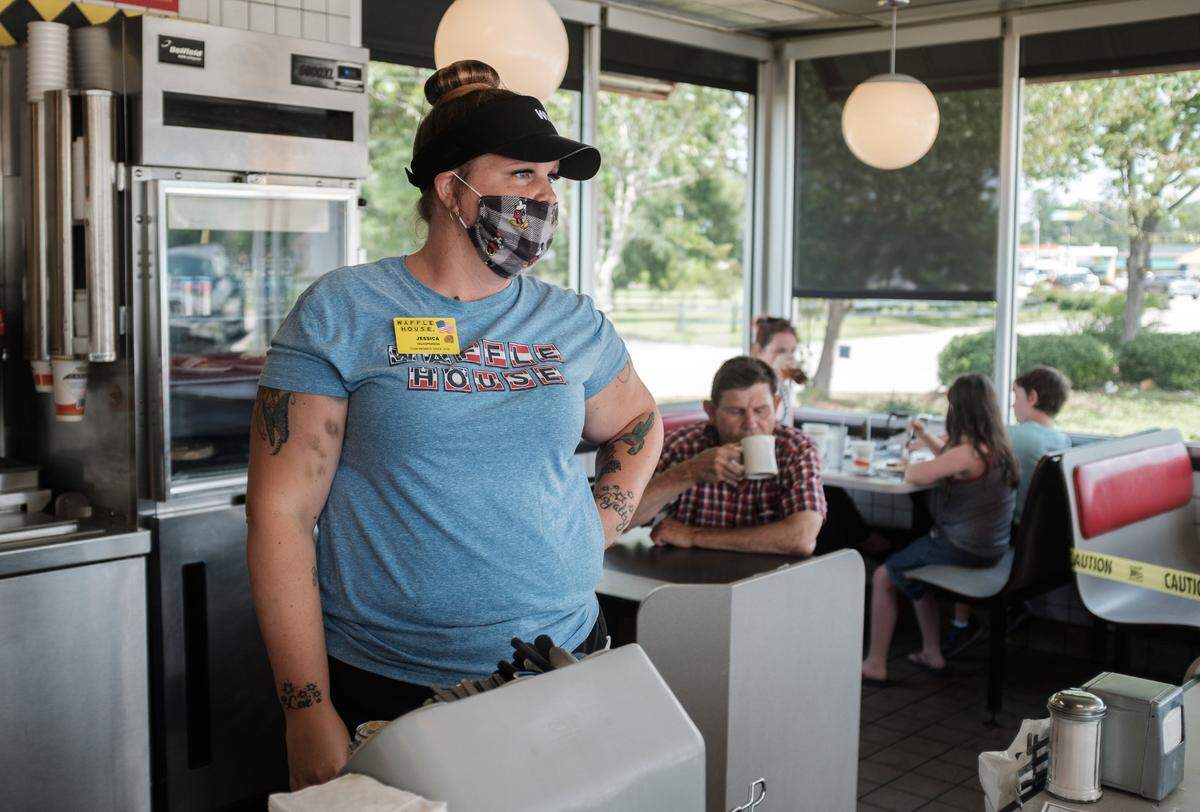
Returning to work for the first time in months was a welcome relief for employees who scrambled to get unemployment benefits during the brunt of shutdowns across the country.
“I was happy. I was like, ‘Hey we’re back,’” said Jessica Fipps, a server at an Aynor Waffle House. “It’s on now. We’re fixing to have fun now.”
Some retailers and restaurants were reopening, while others would never get the chance to do the same.
Judy’s House of Oldies, a North Myrtle Beach spot specializing in shoes and accessories for shag dancers, closed permanently in July.
“The store has people literally coming in in tears ... because when people come to the beach, this is their first stop,” said Jeannie Elmore, who ran the store. She added her business was “devastated” by the pandemic shutdowns.
Summer was welcomed by many, specifically in the hospitality industry, as a dance party broke out on Ocean Boulevard and hotels hosted tourists once again. It was almost like old times. Almost.
But nursing home residents were still under strict regulations by the state. Seniors, who have been identified as high-risk of infection, were feeling the effects of isolation. Fred Portway, an 88-year-old retiree, did what he could to interact with his sister-in-law who was in a nursing home.
“We were only there for about five or 10 minutes,” Portway said in May. “we’re laughing and I’m right there waving and we’re right there 10 feet from the window. But, like I say, it’s a sad thing for the sickly, the elderly and the people that have to work there.”
Horry County opened businesses, a weight off the shoulders of many service workers. But soon after, the area was designated a “hot spot” as cases of COVID-19 hit levels not yet seen in the Myrtle Beach area. Government officials from other states called out trips to Myrtle Beach and other beach towns as the reason for outbreaks in their own areas, and national news outlets reported on the county’s high spread.
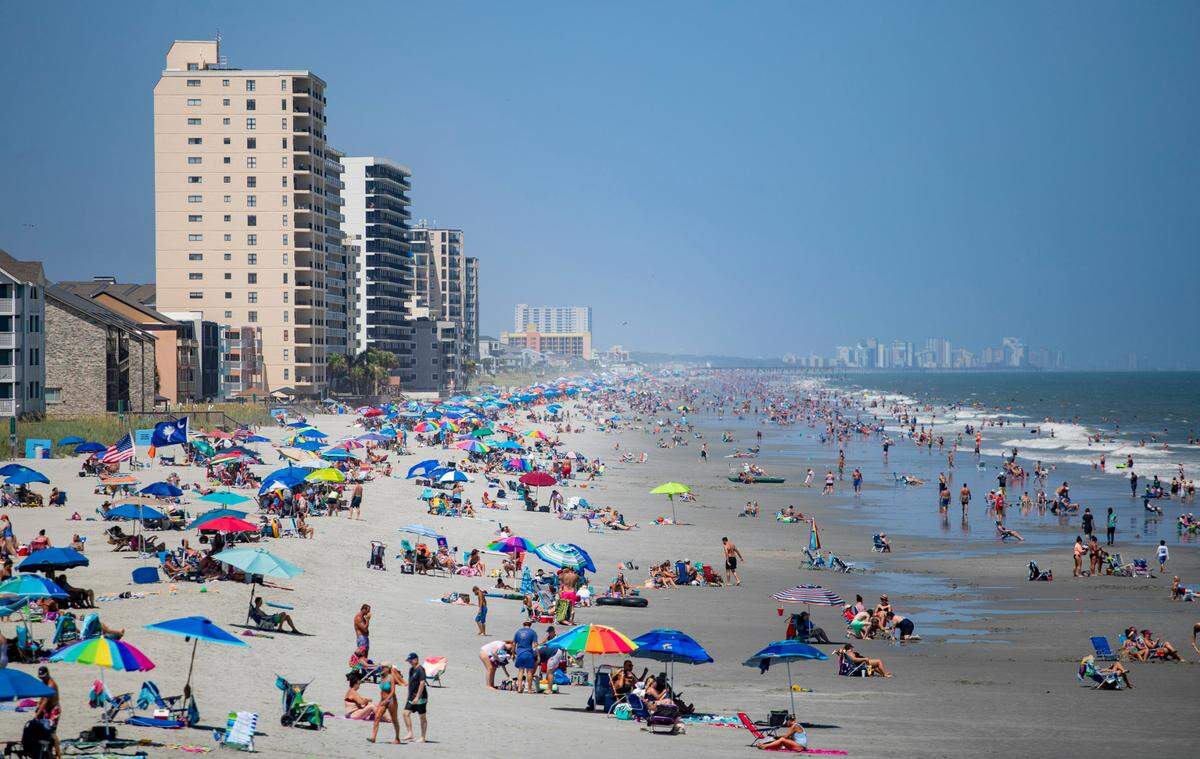
“We have more and more people coming here and people are falsely under the assumption there is not a virus any longer,” Myrtle Beach Mayor Brenda Bethune said at the time.
It wouldn’t be long before Myrtle Beach, Horry County and other local governments passed more stringent restrictions. Masks became mandatory in early July in Myrtle Beach, Horry County, North Myrtle Beach, Conway and other municipalities as leaders feared super-spreader events during the July 4th holiday weekend.
Masks weren’t yet synonymous with political debate. Instead, people in the Myrtle Beach area got creative — the protective gear doubled as fashion statements.
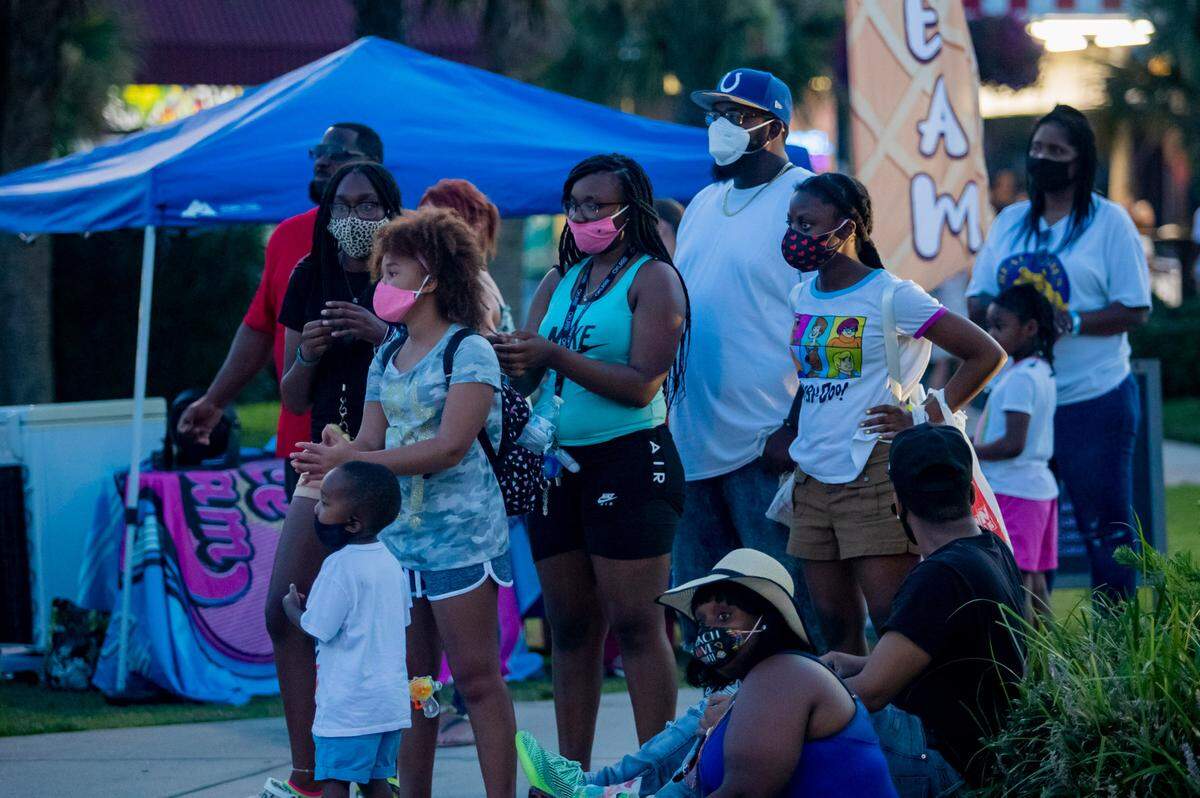
“If you’ve got to wear them you might as well make them look decent,” Neil Smith said in July while sporting a mask with a pattern from “The Goonies.”
Experts have long worried about the effects of quarantine and isolation on people struggling with addiction. Couple that with job losses and anxiety and the result was “devastating,” Donald Shepherd told The Sun News last summer. He had secured a job in construction while battling homelessness and maintaining his sobriety, and was looking forward to some restored stability in his life.
Then the pandemic hit, and he lost the job. His sobriety followed.
“It led me to bury myself in drugs and alcohol,” Shepherd said.
Fall: ‘It’s just heartbreaking’
The arrival of autumn usually means the arrival of students back into the classroom. There’s typically a buzz in the air as teachers beam at their new students.
This year, smiles were hidden behind masks.
Horry County Schools opened on a hybrid model in September with an option to take classes fully online, while Coastal Carolina University began welcoming students back into dorms in mid-August.
“I know I can’t enjoy it to the fullest extent, but just having a little part to enjoy makes me happy,” Coastal Carolina University student Alicia Douglas said while moving into her dorm.
The coronavirus continued its ruthless path through Horry County, claiming more than 160 lives by August. Horry County Police Cpl. Michael Ambrosino was one of them.
The loss left his family and the police department reeling, but his wife Tracey said support flooded in from across the country after his death.
“I bet I got cards from every state in the U.S.,” she said after his death. “In a world where there [seems to be] so much turmoil and you have so much negativity, that is not the world we live in.”
An initial drop in cases during the fall wouldn’t last long. They began to rise again. At least five COVID-19 deaths and 20 cases were linked to an unofficial shag dancing festival in North Myrtle Beach.
“My friends are dying. It’s the worst I’ve ever seen,” said Lulu Quick after the event. “If only everyone had been a little more careful.”
Winter: ‘You should feel obligated to get the vaccine’
A somber holiday season was also marked by the slightest bit of hope.
Zoom calls replaced traditional Thanksgiving meals. Volunteers serving free meals to those in need wore masks and gloves. Health experts begged people not to travel.
But there was also a vaccine on the way. By the end of December, medical workers and others in the first phase of South Carolina’s immunization plan began getting doses of the vaccine. It was the tiniest light at the end of a terrible tunnel.
“If you care about your parents, your grandparents, your friends or anybody, you should feel obligated to get the vaccine,” said Dr. Stephen Brady, who works in the cardiology department at Conway Medical Center, after getting the vaccine in December.
Nursing home residents and staff were also eligible, giving much-needed optimism to one of the most vulnerable communities.
“There’s been a lot of sadness and hurt. You know, anytime you lose a resident, it breaks your heart,” said Tim Layton, Executive Director of the Lakes at Litchfield care facility. “Hopefully that’s behind us.”
Even with vaccines developed and distributed, Horry County saw its worst spike of the entire pandemic following the winter holidays. More people died in January than in any other month of the pandemic.
And Myrtle Beach lost a familiar face. Former Mayor John Rhodes died due to COVID-19 complications in January, spurring an outpouring of condolences from across the city, including his one-time mayoral opponent Bethune.
“Myrtle Beach is a better place because of his leadership,” Bethune said shortly after his death. “John was a long time friend of my family’s and I have nothing but fond memories of him and respect.”
The financial crunch didn’t let up for many Horry County locals. Worries about getting food on the table and paying rent on time continued occupying the minds of many, even 10 months into the pandemic.
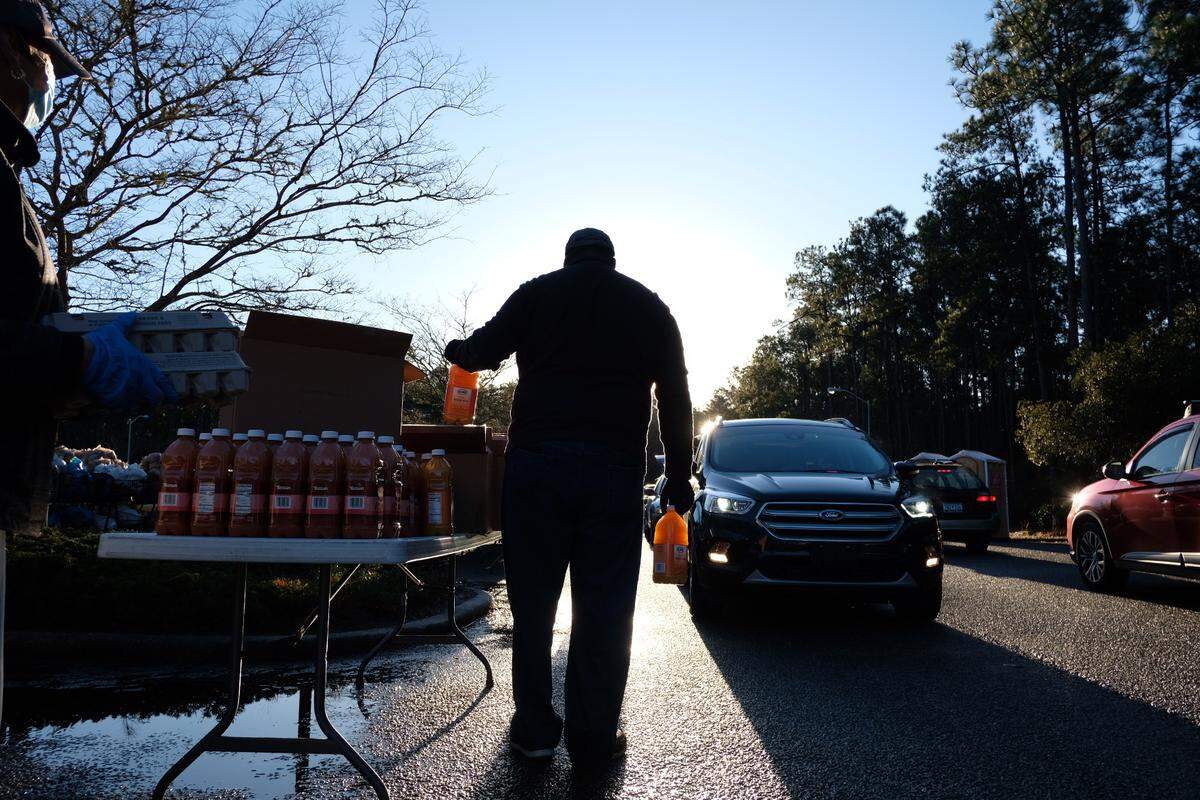
A food distribution event put on by a local nonprofit drew hundreds of people, some of whom arrived more than 12 hours in advance to line up for food.
“Kids eat every day, not once a month,” said Dennis Sessions, a father of three, at the event. “I just have to understand how to be tight with everything. You want to conserve in every way you can because you don’t know where the next meal is coming from.”
.JPG "0312hcsvaccines_01 (1).JPG")
The vaccine rollout, though a sign of progress, hasn’t been without its problems. Residents have run into obstacles when trying to make an appointment, and the state has a limited supply of doses to allocate to providers.
Like the rest of the pandemic, it’s been frustrating. But eligibility has recently been expanded to the majority of the state’s population. The state Department of Health and Environmental Control expects to enter the third phase of vaccination efforts by mid-April.
Now, selfies with a Band-Aid over a vaccine site or a card with the words “Pfizer” or “Moderna” are popping up on social media. Vaccinated grandparents have been given the go-ahead to hug their grandchildren. And whispers of a rumored “normal” summer and return to pre-pandemic life are growing louder.
This story was originally published March 15, 2021 at 6:58 AM.