Verge of tears: Nurse faces constant COVID-19 stress, wave of patients in Myrtle Beach
READ MORE
Horry County Coronavirus Diaries
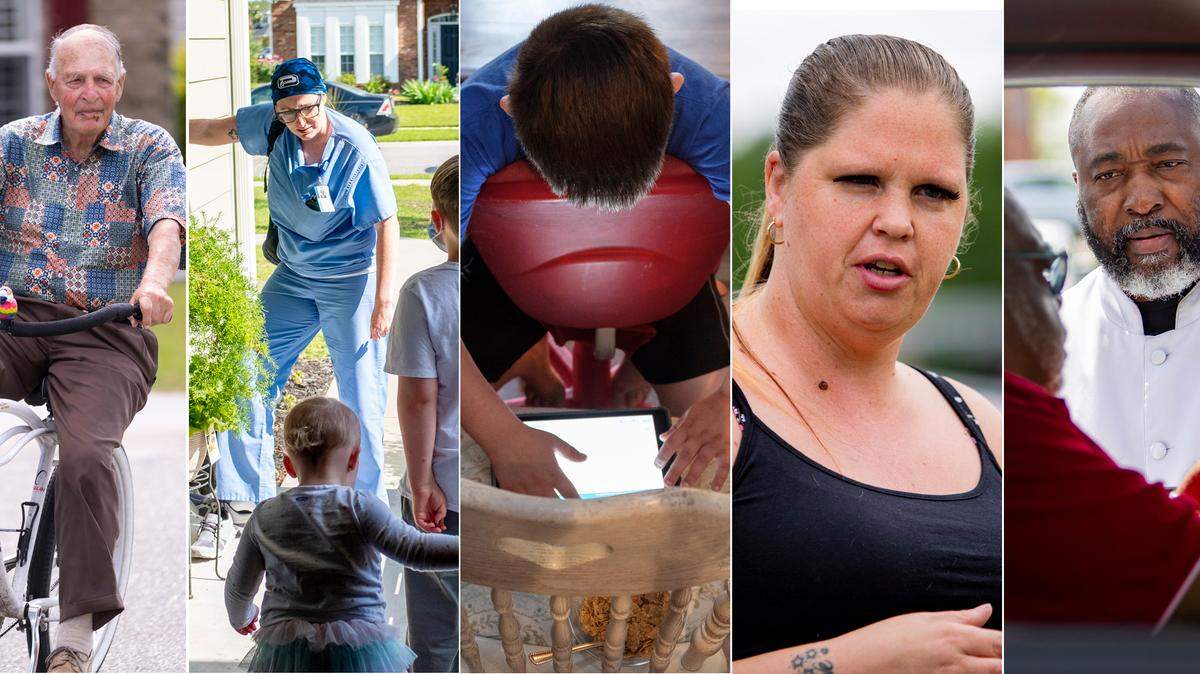
The coronavirus has upended life for everyone. Here is a look at the toll the virus’ impacts have had on our neighbors in Horry County. A nurse, a waitress, a pastor, a retiree and a family grappling with job loss all tell their stories.
Expand All
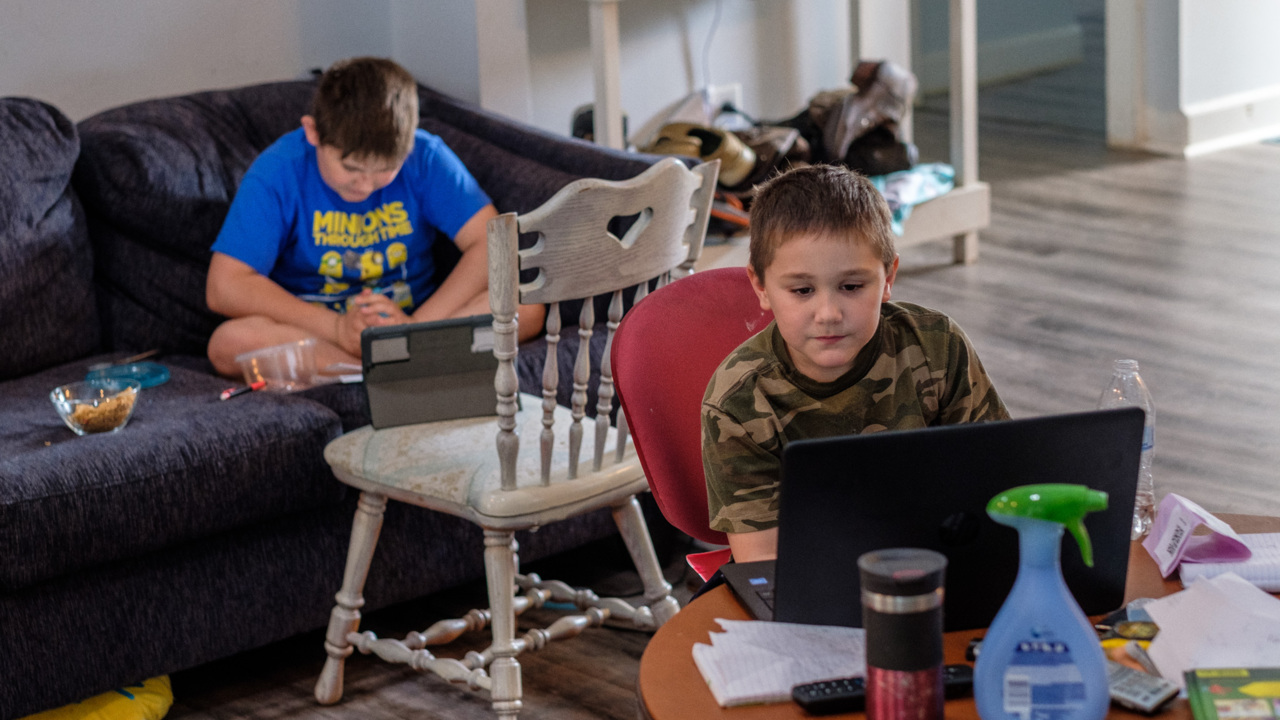
Jacob Hahn’s 7-year-old face peered out the window of his Carolina Forest home into his front yard. It was getting close to 5 p.m., and mom should arrive soon.
Bella Hahn, all of 2 years old, did the same out another window.
A green Honda CR-V pulled up along the front yard as Kelly Hahn stepped out. Her blue scrubs, bandana left little doubt she was just getting home from a medical job.
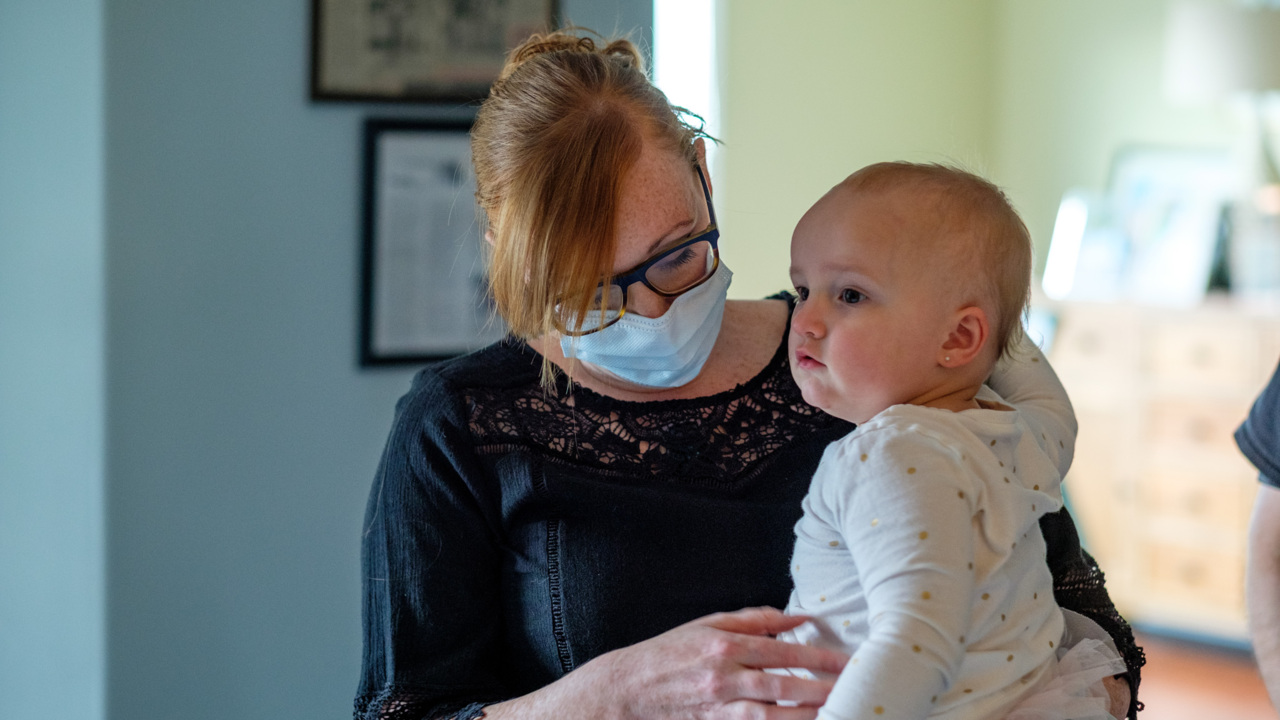
It’s a job on the front lines of the pandemic. The nurse practitioner spent weeks working in a COVID-19 testing tent in the Myrtle Beach area. She walked to her front door, exhausted from another shift.
“Here she comes,” Grandma Christine yelled as Jacob swung open the door and stepped outside to greet her.
Ella, who is also called Bella by her loved ones, hop-skips to the front of the door to greet mom.
“Ella … ” grandma calls, as Jacob interrupts, “Hi, Mommy!”
“Don’t touch!” someone else yells.
The kids are left greeting mom while feet away as Kelly Hahn makes sure her kids don’t touch her. There is a legitimate concern Hahn will bring coronavirus home from her job.
She can only offer smiles for her children when many parents would go for an embrace.
Kelly Hahn has to step over her two-year-old daughter and tries to shut the door with Ella still in the doorway. Ella doesn’t understand, so she plops down and sits right in the door’s arch. A few seconds of coaching and she rolls over just enough to let mom shut the door.
Mom has to abandon her kids there at the entryway and head right for her bedroom and the shower. The long scrub hopefully removes any germs before she finally emerges. Then her kids get their hugs and start to climb all over her.
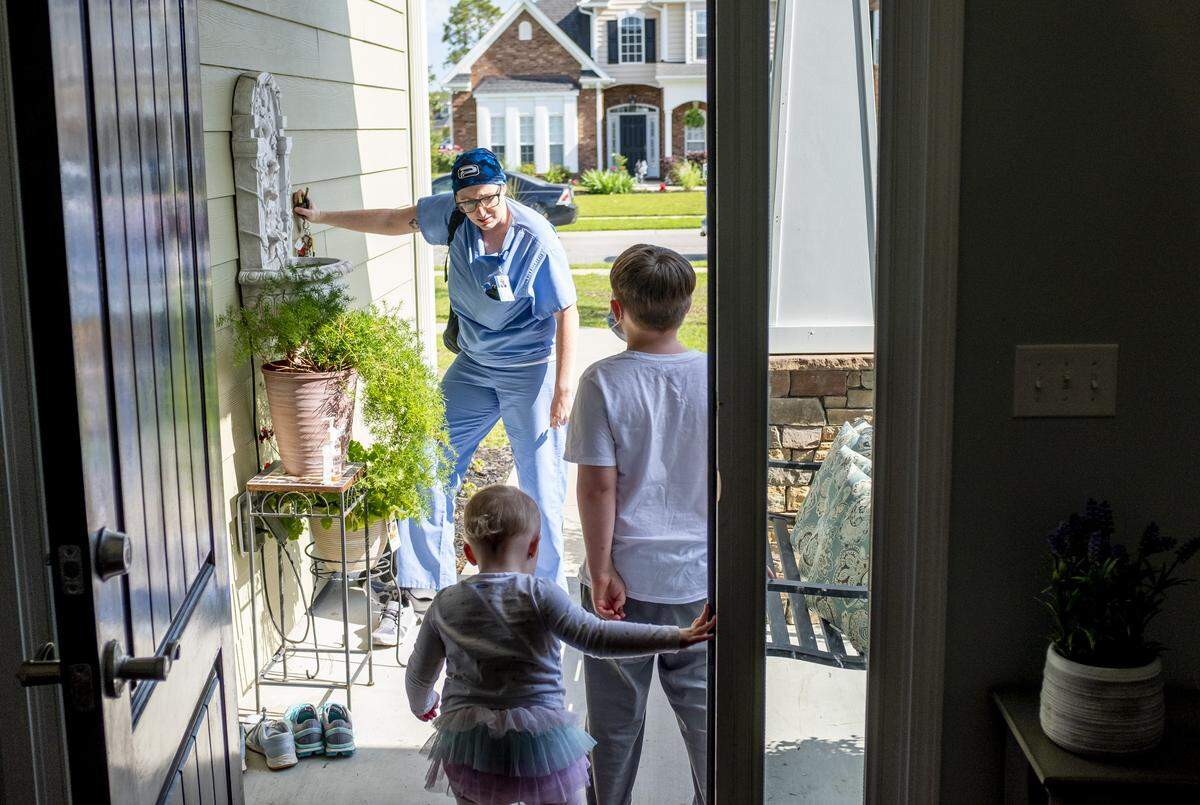
This is now Kelly Hahn’s evening routine thanks to coronavirus. She is terrified of bringing the disease home and does her best to avoid the kids.
It’s a fear exasperated by a lack of personal protection supplies at the testing site. While hospital officials publicly said they were conserving supplies in the case of an influx of cases, Hahn said it was one of the reasons why she decided to make a significant life decision in the middle of a pandemic.
“I think the biggest thing [I’ve learned in the last two months] is you can only protect your environment as much as you can,” she said. “Also, the fear we don’t have the resources that we’ve been promised, where you think we are a first-world country and none of those things are guaranteed to us and that is worrisome.”
March 27-I don’t think it’s hype
Our Story: Hotels are shutting down left and right, people are hoarding at grocery stores and a general confusion persists as Horry County residents try to understand the impact coronavirus is starting to have on their lives. The area now has 24 confirmed cases in the two weeks since its first.
Kelly Hahn’s Story: It’s unclear whether Hahn knows any of those concerned cases, but it’s a reasonable bet. The 36-year-old nurse works at a COVID-19 testing site for Tidelands Health.
It’s a drive-up tent at a clinic, not the hospital, where those with symptoms can make an appointment to get tested. Hahn’s job entails her sticking the swabs up the patient’s nose.
So many have described the unpleasantness of the test.
“Today was eye-opening,” the Pennsylvania native says.
Not because of anything COVID-19 or patient-related, but from concern the supply they have is not enough to last for the duration of the pandemic. In the tent she’s wearing the gear — the masks, the face shields, the gowns all seen on television — to protect health care workers from the disease.
At first she has one N95 mask per day that covers her mouth. Tidelands Health officials said they’ve always followed The Centers for Disease Control and Prevention’s guidelines for extended use of the supplies in a contained area like the tent in which Hahn worked.
But the nurse said she also sprayed it with Lysol — which was not in the CDC guidelines — and covered it with another surgical mask to protect herself. The nurses haven’t gotten word when they will get more.
“On a scale of 1 to 10, I’ve never been this stressed in a job,” says Hahn, who once worked as a nurse in the surgery department. “I’m on the verge of tears half the time.”
Dozens of patients visit the tent each day. Hahn says she worries about her safety, the safety of her family and the community as a whole.
When the disease started to spread in Italy, Hahn said she knew America was weeks behind. She’d talk to patients about the threat. But, most blew it off.
Even her patients didn’t give much credence to the disease or its potential impact.
“I’d say, ‘What do you think of this whole virus?” Kelly remembers asking.
“It’s hype,” patients say.
“I’m just telling you I don’t think it’s hype.”
March 31- That’s not OK
Our Story: Golf courses remain open, but many other businesses in Horry County are now closed. Gov. Henry McMaster orders the beach accesses closed, meaning the area’s most popular selling point is now off-limits.
Kelly Hahn’s Story: Hahn’s frustration is growing with each day in the testing tent. There is no word when more supplies will arrive.
A fellow nurse went to Michigan to help her dad, Hahn says. That nurse was able to send back some supplies she found in the Great Lakes. Michigan is hit particularly hard by the virus.
Hahn says she got the run-around from administrators when she emailed about the supplies.
“I just want to hear ‘yes’ or ‘no,’” she says, taking a deep breath then exhaling her frustrations.
The nurses even heard gloves are reaching a critically low point for the medical provider.
“That’s not OK, are you kidding me,” Hahn exclaims.
April 14-Rather be laid off
Our Story: Three Horry-Georgetown Technical College students have tested positive for coronavirus and the county surpasses 150 total cases.
Kelly Hahn’s Story: It’s been a month since COVID-19 was first confirmed in Horry County and Hahn is still testing people who come to her clinic.
“Still working all day in that damn tent,” she says, clearly disenfranchised with the situation.
She’s had to work in the middle of a storm with the tent blowing. She notes the doctors are inside and it’s the nurses out, braving the elements and putting their health at risk to provide tests.
There was a slight change to her routine when she completed a rotation in the hospital. Hahn shadowed a fellow nurse in case she is moved from the testing site to the bedside because of a spike in cases.
Though, Hahn said, she doesn’t think she will be needed in the hospital.
Coronavirus closures are taking their toll at hospitals, too. Canceled surgeries and doctor’s visits mean less revenue. Hospitals nationwide cut back staff and hours in the middle of the pandemic. Tidelands is no exception and Hahn said she recently learned she would be losing 10 percent of her pay.
For Hahn, it amounts to a 20 percent cut, because 10 percent of her pay is tied to unattainable goals, she said. Hahn laments the lack of support for her and the other nurses.
“I’d rather they just laid me off honestly,” she bluntly says. “I just feel we’re not treated with the respect we deserve.”
May 1- A bit stir crazy
Our Story: Horry County now sits at 223 as the Myrtle Beach area allows all hotels to resume welcoming customers. People are using the beaches again and now a wave of visitors is expected to return in short order.
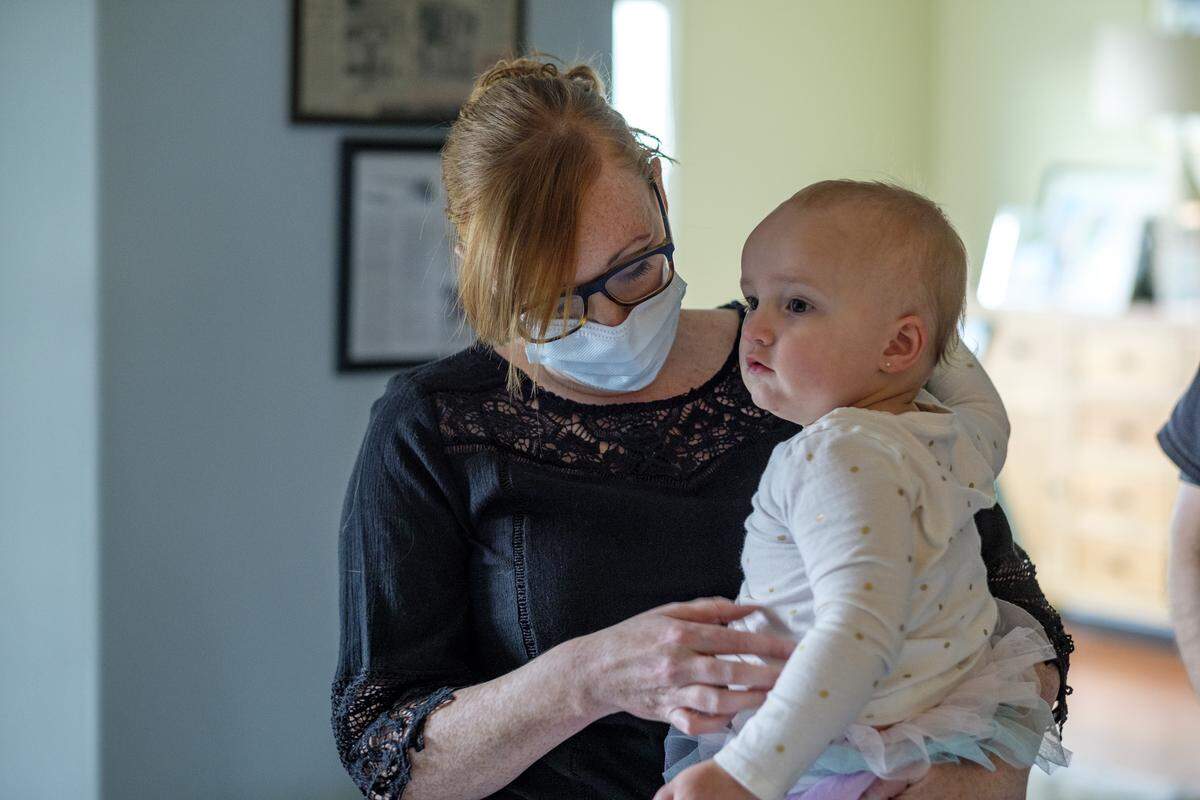
Kelly Hanh’s Story: The constant wearing of the N95 masks is now exasperating a health problem for Hahn. The straps rubbing against her temple is leading to migraines, which adds to the frustration.
Her displeasure with Tidelands has also reached a breaking point, and she told her boss today that she quit.
Hahn won’t be out of work for long as she already has worked lined up with another healthcare provider. It will provide better pay and a place she feels more support.
She has a couple of weeks left at Tidelands, though she will only work two days in the tent a week.
The number of people visiting the tent has slowed down in the past week, Hahn says. Some days there are only 20 appointments, meaning they can leave around 2:30 p.m.
Her routine of ignoring the kids — sometimes she sneaks in a back door — continues as she tries to protect her family.
“We’re good,” she says of her family and then admits the truth. “We’re all kind of stir crazy.”
To help, the family tried to visit the North Myrtle Beach oceanfront in the days after its public accesses opened. But, Hahn described what she saw and how the trip didn’t last long.
People packed the beach and walked along the access with no mask. They were only feet apart and there was no social distancing. Hahn wore a mask to prevent the others from the COVID-19 she could be unknowingly carrying.
The site of so many packed in when the virus is still spreading made Hahn turn around and return home.
“Not that hard to walk from the car to the beach with a mask,” she says.
May 20-It’s when
Our Story: More of Horry County is reopening as hotels, gyms, pools and much more are in the swing of welcoming back customers. The number of COVID-19 cases continues to grow as Horry County has now had 314 cases in the last two months.
Hahn’s Story: It’s been about a week since Tidelands told Hahn she didn’t need to come in for her last few days.
The migraines grew worse and Hahn was forced to see a doctor. They are now doing better in the last few days thanks to medication and environmental factors.
“I really think it was a culmination of stress, I don’t know if my body took some kind of hit,” she says.
Hahn’s heart rate was also elevated for several days and she believed it was something else stress-related. But instead she was diagnosed with a hole in her heart. She has had it since birth, and it doesn’t provide any great health risk. Still, it was not welcome news.
“Are you kidding me, what now?” Hahn asks rhetorically.
More of the area is reopening, but Hahn’s frustration with some of the decisions is evident. She talks about recent high-profile incidents along Ocean Boulevard and how the tourists have descended upon Myrtle Beach.
It’s led to fears of the virus spreading, despite Horry County’s relatively low numbers since the pandemic started.
South Carolina should have had reopenings by region, Hahn says. Have less touristy areas open first and then the beaches to help protect against a rush of people coming to the state and bringing the disease.
“I think it’s when,” Hahn says of more restrictions. Is she really talking about the restrictions here or is she talking about the restrictions lift causing a spike in cases? If it’s restrictions, I’m not sure what she means by “it’s when.”
When. Not If.
Editor’s note: This story was updated to reflect Tidelands Health’s public statements on supply availability and CDC guidelines for N95 masks.
This story was originally published June 3, 2020 at 9:30 AM.