‘Beaches are technically open’: How local leaders are interpreting coronavirus orders
Public access to beaches along the Grand Strand may now be blocked off due to the coronavirus outbreak but local leaders assure the beach is still open and a shelter-in-place order isn’t necessary at this time.
S.C. Gov. Henry McMaster issued an executive order Monday night calling for the closure of all public access to state beaches and any adjacent parking lots, along with boat ramps and landings on all state lakes, rivers and waterways. While city and town officials are complying with the order, they have their own interpretation.
“We don’t interpret this to mean people are prohibited from the beach,” Myrtle Beach Mayor Brenda Bethune said. “The police department will continue to patrol the beach and monitor them, but enforcing people sitting on the beach or walking their dog, that’s not what their focus is.”
With more than 40 public beach accesses with parking within the City of Myrtle Beach, Bethune said the public works department spent Tuesday morning erecting barricades, traffic cones and signage to aid in limiting the amount of traffic on the beach as cases of COVID-19 continue to increase. North Myrtle Beach and Surfside Beach took similar measures.
However, while folks are encouraged to practice social distancing, Bethune and North Myrtle Beach Mayor Marilyn Hatley said people can still access the beach from a private entrance.
“Beaches are technically open, it’s just our public access is closed to limit people from getting on the beach,” Hatley said. “My job is to make sure that our city abides by the governor’s rules and that’s exactly what we’re going to do.”
While Bethune said those on the beach won’t be ticketed as long as they follow the rules, North Myrtle Beach spokesperson Pat Dowling said law enforcement officials will only enforce measures pertaining to social distancing and dispersing groups of three or more, first through education and then, if compliance is lacking, citations.
Myrtle Beach Police Chief Amy Prock said officers will monitor public accesses regarding traffic related concerns and beach patrol officers will monitor the beach. Per the Governor’s order, violators are subject to citation or arrest, she said, urging folks to stay informed through social media.
Surfside Beach Mayor Bob Hellyer said he’s been grappling with the new order, asserting that the town will be in compliance with McMaster’s request while also being mindful of residential concerns regarding beach access. He said the current order is “a lot to absorb” with residents questioning if they can access the beach through a friend or neighbor’s home.
“It’s causing a lot of concern with our local people and we’re trying to work that out,” Hellyer said. “But if people would be more mindful of what we need to do and take responsibility for themselves then we wouldn’t have to keep stepping it up, and as the governor said, this was due to the behavior of the people on the beach.”
McMaster cited large gatherings on the beach as the catalyst for his executive order, though Bethune said the city experienced no issues over the weekend when the summer-like weather presented opportunities to spur crowds.
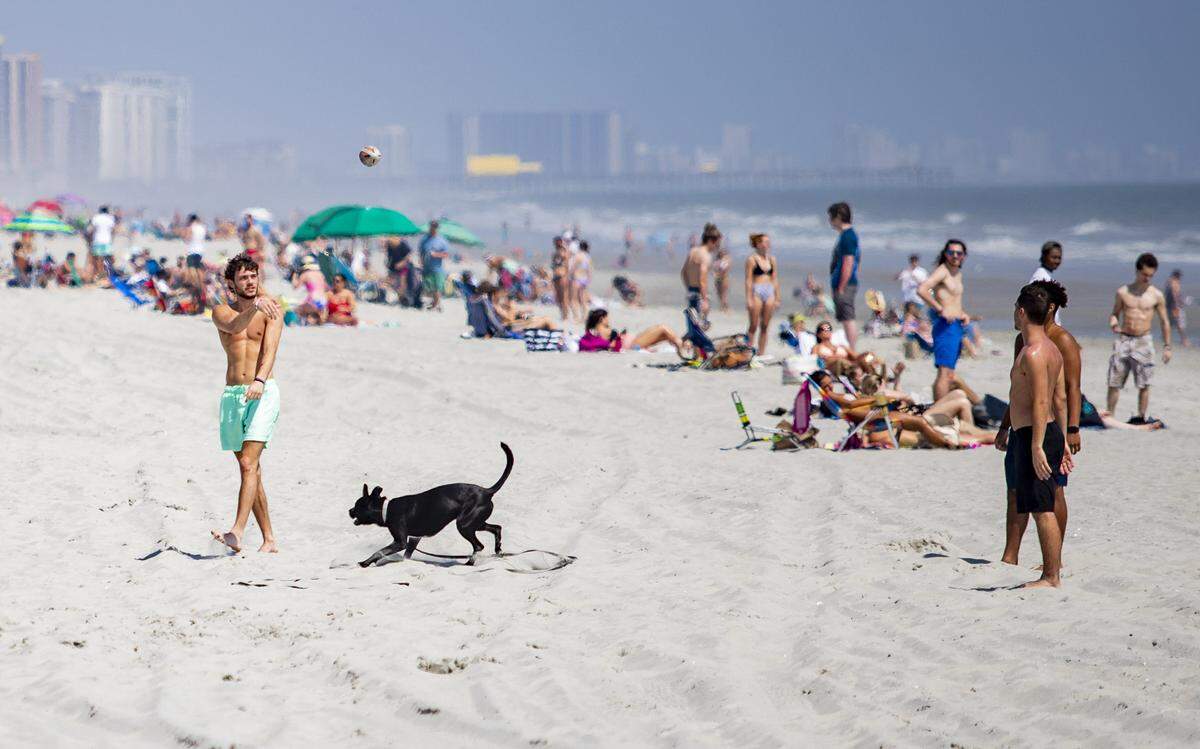
While she applauds residents for using area beaches responsibly and not congregating in groups, all three leaders agreed a shelter-in-place order isn’t needed at this time with orders already in place shuttering dine-in only restaurants, hotels, accommodation services, amusements and short-term rentals.
“We are not ready to go down that road yet,” Bethune said. “That can change because this entire situation is literally changing every single day, but we have to adapt and make decisions based on those changes.”
As of Tuesday, Horry County has 37 confirmed coronavirus cases among 1,083 in South Carolina, which has a total of 22 deaths, according to South Carolina Department of Health and Environmental Control data. There have been three deaths reported in Horry County.
DHEC projects the state will reach 2,657 cumulative cases by April 2 and 8,053 cases by May 2, though projected data is estimated and may change significantly due to various factors, the agency said.
With highly-impacted places like New York, Illinois and California issuing orders for residents to stay home, Hellyer said it’s a good alternative if numbers continue to spike. Hatley alluded that it’s only a matter of time until South Carolina follows suit.
“I’m not sure it’s what we need to do at this time,” Hatley said. “I do think it may come to that, it just depends on how the numbers continue to grow.”
This story was originally published March 31, 2020 at 2:44 PM.