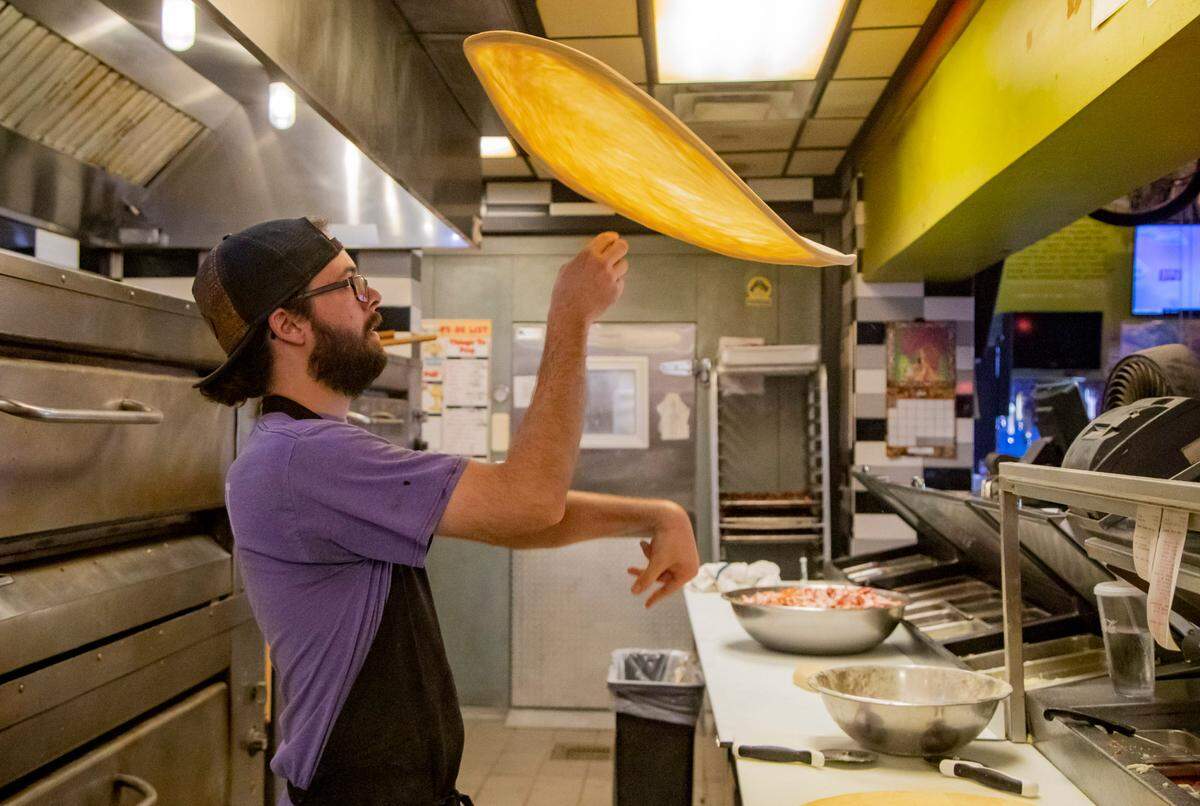
Myrtle Beach restaurants struggle to keep up due to COVID-19 impacts: ‘They’re exhausted.’
Restaurateurs in Myrtle Beach were forced to close their businesses to dine-in customers on March 18, per an order from S.C. Gov. Henry McMaster.
On May 4, outdoor seating with distancing was allowed in addition to pick-up orders and delivery, and on May 11 restaurants were allowed to reopen to indoor dining with a suggested limited capacity of 50 percent.
So after nearly two months of disruptions meant to slow the spread of the coronavirus, business was getting back to normal.
But many restaurants are still struggling.
Not with a lack of business, but with perhaps too much business for the available workforce and suggested restrictions that remain, which customers seem to be either failing to comprehend or refusing to accept in many instances.
The number of tourists flooding the Grand Strand is nearly comparable to recent summers, particularly on weekends, despite the COVID-19 pandemic.
But there is a severe shortage of cooks and seasonal workers that annually allow restaurants to withstand the tourism season, so they’ve been inundated and have resorted in many cases to fewer hours of operation and limited menus.
“We have maybe half of the staff that we normally do for the season,” said Ronald Ronda, assistant general manager of Mellow Mushroom in Myrtle Beach. “… The main thing is the kitchen. It’s cooks, and it’s not only us. Everybody in Myrtle Beach is lacking cooks.
“I’ve got my cooks working doubles. They’re exhausted. We all are, but we’re doing it.”
Mellow Mushroom is open three fewer hours per day than it was last summer, from noon to 9 p.m., because of the decreased workforce.
“All the employees we had before [March 18] came back, but it’s not enough. In June and July, we need like 20 extra people, and we can’t find anybody,” Ronda said.
At restaurants including Mellow Mushroom and Senor Frogs in Broadway at the Beach, managers have been forced to take on duties of other positions including prep work, cooking and serving.
Where are they?
The traditional influx of seasonal workers hasn’t materialized this year, in part because of a suspension of the J-1 and H-2B visa programs that combined provide approximately 3,000 workers to the area each summer, according to Myrtle Beach Hospitality Association president and CEO Stephen Greene.
The nonimmigrant visa programs were suspended by president Donald Trump in April and he extended the suspension on Monday through the remainder of 2020. The availability of the programs was already in doubt prior to Trump’s extension because in many countries embassies and consulates — where the travelers receive their visas — are closed.
Senor Frogs normally hires at least 30 J-1 students every summer, but they can’t bring in any this year and that loss has resulted in the restaurant/club condensing its menu and closing much earlier than it has in past years.
Stephanie Parsons, chief operating officer of a group of four bars and restaurants including two Wicked Tuna locations, said just about all of her company’s full-time year-round employees have returned, and many are working extra days and earning overtime pay. But she hasn’t been able to find the additional workers needed for the increased business.
“Normally you get tons and tons of applications. If I had 25 or 30 this time last year, this year I’ve got four. It has really been crazy,” Parsons said. “There have been a wealth of challenges. … Staffing has been a huge issue, just getting people to come to work, especially for the kitchen.”
Ronda believes the cook shortage is at least partially due to the additional $600 per week added to state unemployment benefits through the Cares Act — a bonus payment that is set to expire in late July.
“I’ve heard some people say it’s because of the unemployment checks. They’re making a lot of money just to sit at home,” Ronda said. “I really don’t blame them, but we’re suffering because of that.”
Like most restaurants, Mellow Mushroom is seating at half capacity for the safety of both diners and employees. Ronda said customers often complain about the wait time to be seated, then the time it takes to receive their orders. Some impatient patrons have seated themselves at blocked-off tables.
“Sometimes they don’t understand what we’re going through, that we don’t have enough people in the kitchen,” Ronda added. “We always explain what’s going on. I apologize all the time.
“… Some people leave because they’ve been waiting maybe 25 or 30 minutes for their food. I try to explain to them but sometimes they don’t hear it. They’re hungry, I understand, but it’s tough.”
Disgruntled diners
Ronda said his restaurant’s longest wait time to be seated has been about an hour, but other Strand restaurants have quoted wait times of up to three hours.
Mellow Mushroom’s to-go orders are by far the most the location has ever experienced as many people are choosing to avoid large crowds.
“The to-go orders are getting wild. It’s our best seller right now,” Ronda said. “Some people come into the restaurant and see like maybe 10 tables seated, and they complain, ‘Why? You’re not busy.’ They don’t understand we’ve got like 300 orders to go.”
The staffs at Parsons’ bars and restaurants have regularly had similar conversations and run-ins with customers.
“The actual [customers] are a pretty big challenge because nobody seems to understand or care about the restrictions and following them,” Parsons said. “That part has been extremely challenging, all the people coming in from out of town that don’t understand what South Carolina rules are and don’t understand why we’re following them. None of it has been easy.”
She blames other Strand establishments that aren’t following all of the guidelines for some of the difficulty.
“You have other places that are having no restrictions whatsoever and it’s just a free-for-all, then they come to one of our restaurants and we’re following all of the rules, and they don’t understand why they didn’t have to do something in one place but they do have to do it in our place,” Parsons said. “That has really been bothersome. I just wish everybody would have just followed the rules from the beginning so it was consistent everywhere people went.”
Coronavirus cases have also directly impacted many Strand restaurants. More than a dozen have temporarily closed for deep cleanings and to have their remaining employees tested after at least one worker tested positive for or was exposed to the virus, and most have already reopened.
Several employees of restaurants and other businesses have contacted The Sun News with their concerns about returning to work in the midst of the pandemic, so that apprehension has likely contributed to the decreased workforce as well.
Some restaurant owners and managers fear their staffs will burn out long before the end of the summer season, and a coronavirus outbreak among employees could be devastating.
“If we lost more people, we wouldn’t be able to do it, or we’d have to cut back more on our hours,” Ronda said. “We’re doing the right procedures and thank God nobody has gotten sick so far and we’ve been open for almost two months. We’ve been lucky and at the same time doing the right things.”