
Grand Strand Fishing Report: Fish still being caught despite cold water temperatures
Estuary
Look For: Red drum, black drum, sheepshead, spotted seatrout, flounder.
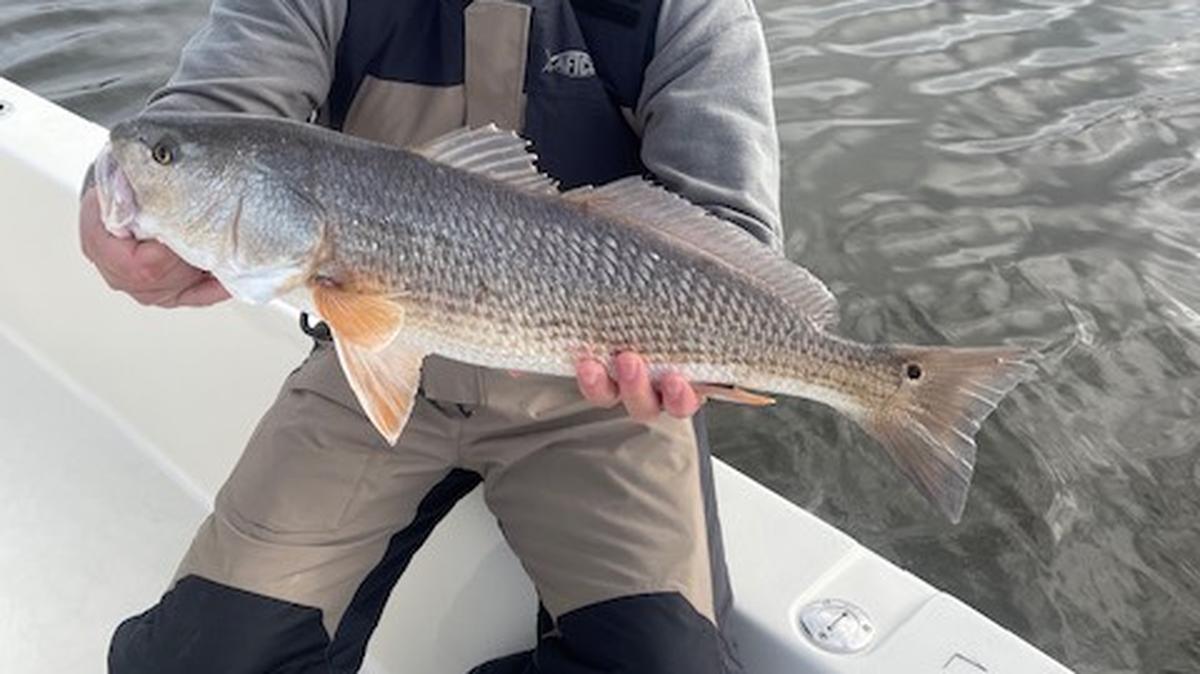
Comments: The duo of Capt. Patrick Kelly of Captain Smiley Fishing Charters and Capt. Chris Ossman of Fine Catch Fishing Charters targeted red drum in the creeks of the Little River area Tuesday and Wednesday, on the heels of a couple of wintry weeks. “We went one day and scouted them, went the next day and got them,” said Kelly. “(The first day) we found some reds in the usual redfish places and struck out as far as catching. But we found out where they are visually.” On Wednesday, the duo managed to find finger mullet for bait and offered them to a large school of reds Kelly said were “huddled up on the bank.” Using a split shot to minimize splashing, they got several bites and caught and released four reds. The water temperature was 48 degrees both days, and the fish acted like it. “They were laying there, kinda lethargic, grabbing half the bait and sitting there with it,” said Kelly. “They were not real aggressive. We had to give them time to swallow it. It seems they bit when the tide was slack and starting to come in.” Kelly noted that the aggravating algae, dubbed snot grass, is present in the Little River area. “It’s definitely getting on the hooks,” Kelly said. Further south, Capt. Dan Connolly of O-Fish-Al Expeditions has seen similar action in Murrells Inlet. “There are big schools of redfish, 50-200 fish deep, (but) it’s hard to get them to eat,” said Connolly. “Certain tides, certain weather, certain baits produce bites per each school of fish.” Connolly notes spotted seatrout have mostly retreated to the ocean with the cold water temperatures, and those remaining in the inlet are in a lethargic state. Connolly has observed water temperatures of 42-49 degrees on recent trips. Even further south, Capt. Mike McDonald of Gul-R-Boy Guide Service went on a scouting trip down the Intracoastal Waterway from Georgetown to the Santee River region on Wednesday. McDonald noted a water temperature reading of 44 degrees at about 8:30 a.m. leaving the South Island Ferry landing and 48 degrees while fishing at midday. McDonald had little action using soft plastic grubs and cut shrimp on the North Santee River on the ocean side of the ICW.
Inshore
Look For: Black drum, sheepshead, tautog, flounder, red drum.
Comments: Capt. Adam Goodwin of Tide Chaser Enterprises and crew hit a couple near-shore reefs off Murrells Inlet in search of sheepshead and black drum on Monday. “This is the time of year you normally go to try to catch sheepshead at the reefs, that’s where they go from the jetties to spawn,” said Goodwin, who was fishing with his brother, Capt. Lucas Goodwin, Capt. Ray Earnest and Ben Graham of Hardee Auto Sales in Conway. With live fiddler crabs and live shrimp not available, the crew went with the old standby – fresh cut shrimp – for bait. After catching undersized black sea bass on the first reef, the crew hit paydirt on their second stop. “The first two drops we started catching really nice black drum,” said Goodwin. “We had two cups of dead shrimp and it was a good time.” The shrimp was fished on jig heads and a modified Carolina rig using a No. 2 offset J-hook. The crew wound up catching numerous black drum, several sheepshead and even a 27 1/2-inch red drum. Action is slow along the beach, as Calvin Dickerson of Apache Pier reported a water temperature reading of 46 degrees early in the week.
Offshore
Look For: Wahoo, blackfin tuna, yellowfin tuna, grouper, red snapper, amberjack, vermilion snapper, triggerfish, red porgy, black sea bass, grunts.
Comments: When sea conditions permit, trolling for wahoo and blackfin tuna can be excellent in the dead of winter. David Black of Georgetown Landing Marina reports offshore fishing trips are few and far between, but some good fish are being caught. “The fish are biting but nobody’s going. There are lots of boats in the yard (getting annual maintenance) and lots of duck hunting going on,” said Black, who noted that Run-A-Wave landed a 77.2-pound wahoo on a recent trip. The South Carolina Wahoo Series is about to get underway with the first day of fishing set for Feb. 11. The state-wide tournament continues through April 17 with boats allowed to fish three separate days during that stretch. Each boat can weigh one wahoo per day and the winner will be determined by the boat with the heaviest two-fish aggregate weight. Weigh-in stations for the wahoo series are Georgetown Landing Marina, Toler’s Cove Marina in Mt. Pleasant and Hilton Head Harbour Marina in Hilton Head Island. Bottom fishing is excellent in winter months, again, when conditions permit. Look for grouper, amberjack, red snapper, triggerfish, red porgy, grunts and black sea bass with best action on bottom spots in 90-120 feet of water. Solid catches of black sea bass and grunts can be found a little shallower, in depths of 50-90 feet. Keep in mind that the annual shallow-water grouper spawning season closure is in place through April with the season opening again on May 1. In addition, red snapper are off-limits for recreational anglers and must be released.
Freshwater
Look For: Bream, crappie, catfish, bass.
Comments: Wintertime conditions have arrived on local rivers, reports Ronald “Catfish” Stalvey of Stalvey’s Bait and Tackle in Conway, which means good fishing and few anglers on the water. “Fishing’s great but with this weather it’s few and far between those who are fishing,” said Stalvey. “The river levels are great, they’re making good tides.” With water temperatures in the 40s, fishing deep is the ticket in general with most species. “Those going are catching a lot of nice crappie on jigs, beetle spins and minnows,” said Stalvey. “Bream are biting like crazy right now on down in 8-15 feet on red worms and night crawlers. Catfish (are being caught) on large shiners and cut mullet. Some are on the ledges in 8-12 feet but most are deeper. Bass, there’s quite a few tournaments going on and they’re using crank baits, and spinnerbaits are doing really well.” Stalvey also said finesse worms and smaller craw baits are producing bass.
This story was originally published February 8, 2022 at 6:00 AM.