
Will SC flounder regulations change? Grand Strand reps involved in important discussion
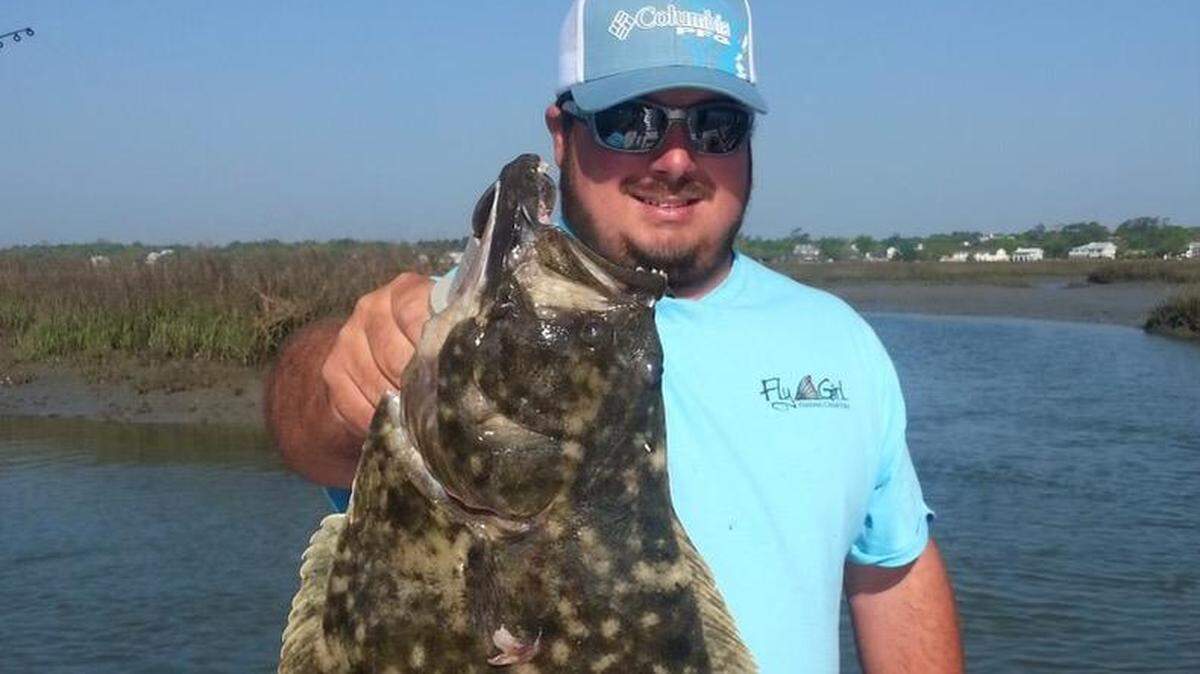
The process of updating South Carolina’s flounder regulations is getting heated up in the State Legislature.
State Representatives William Bailey (R-Little River) and Lee Hewitt (R-Murrells Inlet) co-sponsored a bill in the House of Representatives on Tuesday that proposes to reduce the recreational daily bag limit for flounder and establish a first-time slot limit on the species.
The proposal intends to cut in half the current daily bag limits for flounder of 10 per person and 20 per boat, to five per person and 10 per boat. The proposed slot limit is 16-20 inches with one fish over 20 inches allowed with a maximum of two over 20 inches per boat per day. Currently, there is a minimum size limit of 15 inches for flounder.
In South Carolina, fisheries regulations are state law and any changes must be approved by the state legislature. The South Carolina Department of Natural Resources can only make recommendations to the legislature.
The House bill, also co-sponsored by Roger Kirby (D-Lake City) and G. Murrell Smith (R-Sumter), in all likelihood will soon have a counterpart in the Senate.
Sen. Stephen Goldfinch (R-Murrells Inlet) has his fingerprints on a pending proposal, which he expects to be introduced as a bill within the next two weeks.
Goldfinch’s proposal will have similarities to the House version, but with some notable differences.
According to Goldfinch, the Senate version will also have daily limits of 5 per person and 10 per boat. The proposal includes no slot limit but instead a 16-inch minimum size limit.
“I think the slot is a back-door way to close gigging,” said Goldfinch. “There’s no way a gigger can gauge a (slot fish) if a flounder is covered in mud.”
Goldfinch says the Senate proposal will also include an increase in saltwater fishing license fees, with the additional funds earmarked to a flounder stocking program that S.C. DNR would be required to establish if the legislation were to become law.
For instance, an annual resident saltwater fishing license would increase from $10 to $15 and a three-year resident saltwater fishing license would increase from $30 to $45.
The flurry of legislative activity is in response to a regional stock assessment of flounder concluded in 2017, but released in 2019, that painted a dire picture of the status of flounder in the Southeast, from North Carolina to Florida.
The S.C. DNR Board’s recommendations entering the legislative session were much more restrictive – including a two-per person daily bag limit, a boat limit of 6 per day and a spawning season closure from November through May, with fishing only allowed for five months from June through October.
Capt. Jason Burton, owner of Murrells Inlet Fishing Charters, likes some aspects of the proposed bill in the House, but other aspects, not so much.
“I think its a step in the right direction. The problem I think we have is there are too many (female flounder) harvested out of here,” said Burton. “By only being able to keep one fish over 20 (inches), what that does if you get on a school of bigger fish, you keep one for dinner and let the rest go. I love that.
“The five fish still seems kind of high. I think the two fish per person and six per boat is a good limit, but don’t close the season. Closing the season would be a disaster, primarily because there are so many people that travel here just to fish. The local economy, it would probably hurt everybody from the bait shops to the hotels.
“No doubt the fishery needs help. In my opinion, you shouldn’t be able to keep 10 fish per person.”
The idea of a closed season has been widely criticized by fishermen.
“There will be no closed season as long as I have anything to do with it,” said Goldfinch. “Closing the season is a management failure, and a last resort. I’m just not going there. We owe it to the fishermen to do better.”
Coastal Conservation Association South Carolina has been involved with the process since the stock assessment displayed the need for changes to limits on a species that is especially important in the Palmetto State.
“It’s refreshing that everyone understands and appreciates what’s at stake,” said Jeff Wallen of Myrtle Beach, a CCA SC Government Relations Committee member. “After years and years, decades really, of watching trends, one of the most popular fish on the Palmetto State coast continues to struggle. After a thorough education campaign across the state, we are now in the management decision process in South Carolina and cooperation between decision makers, fisheries managers, and the angling community is high”.
*SAFMC Meeting: The South Atlantic Fishery Management Council will hold a meeting Monday through Friday via webinar only.
Among the marine species up for discussion are wahoo/dolphin, red porgy and amberjack.
A stock assessment has determined that red porgy are overfished and overfishing is occurring, and steps must be taken to end said overfishing.
The council is in the process of modifying the recreational fishery for wahoo and dolphin, possibly including a decrease in recreational limits on dolphin. Amberjack have been found to not be overfished, and allocation of the recreational and commercial catch will be discussed.
“We have a very diverse menu,” said council member Mel Bell. “The big things on the agenda are going to be try to finish up the dolphin-wahoo plan and take a path forward on red porgy. We didn’t get much public input (from public hearings).
“We need more input on red porgy. We’ve got to get something in place for porgy pretty quickly to end overfishing. By law, we must have a plan to rebuild red porgy by June 12, 2022. (Red porgy have) been under other rebuilding plans but they have not been successfully rebuilt.”
For more information on the meeting and to access the webinar, visit www.safmc.net.
This story was originally published February 28, 2021 at 6:58 AM.