
These are the top outdoors stories of the Grand Strand in 2020
The year is coming to an end. Here’s a look back at the top outdoors stories from 2020:
1, Emily’s House
It was mid-August, and an early-morning thunderstorm halted Mark Smith’s fishing plans with his two sons out of Georgetown Landing Marina.
With a little patience and perseverance, Smith and his crew of six waited out the storm and two hours later were cast-netting menhaden at the entrance to Winyah Bay prior to heading offshore.
Smith specializes in offshore bottom fishing, and the bite was slow at the first stop. With the surface water temperature in the mid-80s, Smith headed to a deeper spot and found the fish aggregated in depths of 115-120 feet.
The box wound up quite full with a mix of vermilion snapper (beeliners) and assorted red porgy, white grunts, black sea bass, strawberry grouper, grey triggerfish and amberjack. The catch of the day was a scamp grouper in the 12-pound range.
Smith, of Pawleys Island, takes his sons, 12-year-old Jack and 10-year-old Cullen, on as many fishing trips as he can fit into his busy schedule as owner/operator of JMS Constructors, LLC. The excursions have become much-needed therapy for the family of three.
Just two months earlier, on June 10, the family endured a life-changing tragedy. Smith’s wife of 13 years and the boys’ mother, Emily Turner Smith, passed away after a 17-month battle with a particularly aggressive form of brain cancer, Glioblastoma Multiforme (GBM).
Smith has taken meaning from the letters, GBM, the initials of the disease that took his wife’s life.
“I like to take the acronym, because Glioblastoma is known as GBM, and say God Broke Me, and then God Blessed Me,” said Smith. “Because of her and the love she spread throughout this community, I’ve been able to take that and make something out of it. She loved everybody. You never got a cross word from her. The only way you would ever get on her bad side is if you threatened me or those children.
Smith mulled over ways to honor Emily and at the same time support patients dealing with GBM.
Soon, the Emily Smith Foundation, or Emily’s House, was created.
“I took the thought and I came up with the name, Emily’s House, because she’s always welcomed people into her home,” said Smith. “Never a stranger, you felt at home when you came into this house, she made you feel that way.
“What we’re going to do is we’re going to bring people to our town, our beach, we’re going to give them a free week, we’re going to provide meals. We’ll do whatever we can do to help that family and those people make memories with their loved ones while they can.”
Donations can be made by check to Emily’s House, 458 Shore Rush Drive, Pawleys Island, S.C., 29585; Venmo to @EmilysHouse; or PayPal to donations@theemilysmithfoundation.org.
2, North Inlet
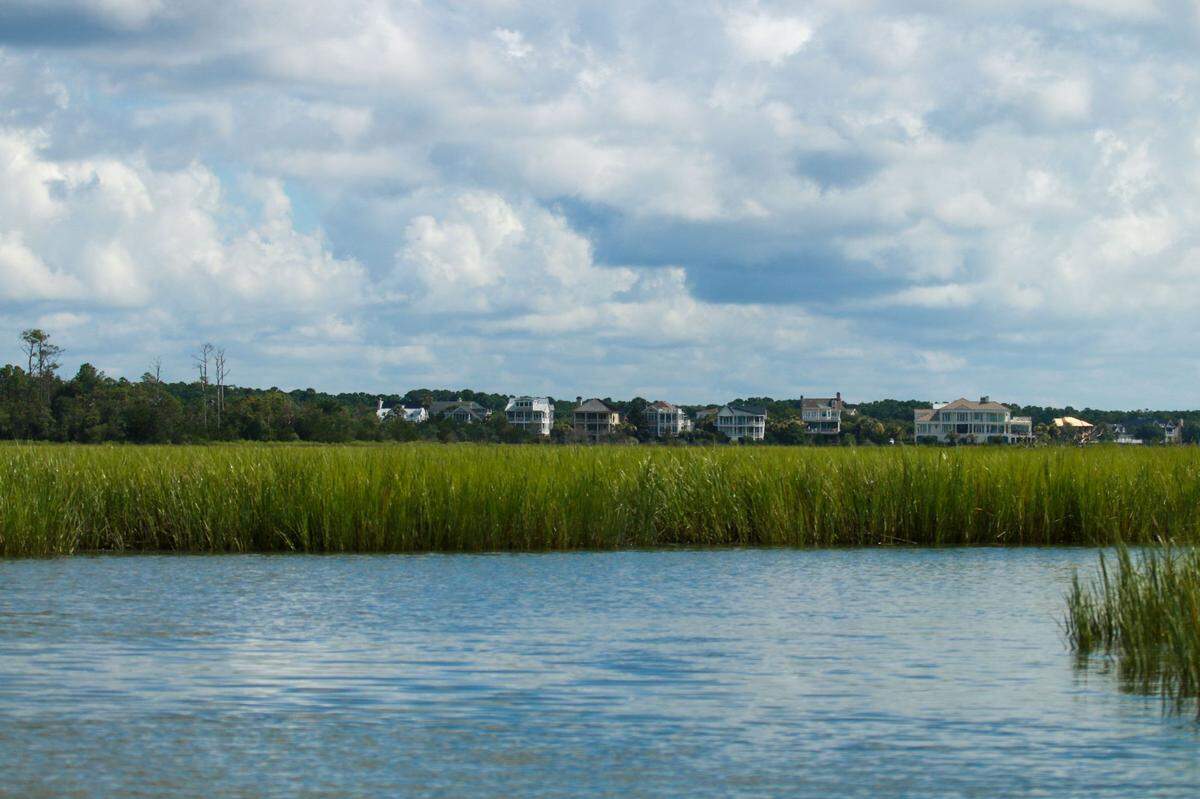
The extent of public access to Georgetown County’s North Inlet is in question with an ongoing lawsuit the Belle W Baruch Foundation filed versus the state of South Carolina in late 2019.
In the lawsuit, the foundation claims ownership through a kings grant dating to the early 1700s of 8,000 acres of marshland and beaches in the area between the mean high water mark and mean low water mark in the inlet.
The small inlet is a unique saltwater estuary, featuring no direct freshwater influx and very little development, unlike its sprawling neighbor just to the south, Winyah Bay, which is considered the third-largest estuary on the East Coast and is the watershed for five rivers.
“You’ve got to get out and see it,” county resident Geoff Groat said of North Inlet. “Until you go out there and see it you just don’t know how beautiful and special a place it is.”
North Inlet is one of the few remaining unspoiled treasures along the Southeast coast, and is clearly special to Groat and numerous other residents from Georgetown and Horry counties and across South Carolina.
For decades, even centuries, the public has ventured to the inlet from Winyah Bay through a pair of treacherous creeks filled with flats, sandbars and oyster reefs – Jones Creek and appropriately named No Man’s Friend Creek. The most direct access is from DeBordieu Colony on the north side of the inlet.
The case has caught the attention of Coastal Conservation Association South Carolina, which is involved in the case and pushing to keep public access to the inlet unchanged.
“For years the public has used the claimed marshlands and beaches (of North Inlet) to fish, crab, shrimp, hunt, and engage in other outdoor activities,” said Scott Whitaker, Executive Director of CCA SC. “The public enjoys use of the area in question from inside their boats and also outside of moored boats in activities such as walking on beaches, wading through marshlands, or hunting.
“Since CCA SC’s objective is to conserve, promote, and enhance the present and future availability of coastal marine resources for the benefit and enjoyment of the general public, CCA SC is concerned about the claims made by the Foundation and how those claims may impact the public’s use of these areas.“
3, Tuna Surprise
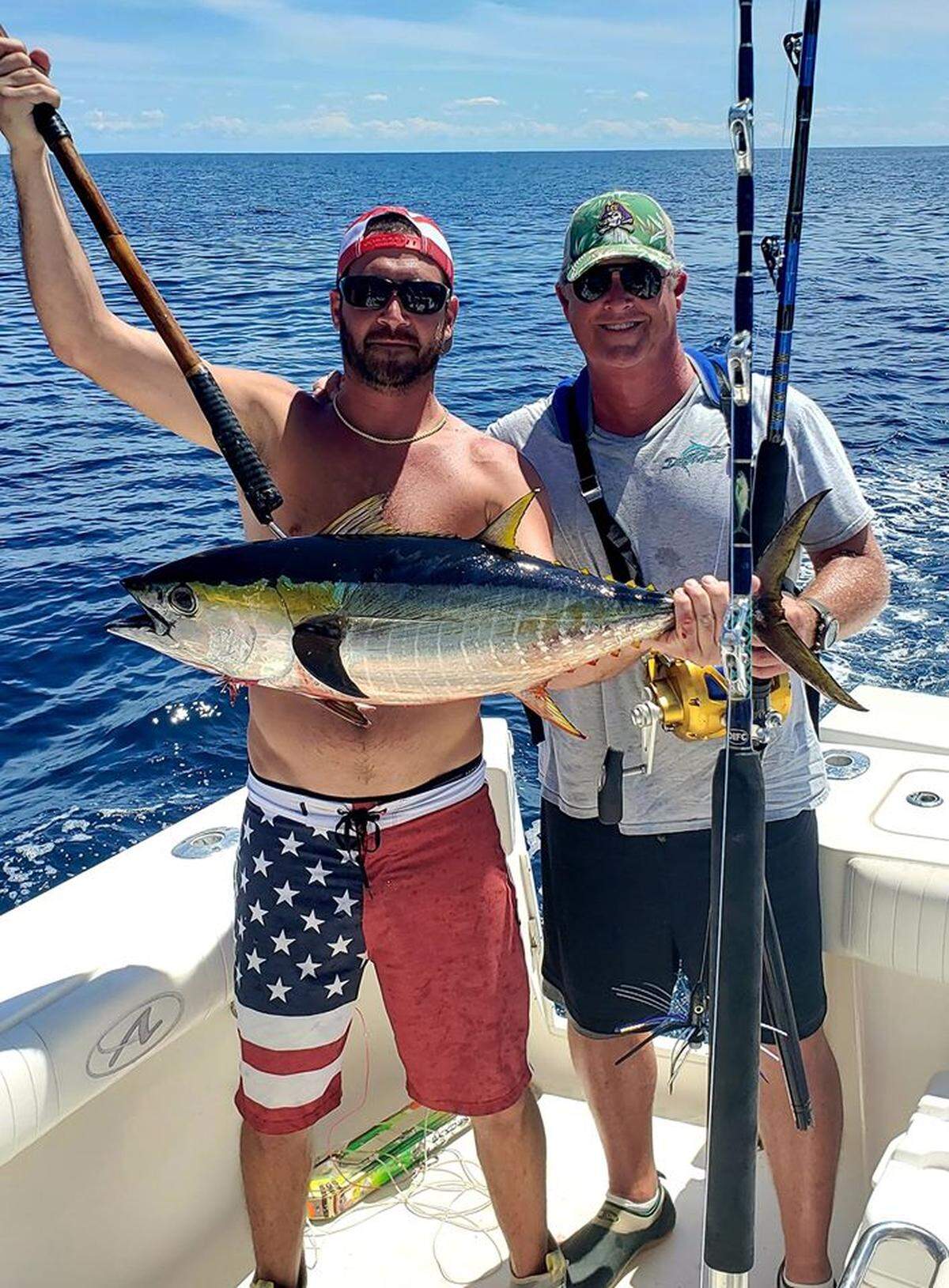
Anglers along the South Carolina coast were happy to see the return of yellowfin tuna this spring on offshore trolling excursions.
Capt. Jay Weaver of Georgetown’s Blue Sky remembers the days when yellowfin were a relatively common catch in the vicinity of offshore bottom features like the Georgetown Hole and Winyah Scarp. They have rarely been caught or seen for numerous years in waters off the Palmetto State.
“It’s been a solid 15 seasons without them,” said Weaver . ”The last year they were here in numbers was 2005. After that very few yellowfin have been caught. It’s nice to see them back now.”
Weaver is hopeful their appearance is a trend and not an anomaly.
“Hopefully we see them again next year but there’s no guarantee,” Weaver said.
The yellowfin’s cousin, the blackfin tuna, is commonly caught in the offshore waters, but observers were surprised where they showed up in mid-October.
Several large blackfins were caught at Belky Bear, a common name for a bottom spot located 13 miles east of Murrells Inlet in only 45 feet of water.
A typical blackfin tuna, even in the offshore waters weighs about 8-12 pounds. The grade of blackfins caught during the one-week stretch at Belky Bear was impressive, with several fish topping 20 pounds, including a 28-pound, 38.5-inch specimen landed by Capt. Adam Goodwin of Tide Chaser.
4, Illegal Fish Bust
For responsible fishermen, it was an infuriating turn of events and brought to the forefront a continuing problem of disregard for fisheries laws along the Grand Strand.
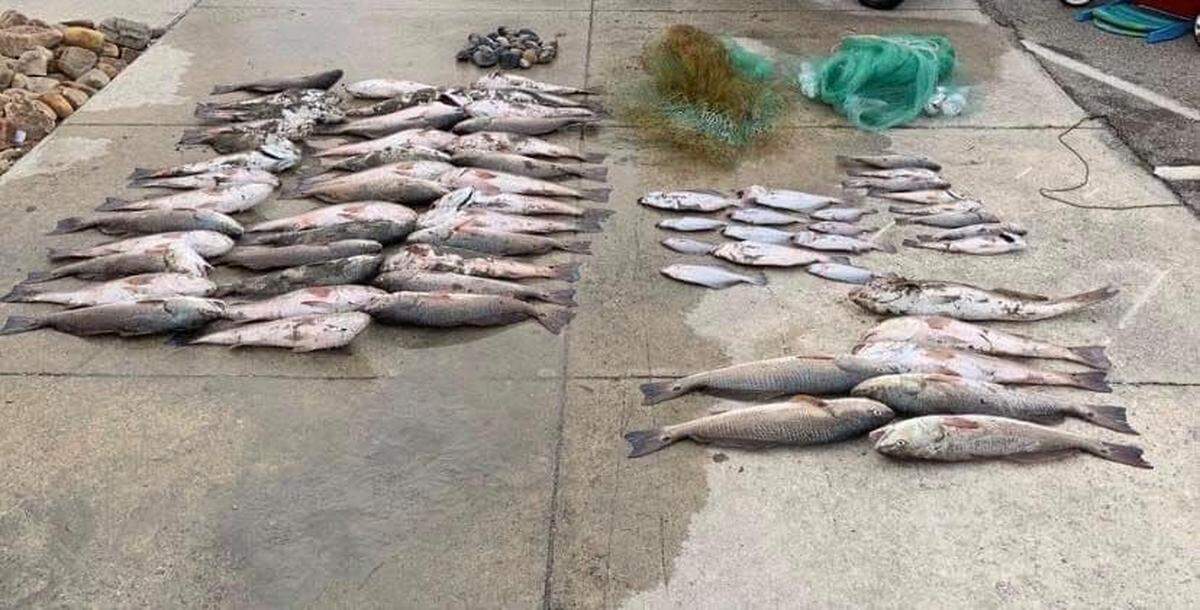
On Aug. 21, 10 men were arrested by South Carolina Department of Natural Resources Law Enforcement officers for being in possession of illegal fish, violating both size and bag limits in Murrells Inlet, adjacent to Huntington Beach State Park.
The numbers were astonishing, especially considering the main species of illegal fish the men were caught with were red drum, which have a daily bag limit of two fish per person per day and a slot limit of 15-23 inches in South Carolina waters.
The men were in possession of 55 red drum including seven over the slot and eight under slot along with 12 undersized flounder, clams out of season, and whole stone crabs.
Flounder have a minimum size limit of 15 inches, and it is illegal to harvest whole stone crabs.
Only one of the men had the required S.C. Saltwater Fishing License.
“We’ve worked so hard to keep a healthy population of sportfish, and (S.C. DNR has) released a lot of (red drum) in Murrells Inlet,” said First Sgt. Ryan Williams of S.C. DNR Law Enforcement. “They need to be respected. To just go out and slaughter something, that’s just not right.”
Fishermen using cast nets to harvest illegal fish, crabs and shellfish, particularly at low tide, is nothing new to Williams and his fellow S.C. DNR Law Enforcement officers in Georgetown and Horry counties.
“It’s an ongoing issue, there are a lot of saltwater gamefish violations,” said Williams. “We do write a lot of violations for people using casts nets to catch fish. There have been a lot of cases written this year and prior years. Anywhere there’s public access (to the estuaries). Pawleys Island has a big problem with it, Horry County has issues with it on their side as well.”
5, Old Days Flashback
It was early April, and the state of South Carolina was at the height of COVID 19 restrictions put in place by Gov. Henry McMaster.
In a normal year, the Grand Strand would be bustling with activity in April, with spring break in full swing and fishing activity breaking out of the winter doldrums.
But 2020 wasn’t a normal year. With all non-essential businesses temporarily closed and dine-in service at restaurants and bars shut down traffic was much lighter than usual on the roadways, and the waterways.
With recreational activities exempt from McMaster’s “work or home” order, what better time for a spring-time fishing trip,
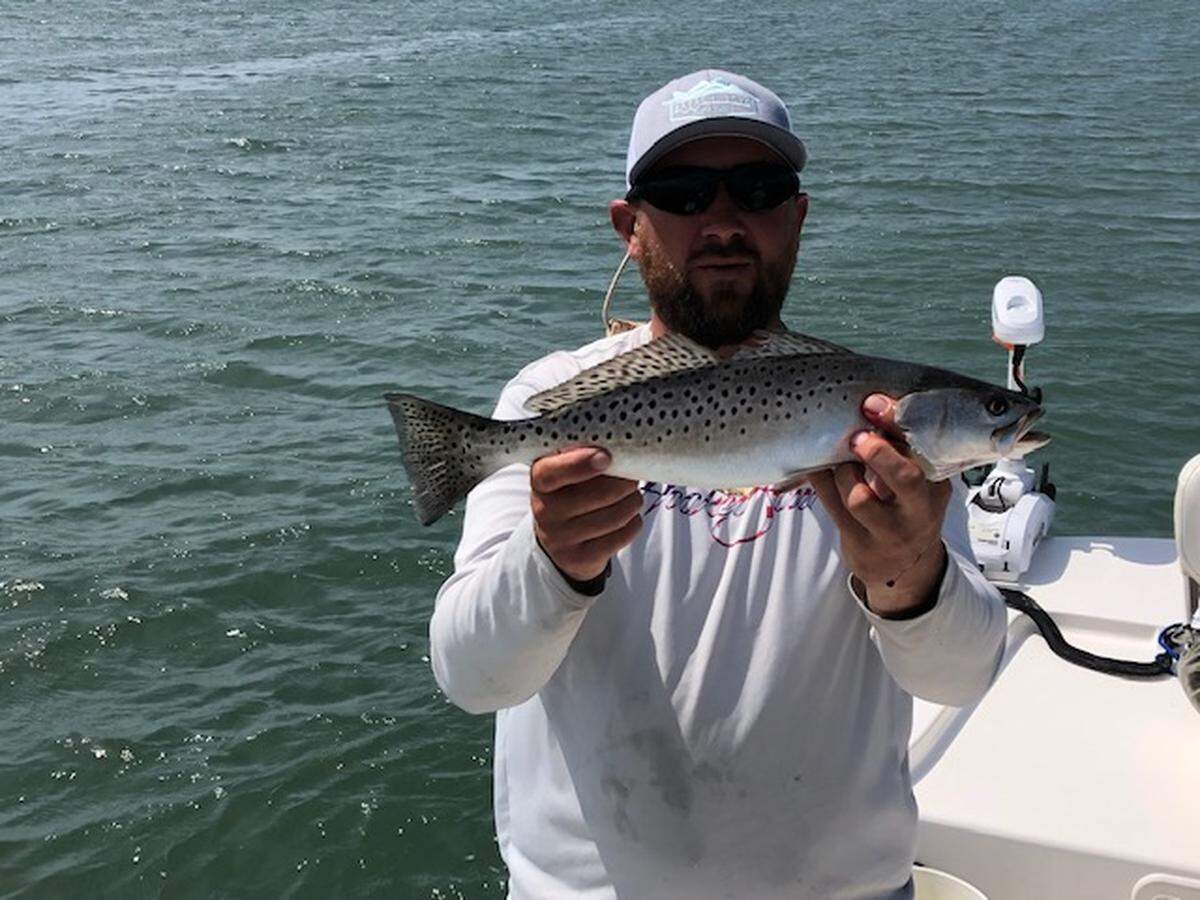
Capt. Dan Connolly of O-Fish-Al Expeditions and I took the opportunity to target spotted seatrout and black drum in Murrells Inlet, plus Spanish mackerel which were beginning to show up for the spring in the near-shore waters of the Atlantic.
The fishing was good aboard Connolly’s 18-foot Key West center-console skiff, with a nice catch of mainly trout and a few drum, although the Spanish mackerel were elusive on this day.
The day was especially memorable due to the light boat traffic, which beckoned to similar fishing trips with my Dad in the 1970s and 80s, a time when Murrells Inlet truly was a sleepy little fishing village.
On the ride home on Business Hwy. 17 through the inlet, it was a surreal scene on what normally would be a hectic time of year. The Marshwalk and adjacent parking lots were practically deserted, save for a bit of carryout activity from the restaurants.
It was certainly an eerie ending to a beautiful day on the inlet during these unprecedented times.