
Here are the top five Grand Strand outdoors stories from 2019
As we head into yet another decade, here are the top stories from my column in the year 2019:
1, Flounder In Flux
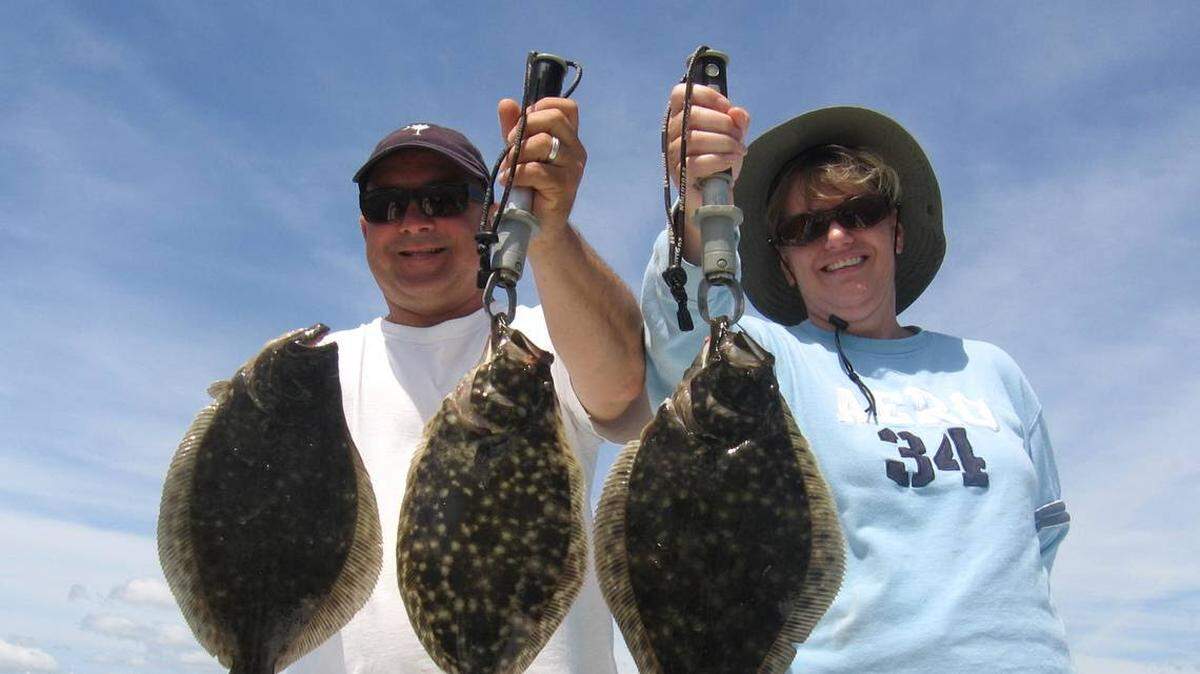
The story of the year hits right at home in the northeast corner of South Carolina, where flounder fishing is arguably more popular than anywhere else along the Palmetto State coast.
Currently, the limits on flounder in South Carolina waters are 10 per person per day with a boat limit of 20 per day, and a 15-inch minimum size limit.
Look for those limits to be cut back within the next few years after a comprehensive regional study earlier this year concluded numbers of southern flounder along the four-state Southeast coast including North Carolina, South Carolina, Georgia and Florida are at historically low levels.
The North Carolina Marine Fisheries Commission reacted to the regional study by closing the recreational and commercial harvest of flounder in N.C. waters beginning on Sept. 4, although the commercial harvest re-opened soon thereafter.
On the heels of the regional study, biologists from the South Carolina Department of Natural Resources took a close look at flounder stocks in the Palmetto State and the results were just as alarming.
The study found flounder numbers in the state are at the lowest since the agency began keeping records.
Proposals to change South Carolina’s limits on flounder are assuredly forthcoming in 2020, but any alterations must be approved by the S.C. Legislature.
S.C. DNR biologists want more feedback from recreational anglers and are encouraging the public to take an online survey to provide input.
The survey can be accessed at: https://www.surveymonkey.com/r/2V2VRV5
2, Adam’s Snook
Surfside Beach angler Adam Kuryea was a little stunned at what he landed in late November while fishing from the bank in Murrells Inlet.
Kuryea was having a memorable autumn afternoon catching plenty of spotted seatrout, using a Gulp Swimming Mullet, including a 27-inch gator trout.
After securing his limit, Kuryea was fun fishing when he had a bite that, frankly, wasn’t a memorable one. That is, until he saw the fish.
“It jumped and I thought that was weird,” recalled Kuryea. “A trout doesn’t usually jump. The fish didn’t fight at all, it was lethargic.
“I wasn’t even netting them at that point. I flipped it up (out of the water) and the hook popped out as soon as it hit land. I looked down and, boom, there was a snook.”
Snook are predominately found in Florida waters and are very rarely found north of Georgia. Kuryea’s 16-inch snook was caught in a water temperature in the mid-50s, explaining why the fish was lethargic.
Kuryea found there are no limits in South Carolina for snook, since they are rarely found in Palmetto State waters. He fileted the fish and gave the carcass to South Carolina Department of Natural Resources biologist Kris Reynolds to be studied.
Are snook becoming established in South Carolina waters? Time will tell.
3, Apache Tarpon
Stephen Walker and 38 other anglers on the Apache Pier were watching the Spring King Mackerel Tournament come to a close in early June, without a king being caught in two days of fishing.
But late in the afternoon, a day with little action was capped by a frantic rare encounter from a Grand Strand pier.
“I heard a giant splash and my buddy (John Trull) yelled ‘Tarpon!’ “ recalled Walker. “I looked to see what was going on and there was the tarpon, 30 feet in front us, tail-walking.”
With nearly 40 lines and live baits in the water, the question was, who exactly was fortunate enough to have hooked up with the tarpon?
“I noticed my bait (a 1.5-pound bluefish) wasn’t where I thought it was,” said Walker.
Instead of a king, Walker had indeed hooked up with a Silver King, perhaps the most vaunted of all saltwater gamefish.
“I thought, ‘This can’t be happening, this is so unreal,’ “ Walker remembered thinking as the tarpon ripped off nearly 500 yards of line.
Walker began working the tarpon back toward shore, where a crew of Walker’s friends was waiting on the beach to help with the release of the fish. Late afternoon choppy waves of 2-3 feet were rolling into the surf, complicating the release.
Almost a half-hour later, Trull, Brian Snyder, Landon Steen and Cam Steele all were in the water about waist deep, lifted the tarpon up and carried it to the beach.
Then it was time for a quick photo op and souvenir – a scale – and then to prepare the fish for release.
Thorpe, Steele, Steen and Walker carried the fish to waist deep water and held it upright into the waves for almost five minutes to revive it.
“I got a hold of her tail moving it back and forth,” said Walker. “She was kicking as hard as she could and took off just fine.”
4, Chong Reef
The Captain Chris Chong Memorial Reef settled into place in May, located 25 nautical miles east-southeast of the Murrells Inlet Sea Buoy, and Travis Lane couldn’t be happier with the tribute to his late friend.
Chong was a popular captain and avid diver out of Express Watersports in Murrells Inlet before he tragically passed away in a diving accident on Dec. 26, 2017.
On May 1, a fitting memorial to Chong was sunk within the parameters of the Bill Perry Jr. Artificial Reef site in the form of the tugboat J.P. McCallister, a massive 103-foot vessel that was prepared for placement on the reef with the diving community in mind.
“It’s really the perfect kind of memorial for Chris,” said Lane, a classmate at Coastal Carolina University and roommate of Chang’s for five years before his death. “Putting this immense structure there, that will change the way people see this site for diving. The cool thing about it is, with this wreck we tried to cut out (areas) so divers can dive inside. On a lot of our wrecks, divers don’t really have that opportunity to go in the little nooks and crannies.”
Lane has a vision for the future of his buddy’s reef, with plans to tie rope lines from the tugboat to other structure on the site.
The Bill Perry Jr. Reef site has had a tremendous amount of large structure placed on it over the years including four landing crafts, a shrimp boat, a tugboat, New York City subway cars, Armored Personnel Carriers and shipping containers.
“We want to put a line system in, connecting the tugboat with what ‘s already there,” said Lane, a 2017 graduate of CCU. “Kind of make it into a diving playground with multiple areas to dive on one site.”
Lane noted that 12 reef balls were dropped along with the tugboat, with CCU’s scuba diving club, Aqua League, instrumental in that endeavor.
5, Pier Kings
There are good years and lean years for the dedicated anglers that target king mackerel from piers along the Grand Strand.
The 2019 king season was a memorable one for the anglers fishing from the Apache Pier in Myrtle Beach and the Cherry Grove Pier in Cherry Grove.
Highlighted by excellent runs of kings in late June and from late September well into October, the Cherry Grove Pier produced 91 kings for the year while 79 were caught from the Apache Pier.
Conditions were fabulous for the Fall Pier King Mackerel Tournament, held Sept. 21-22, and the catches showed.
The anglers competing in the tournament, 40 on Apache Pier and 35 on Cherry Grove Pier, were greeted by light to moderate east-southeast winds, relatively clear water and plenty of bait along the beach.
In late September along the Carolina coast, that is the recipe for king mackerel to show up near the beach, and they most certainly did.
Eight kings were caught from the Apache Pier and six from the Cherry Grove Pier, excellent numbers for an event that sometimes doesn’t produce any kings.
On October 19, angler Sybrant Baccas had a big time from the Apache Pier. Baccas started the day by landing a 31.10-pound king and followed it up with a 13.15-pounder later in the day. Two kings on one day from a Grand Strand pier – quite an accomplishment for Baccas.
This story was originally published December 27, 2019 at 2:54 PM.